
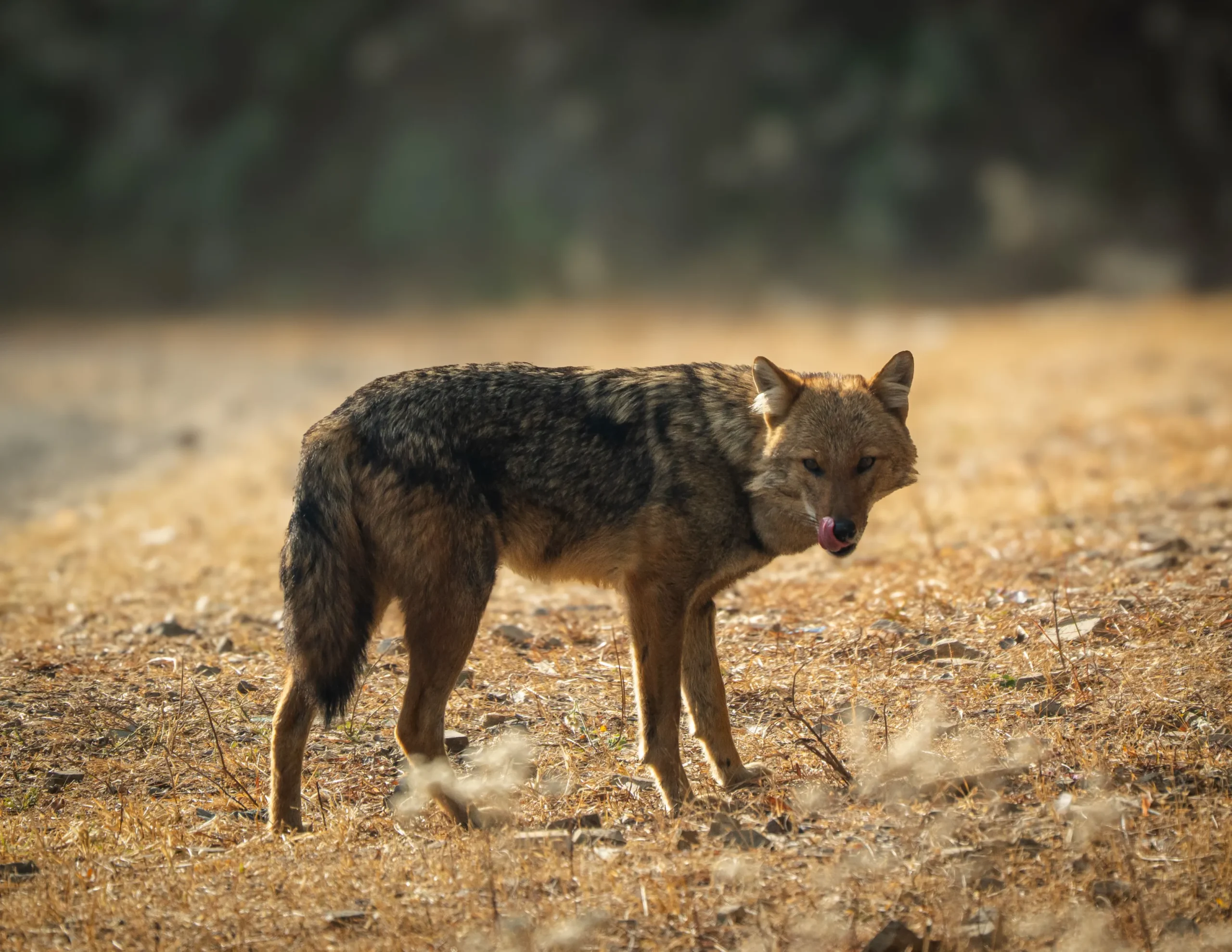
Discover the ecology, behavior, and survival strategies of the golden jackal in India. Learn where to see them and how they adapt to urban mangroves.
Introduction, Species Profile & Evolutionary Significance
Introduction
When planning a safari in India, most travelers focus entirely on large cats. However, understanding the smaller, highly adaptable carnivores provides a much deeper perspective on how Indian ecosystems function. The golden jackal (Canis aureus) is one of the most resilient and widespread wild canids on the Indian subcontinent.
Far from being simple scavengers, these animals serve as vital ecological links between wild habitats, agricultural landscapes, and expanding urban boundaries. Learning to identify them and interpret their behavior adds immense value to any field excursion, helping you appreciate the complex predatory networks operating right alongside India’s larger wildlife.
What Is the Golden Jackal?
The golden jackal belongs to the family Canidae and is widely distributed across the country. Often noticed for its eerie evening vocalizations, it plays a key role in keeping rodent populations in check and clearing carrion from the landscape.
Identification Features in the Field
Distinguishing a golden jackal from a stray dog or a wolf requires looking at specific anatomical markers rather than just coat color.
- Size and Build: They are intermediate in size between an Indian fox and a gray wolf. They stand about 38 to 43 centimeters high at the shoulder and generally weigh between 8 and 11 kilograms.
- Coat Color: Their fur is a coarse mixture of gold, sandy cream, and grey, typically darkening to a black-tipped saddle patch across the back.
- Anatomical Details: Look for a pointed muzzle, relatively short legs, a bushy tail that ends in a dark tip, and large, erect ears. Unlike domestic dogs, their tails always hang straight down when walking or trotting rather than curling upward.
Field Note
When trying to distinguish a golden jackal from a feral dog at a distance, watch its movement. Jackals move with a light, rhythmic, and highly purposeful trot. Their tracks are narrower and more precisely aligned than those of a domestic dog, reflecting an optimization for long-distance foraging.
The Evolutionary Significance of the Indian Lineage
For a long time, the golden jackal was viewed globally as a single, uniform species stretching across Africa, Europe, and Asia. However, modern genetic research has revealed a much more interesting story.
A 2015 phylogeographic study published in PLOS One analyzed the genetic diversity of golden jackals in India. The researchers uncovered high genetic diversity within the Indian populations. The data indicates a recent population expansion across the Indian subcontinent, with ancestral lineages traceable to roughly 37,000 years ago.
This means India is not just an arbitrary corner of the jackal’s range; it is a critical historic center of genetic diversity for the species. This genetic variety gives the Indian population a high degree of evolutionary resilience, which helps explain why the species manages to survive in heavily altered human landscapes where other carnivores quickly disappear.
Distribution, Key Habitats & Field Behavior
Distribution and Habitats Across India
Where can you see golden jackals in India? The short answer is: almost everywhere. Unlike highly specialized predators that require pristine environments, golden jackals are incredibly adaptable. They are one of the most widespread wild canids in India, utilizing a massive variety of landscapes.
Forest, Grassland, and Scrubland Adaptability
In central and northern India, you will frequently encounter jackals in dry deciduous forests, scrublands, and open grasslands. National parks such as Kanha, Pench, and Bandhavgarh hold healthy populations, as do the Himalayan foothills and sections of the Western Ghats. In these protected areas, they favor the ecotones—the transition zones between dense forest and open meadows—where small prey is abundant and scavenging opportunities are high.
The Coastal and Mangrove Strongholds
Jackals do not restrict themselves to dry land. They have established significant populations in coastal ecosystems, particularly within dense mangroves. Areas like Coringa in Andhra Pradesh, the coastal stretches of Goa, and the expansive mangrove patches of Maharashtra serve as crucial habitats. In these tidal environments, they adapt their diet to forage for crabs, stranded fish, and coastal birds.
Surviving on Agricultural and Urban Edges
The species heavily utilizes agricultural landscapes and the peripheries of human settlements. Sugarcane fields, tea estates, and riverbanks bordering village lands offer excellent cover and steady food sources, primarily in the form of rodents.
Practical Checklist: Tracking Jackal Habitats
When looking for jackals outside core tiger reserves, focus your attention on:
- Transition zones between farmland and scrub forest.
- Dry riverbeds and ravines, which they often use as travel corridors.
- Edges of coastal mangrove swamps during low tide.
Golden Jackal Behavior, Diet, and Ecology
Understanding how golden jackals operate in the field greatly improves your chances of observing natural behavior, rather than just getting a fleeting glimpse as an animal crosses a jeep track.
Social Structures: Monogamy and Family Bonds
A common misconception is that golden jackals form large hunting packs like gray wolves. In reality, the core social unit is a monogamous breeding pair. While you might occasionally see a small family group consisting of parents and their older offspring—who act as helpers—they generally live, forage, and patrol their territory in pairs.
Foraging Habits: Hunting vs. Scavenging
Jackals are supreme opportunists, functioning as true omnivores and skilled scavengers. Their varied diet includes rodents, ground-nesting birds, reptiles, insects, fruit, and human refuse. While they are highly effective at cleaning up carrion left by apex predators, they are also capable hunters of small game.
Nocturnal Shifts and Activity Patterns
Are golden jackals nocturnal? Generally, yes, but their activity patterns shift directly based on human proximity. In quiet, protected national parks, you will frequently see them actively foraging during the early morning or late afternoon. However, in agricultural lands and urban edges, they become strictly nocturnal to avoid human detection.
Expert Tip: Listening for Jackals
Jackals are highly territorial and use distinct vocalizations to communicate. Their calls typically begin with a long, trailing howl followed by a series of sharp, high-pitched yelps. Listening for this evening chorus just after sunset is often the most reliable way to confirm their presence in an area before attempting to track them visually.
Urban Ecology: The Mumbai Mangrove Case Study
The Urban Frontier: Mumbai’s Mangrove Jackals
Can a wild canid survive in one of the world’s most densely populated megacities? Recent research proves that they can, provided there are intact coastal ecosystems. A 2024 study focused on Mumbai documented that golden jackals persist strongly in the city’s mangrove belts, specifically in areas like Gorai, Manori, Vashi, and the Bhabha Atomic Research Centre (BARC). Rather than just surviving as transient visitors, these urban jackals remain highly nocturnal to avoid human contact and show signs of year-round breeding activity.
Urban Diet Diversity and the Plastic Threat
In these tidal zones, the jackal’s omnivorous nature is a distinct survival advantage. They regulate local prey populations by hunting rodents and scavenging in the dense mangrove root systems. However, living on the urban edge introduces severe dietary hazards.
The 2024 Mumbai research analyzed scat samples to determine diet diversity and found alarming traces of plastic. This indicates that urban jackals are increasingly supplementing their natural diets by foraging through human waste.
Responsible Tourism Tip: Waste in Wildlife Corridors
When birding or exploring mangrove boardwalks on the edges of cities, strictly pack out all trash. Scavenging species like jackals cannot digest food wrappers, and plastic ingestion frequently leads to fatal gastrointestinal blockages.
The Double Threat: Feral Dogs and Hybridization Risks
The most significant challenge for urban jackals is not a lack of food, but the dense presence of domestic and feral dogs. Free-ranging dogs compete directly with jackals for territory and scavenged food. More critically, they act as vectors for lethal wildlife diseases such as canine distemper and rabies.
Furthermore, recent urban research has raised alarms about genetic dilution. Mumbai has recently recorded suspected cases of jackal-dog hybridization. If domestic dogs continually interbreed with wild jackals, it threatens the unique, ancient genetic diversity that characterizes the Indian golden jackal lineage.
Future Monitoring and Movement Tracking
Protecting these urban populations requires better baseline data. As city infrastructure expands, habitat fragmentation forces jackals to cross busy roads, exposing them to high roadkill mortality.
To address this, local activists and researchers in late 2024 emphasized the urgent need for formal census work and radio-collaring initiatives within the Mumbai Metropolitan Region. Tracking their movements is essential for identifying crucial wildlife corridors, securing underpasses, and ensuring these coastal populations do not become permanently isolated.
Conservation, Legal Framework & Primary Threats
Conservation Status and Legal Protection
Understanding the legal standing of the golden jackal requires looking at both global assessments and national laws.
Globally, the golden jackal is listed as Least Concern on the IUCN Red List. However, its status within India is strictly regulated. The species is legally protected under India’s Wildlife (Protection) Act, 1972. While secondary reports sometimes casually summarize its specific scheduling, travelers and researchers must refer directly to the official India Code for the most current statutory schedules regarding hunting and trade penalties.
The Reality Behind the “Least Concern” Designation
A common misconception is that a “Least Concern” status means a species faces no conservation issues. In reality, this designation simply reflects the species’ wide geographic distribution and overall global numbers. Within India, golden jackals face severe, localized ecological pressures that require dedicated conservation management, especially outside protected national parks.
Primary Threats Facing India’s Golden Jackals
While they are highly adaptable, golden jackals are increasingly vulnerable to human-induced threats.
The Illegal Trade and the “Jackal Horn” Superstition
One of the most underreported threats to the golden jackal in India is poaching driven by superstition and the illegal wildlife trade.
A detailed 2020 study published in the Journal of Threatened Taxa analyzed poaching and trade data across India. The researchers documented significant seizures from 2013 to 2019, which included 126 skins, 16 skulls, 8 tails, and 2 live jackals.
Most notably, the study recorded the seizure of more than 370 “jackal horns”. This is not a true horn, but rather a bony cone or growth that occasionally appears on the skull of some jackals. It is heavily exploited in black markets due to superstitious beliefs claiming it brings wealth or good luck. This targeted poaching poses a significant threat to local populations.
Habitat Loss, Fragmentation, and Road Pressures
As agricultural lands transition into industrial zones and highways cut through rural landscapes, jackal territories are continuously fragmented.
Unlike tigers or elephants, jackals are rarely the focus of dedicated wildlife corridors or highway underpasses. Consequently, roadkill remains a high source of mortality for jackals attempting to navigate human-dominated landscapes, particularly during their nocturnal foraging routes. Habitat fragmentation also pushes them closer to villages and urban centers, increasing their conflict with feral dogs and exposure to deadly canine diseases.
Decision Guide: Supporting Conservation Through Tourism
When booking a wildlife safari, prioritize lodges and operators that actively employ guides from local communities. The best defense against localized poaching—including the superstitious trade in “jackal horns”—is demonstrating to border communities that living wildlife generates reliable, sustainable economic value.
Safari Planning, Field Guides, Common Mistakes & FAQs
Best Places to See Golden Jackals in India
While golden jackals are widely distributed, certain landscapes offer much higher visibility for wildlife travelers. Because they favor edge habitats and open terrain, they are often easier to spot than forest-dwelling predators.
For reliable sightings in central India, national parks like Kanha, Pench, and Bandhavgarh are excellent choices. In these reserves, jackals frequently patrol the open meadows (maidans) during the early morning and late afternoon.
For a completely different ecological context, coastal environments provide fascinating viewing opportunities. The Coringa Wildlife Sanctuary in Andhra Pradesh and the coastal backwaters of Goa are prime locations to observe jackals foraging in tidal mudflats. Even within the Mumbai Metropolitan Region, areas surrounding the Thane Creek flamingo sanctuary and the Godrej mangroves hold robust, though largely nocturnal, populations.
Table 1: Indian Wild Canid Field Identification
To help you accurately identify what you are seeing in the field, use this quick comparison guide.
| Species | Size & Build | Primary Diet | Typical Habitat | Key Field Signs |
| Golden Jackal | Medium; 8–11 kg. Pointed muzzle. | Omnivore & Scavenger | Forest edges, mangroves, farmlands, urban fringes | Tail hangs straight down. Narrow, purposeful tracks. |
| Gray Wolf | Large; 18–25 kg. Lanky with long legs. | Carnivore | Open grasslands, scrublands, arid plains | Large tracks. Often moves in structured packs. |
| Indian Fox | Small; 2–3 kg. Slender with short legs. | Omnivore (heavy insect reliance) | Dry plains, scrub, agricultural fields | Large bushy tail with a distinct black tip that trails. |
| Feral/Stray Dog | Highly variable. | Scavenger | Human settlements, urban centers, buffer zones | Tail often curls upward. Tracks are erratic and messy. |
Common Mistakes Travelers Make When Spotting Jackals
- Dismissing them as stray dogs: Because of their similar size and tendency to linger near park gates or villages, many tourists glance at a jackal and assume it is a feral dog. Always check the tail carriage and the shape of the ears.
- Assuming they hunt in large packs: If you see a solitary jackal or a pair, do not assume the rest of a “pack” is hiding nearby. Unlike wolves, golden jackals in India primarily operate in monogamous pairs or small family units.
- Ignoring their alarm calls: Jackals are highly observant and frequently issue sharp, high-pitched alarm yelps when they spot a leopard or tiger. Ignoring a jackal looking intently into the brush is a missed opportunity for tracking larger predators.
Table 2: Key Threats and Ecological Mitigation
| Ecological Threat | Primary Impact on Population | Mitigation Strategy |
| Habitat Fragmentation & Roads | High roadkill mortality as jackals navigate heavily human-dominated landscapes. | Constructing wildlife underpasses and mapping urban wildlife corridors. |
| Feral Dogs (Disease & Hybridization) | Competition for resources, transmission of rabies/distemper, and genetic dilution. | Feral dog vaccination programs and strict waste management near wild buffers. |
| Illegal Wildlife Trade | Targeted poaching for pelts and the superstitious “jackal horn”. | Stronger enforcement of the Wildlife (Protection) Act and community education. |
Frequently Asked Questions About Golden Jackals in India
What is the golden jackal called in India? It is commonly referred to as the Indian jackal, which is a population of the widely distributed Canis aureus.
Is the golden jackal the same as the Indian jackal? Yes. The Indian jackal is simply the specific lineage of the golden jackal found across the Indian subcontinent.
Where are golden jackals found in India?
They are found across almost the entire country, from the Himalayan foothills to the Western Ghats, central Indian forests, and coastal mangroves.
Which Indian states have golden jackals?
They are present in nearly all Indian states, including Madhya Pradesh, Maharashtra, Andhra Pradesh, Goa, and Gujarat.
What does a golden jackal look like? They feature a coarse coat of sandy cream and gold, a dark saddle patch across the back, erect ears, and a bushy tail with a black tip that hangs straight down.
What do golden jackals eat?
They are true omnivores. Their diet includes rodents, ground birds, reptiles, fruit, crabs in coastal areas, and human refuse.
Are golden jackals nocturnal?
In quiet, protected areas, they are active during early mornings and late afternoons. In agricultural and urban landscapes, they become almost strictly nocturnal to avoid humans.
Do golden jackals live in packs or pairs?
They predominantly live and forage in monogamous pairs, sometimes accompanied by a few older offspring as helpers. They do not form large packs like wolves.
Are golden jackals common in cities?
They are increasingly common on the urban periphery, especially in cities with adjacent agricultural land or coastal mangroves, like Mumbai.
Can golden jackals live in mangroves?
Yes, they thrive in mangroves, adapting their diet to marine foraging and utilizing the dense root systems for shelter.
Are golden jackals protected by law in India?
Yes, they are legally protected under India’s Wildlife (Protection) Act, 1972, which prohibits hunting and trade.
What is the IUCN status of the golden jackal?
Globally, the species is listed as “Least Concern,” though localized Indian populations face severe pressures.
What are the biggest threats to golden jackals in India?
The primary threats are habitat fragmentation, road mortality, conflict and disease transmission from feral dogs, and targeted poaching.
Do golden jackals attack humans?
Attacks on humans are exceedingly rare. Jackals are naturally shy and prefer to flee from human contact.
Are golden jackals harmful to livestock?
They generally hunt small prey or scavenge. While they may occasionally take small poultry in rural villages, they do not pose a threat to large livestock.
What is the difference between a golden jackal and a wolf? The Indian gray wolf is much larger, relies on a strictly carnivorous diet, and frequently hunts in structured packs, whereas the jackal is a smaller, pair-bonded omnivore.
How do golden jackals behave during breeding season?
Breeding pairs become highly territorial, aggressively defending their range from other jackals and increasing their evening vocalizations to establish boundaries.
Why are golden jackals important in ecosystems?
They serve as crucial ecosystem cleaners by removing carrion and act as natural pest controllers by regulating rodent populations in agricultural areas.
Is poaching or illegal trade a threat to golden jackals?
Yes. A 2020 study documented extensive seizures of jackal skins, tails, and “jackal horns”—bony skull growths used in superstitious rituals.
What recent research has been done on golden jackals in Mumbai?
A 2024 study focused on jackals in Mumbai’s mangroves, documenting their nocturnal breeding, heavy reliance on urban ecosystems, and the alarming presence of plastic in their diet.
Conclusion
The golden jackal is a testament to natural resilience. While India’s larger, more famous predators require vast tracts of undisturbed wilderness to survive, the jackal has managed to weave its existence into the very fabric of human development. From the deep forests of central India to the tidal mudflats of Mumbai, they continue to play a vital role in disease control and ecosystem balance. Taking the time to understand, identify, and observe these adaptable canids will profoundly enrich your experience of the Indian wilderness.
Author Note & Update Log: Written by the WildlifeSafaris.in Editorial Team. Last Updated: August 2026.