Discover the endangered wild water buffalo (Bubalus arnee). Learn how to identify true wild populations, where they survive, and key conservation efforts.
Introduction
The wild water buffalo is one of Asia’s largest remaining megaherbivores, but it currently faces a quiet extinction crisis. With fewer than 4,000 individuals remaining in the wild, understanding the true identity of this endangered bovine is the first step toward its conservation and responsible travel planning. This guide provides a practical overview of the species to help travelers and researchers distinguish genuine wild populations from domestic livestock, track their remaining habitats, and understand the critical efforts underway to save them.
What Is the Wild Water Buffalo?
To understand this animal, you must look beyond the common domestic livestock seen throughout Asian countrysides. The true wild water buffalo is a distinct, genetically pure ancestral species that plays a critical role in wetland ecosystems.
Scientific Name and Taxonomy
The wild water buffalo is scientifically classified as Bubalus arnee. It is the direct wild ancestor of the domestic water buffalo, which is classified as Bubalus bubalis. While casual travel writing often lumps all water buffalo together, wildlife researchers maintain a strict taxonomic division between true wild populations and domestic or feral lineages to protect the genetic integrity of the surviving wild herds.
Wild vs. Domestic Buffalo
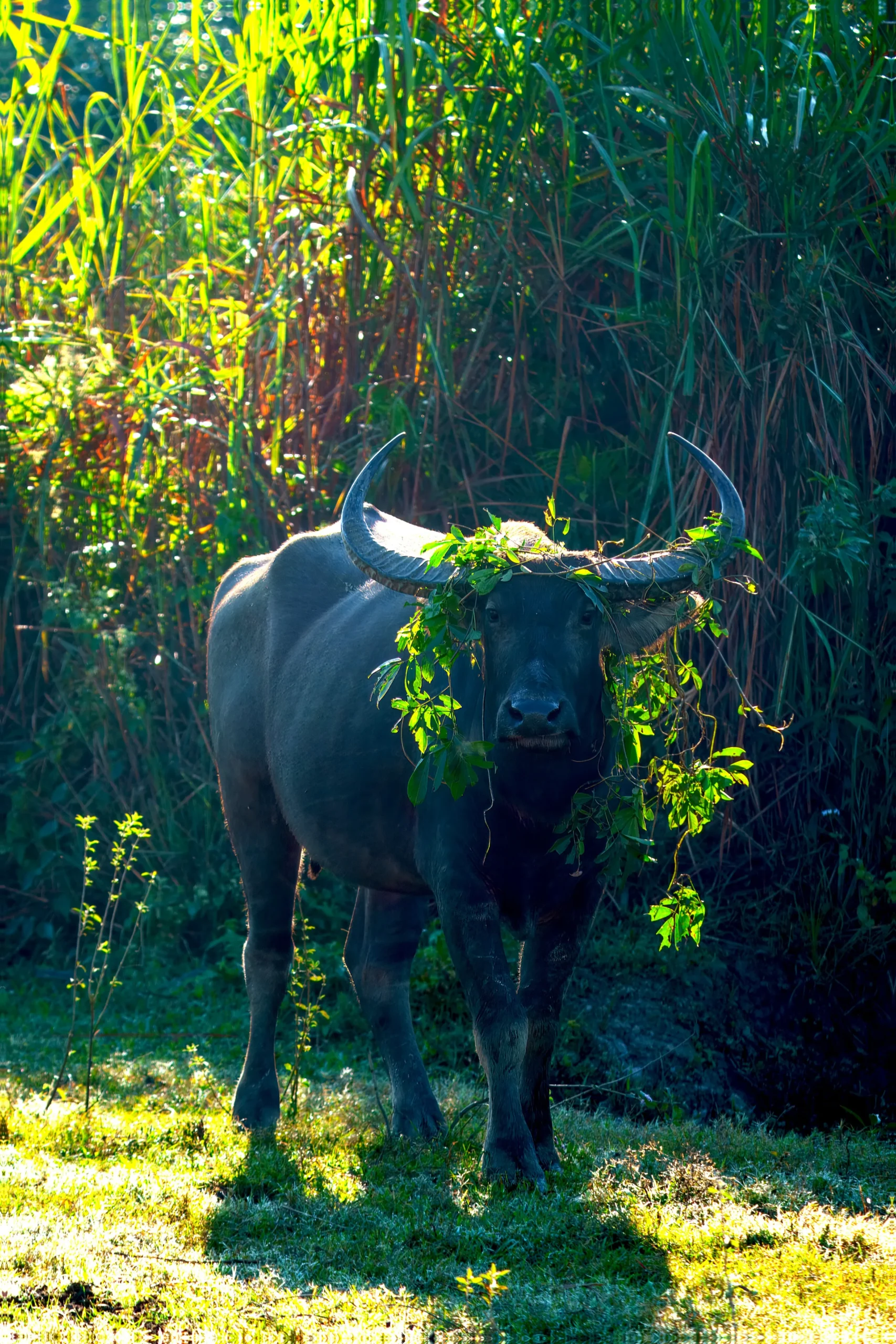
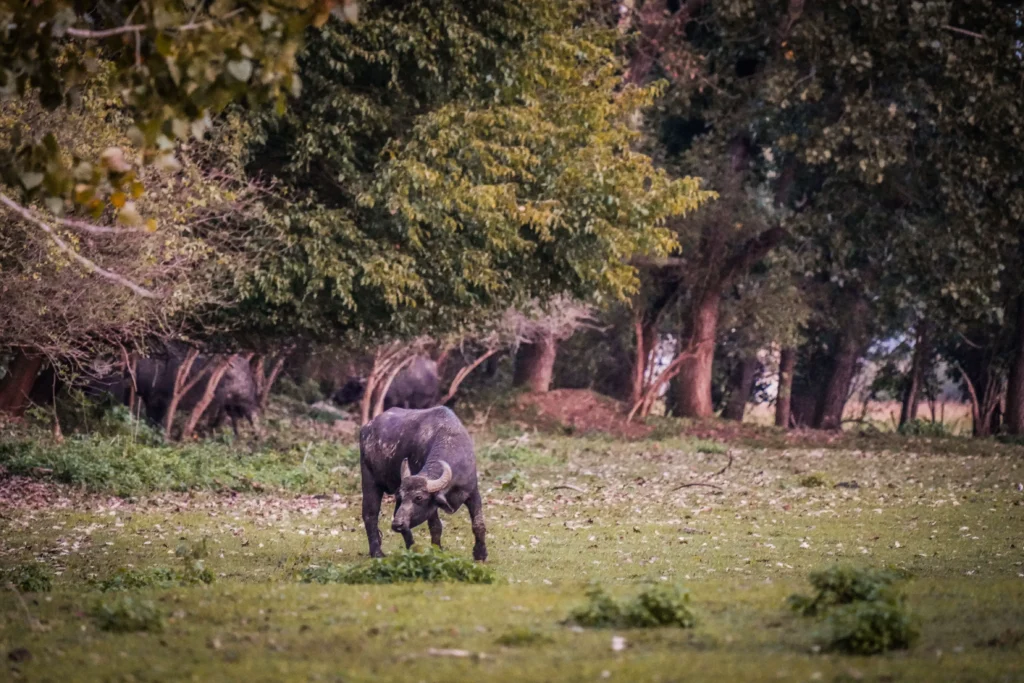
Identifying a genuine wild water buffalo requires looking closely at its physical structure and behavior. True wild buffalo are significantly larger and more aggressive than domestic varieties, with adult males often weighing up to 1,200 kg. They possess massive, backward-curved crescent horns that can span over 2 meters, a dark gray-to-black coat, and distinct symmetrical white markings, including white “stockings” on their lower legs and a white chevron near the throat.
The table below outlines the key structural differences to help you accurately identify the species in the field:
Table 1: Visual and Behavioral Differences
| Feature | Wild Water Buffalo (Bubalus arnee) | Domestic Water Buffalo (Bubalus bubalis) |
| Body Size & Weight | Larger, heavily built; adults weigh up to 1,200 kg. | Smaller, more compact; generally lighter weight. |
| Horn Structure | Massive, wide, backward-curved crescent shape. | Smaller, often tightly curled, drooped, or swept back. |
| Coat & Markings | Dark gray to black; distinct white leg stockings and throat chevron. | Variable color (gray, black, or albino); lacks clear symmetrical white markings. |
| Behavior | Wary, highly protective of herds, and aggressive toward threats. | Docile, habituated to human presence, and easily herded. |
| Genetic Status | Pure wild lineage; highly susceptible to degradation via crossbreeding. | Hybridized or selected over generations for agricultural use. |
Field Note: When observing buffalo near park boundaries, look closely at the horns and leg markings. If the horns curl tightly inward or the animal shows no wariness toward vehicles, you are likely looking at a domestic or feral individual rather than a pure Bubalus arnee.
Where Wild Water Buffalo Still Live
Today, the wild water buffalo survives only in a fraction of its historical range. Knowing exactly where these remaining populations exist is essential for wildlife travelers seeking authentic sightings and researchers monitoring species recovery.
Habitat Preferences
Wild water buffalo are deeply tied to wetland ecosystems. They require a specific combination of floodplain grasslands, tall wet savannas, wetlands, and riverine systems to thrive. These wet environments provide their primary food sources and allow them to submerge themselves to regulate body temperature and escape biting insects. Because these specific habitats are easily converted for agriculture, the species has been pushed into small, fragmented protected areas.
Assam’s Protected-Area Strongholds
India currently holds the largest share of the global wild water buffalo population, with the northeastern state of Assam serving as the critical stronghold. Travelers planning a safari to see this species should prioritize Assam’s network of national parks.
Kaziranga National Park supports the most significant and visible population, offering the highest probability of sightings. Other vital protected areas in Assam include Manas National Park, Dibru-Saikhowa National Park, Orang National Park, and Pobitora Wildlife Sanctuary. These reserves protect the tall wet savannas the buffalo depend on. Additional small populations are scattered across central and northeast India.
Koshi Tappu and Nepal’s Population
In Nepal, the situation is precarious due to severe geographical isolation. The country’s primary wild water buffalo population—estimated by Nepal’s Department of National Parks and Wildlife Conservation (DNPWC) at just 441 individuals—survives in a single location: the Koshi Tappu Wildlife Reserve. This isolation makes the Koshi Tappu population highly vulnerable to disease or sudden environmental changes, elevating the importance of ongoing conservation work.
Fragmented Populations in Other Regions
Beyond India and Nepal, tiny and highly fragmented populations cling to survival in parts of Bhutan, Thailand (notably the Huai Kha Khaeng Wildlife Sanctuary), and Cambodia. These populations are often small and difficult to access for standard wildlife tourism, making them more relevant to specialized conservation research than typical safari planning.
Table 2: Global Strongholds and Population Estimates
| Country | Key Protected Areas | Population Notes |
| India | Kaziranga, Manas, Dibru-Saikhowa, Orang, Pobitora | Holds the largest share of the global population. |
| Nepal | Koshi Tappu Wildlife Reserve | 441 individuals reported; isolated in one primary reserve. |
| Thailand | Huai Kha Khaeng Wildlife Sanctuary | Small, fragmented population. |
| Bhutan & Cambodia | Scattered remnant habitats | Isolated and highly fragmented. |
Global Estimate: The IUCN estimates the total global population to be fewer than 4,000 individuals, with one supporting document citing a specific estimate of 3,690. It is important to note that population counts are approximate and can vary based on the assessment year and methodology.
Why Wild Water Buffalo Are Endangered
Understanding the causes of decline helps safari travelers and researchers recognize the extreme vulnerability of the remaining wetland landscapes. The wild water buffalo faces a combination of threats that directly impact its population size and genetic purity.
Genetic Hybridization and Swamping Explained
The most severe and complex threat to Bubalus arnee is not the loss of physical animals, but the loss of their genetic identity. Because domestic water buffalo (Bubalus bubalis) often graze near park boundaries, interbreeding between wild herds and domestic or feral individuals occurs frequently.
This process leads to “genetic swamping,” where continuous one-way gene flow from a massive domestic population erodes the distinct evolutionary traits of a small, isolated wild population. Over time, crossbreeding compromises the physical traits, disease resistance, and behavioral adaptations that allow pure wild buffalo to survive in harsh environments.
Habitat Loss, Fragmentation, and Livestock Pressure
Wild water buffalo require expansive floodplain ecosystems. However, these fertile river plains are highly valued for agricultural expansion, leading to widespread habitat destruction and fragmentation.
When large landscapes are divided into isolated pockets, herds cannot migrate safely to find food or interbreed with other wild populations. Furthermore, domestic livestock encroach into protected grasslands, competing directly with wild buffalo for forage and exposing them to domestic cattle diseases. Poaching also remains an ongoing threat in several remnant habitats.
Table 3: Primary Conservation Threats and Severity Matrix
| Threat Type | Severity Level | Practical Impact on the Species |
| Genetic Hybridization | Critical | Erases genetic purity via crossbreeding with domestic and feral buffalo. |
| Habitat Fragmentation | High | Isolates herds into small pockets, blocking natural migratory and breeding patterns. |
| Livestock Encroachment | High | Causes severe competition for food and increases the risk of disease transmission. |
| Poaching | Moderate | Direct population loss, impacting small herds where every individual counts. |
Conservation and Recovery Efforts
To prevent extinction, conservationists are moving beyond passive protection toward active population management and rewilding initiatives.
Translocation Initiatives in Nepal
Relying on a single isolated population is a dangerous strategy for an endangered species. To mitigate this risk, Nepal’s Department of National Parks and Wildlife Conservation (DNPWC) initiated a major translocation program in 2017.
A founding group of wild water buffalo was moved from the vulnerable Koshi Tappu Wildlife Reserve to Chitwan National Park. Establishing this second population provides a vital safety net against catastrophic events like disease outbreaks or severe floods in Koshi Tappu.
Reintroduction in India
In India, conservation managers are using similar strategies to expand the species’ range outside of Assam. Feasibility research has actively evaluated Kanha National Park in central India to support a new founding population.
These reintroduction efforts depend heavily on intensive grassland restoration. Restoring tall wet savannas ensures that reintroduced megaherbivores have the necessary resources to establish stable, long-term breeding populations.
Responsible Tourism Tip: Travelers can support these initiatives by choosing parks that actively manage grassland restoration and community anti-poaching programs. Safari fees contribute directly to the funding required for complex projects like translocations and genetic testing.
Best Places to See Wild Water Buffalo
For travelers wishing to observe Bubalus arnee in its natural habitat, choice of destination is critical. True wild water buffalo are restricted to specific protected environments, meaning casual sightings along rural roads are almost certainly domestic or feral livestock.
The premier destinations for reliable and authentic wild water buffalo safaris include:
- Kaziranga National Park (Assam, India): This park offers the highest density and best visibility of wild water buffalo globally, with herds regularly seen in the open alluvial grasslands.
- Manas National Park (Assam, India): Located at the foothills of the Himalayas, Manas protects substantial populations within its expansive wet savanna landscape.
- Koshi Tappu Wildlife Reserve (Nepal): This is the definitive destination in Nepal, protecting the country’s primary naturally occurring population.
Table 4: Ethical Wildlife Viewing Guide for Safari Travelers
| Action | Practical Guideline | Conservation Impact |
| Maintain Distance | Keep vehicles at least 50 meters away; increase distance if a mother and calf are present. | Prevents defensive behavior from these large, volatile megaherbivores. |
| Minimize Noise | Turn off vehicle engines during prolonged sightings and speak in low tones. | Reduces stress on the herd, allowing natural grazing behavior to continue. |
| Stay in Vehicles | Never exit your safari vehicle outside of designated park viewpoints or camps. | Ensures traveler safety against aggressive charges from defensive bulls. |
| Support Local Guides | Hire registered local naturalists who understand park boundaries and buffalo behavior. | Directs tourism revenue to community conservation and anti-poaching networks. |
Common Mistakes in Buffalo Identification
Misidentification is frequent among wildlife travelers due to the physical similarities between wild, domestic, and feral buffalo varieties. Avoiding these common analytical errors ensures accurate field reporting:
- Assuming Proximity Equates to Wild Status: Observing a buffalo inside a national park does not guarantee it is wild. Domestic buffalo frequently trespass park boundaries to graze, and feral populations exist in several regions. Always verify horn span, body mass, and the presence of distinct white leg stockings.
- Believing the Species is Widespread: Because domestic water buffalo are visible across Asia, travelers often assume the species is secure. In reality, the genetically pure wild water buffalo (Bubalus arnee) is highly endangered and restricted to fragmented pockets.
- Underestimating Hybridization: Crossbreeding is sometimes viewed as harmless variations in local herds. For small, isolated wild populations, hybridization is a critical threat that permanently dilutes genetic purity and erodes survival adaptations.
Wild Water Buffalo FAQs
What is the scientific name of the wild water buffalo?
The scientific name of the true wild water buffalo is Bubalus arnee. This separates it taxonomically from the domestic water buffalo, which is classified as Bubalus bubalis.
How many wild water buffalo are left in the world?
The global population is estimated to be fewer than 4,000 individuals. One IUCN supporting document references a specific global estimate of 3,690 individuals, though exact numbers fluctuate depending on the census year and tracking methods.
Where are wild water buffalo found?
The majority of the population lives in India, primarily clustered in the state of Assam. Isolated populations survive in Nepal (Koshi Tappu and a translocated population in Chitwan), Thailand (Huai Kha Khaeng), Bhutan, and Cambodia.
Why is hybridization with domestic buffalo considered a threat?
Hybridization causes a loss of genetic integrity. When wild herds interbreed with domestic cattle, the unique behavioral, physiological, and survival adaptations of the wild species are permanently diluted.
What is genetic swamping?
Genetic swamping occurs when a large population of domestic animals continuously breeds with a small, isolated population of wild animals. The massive influx of domestic genes overwhelms the wild gene pool, eventually erasing the distinct identity of the wild species.
Are wild water buffalo dangerous to encounter on safari?
Yes. Unlike docile domestic strains, wild water buffalo are aggressive, heavy, and intensely protective of their herds. Adult males can weigh up to 1,200 kg and will charge vehicles if they perceive a threat.
What do wild water buffalo eat?
They are specialized grazers that feed primarily on grasses, reeds, and other wetland vegetation found across floodplain grasslands and tall wet savannas.
What is the difference between swamp and river buffalo?
Swamp and river buffalo are two distinct groups of domestic water buffalo (Bubalus bubalis) bred for different agricultural purposes, such as milk production or field labor, whereas Bubalus arnee represents the entirely wild ancestral lineage.
Conclusion
Conserving the wild water buffalo involves far more than protecting a single endangered megaherbivore. Because Bubalus arnee is an ecosystem engineer, its grazing patterns, wallowing habits, and physical movements directly shape the health of Asia’s remaining wetland-grassland landscapes. By choosing responsible safari operators, respecting park regulations, and supporting active habitat management like grassland restoration, travelers contribute directly to the survival of this magnificent species and the complex riverine ecosystems it sustains.
Author Note & Update Log: Written by the WildlifeSafaris.in Editorial Team. Last Updated: August 2026.