
Discover Changthang Wildlife Sanctuary in Ladakh, including wildlife, lakes, best time to visit, permits, routes, photography, and travel planning tips.
Introduction, Overview and Planning
Changthang Wildlife Sanctuary at a Glance
Changthang Wildlife Sanctuary is one of India’s largest protected high-altitude landscapes and among the country’s most important destinations for wildlife, birdwatching, and cold-desert ecology. Located in eastern Ladakh near the Tibetan Plateau, the sanctuary is known for its vast open plains, alpine wetlands, salt lakes, and mountains that support species specially adapted to life above 4,500 metres.
Unlike many wildlife sanctuaries that are centred around forests, Changthang is a cold-desert ecosystem. Its appeal lies not in dense vegetation but in expansive landscapes where visitors may spot kiang grazing across open plains, Himalayan marmots beside roads, or breeding waterbirds around remote lakes. The sanctuary is also recognised for supporting species such as the snow leopard, Tibetan wolf, wild yak, Tibetan gazelle, and the Black-necked Crane.
For many travellers, Changthang forms the highlight of a Ladakh road trip because it combines spectacular scenery with opportunities to observe wildlife that is difficult to see elsewhere in India. It also encompasses some of the region’s best-known destinations, including Tso Moriri and Tso Kar, while lying within the broader Changthang Plateau that extends beyond India’s borders.
Decision Guide: Choose Changthang if your interests include wildlife, birdwatching, photography, or understanding Ladakh’s unique high-altitude ecosystems. If your priority is only visiting Pangong Lake, a shorter lake-focused itinerary may be sufficient.
What Is Changthang Wildlife Sanctuary?
Changthang Wildlife Sanctuary protects a large section of the Indian part of the Changthang Plateau—a vast high-altitude region shared between India and Tibet. The sanctuary was established to conserve this fragile cold-desert ecosystem and the specialised wildlife that depends on its wetlands, grasslands, rocky slopes, and alpine plains.
One point that often confuses visitors is the difference between the Changthang Plateau and Changthang Wildlife Sanctuary.
The plateau is a much larger geographical region extending across international boundaries. The wildlife sanctuary, by contrast, is a legally protected area within the Indian part of eastern Ladakh. Many online articles use these terms interchangeably, leading to confusion about the sanctuary’s size and attractions.
Changthang Plateau vs Changthang Wildlife Sanctuary
| Changthang Plateau | Changthang Wildlife Sanctuary |
| A vast high-altitude plateau extending across Tibet and eastern Ladakh. | A protected wildlife sanctuary located in eastern Ladakh. |
| Geographical region. | Legally protected conservation area. |
| Includes many landscapes beyond India. | Focuses on conserving wildlife and high-altitude wetlands within India’s borders. |
Understanding this distinction makes it easier to interpret maps, travel guides, and older references that sometimes use different terminology.
Where Is Changthang Wildlife Sanctuary Located?
Changthang Wildlife Sanctuary lies in eastern Ladakh, southeast of Leh, close to the Tibetan frontier. The sanctuary encompasses an extensive high-altitude landscape that includes lakes, wetlands, grasslands, and mountain valleys rather than a single tourist site.
Several well-known destinations are associated with the sanctuary:
- Tso Moriri, one of Ladakh’s most important freshwater lakes.
- Tso Kar, noted for its wetlands and birdlife.
- Korzok, the main village used as a base for visiting Tso Moriri.
- Hanle Plains, known for expansive landscapes and wildlife habitat.
- Puga Valley, recognised for its geothermal features and surrounding grasslands.
- Pangong Lake, which is associated with the wider Changthang region and often included in extended itineraries.
These locations together create a landscape that attracts wildlife enthusiasts, photographers, birdwatchers, and travellers interested in exploring Ladakh beyond its monasteries and mountain passes.
Field Note: Don’t think of Changthang as a single destination that can be “covered” in a few hours. It is a vast landscape where different lakes, wetlands, and valleys each offer distinct habitats and wildlife opportunities.
Landscape, Altitude and Climate
Changthang Wildlife Sanctuary is unlike any other protected area in India. Instead of tropical forests or river valleys, it protects a vast cold-desert landscape where mountains, grasslands, marshes, and high-altitude lakes exist above 4,500 metres. The harsh climate limits vegetation, but it has also allowed a unique community of plants and animals to evolve, each adapted to survive freezing winters, strong winds, and low oxygen levels.
For visitors, understanding this environment is important because it influences everything from wildlife activity and photography to road conditions and acclimatisation.
A High-Altitude Cold Desert
Changthang is often described as a cold desert, but the term can be misleading.
Unlike hot deserts, this landscape receives most of its challenge from altitude rather than heat. Winters are long and severe, temperatures remain low for much of the year, and the growing season is extremely short. The thin atmosphere also means sunlight is intense during the day while nights can become very cold, even in summer.
These conditions shape every aspect of the sanctuary’s ecology. Plants grow close to the ground, wetlands become critical sources of life, and wildlife has evolved remarkable adaptations for surviving in one of India’s most demanding environments.
Wetlands, Grasslands and Mountain Habitats
Although Changthang appears barren at first glance, it contains a surprising variety of habitats.
The sanctuary includes:
- Freshwater and saline lakes
- Marshes and seasonal wetlands
- Alpine grasslands
- Open plains
- River basins
- Rocky mountain slopes
- High-altitude valleys
Each habitat supports different wildlife.
Wetlands attract breeding waterbirds, while open plains provide grazing grounds for kiang and Tibetan gazelles. Rocky hillsides support bharal and offer suitable habitat for predators such as the snow leopard and Tibetan wolf. This mosaic of habitats explains why the sanctuary supports far greater wildlife diversity than its sparse vegetation might suggest.
Field Note: Many first-time visitors expect wildlife to concentrate around the lakes themselves. In reality, the surrounding marshes, grasslands, and nearby slopes are often the most productive habitats.
Why the Wetlands Matter
The lakes of Changthang are only part of the ecological story.
Equally important are the marshes and shallow wetlands surrounding them. These areas provide nesting sites, feeding grounds, and shelter for migratory and breeding birds. Without these wetlands, many of the sanctuary’s best-known bird species would not be able to complete their breeding cycle.
This is one reason conservation efforts focus not only on protecting the lakes but also on preserving the fragile wetland systems connected to them.
How Altitude Affects Visitors
Altitude is one of the biggest factors influencing any trip to Changthang.
Most visitor areas lie at around 4,500 metres above sea level, where oxygen levels are significantly lower than at sea level. Travellers arriving directly from lower elevations may experience symptoms of altitude sickness if they ascend too quickly.
Common symptoms include:
- Headache
- Fatigue
- Shortness of breath
- Nausea
- Difficulty sleeping
Because of this, spending time acclimatising in Leh before travelling deeper into Changthang is generally recommended.
Practical Acclimatisation Checklist
| Before Entering Changthang | Why It Helps |
| Spend time acclimatising in Leh | Allows the body to adjust gradually to higher altitude. |
| Stay well hydrated | Dry mountain air increases fluid loss. |
| Avoid strenuous activity on the first day | Reduces the risk of altitude-related illness. |
| Eat light meals | Many travellers find digestion slower at high altitude. |
| Monitor how you feel | Persistent or worsening symptoms should never be ignored. |
Responsible Travel Tip: Acclimatisation is not just about comfort—it is an important safety consideration. No wildlife sighting is worth risking your health.
Wildlife You Can See in Changthang Wildlife Sanctuary
Changthang is recognised as one of India’s most significant wildlife landscapes because it supports species specially adapted to life on the Tibetan Plateau. Unlike forest reserves, wildlife is often observed across open terrain, where patience and careful scanning of distant hillsides can be more rewarding than constantly driving from one location to another.
It is equally important to keep expectations realistic. The sanctuary covers a vast area, and many animals occur at naturally low densities. Even experienced naturalists may spend days searching for elusive species such as the snow leopard without a sighting.
Flagship Mammals
Changthang protects several mammals that are closely associated with the high-altitude landscapes of Ladakh and the Tibetan Plateau.
| Species | Typical Habitat | Visitor Notes |
| Snow Leopard | Rocky mountain slopes | Rarely seen; among India’s most elusive predators. |
| Kiang (Tibetan Wild Ass) | Open plains and grasslands | Often one of the easiest large mammals to observe. |
| Tibetan Wolf | High-altitude plains | Usually seen from a distance. |
| Bharal (Blue Sheep) | Rocky hillsides | Important prey species for snow leopards. |
| Tibetan Gazelle | Open grasslands | Small groups may occasionally be seen grazing. |
| Tibetan Antelope (Chiru) | Remote plains | Highly protected and uncommon. |
| Wild Yak | Remote mountain areas | Usually found away from busy tourist routes. |
| Eurasian Lynx | Rocky terrain | Secretive and rarely encountered. |
| Himalayan Marmot | Meadows and roadside grasslands | Frequently observed during the summer months. |
Snow Leopard: The Sanctuary’s Most Elusive Resident
The snow leopard is often the first species people associate with Changthang, but visitors should understand that sightings are exceptional rather than routine.
Its natural camouflage, large home range, and preference for rugged mountain terrain make it one of the most difficult big cats to observe anywhere in the world. Most travellers should regard any sighting as a fortunate bonus rather than an expectation.
Photography Tip: Carry binoculars or a spotting scope if possible. Wildlife is frequently detected at long distances before it is photographed.
Birdlife: One of Changthang’s Greatest Strengths
Birdwatchers often find Changthang even more rewarding than mammal enthusiasts.
The sanctuary’s wetlands form one of India’s most important breeding areas for several high-altitude birds. Scientific surveys have documented 44 species of waterbirds, highlighting the ecological importance of these lakes and marshes.
Black-necked Crane
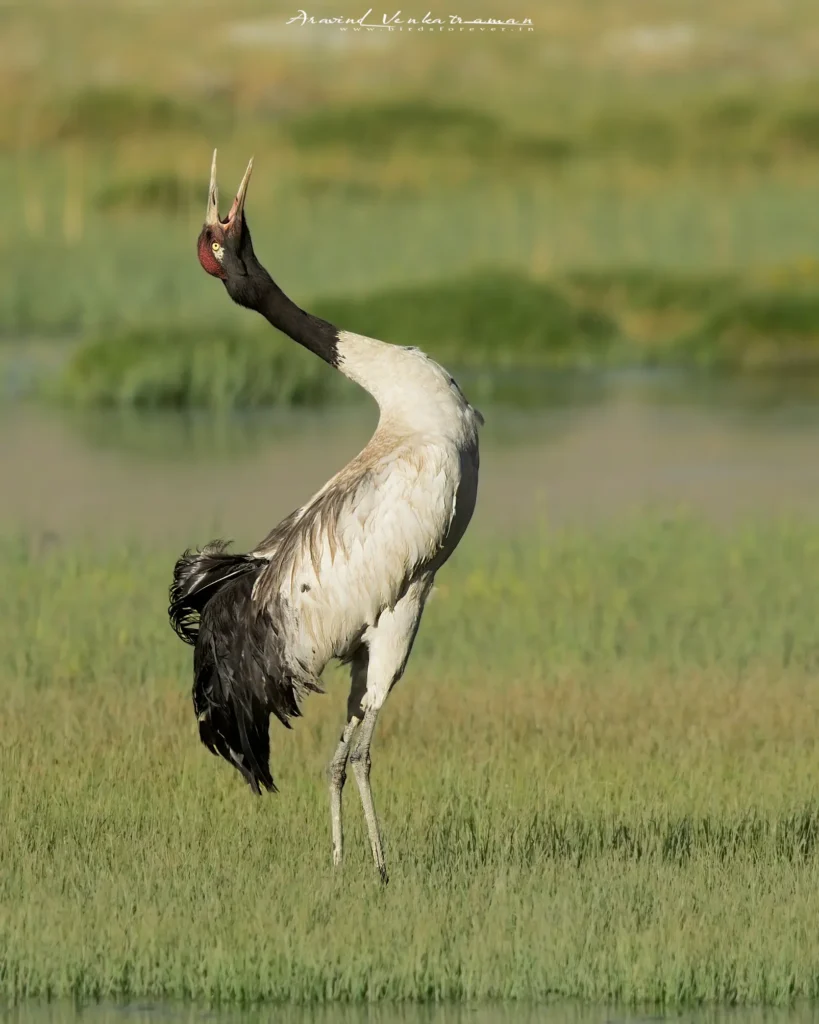
The Black-necked Crane is the sanctuary’s signature bird.
According to biodiversity documentation cited in the research brief, Changthang is recognised as India’s only known breeding area for this species. During the breeding season, pairs nest in shallow marshes where disturbance is minimal. Observing these cranes from a respectful distance helps ensure breeding birds are not disturbed.
Bar-headed Goose
Changthang is also an important breeding area for the Bar-headed Goose, a species famous for its migration across the Himalaya. The wetlands surrounding the sanctuary’s lakes provide nesting habitat during the summer months.
Other Birds You May Encounter
Depending on the season and location, visitors may also see:
- Ruddy Shelduck
- Brown-headed Gull
- Tibetan Snowcock
- Chukar
- Other migratory waterbirds associated with the sanctuary’s wetlands.
Major Lakes, Best Time to Visit, How to Reach and Visitor Information
Major Lakes and Wildlife Areas
The lakes of Changthang are far more than scenic viewpoints. Each supports a different combination of wetlands, grasslands, and surrounding mountains, creating habitats for mammals and birds adapted to the high-altitude cold desert. If you have limited time, understanding what makes each lake unique can help you plan a more rewarding itinerary.
Tso Moriri
Tso Moriri is the best base for most visitors exploring Changthang Wildlife Sanctuary.
Located beside the village of Korzok, this freshwater lake combines dramatic mountain scenery with wetlands that support breeding birds and grazing wildlife. Its accessibility and tourism infrastructure make it the centre of most wildlife-focused visits to the sanctuary.
Wildlife enthusiasts often spend time scanning the surrounding slopes and plains rather than focusing only on the lake itself. Nearby marshes attract waterbirds during the breeding season, while the surrounding landscape offers opportunities to observe species such as kiang, Himalayan marmots, and occasionally Tibetan gazelles.
Tso Kar
Tso Kar offers a different experience.
Instead of being known primarily for scenery, it is especially valued for its wetlands and birdlife. The shallow lakes, marshes, and surrounding grasslands create ideal conditions for breeding and migratory birds, making this one of the most rewarding areas for birdwatchers visiting Ladakh.
Photographers also appreciate the wide open landscapes, where changing light conditions can dramatically alter the appearance of the lake and surrounding mountains.
Pangong Lake
Although Pangong Lake is often associated with the broader Changthang region, visitors should understand that it has become famous primarily as a scenic destination rather than a dedicated wildlife-viewing location.
Travellers combining Pangong with Tso Moriri and Tso Kar gain a broader understanding of the different landscapes that define eastern Ladakh.
Hanle Plains
Hanle is known for its vast open plains and relatively undisturbed landscapes.
The combination of grasslands and nearby wetlands makes it an important wildlife habitat. The openness of the terrain also allows visitors to scan long distances, improving the chances of spotting grazing mammals compared with more rugged mountain valleys.
Lake Comparison
| Feature | Tso Moriri | Tso Kar | Pangong Lake |
| Main attraction | Wildlife and freshwater lake | Wetlands and birdwatching | Scenic high-altitude lake |
| Best for | First-time visitors | Birdwatchers and photographers | Landscape photography |
| Nearby settlement | Korzok | Limited accommodation nearby | Multiple tourism bases outside the sanctuary |
| Habitat highlights | Wetlands, grasslands and mountains | Marshes and shallow wetlands | Large alpine lake with surrounding mountains |
Best Time to Visit Changthang Wildlife Sanctuary
The best time depends on what you hope to experience.
Most visitors travel during the warmer months, when roads are generally open and wildlife activity is easier to observe. Seasonal changes also influence bird breeding, photography conditions, and accessibility.
Season-by-Season Guide
| Season | What to Expect | Suitable For |
| Late Spring | Roads begin opening and temperatures become more comfortable. | General sightseeing and photography |
| Summer | Peak travel season with breeding birds and relatively easier access. | Wildlife, birdwatching and first-time visits |
| Early Autumn | Clear skies and fewer visitors. | Landscape photography and road trips |
| Winter | Severe weather and difficult access. | Experienced travellers only, subject to conditions |
Wildlife Viewing
Open grasslands and favourable weather during the warmer months generally provide the best opportunities for observing mammals.
Although wildlife can be present throughout the year, accessibility and weather are often the limiting factors rather than animal movements. Visitors should remember that sightings are always unpredictable.
Birdwatching
Summer is particularly rewarding because many wetlands become active breeding grounds for species such as the Black-necked Crane and Bar-headed Goose. Wetland habitats around Tso Moriri and Tso Kar are especially important during this period.
Photography
For photographers, the best images often come during the first and last hours of daylight.
Morning light can produce calm reflections on the lakes, while late afternoon highlights the colours and textures of the surrounding mountains. Strong midday sunlight at high altitude often creates harsh contrast, making early and late hours more suitable for both wildlife and landscape photography.
Photography Tip: Carry spare camera batteries. Cold temperatures can reduce battery performance, particularly during mornings and evenings.
How to Reach Changthang Wildlife Sanctuary
Most journeys begin in Leh, which serves as the main gateway to eastern Ladakh.
From Leh, travellers typically reach the sanctuary by road while combining destinations such as Tso Moriri, Korzok, Hanle, or Tso Kar into a multi-day itinerary. The exact route depends on current road conditions and the destinations included in the trip.
Because of the long driving distances and high altitude, most visitors travel using private vehicles or organised tours rather than public transport.
Acclimatisation Before Travelling
Before heading towards Changthang, spend adequate time acclimatising in Leh.
Ascending too quickly increases the likelihood of altitude sickness, particularly because many destinations within the sanctuary lie above 4,500 metres. Staying hydrated, avoiding strenuous activity immediately after arrival, and recognising early symptoms of altitude illness are important parts of safe travel.
Permits, Rules and Visitor Information
Permit requirements for eastern Ladakh can change over time.
Before travelling, visitors should verify the latest requirements through official authorities or their tour operator rather than relying on outdated online information. The research brief identifies permits as an important planning consideration but also advises using current official guidance for the latest rules.
Where to Stay
Most visitors choose Korzok when exploring the Tso Moriri region because it provides accommodation options close to one of the sanctuary’s principal wildlife areas. Other overnight stops depend on the itinerary and destinations included in the trip.
Responsible Wildlife Watching
Changthang’s ecosystems are both fragile and slow to recover from disturbance.
Follow these simple practices during your visit:
- Observe wildlife from a respectful distance.
- Never approach nesting birds for photographs.
- Stay on established roads and tracks.
- Avoid creating noise near wetlands.
- Do not feed wild animals.
- Leave no litter behind.
- Respect local communities and grazing areas.
Responsible Tourism Tip: Wildlife viewing is most rewarding when animals behave naturally. Giving them space protects both the species and the experience for future visitors.
Conservation, Recent Updates, Suggested Itinerary, Common Mistakes, FAQs and Conclusion
Why Changthang Wildlife Sanctuary Is Important for Conservation
Changthang Wildlife Sanctuary is more than a scenic destination. It protects one of India’s largest high-altitude cold-desert ecosystems, where wetlands, grasslands, mountain slopes, and alpine lakes support wildlife that is specially adapted to extreme conditions. Many of these species have limited distributions and depend on intact habitats to survive.
The sanctuary is also significant because it lies at the meeting point of the Palearctic and Oriental biogeographic regions, creating a unique combination of habitats and species. Its wetlands provide breeding grounds for high-altitude birds, while the surrounding plains and mountains support mammals that are rarely found elsewhere in India.
The Role of the Changpa Community
The Changthang landscape is not an untouched wilderness. It has long been home to the Changpa, a nomadic pastoral community whose traditional lifestyle revolves around livestock grazing in this high-altitude environment. Their presence reflects the long-standing relationship between people and the cold-desert ecosystem.
Modern conservation efforts increasingly recognise the importance of balancing wildlife protection with the livelihoods of local communities. The research brief highlights community conservation as an important aspect of managing this landscape.
Conservation Challenges
Like many protected areas, Changthang faces ongoing conservation challenges. These include balancing habitat protection with local habitation, infrastructure development, tourism, and other land-use needs. The sanctuary’s fragile wetlands are particularly sensitive because vegetation grows slowly and recovery from disturbance can take many years.
For visitors, responsible behaviour—such as staying on designated roads, avoiding disturbance to nesting birds, and respecting wildlife viewing distances—contributes directly to protecting this ecosystem.
Recent Boundary Changes Explained
One of the most important recent developments affecting Changthang Wildlife Sanctuary is the 2025 rationalisation of its protected-area boundaries.
According to the research brief, Ladakh approved revised sanctuary maps based on recommendations from the Wildlife Institute of India. Following this rationalisation, the sanctuary’s official area is reported as 9,695 square kilometres.
Why Do Different Sources Mention Different Sizes?
Visitors often encounter conflicting figures for the sanctuary’s area.
Older articles and websites may refer to substantially smaller figures because they were published before the 2025 boundary revision or used different interpretations of the protected area. Rather than assuming one figure is “wrong,” it is helpful to understand that the sanctuary’s legal boundaries have changed over time.
For clarity, this guide uses the most recent officially reported area while acknowledging that older references remain widely available online.
Expert Tip: When researching any protected area, always check whether recent notifications or boundary revisions have been issued. Older travel articles may no longer reflect the current protected area.
Suggested Itinerary
Option 1: Two-Day Visit
Suitable for travellers already exploring eastern Ladakh.
Day 1
- Travel from Leh after adequate acclimatisation.
- Reach Korzok and Tso Moriri.
- Spend the afternoon observing birds and wildlife around the lake.
Day 2
- Early morning wildlife viewing.
- Explore nearby wetlands and surrounding landscapes.
- Return via the planned road route or continue towards other destinations in eastern Ladakh.
Option 2: Three-Day Visit
Recommended for visitors with a stronger interest in wildlife and photography.
Day 1
- Leh to Korzok.
- Evening photography around Tso Moriri.
Day 2
- Wildlife watching around Tso Moriri.
- Visit Tso Kar wetlands.
Day 3
- Explore additional areas such as Hanle (depending on route and travel plans).
- Return towards Leh or continue an extended Ladakh circuit.
Common Mistakes Visitors Make
Expecting Guaranteed Snow Leopard Sightings
Snow leopards occur within the sanctuary, but sightings are rare. Planning your trip solely around seeing one often leads to unrealistic expectations.
Ignoring Acclimatisation
Many visitors underestimate the effects of travelling above 4,500 metres. Spending time acclimatising in Leh before entering Changthang is one of the most important steps for a safe journey.
Focusing Only on Tso Moriri
Tso Moriri is a major highlight, but wetlands, grasslands, and surrounding valleys contribute equally to the sanctuary’s ecological importance.
Disturbing Nesting Birds
Approaching breeding Black-necked Cranes or Bar-headed Geese for photographs can disrupt nesting behaviour. Observing from a distance is both safer and more ethical.
Confusing the Plateau with the Sanctuary
The Changthang Plateau is a much larger geographical region, while Changthang Wildlife Sanctuary is the legally protected conservation area within Indian territory.
Frequently Asked Questions
Where is Changthang Wildlife Sanctuary?
It is located in eastern Ladakh on the Indian part of the Changthang Plateau.
What is the best time to visit?
The warmer months generally provide the easiest road access and the best opportunities for wildlife viewing and birdwatching.
Can visitors see snow leopards?
Snow leopards inhabit the sanctuary, but sightings are uncommon and should never be expected on a routine visit.
Is Tso Moriri inside the sanctuary?
Yes. Tso Moriri is one of the sanctuary’s best-known lakes and an important centre for wildlife tourism.
Why is the Black-necked Crane important?
Changthang is recognised as India’s only known breeding area for the Black-necked Crane according to the biodiversity documentation referenced in the research brief.
Are permits required?
Permit requirements can change over time. Visitors should verify the latest rules with official authorities or their tour operator before travelling.
How many days should I spend in Changthang?
A two-day trip covers the main highlights, while three days provide more time for wildlife observation, photography, and exploring multiple wetlands.
Is Changthang suitable for families?
Yes, provided travellers are well acclimatised, prepared for high-altitude conditions, and comfortable with long road journeys.
Conclusion
Changthang Wildlife Sanctuary offers a very different wildlife experience from India’s forest reserves. Its appeal lies not in dense vegetation or frequent sightings of large animals, but in vast open landscapes where wetlands, alpine lakes, and mountain plains support an extraordinary community of wildlife adapted to life at extreme altitude.
Visitors who arrive with realistic expectations, allow time for acclimatisation, and explore beyond the famous lakes often gain a much deeper appreciation of this unique landscape. Whether your interest is birdwatching around Tso Kar, photographing the changing light at Tso Moriri, or simply understanding one of India’s most significant cold-desert ecosystems, Changthang rewards slow travel and careful observation.
Rather than trying to “tick off” wildlife sightings, approach the sanctuary as a living high-altitude landscape where conservation, local communities, and nature remain closely connected. That perspective will make your visit far more meaningful than any single photograph or species checklist.
“Large herds of kiang often graze across Changthang’s open plains, where the lack of trees makes them surprisingly easy to spot even from several hundred metres away.”
- what kiang actually do
- how Himalayan marmots behave
- where bharal prefer to graze
- why marshes attract cranes
- how morning light affects bird activity
- why wind matters
- why Tso Moriri is freshwater
- why wetlands surround it
- why Korzok became the tourism base
- why photographers stay overnight
- how bird activity changes through the day
During summer, Himalayan marmots are often among the first mammals visitors notice. They frequently stand upright near their burrows, giving loud alarm calls before disappearing underground when vehicles approach.
Wetlands remain productive even when surrounding grasslands dry out, making them essential breeding habitat for cranes, geese and numerous migratory birds.
Don’t expect wildlife to appear beside the road simply because you’re inside a sanctuary. Changthang covers thousands of square kilometres, and even common mammals can be widely dispersed depending on grazing conditions.
- Black-necked Crane in India
- Snow Leopard in India
- Birdwatching in Ladakh
- Tso Moriri Guide
- Tso Kar Guide
- Pangong Lake Guide
Himalayas : Topics Cluster
- Himalayan Wildlife Comprehensive Guide
- Wildlife in Ladakh
- Himalayan Pheasants
- Raptors of Himalayas
- Wildlife in Sikkim
- Wildlife in Arunachal Pradesh
- Wildlife in Uttarakhand
- Wildlife in Himachal Pradesh
- Wildlife in Jammu and Kashmir
- Himalayan Black Bear
- Snow Leopard
- Kibber Wildlife Sanctuary Guide
- Great Himalayan National Park
- Khangchendzonga National Park
- Eastern Himalayas