
Discover the birds of India’s mangrove forests, the best birdwatching destinations, rare species, travel tips, seasons, and conservation insights.
Mangrove Birds of India: Where Tides, Forests, and Birdlife Meet
India’s mangrove forests are among the country’s most rewarding habitats for birdwatching. While many people associate these tidal forests with Bengal Tigers or saltwater crocodiles, they also support an impressive variety of resident and migratory birds. Kingfishers, herons, egrets, storks, shorebirds, raptors, and several habitat specialists depend on mangroves for feeding, nesting, or shelter during migration.
The Indian Sundarbans, the world’s largest mangrove ecosystem, is the best-known destination for mangrove birding. Surveys from the Zoological Survey of India have documented 428 bird species in the Indian Sundarbans alone, highlighting the ecological importance of these tidal forests. Other mangrove systems, including Bhitarkanika in Odisha, Pichavaram in Tamil Nadu, and coastal mangroves along Karnataka, Maharashtra, Goa, and Puducherry, also provide valuable habitat for diverse bird communities.
Unlike inland forests or freshwater wetlands, mangroves sit at the meeting point of land and sea. Daily tidal cycles continually reshape mudflats, creeks, and shallow pools, creating feeding opportunities that attract different groups of birds throughout the day. This changing landscape means that birdwatchers may encounter fish-eating kingfishers along tidal channels, waders probing exposed mudflats at low tide, or raptors scanning open waterways from tall mangrove trees.
For travellers, mangrove birdwatching offers more than simply adding species to a checklist. It provides an opportunity to observe how birds adapt to one of India’s most dynamic ecosystems, where freshwater, seawater, vegetation, and tides interact continuously. Understanding these ecological relationships also helps visitors appreciate why healthy mangrove forests are essential not only for birds but also for coastal protection, fisheries, and biodiversity conservation.
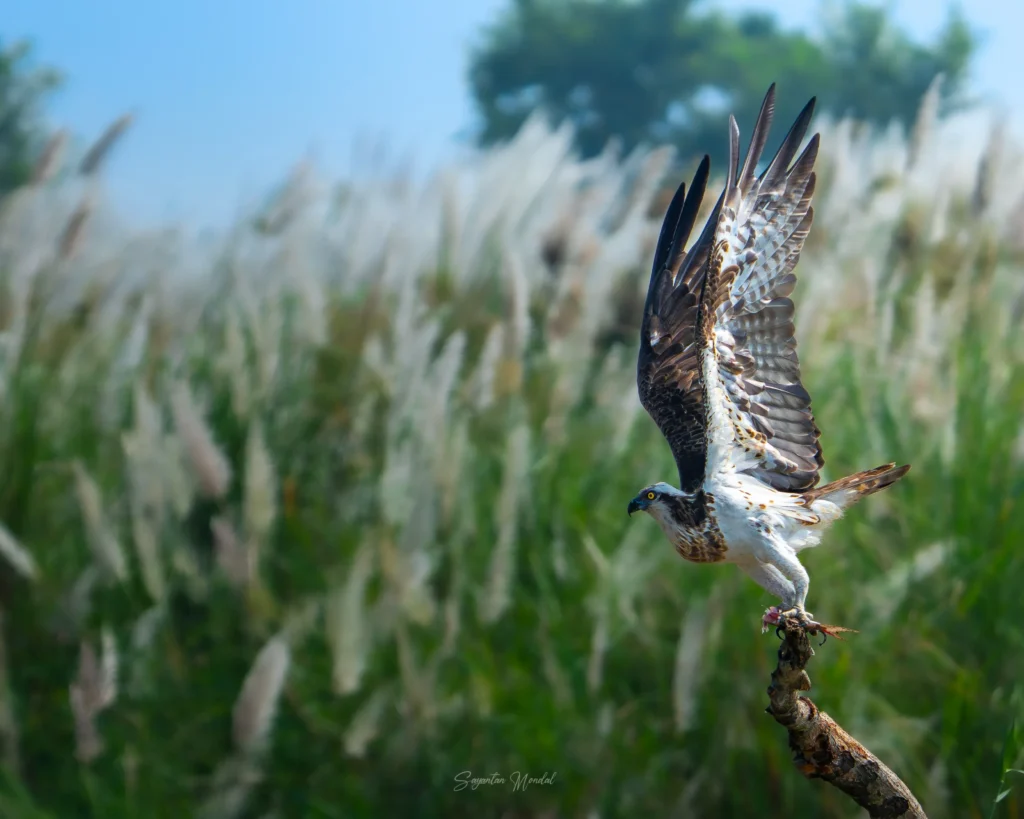
Field Note : Ospreys are commonly found in coastal areas and wetlands including mangroves.
Why Mangrove Forests Are Among India’s Best Bird Habitats
What Makes Mangroves Different from Other Wetlands?
Mangroves occupy the intertidal zone, where coastal land is regularly flooded and exposed by the tides. Trees growing in these conditions have adapted to saline water, oxygen-poor soils, and constantly shifting sediments. Their distinctive root systems slow water movement, trap sediments, and create a complex network of sheltered channels and mudflats.
For birds, this habitat provides several advantages:
- A steady supply of fish, crabs, molluscs, and other aquatic prey.
- Safe roosting and nesting sites above tidal waters.
- Feeding areas that change with each tide, supporting different bird groups throughout the day.
- Resting habitat for migratory birds travelling along major flyways.
Because mangroves combine features of forests, estuaries, mudflats, and coastal wetlands, they support a wider variety of birds than many single habitat types.
How Tides Shape Bird Activity
One of the defining features of mangrove birdwatching is the influence of the tide. Unlike many inland birding locations, the best time to observe birds is often linked as much to tidal conditions as to the time of day.
At low tide, exposed mudflats become feeding grounds for shorebirds, sandpipers, redshanks, curlews, and other waders searching for invertebrates hidden in the soft sediment. As the tide rises, these feeding areas disappear beneath the water, prompting birds to move to higher ground or forage along creek edges. Fish-eating species such as kingfishers, herons, and egrets often remain active around tidal channels throughout the cycle, taking advantage of fish concentrated by changing water levels.
For visitors, checking local tide schedules before a boat excursion can significantly improve birdwatching opportunities, particularly in destinations such as the Sundarbans and Bhitarkanika, where tidal movements strongly influence wildlife activity.
Resident, Migratory, and Mangrove Specialist Birds
Not every bird seen in a mangrove forest depends entirely on mangroves. Understanding the different ecological groups helps explain the remarkable diversity found in these coastal habitats.
Resident birds live in mangrove ecosystems throughout the year. Many kingfishers, herons, egrets, and other waterbirds breed and feed within these habitats.
Migratory birds arrive during the cooler months from Central Asia and other northern breeding areas. They use mangrove mudflats and estuaries as seasonal feeding grounds before continuing their migrations or overwintering in India.
Mangrove specialists are species that show a strong association with tidal forests. Birds such as the Brown-winged Kingfisher and Mangrove Pitta are especially sought after by experienced birdwatchers because their distribution is closely linked to healthy mangrove ecosystems. Rare species, including the Masked Finfoot and White-eared Night Heron, further highlight the conservation value of India’s remaining mangrove forests.
Field Note: Many of the most memorable sightings occur not in dense mangrove interiors but along creek edges, open mudflats, and natural canopy gaps, where birds have better access to food and observers have clearer views.
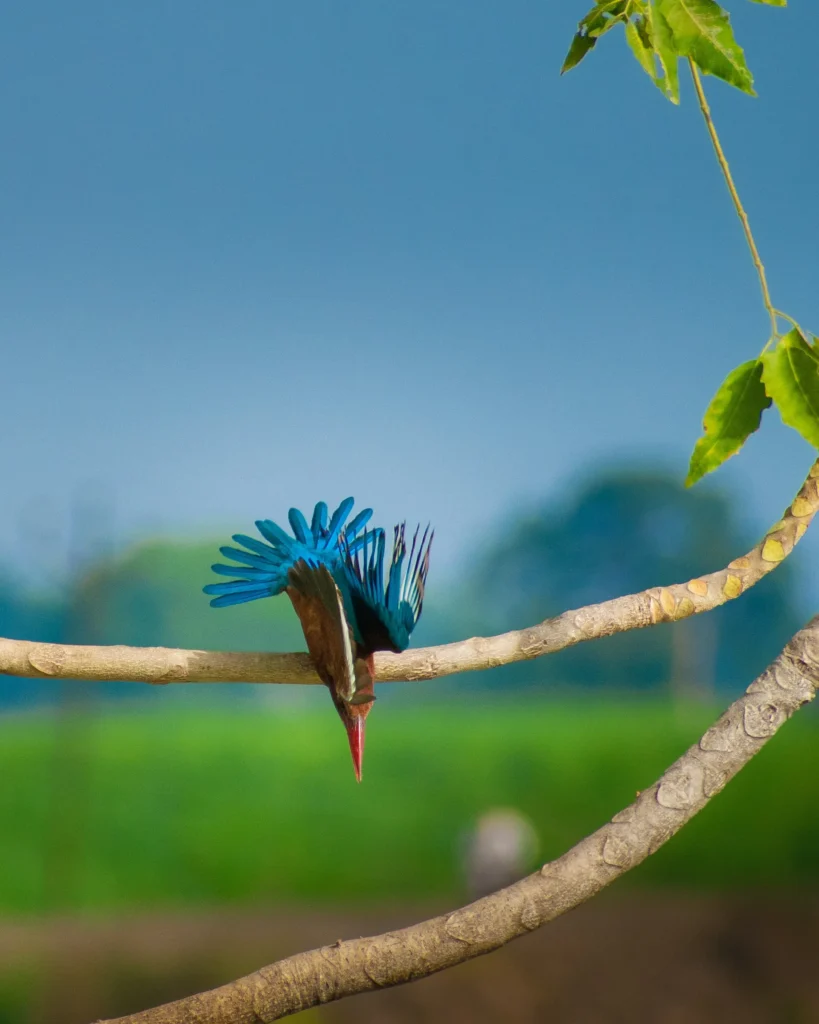
Image : Numerous kingfisher species are found in the mangroves regions of India.
Major Mangrove Birding Regions of India
India’s mangrove forests vary greatly in size, landscape, and birdlife. Some, like the Sundarbans, are vast tidal wildernesses extending across thousands of square kilometres, while others are smaller estuarine forests that still support impressive bird diversity. Choosing the right destination depends on your interests, whether you hope to see rare mangrove specialists, photograph kingfishers, observe migratory shorebirds, or simply enjoy a peaceful day of birdwatching.
Comparison: India’s Major Mangrove Birding Destinations
| Destination | State | Notable Birdlife | Best Season | What Makes It Special |
| Sundarbans | West Bengal | Brown-winged Kingfisher, Masked Finfoot, Mangrove Pitta, numerous herons, raptors and shorebirds | October–March | India’s largest and most species-rich mangrove ecosystem with 428 recorded bird species. |
| Bhitarkanika | Odisha | Kingfishers, storks, herons, migratory waterbirds, raptors | October–February | Extensive mangroves, tidal creeks and productive estuarine habitat. |
| Pichavaram | Tamil Nadu | Herons, egrets, kingfishers, migratory waders | November–February | Easily accessible mangrove channels suitable for boat birding. |
| Karnataka Mangroves | Karnataka | Waterbirds, shorebirds and seasonal migrants | October–May | Studies have documented high seasonal bird diversity in coastal mangroves. |
| Maharashtra & Goa Mangroves | Maharashtra & Goa | Kingfishers, herons, egrets, waders and estuarine birds | Winter | Important coastal bird habitats close to major cities. |
Sundarbans, West Bengal
For most birdwatchers, the Sundarbans is the first destination that comes to mind—and for good reason. As the world’s largest mangrove forest, shared between India and Bangladesh, it supports one of the richest bird communities found in any mangrove ecosystem. The Zoological Survey of India has documented 428 bird species from the Indian Sundarbans Biosphere Reserve, making it one of the country’s premier birding destinations.
The landscape consists of countless tidal rivers, narrow creeks, mudflats, salt marshes and dense mangrove islands. Each habitat attracts different birds depending on water levels and food availability.
Birdwatchers visit the Sundarbans hoping to find species such as:
- Brown-winged Kingfisher
- Ruddy Kingfisher
- Black-capped Kingfisher
- Collared Kingfisher
- Mangrove Pitta
- Masked Finfoot
- White-eared Night Heron
- Buffy Fish Owl
- Lesser Adjutant
- Osprey
- Numerous herons, egrets and migratory shorebirds.
Recent bird festivals and surveys continue to highlight the area’s importance. Bird monitoring programmes recorded 154 species during the 2025 Sundarbans Bird Festival and 168 species during surveys in 2026, reflecting ongoing scientific interest and active conservation monitoring. These figures represent observations during the surveys rather than the region’s total bird diversity.
Why Birders Choose the Sundarbans
- Highest documented bird diversity among India’s mangrove systems.
- Good chances of seeing multiple kingfisher species during one visit.
- Excellent habitat for both resident and migratory birds.
- Opportunities to combine birdwatching with broader wildlife observation.
Expert Tip: In the Sundarbans, experienced guides often plan boat trips around tidal movements. Low tide can expose extensive mudflats for waders, while rising tides may concentrate fish along creek edges where kingfishers and herons become more active.
Bhitarkanika, Odisha
Bhitarkanika National Park protects one of India’s largest remaining mangrove ecosystems outside the Sundarbans. Its network of tidal rivers, creeks and estuaries creates excellent habitat for waterbirds throughout the year, while winter migration brings additional species to the area.
Although Bhitarkanika is widely known for its saltwater crocodiles, birdwatchers are equally drawn to its productive wetlands and mangrove forests.
Birds commonly associated with Bhitarkanika include:
- Kingfishers
- Herons
- Egrets
- Storks
- Raptors
- Migratory waterbirds and shorebirds.
The combination of freshwater influence and tidal mangrove habitat supports a diverse mix of species that use different parts of the landscape for feeding and nesting.
Best Time to Visit
The cooler months from October to February generally offer the most comfortable weather and coincide with the arrival of many migratory birds.
Pichavaram and the Tamil Nadu Coast
Pichavaram, located between the Vellar and Coleroon estuaries, offers a very different birding experience from the Sundarbans. Instead of vast tidal rivers, visitors explore a maze of relatively narrow waterways lined with mangrove trees.
These sheltered channels provide habitat for:
- Kingfishers
- Herons
- Egrets
- Cormorants
- Migratory waders
- Other coastal wetland birds.
Because much of the birdwatching is conducted by small boat, Pichavaram is particularly attractive to photographers looking for close views without travelling deep into a large wilderness.
Family Travel Tip
Pichavaram’s shorter boat routes and relatively easy access make it a practical introduction to mangrove birdwatching for families and first-time visitors.
West Coast Mangroves: Karnataka, Maharashtra and Goa
India’s west coast supports numerous smaller mangrove systems scattered along estuaries and river mouths. Although individually much smaller than the Sundarbans, these habitats remain important for resident birds and winter migrants.
Research in Kundapura, Karnataka, documented 79 bird species, with the highest diversity recorded between October and May. The study highlights how even relatively modest mangrove forests can provide valuable habitat when tidal creeks, mudflats and surrounding wetlands remain intact.
Typical birds include:
- Egrets
- Herons
- Kingfishers
- Sandpipers
- Redshanks
- Ospreys
- Other estuarine and coastal birds.
Mangroves around Mumbai, Navi Mumbai, Thane Creek and Goa also support significant birdlife, especially during the winter migration season, making them worthwhile destinations for birdwatchers who cannot travel to larger eastern mangrove systems.
Smaller Mangrove Systems Worth Knowing
Several lesser-known mangrove habitats also contribute to India’s coastal bird diversity.
The Karaikal mangroves in Puducherry have documented 34 bird species despite their relatively small size, demonstrating that even fragmented mangrove patches can provide valuable habitat for resident and migratory birds.
Across India’s coastline, these smaller mangrove forests serve as important stopover sites for migratory birds and feeding grounds for local waterbirds. They also reinforce an important conservation lesson: protecting many small mangrove habitats can be just as valuable as safeguarding a few large ones, particularly for species that move along the coast during seasonal migrations.
Birds You Can See in Indian Mangrove Forests
Mangrove forests support a wide variety of birds because they combine features of forests, estuaries, tidal creeks, mudflats, and coastal wetlands. Some species spend their entire lives in these habitats, while others visit seasonally or use mangroves as important feeding grounds during migration. Understanding these groups makes birdwatching more rewarding than simply working through a checklist.
Kingfishers: The Signature Birds of Indian Mangroves
If one group defines Indian mangrove birdwatching, it is the kingfishers. Their dependence on tidal creeks, shallow waterways, and abundant fish makes mangroves ideal habitat. The Sundarbans, in particular, is one of the best places in India to observe several kingfisher species during a single visit.
Brown-winged Kingfisher
The Brown-winged Kingfisher is one of the most sought-after birds in the Indian Sundarbans because of its close association with mature mangrove forests. Unlike more widespread kingfishers, it is considered a mangrove specialist, making every sighting especially rewarding for experienced birdwatchers.
Ruddy Kingfisher
With its rich chestnut plumage and bright red bill, the Ruddy Kingfisher is another highlight of eastern mangrove forests. It often remains hidden within dense vegetation, so patience and quiet observation are essential.
Black-capped Kingfisher
This striking species is easier to identify thanks to its contrasting black head, white collar, and bright blue wings. It frequently hunts from exposed branches overlooking tidal channels, where it dives for fish and crabs.
Collared Kingfisher
The Collared Kingfisher is well adapted to coastal environments and is regularly encountered around mangrove edges, mudflats, and estuaries. Unlike some kingfishers that rely mainly on fish, it also feeds on crabs, insects, and other small prey found in intertidal habitats.
Photography Tip: Early morning light often falls directly along tidal creeks, providing good opportunities to photograph perched kingfishers before boat traffic increases. Avoid sudden movements, as many species are alert and easily disturbed.
Herons, Egrets and Storks
These long-legged waterbirds are among the easiest birds to observe in mangrove ecosystems. They exploit shallow water, exposed mud, and creek margins where fish, crustaceans, and amphibians become concentrated by the tides.
Common groups include:
- Herons
- Egrets
- Storks
- Bitterns
- Ibises in suitable adjoining wetlands.
Many of these birds remain motionless for long periods before striking rapidly at passing prey. During falling tides, creek mouths and shallow pools often become particularly productive feeding sites.
Lesser Adjutant
Among the larger birds associated with eastern mangroves, the Lesser Adjutant is especially notable. This globally threatened stork is occasionally recorded in mangrove landscapes, particularly where extensive wetlands surround tidal forests.
White-eared Night Heron
The White-eared Night Heron is one of the rarest birds reported from the Sundarbans and is seldom encountered. Its presence reflects the ecological importance of preserving large, undisturbed mangrove habitats.
Shorebirds and Waders
The exposed mudflats revealed at low tide attract some of the greatest concentrations of birds in mangrove ecosystems. These open feeding grounds are rich in worms, molluscs, crustaceans, and other invertebrates hidden beneath the soft sediment.
Birdwatchers may encounter:
- Common Redshank
- Eurasian Curlew
- Sandpipers
- Other migratory waders and shorebirds.
Many of these species breed thousands of kilometres away and spend the winter along India’s coastline before returning north during spring migration.
Why Low Tide Matters
Low tide exposes extensive feeding areas that remain underwater for much of the day. As a result, shorebird activity often peaks during this period, making tide planning just as important as choosing the right season.
Raptors
Although mangroves are best known for waterbirds, several birds of prey regularly hunt over these tidal landscapes.
One of the most familiar is the Osprey, a specialist fish-eating raptor that patrols rivers, estuaries, and coastal waters before plunging into the water to catch fish.
Other raptors may use mangroves for:
- Hunting fish
- Searching mudflats for prey
- Roosting in tall mangrove trees
- Nesting near estuarine habitats where disturbance is limited.
Watching an Osprey dive successfully into a tidal creek is often one of the memorable moments of a mangrove birding trip.
Forest Birds of the Mangroves
Not every bird in a mangrove depends on open water. Dense vegetation also provides habitat for woodland species that forage within the canopy or lower branches.
Mangrove Pitta
The Mangrove Pitta is one of India’s best-known mangrove specialists. It is prized by birdwatchers because of its colourful plumage and strong association with intact tidal forests. Its secretive behaviour means sightings are never guaranteed, but it remains one of the signature birds of the Sundarbans.
Buffy Fish Owl
Often active around creeks and forest edges, the Buffy Fish Owl is another species linked with mature mangrove habitats. It is generally easier to detect at dawn or dusk when it becomes more active.
Rare and Threatened Species
One of the greatest attractions of Indian mangrove birding is the possibility—however remote—of encountering species that are scarce elsewhere.
Notable examples include:
- Masked Finfoot
- White-eared Night Heron
- Brown-winged Kingfisher
- Mangrove Pitta
- Lesser Adjutant.
Most visitors should view these birds as fortunate sightings rather than guaranteed targets. Their scarcity reflects specialised habitat requirements and, in some cases, declining populations linked to habitat degradation. For many birdwatchers, simply knowing these species survive in India’s mangroves adds depth and meaning to a visit.
Bird Groups at a Glance
| Bird Group | Representative Species | Typical Habitat |
| Kingfishers | Brown-winged, Ruddy, Black-capped, Collared | Tidal creeks, waterways, mangrove edges |
| Herons & Egrets | Various herons, egrets, White-eared Night Heron | Creek margins, shallow pools, mudflats |
| Storks | Lesser Adjutant | Wetlands adjoining mangroves |
| Shorebirds | Redshank, Curlew, Sandpipers | Exposed mudflats at low tide |
| Raptors | Osprey | Rivers, estuaries, open waterways |
| Forest Birds | Mangrove Pitta, Buffy Fish Owl | Dense mangrove forest and canopy |
Field Note: While rare species often receive the most attention, much of the enjoyment of mangrove birdwatching comes from observing common birds using the tides. Watching herons stalk fish, kingfishers dive into narrow creeks, or waders spread across newly exposed mudflats offers valuable insight into how these ecosystems function.
Best Time for Birdwatching in Indian Mangroves
Unlike many forest birding destinations, successful birdwatching in mangrove ecosystems depends on both the season and the tides. Planning your visit around these natural cycles can significantly improve the variety of birds you see and the quality of your observations.
The Best Season to Visit
For most Indian mangrove destinations, October to March offers the most rewarding birdwatching. Cooler temperatures make field conditions more comfortable, and many migratory birds arrive from their northern breeding grounds during this period.
Studies from Karnataka’s mangroves found higher bird diversity between October and May, while recent bird surveys and festivals in the Sundarbans have also been conducted during the winter months, reflecting this period’s importance for avifauna.
Seasonal Bird Activity
| Season | What to Expect |
| October–November | Arrival of many migratory birds and pleasant weather. |
| December–February | Peak birdwatching season with a mix of resident and migratory species. |
| March–May | Many resident birds remain active, although some migrants begin departing. |
| Monsoon | Birdwatching is possible but weather, high water levels and access may be more challenging. |
Because local weather and migration patterns vary between regions, seasonal observations should be treated as general guidance rather than fixed rules.
Why Tide Timing Matters
A visitor who ignores the tide may miss many of the day’s best birding opportunities.
Mangroves are constantly reshaped by rising and falling tides, changing where birds feed throughout the day. When the tide recedes, extensive mudflats emerge, attracting shorebirds, sandpipers, curlews and redshanks searching for worms, molluscs and crustaceans. As water returns, these feeding grounds disappear and many birds shift towards creek edges or higher resting areas.
Kingfishers, herons and egrets often remain active throughout the tidal cycle, but their feeding locations also change as fish become concentrated in different parts of the waterways.
Expert Tip: Before booking a boat safari, ask your guide whether departure times are planned around the tide. A well-timed excursion can provide noticeably better birdwatching than one scheduled without considering tidal conditions.
Planning a Mangrove Birdwatching Trip
A little preparation can make the difference between simply spotting birds and enjoying a productive day in the field.
Essential Equipment
You do not need specialist gear, but a few basic items will greatly improve your experience.
Recommended essentials:
- Binoculars suitable for birdwatching.
- A field guide or bird identification app.
- Camera with a telephoto lens if photography is a priority.
- Hat and sunscreen for long boat trips.
- Drinking water.
- Insect repellent.
- Comfortable clothing in muted colours.
- Lightweight waterproof bag for electronics.
If travelling by boat, keep equipment protected from occasional spray and avoid leaving cameras exposed to saltwater.
Photography Tips
Mangrove photography presents unique opportunities but also a few challenges.
Early morning usually provides softer light and calmer conditions, while the low angle of the sun can illuminate birds perched along creek edges. Boat movement, however, often makes photography more demanding than in terrestrial forests.
For better results:
- Keep shutter speeds high when photographing from boats.
- Watch for birds perched on exposed roots or branches before approaching.
- Avoid sudden movements that may flush birds.
- Photograph natural behaviour rather than trying to provoke a response.
- Give nesting birds plenty of space.
Good bird photography depends as much on patience as on equipment.
Responsible Birdwatching
Mangroves are sensitive ecosystems where disturbance can affect breeding birds and other wildlife.
Responsible visitors should:
- Follow designated boating routes where applicable.
- Maintain a respectful distance from birds.
- Avoid using recorded bird calls to attract wildlife.
- Never attempt to approach nests.
- Keep noise to a minimum.
- Take all litter back with you.
- Follow instructions provided by local guides and protected-area staff.
These simple practices help ensure that wildlife remains undisturbed while allowing future visitors to enjoy the same habitats.
Responsible Tourism Tip: Local guides often understand bird behaviour, tidal conditions and sensitive nesting areas far better than first-time visitors. Listening to their advice benefits both your birdwatching experience and the birds themselves.
Family Travel Advice
Mangrove birdwatching can be an enjoyable activity for families when expectations match the destination.
For visitors travelling with children:
- Choose shorter boat excursions where available.
- Carry sufficient drinking water and sun protection.
- Encourage children to observe bird behaviour rather than simply counting species.
- Bring a simple bird checklist to make sightings more engaging.
- Allow time for breaks, especially during warmer weather.
Destinations with relatively easy boat access, such as Pichavaram, may be more suitable for families with younger children, while longer expeditions in the Sundarbans are often better suited to older children with an interest in wildlife.
Practical Birdwatching Checklist
Before leaving for your trip, make sure you have:
- □ Checked the best season for your destination.
- □ Reviewed local tide timings.
- □ Packed binoculars.
- □ Charged camera batteries.
- □ Carried extra memory cards.
- □ Packed drinking water.
- □ Worn neutral-coloured clothing.
- □ Confirmed boat timings where applicable.
- □ Downloaded an offline bird identification guide if mobile coverage is limited.
Decision Guide: Which Mangrove Destination Should You Choose?
| If your priority is… | Consider visiting… |
| The greatest bird diversity | Sundarbans |
| Mangrove specialist birds | Sundarbans |
| Crocodiles and birds together | Bhitarkanika |
| Easy boat-based birdwatching | Pichavaram |
| Short coastal birding trips | Goa or Maharashtra mangroves |
| Winter migratory birds | Most Indian mangrove regions between October and February |
No single destination offers every species. Choosing the right location depends on your interests, available time and travel plans rather than simply aiming for the longest species list.
Conservation Challenges Facing Mangrove Birds
India’s mangrove forests are among the country’s most productive coastal ecosystems, but they are also among its most vulnerable. Healthy mangroves provide food, nesting sites, shelter from predators, and safe stopover habitat for migratory birds. When these habitats decline, bird populations are often affected alongside many other forms of wildlife.
Habitat Loss and Fragmentation
Mangrove forests naturally change over time, but human activities have accelerated habitat loss in many coastal regions.
According to the research reviewed for this article, the major pressures include:
- Coastal development.
- Habitat fragmentation.
- Pollution.
- Changes in freshwater flow.
- Disturbance to sensitive nesting and feeding areas.
Fragmented mangrove patches may still support birds, but larger, connected forests generally provide more stable breeding and feeding habitat, particularly for specialist species.
Climate Change and Rising Sea Levels
Mangroves occupy the narrow zone between land and sea, making them especially sensitive to environmental change.
Current conservation concerns include:
- Sea-level rise.
- Changing salinity.
- Increased storm intensity.
- Altered tidal dynamics.
- Long-term changes in coastal ecosystems.
These changes can influence the availability of mudflats, shallow feeding areas, and nesting habitat used by many birds.
Because migration patterns and habitat conditions may shift over time, long-term monitoring remains essential for understanding how bird communities respond to environmental change.
Why Mangrove Restoration Matters
Mangrove restoration is often discussed in the context of coastal protection, but its importance extends far beyond reducing erosion or buffering storms.
Restored mangrove habitats can help:
- Rebuild feeding areas for waterbirds.
- Improve habitat connectivity.
- Support migratory bird stopovers.
- Protect breeding sites.
- Maintain the ecological processes that sustain coastal biodiversity.
Recent conservation reports continue to emphasise that protecting existing mangroves is generally more effective than attempting to recreate lost habitats later.
What Recent Bird Surveys Tell Us
Recent monitoring demonstrates that India’s mangroves continue to support impressive bird diversity.
Highlights from the research include:
- The Indian Sundarbans has 428 documented bird species according to the Zoological Survey of India.
- The 2025 Sundarbans Bird Festival recorded 154 bird species during its survey period.
- Surveys in 2026 recorded 168 species, showing continued monitoring and strong avifaunal diversity.
- Studies from Kundapura, Karnataka documented 79 bird species, with diversity highest between October and May.
- Research from the Karaikal mangroves recorded 34 bird species, illustrating the value of even relatively small mangrove systems.
These figures come from different studies and survey periods and should not be interpreted as direct comparisons. Together, however, they highlight the ecological importance of India’s diverse mangrove habitats.
Common Mistakes Birdwatchers Make
Avoiding a few common errors can greatly improve both your experience and the welfare of the birds.
Visiting Without Checking Tide Timings
Many first-time visitors focus only on the weather or season. In mangroves, tidal conditions often have an even greater influence on bird activity.
Expecting to See Every Rare Species
Birds such as the Masked Finfoot or White-eared Night Heron are genuinely uncommon. Consider them fortunate sightings rather than guaranteed targets.
Ignoring Common Species
Some visitors concentrate entirely on finding rare birds and overlook the fascinating behaviour of more familiar kingfishers, herons, egrets, and waders that define everyday life in mangrove ecosystems.
Disturbing Wildlife for Better Views
Approaching nesting birds too closely, making loud noises, or attempting to flush birds for photographs causes unnecessary stress and can disrupt natural behaviour.
Underestimating the Coastal Environment
Sun exposure, humidity, insects, and boat movement are all part of mangrove birdwatching. Carrying water, sun protection, and suitable clothing makes the experience much more enjoyable.
Frequently Asked Questions
What are mangrove birds?
Mangrove birds are species that live in, feed within, or regularly use mangrove ecosystems. Some depend almost entirely on mangrove forests, while others visit seasonally or use them during migration.
Which Indian mangrove has the highest bird diversity?
Based on available published information, the Indian Sundarbans has the strongest documented bird diversity, with 428 recorded bird species reported by the Zoological Survey of India.
What is the best time to visit Indian mangroves for birdwatching?
For most destinations, October to March offers the best combination of pleasant weather and migratory bird activity, although local conditions and tides remain important.
Are mangroves good for migratory birds?
Yes. Many migratory shorebirds and waterbirds use mangrove mudflats, creeks, and estuaries as feeding and resting areas during their seasonal journeys.
Which kingfishers are associated with Indian mangroves?
Notable species include the Brown-winged Kingfisher, Ruddy Kingfisher, Black-capped Kingfisher, and Collared Kingfisher.
Is the Mangrove Pitta found in India?
Yes. The Mangrove Pitta is one of the best-known mangrove specialist birds associated with the Indian Sundarbans.
Why do birdwatchers pay attention to low tide?
Low tide exposes mudflats where many shorebirds feed, often making this the most productive time for observing waders and other feeding birds.
Are mangrove birds different from wetland birds?
Some are. Many wetland birds use mangroves, but certain species show a much stronger association with mangrove forests and are considered habitat specialists.
Can beginners enjoy mangrove birdwatching?
Absolutely. Even without targeting rare species, beginners can observe kingfishers, herons, egrets, cormorants, and many other birds while learning how tides shape wildlife behaviour.
How can visitors help protect mangrove birds?
Following local regulations, avoiding disturbance, supporting responsible tourism, and respecting sensitive habitats all contribute to the long-term conservation of mangrove ecosystems.
Conclusion
Mangrove forests may not always receive the same attention as India’s famous tiger reserves or mountain birding destinations, yet they rank among the country’s most important habitats for birdlife. Their constantly changing network of tidal creeks, mudflats, estuaries, and coastal forests supports an impressive mix of resident birds, winter migrants, and specialised species that are closely tied to healthy mangrove ecosystems.
For most travellers, the Sundarbans remains the premier destination because of its exceptional bird diversity and the possibility of encountering sought-after species such as the Brown-winged Kingfisher or Mangrove Pitta. However, places such as Bhitarkanika, Pichavaram, and the mangroves of Karnataka, Goa, Maharashtra, and Puducherry demonstrate that rewarding birdwatching is possible across India’s coastline. Each region offers a different combination of habitats, seasonal visitors, and birding experiences.
Successful mangrove birdwatching is less about chasing long species lists and more about understanding the rhythms of the habitat. By planning around the seasons, checking tide timings, observing birds responsibly, and appreciating the ecological role of mangroves, visitors gain a deeper understanding of one of India’s most dynamic natural environments.
Whether you are identifying your first kingfisher, photographing winter shorebirds, or searching for elusive mangrove specialists, these coastal forests offer opportunities to observe how birds adapt to a landscape shaped twice each day by the tides. Protecting these habitats will help ensure that future generations can continue to experience one of India’s richest and most distinctive birdwatching environments.
- Mangrove Birds India
- Sundarbans birds
- mangrove birdwatching
- kingfishers
- mangrove pitta
- migration
- conservation
If you only visit one mangrove forest in India, make it the Sundarbans. Its scale is impossible to appreciate from a map. As your boat moves through an endless maze of tidal creeks, you quickly understand why more than 400 bird species have been recorded here.
Brown-winged Kingfishers often remain motionless for several minutes before making a short, powerful dive into narrow creeks.
At low tide, Redshanks are usually among the first birds to spread across newly exposed mudflats, while egrets remain closer to the receding waterline.
Unlike several freshwater kingfishers that focus mainly on fish, the Collared Kingfisher readily hunts crabs, insects and small reptiles around exposed mangrove roots, making it well adapted to tidal forests.
Unlike freshwater wetlands, mangroves are flooded twice each day. Every falling tide exposes fresh feeding grounds, meaning bird activity changes continuously rather than remaining concentrated around permanent water bodies.