Discover the best places to see wild elephants in India, from Kabini to Kaziranga. Learn about peak seasons, herd movements, and safari planning tips.
Introduction & Ecological Foundations
Best Places to See Elephants in India: Top Safari Destinations, Best Time, and Travel Tips
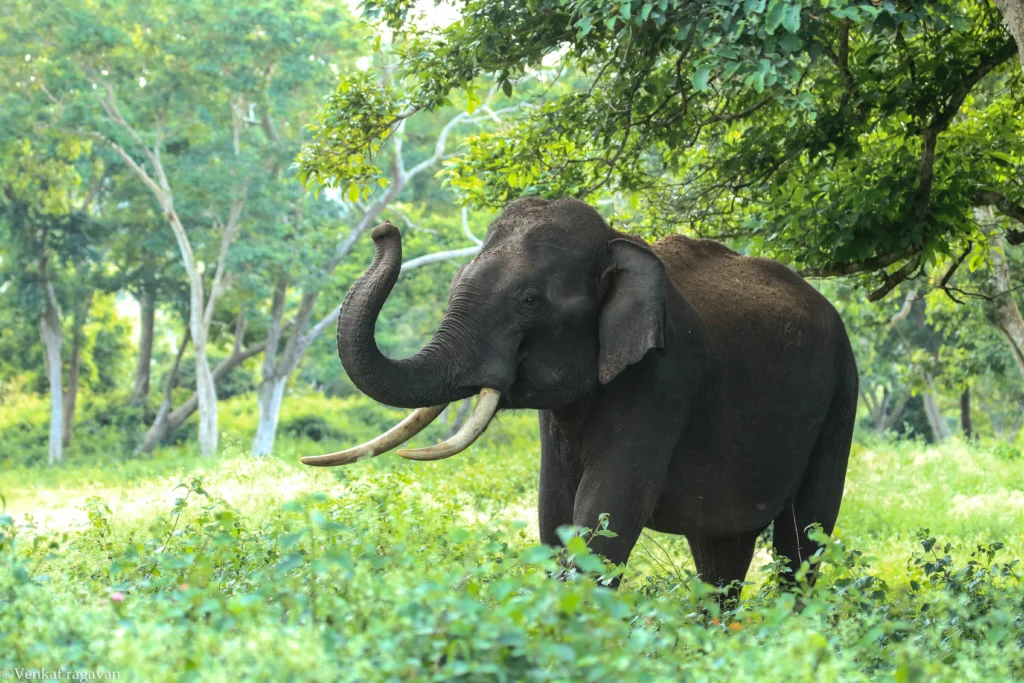
India is home to more than 60% of the world’s wild Asian elephants (Elephas maximus indicus). For wildlife enthusiasts, this makes the subcontinent the premier location on Earth to observe wild herds engaging in natural foraging, bathing, and social behaviors.
Planning a successful elephant safari requires looking beyond individual park boundaries. Elephants are wide-ranging megaherbivores whose daily and seasonal movements depend directly on water availability, forage density, and unbroken migratory corridors. While sightings are frequent in well-protected landscapes, they are never guaranteed. Choosing the right park requires an understanding of how seasons alter elephant distribution across river valleys, grasslands, and mixed deciduous forests.
What Makes India the Global Stronghold for Asian Elephants
India’s geographical diversity supports elephants across vastly distinct terrains, ranging from the moist deciduous forests of the Western Ghats to the alluvial floodplains of the Brahmaputra and the sal forests of the Himalayan foothills.
CORE INDIAN ELEPHANT REGIONS
│
┌───────────────────────────┼───────────────────────────┐
▼ ▼ ▼
Western Ghats Brahmaputra Floodplains Shivalik & Terai
(Karnataka, Kerala, (Assam: Kaziranga, (Uttarakhand, UP:
Tamil Nadu) Manas) Corbett, Rajaji)
• Dense hill forests • Alluvial grasslands • Sal forest valleys
• River reservoirs • River channels • Broad riverbeds
The 2025 DNA Baseline and Core Elephant Landscapes
India’s wild elephant population is monitored through landscape-scale conservation programs overseen by Project Elephant. The 2025 national estimation established a new scientific baseline of 22,446 wild elephants across the country using DNA-based mark-recapture methodologies from 21,056 dung samples across 6.7 lakh kilometers of forest trails.
This survey established that the Southern Western Ghats landscape—particularly Karnataka, Tamil Nadu, and Kerala—maintains the highest concentration of wild elephants in India. Karnataka leads the country with an estimated 6,013 elephants, followed by Assam in the Northeast with 4,159 individuals. These numbers underscore the importance of large contiguous forest tracts like the Nilgiri Biosphere Reserve and the Kaziranga-Karbi Anglong landscape for long-term population stability.
How Elephant Safaris Differ from Big Cat Tracking
Tracking wild elephants involves different field strategies than searching for solitary predators like tigers or leopards:
- Auditory Indicators: Large predators are typically located by listening for alarm calls from deer or monkeys. Elephants are tracked through direct sound—the snapping of bamboo, low-frequency rumbles, the flapping of ears, or footfalls on dry leaf litter.
- Habitat Scale: Tigers establish defined home territories, whereas elephant herds move across vast home ranges spanning hundreds of square kilometers, shifting their location based on the flowering of grasses and the drying of streams.
- Group Dynamics: Sighting a single bull elephant offers a different viewing experience than encountering a breeding herd containing matriarchs, sub-adults, and calves at a waterhole.
Field Note: Asian elephants are active throughout the day but concentrate their feeding and drinking during the cooler morning and late afternoon hours. Planning morning and evening safari drives around major water sources yields the most consistent sightings.
Key Ecological Drivers of Elephant Sightings
To maximize safari success, travelers must understand the two primary factors dictating where elephants spend their time: hydration requirements and seasonal migratory corridors.
Water Availability and Dry-Season Gathering Dynamics
An adult Asian elephant consumes between 100 and 200 liters of water daily and spends up to 19 hours feeding on grasses, bark, roots, and foliage. Because of these physiological demands, elephant movement during the dry summer months (March to May across central and southern India) is tightly tethered to perennial water bodies.
During the peak dry season, interior forest pools dry up, compelling herds to converge around large reservoirs, perennial rivers, and marshlands. This behavior produces large gatherings along the backwaters of Kabini in Karnataka, the Ramganga River in Corbett, and the water bodies of Periyar in Kerala. Conversely, during the monsoon, herds disperse deep into the forest interior where standing water and fresh browse are abundant, making sightings less predictable from safari tracks.
Elephant Corridors and Migration Paths
Elephants rely on traditional migratory routes known as elephant corridors—narrow strips of forest habitat that connect two larger protected areas. India maintains approximately 150 identified corridors across 33 designated Elephant Reserves covering roughly 65,000 square kilometers.
Corridor health directly impacts where wildlife travelers can spot elephants:
- Contiguous Ranges: Parks that form part of larger reserve complexes (such as the contiguous Bandipur-Nagarhole-Mudumalai-Wayanad network) offer consistent sightings because herds can move freely across state borders as local forage conditions change.
- Seasonal Shifts: During transition months between seasons (such as October–November and May–June), herds frequently use these corridors to travel between highland forests and low-lying river valleys. Safaris along park boundaries and buffer zones during these transition periods often yield productive encounters.
Naturalist Tip: Focus safari drives along river terraces, open forest clearings (maidans), and edges where dense forest transitions into grasslands. These ecotones provide elephants with both high-fiber forage and immediate cover.
South India’s Premier Elephant Destinations
Top Elephant Safari Destinations in South India
The Southern Western Ghats—encompassing Karnataka, Tamil Nadu, and Kerala—forms the most vital landscape for Asian elephants globally. According to the 2025 national estimation, Karnataka alone holds the highest state population at 6,013 elephants. This region provides an unbroken network of reserves, allowing herds to migrate vast distances as seasonal resources shift.
For travelers, this means the South Indian circuit offers the highest probability of encountering large herds, particularly during the dry months.
Kabini and Nagarhole National Park (Karnataka)
Kabini is the best choice for wildlife photographers and first-time visitors because it offers consistent, high-visibility herd sightings along a massive riverine landscape. Situated on the banks of the Kabini River, this southern section of Nagarhole National Park is famous for dry-season congregations.
When interior forest waterholes dry up between March and May, massive herds converge on the receding backwaters of the Kabini reservoir to drink, bathe, and feed on the fresh grass that sprouts along the banks.
- Best time to visit: October to May. The peak dry months of March, April, and May provide the highest concentration of elephants on the riverbanks.
- Sightings likelihood: Very high.
- Best for: Photographers and first-time visitors.
- Travel notes: Kabini offers both traditional jeep safaris and boat safaris. The boat safari provides a silent approach and unique water-level angles for photographing elephants against the forest edge.
Photography Tip: For Kabini boat safaris, book the late afternoon slot. As the sun dips, it casts a warm, golden light across the water, providing optimal lighting conditions for capturing elephants grazing on the banks.
Bandipur National Park (Karnataka)
Bandipur serves as a central anchor of the Nilgiri Biosphere Reserve and is ideal for travelers looking for a classic dry-deciduous forest safari. Sharing a border with Nagarhole, Mudumalai, and Wayanad, it sits directly across crucial elephant migration paths.
Unlike the vast water margins of Kabini, Bandipur features scrub forest, open grassy patches, and artificial waterholes. Here, elephants are frequently seen crossing safari tracks or drinking from small forest pools. The open terrain makes it easier to spot wildlife from a distance.
- Best time to visit: October to May.
- Sightings likelihood: High.
- Best for: Broad safari travelers seeking a well-rounded wildlife experience.
- Travel notes: Bandipur is highly accessible via the Mysore-Ooty highway. Safari slots book up quickly on weekends, so advance online reservations are strictly necessary.
Mudumalai Tiger Reserve (Tamil Nadu)
Mudumalai is the logical extension of Bandipur, sitting just across the state border in Tamil Nadu. It is best suited for travelers on a broader South India road trip who want to observe elephants moving through transition forests.
The reserve acts as a vital corridor linking the Eastern and Western Ghats. Elephants are often sighted along the forest edges and descending toward the river valleys.
- Best time to visit: October to May.
- Sightings likelihood: High.
- Best for: Mixed wildlife trips and travelers connecting Karnataka with the hill stations of Tamil Nadu.
- Travel notes: Mudumalai is known for its tightly regulated safari zones. The forest department also manages a long-standing elephant camp (Theppakadu), which focuses on conservation and the rehabilitation of rescued elephants.
Periyar Tiger Reserve (Kerala)
Periyar is the best destination for travelers who prioritize scenic beauty and relaxed pacing over rugged jeep tracks. Set around a massive artificial lake in Kerala, the reserve is defined by moist deciduous and evergreen forests.
Because the forest is dense, traditional road-based sightings can be challenging. However, Periyar excels in offering boat safaris on the lake, where visitors can watch herds of elephants descend from the forested hills to swim and drink.
- Best time to visit: November to April.
- Sightings likelihood: Moderate to High (highly dependent on the season).
- Best for: Scenic travel and families.
- Travel notes: Book the early morning boat ride for the calmest water and the highest chance of spotting elephants before the day heats up. Periyar also offers guided nature walks along the forest fringes.
Wayanad Wildlife Sanctuary (Kerala)
Wayanad is an excellent addition for nature-focused travelers exploring the Kerala-Karnataka border. It forms a crucial biodiversity bridge connecting the elephant populations of Bandipur, Nagarhole, and Mudumalai.
The sanctuary features lush, moist forests and agricultural fringes. Elephants migrate heavily through this zone, particularly when food becomes scarce in the drier neighboring parks.
- Best time to visit: November to April.
- Sightings likelihood: Moderate.
- Best for: Offbeat travelers and those extending a southern wildlife circuit.
- Travel notes: Wayanad receives heavy rainfall during the monsoon, which often limits safari access. Plan your visit for the dry winter and early summer months.
South India Elephant Destinations Comparison
| Destination | State | Why it’s strong for elephants | Best season | Best for |
| Kabini / Nagarhole | Karnataka | High herd visibility on riverine backwaters | Oct–May | Photographers, first-time visitors |
| Bandipur | Karnataka | Major migration anchor in the Nilgiri system | Oct–May | Broad safari travelers |
| Mudumalai | Tamil Nadu | Important corridor with forest edges and water | Oct–May | Mixed wildlife trips |
| Periyar | Kerala | Scenic, water-rich habitat explored by boat | Nov–Apr | Scenic travel and families |
| Wayanad | Kerala | Lush biodiversity corridor linking major parks | Nov–Apr | Connecting southern circuits |
North and Northeast India’s Premier Elephant Destinations
Top Elephant Safari Destinations in North and Northeast India
While South India holds the largest contiguous numbers, the northern and northeastern belts offer distinct alluvial grasslands, floodplains, and sub-Himalayan sal forests.
Assam ranks as the second-largest elephant state in India with an estimated 4,159 elephants, while Uttarakhand holds 1,792 individuals anchored within the Shivalik landscape. For travelers, these destinations combine elephant encounters with unique regional wildlife like the greater one-horned rhinoceros and classic riverine landscapes.
NORTH & NORTHEAST ELEPHANT HABITATS
│
┌───────────────────────┴───────────────────────┐
▼ ▼
Northeast Floodplains (Assam) Terai & Shivalik (North India)
• Tall elephant grasses & wetlands • Sal forest ridges & broad riverbeds
• Kaziranga & Manas • Corbett, Rajaji & Dudhwa
• High megafauna diversity • Seasonal foothill corridor movements
Kaziranga National Park (Assam)
Kaziranga is the premier destination for travelers who want to see wild elephants alongside large populations of one-horned rhinos, wild water buffalo, and swamp deer.
Situated in the Brahmaputra floodplain, Kaziranga’s landscape consists of tall elephant grass, marshy wetlands (beels), and alluvial forest patches. Elephants move freely throughout the park’s central, western, and eastern ranges, often feeding on aquatic plants or moving across grasslands in large family groups.
- Best time to visit: November to April. Safari tracks inside the park are closed during the summer monsoon due to heavy flooding from the Brahmaputra.
- Sightings likelihood: High.
- Best for: Travelers seeking comprehensive big-game wildlife safaris.
- Travel notes: Safaris are conducted by open jeep across multiple ranges (Kohora, Bagori, Agaratoli). The Bagori (Western) range offers especially open grassland views, making it ideal for spotting family herds grazing alongside rhinos.
Field Note: During the pre-monsoon and monsoon months, elephants in Kaziranga migrate southward across national highway corridors toward the elevated safety of the Karbi Anglong hills. Visiting during late winter (January–March) ensures viewing while herds remain concentrated within the central park boundaries.
Manas National Park (Assam)
Manas is the ideal choice for nature-focused travelers looking for a less crowded, highly scenic wilderness on the border of Bhutan.
Part of the larger North Bank elephant landscape, Manas features a mosaic of alluvial grasslands and tropical moist forests drained by the crystal-clear Manas River. The transboundary park allows elephants to roam between the lowlands of Assam and the forested foothills of the Royal Manas National Park in Bhutan.
- Best time to visit: November to April.
- Sightings likelihood: Moderate to High.
- Best for: Wilderness purists, birders, and travelers looking to avoid crowds.
- Travel notes: Manas is generally quieter than Kaziranga, meaning fewer safari vehicles at sightings. Safaris in the Bansbari and Bhuyanpara ranges provide the most consistent elephant viewing.
Jim Corbett National Park (Uttarakhand)
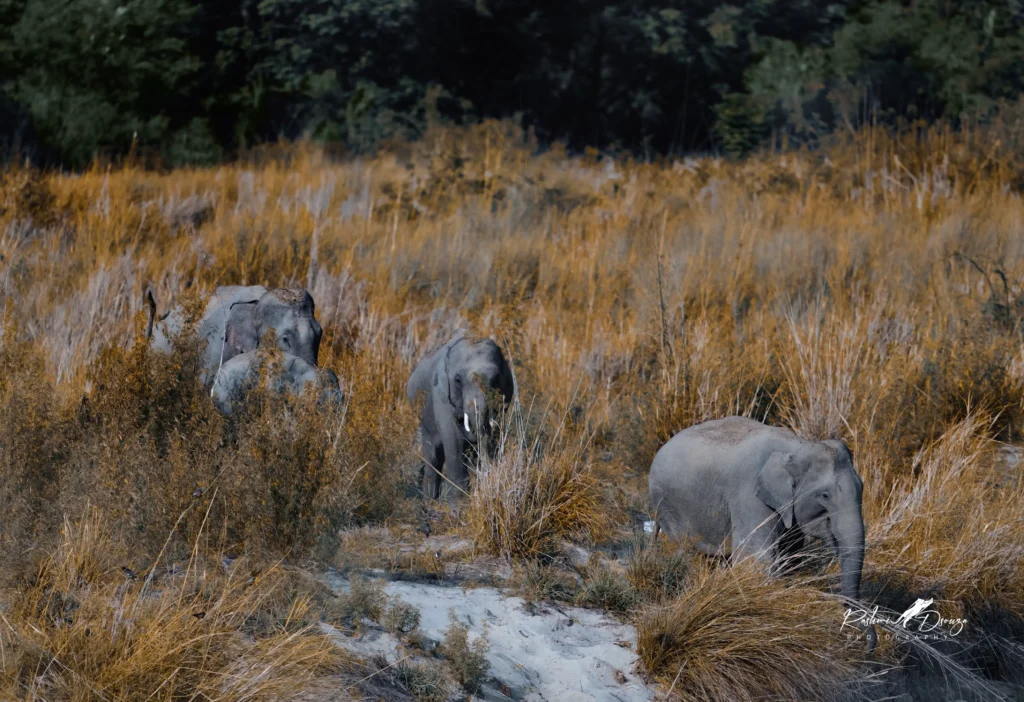
Corbett is the top choice for travelers in North India who want to observe wild elephants in a dramatic landscape of sal-covered hills and broad river valleys.
The Ramganga River basin in Corbett serves as a primary gathering point for elephant herds. Herds frequent the Dhikala chaurs (vast open grasslands) to graze on fresh shoots and congregate along the riverbanks to bathe and drink.
- Best time to visit: November to June. The Dhikala tourism zone opens in mid-November and stays open until mid-June. The warmer months of April and May provide the best riverbank sightings.
- Sightings likelihood: High.
- Best for: Photographers, landscape enthusiasts, and North India safari circuits.
- Travel notes: Staying inside the park at the Dhikala Forest Rest House offers unmatched access to the core grassland and riverbed areas during dawn and dusk.
Rajaji Tiger Reserve (Uttarakhand)
Rajaji is best suited for travelers looking for an accessible elephant safari within easy reach of Delhi, Dehradun, and Haridwar.
Positioned in the Shivalik foothills, Rajaji protects a vital corridor landscape where elephants transition between the upper hill tracts and the lowland river plains. The habitat consists of mixed deciduous forest, dry riverbeds (raus), and pine-covered ridges.
- Best time to visit: November to April.
- Sightings likelihood: Moderate to High.
- Best for: Short weekend trips, transit itineraries, and conservation enthusiasts.
- Travel notes: The Chilla and Motichur safari ranges offer the most reliable tracks for elephant sightings. The dry riverbeds provide wide visibility when herds cross between forest blocks.
Dudhwa National Park (Uttar Pradesh)
Dudhwa is the best option for dedicated conservation travelers interested in the wild Terai landscape along the Nepal border.
The park features tall grasslands, dense sal forests, and extensive wetland marshes. Elephants in Dudhwa are part of a transboundary population that moves between India and Nepal’s Shuklaphanta and Bardia National Parks.
- Best time to visit: November to April.
- Sightings likelihood: Moderate.
- Best for: Offbeat travelers and Terai wildlife enthusiasts.
- Travel notes: Dudhwa is remote and receives low tourist traffic compared to central Indian parks. Sightings require patience because the tall wet grasslands can conceal large herds.
Similipal Tiger Reserve (Odisha)
Similipal is suited for adventurous travelers seeking a remote, heavily forested plateau experience in eastern India.
Covering a massive expanse of the Mayurbhanj Elephant Reserve, Similipal is characterized by rolling hills, sal forests, and perennial streams. Odisha holds an estimated 912 wild elephants, with Similipal acting as the primary sanctuary for breeding herds in the state.
- Best time to visit: November to April.
- Sightings likelihood: Moderate (due to dense canopy cover).
- Best for: Offbeat exploration and rugged wilderness journeys.
- Travel notes: Travel distances inside Similipal are extensive. Plan for full-day safari drives across the plateau.
North and Northeast Elephant Destinations Comparison
| Destination | State | Key Habitat Type | Best Season | Primary Safari Highlight |
| Kaziranga | Assam | Alluvial grasslands and wetlands | Nov–Apr | Herds feeding alongside rhinos and buffalo |
| Manas | Assam | Riverine forest and grassland mosaic | Nov–Apr | Uncrowded wilderness along the Bhutan border |
| Jim Corbett | Uttarakhand | Sal forests and broad river valleys | Nov–Jun | Large herd congregations on the Dhikala grassland |
| Rajaji | Uttarakhand | Shivalik foothills and dry riverbeds | Nov–Apr | Essential corridor safari easily reached from North India |
| Dudhwa | Uttar Pradesh | Terai sal forests and wet grasslands | Nov–Apr | Transboundary herds in an offbeat wetland landscape |
| Similipal | Odisha | Dense sal forests and hill plateaus | Nov–Apr | Remote wilderness in eastern India’s core reserve |
Decision Guide, Seasonality, Conservation Baseline, Field Ethics & FAQs
Which Elephant Destination Is Best for You?
Choosing the right safari depends on your travel style, photography goals, and whether you are traveling with family.
SELECTING YOUR DESTINATION
│
┌──────────────────┬───────────────┴───────────────┬──────────────────┐
▼ ▼ ▼ ▼
First-Timers Photographers Families Offbeat
Kabini / Bandipur Kabini & Corbett Periyar & Bandipur Manas & Dudhwa
(High success & (Open backwaters & (Gentle boat rides & (Quiet trails &
easy logistics) grassland herds) easy accessibility) low vehicle counts)
Best for First-Time Safari Travelers
- Kabini (Nagarhole) and Bandipur (Karnataka): These parks combine high sighting probabilities with straightforward logistics, good road connectivity from Bengaluru and Mysuru, and experienced safari infrastructure.
Best for Large Herd Gatherings and Photography
- Kabini Backwaters (Karnataka): The exposed riverbed during the summer months (March to May) offers unobstructed viewing angles for observing large breeding herds.
- Corbett National Park – Dhikala Zone (Uttarakhand): The open chaurs (grasslands) and the Ramganga riverbed provide expansive landscapes for photographing herds against foothill backgrounds.
Best for Families and Accessible Safaris
- Periyar Tiger Reserve (Kerala): Boat safaris provide a gentle, non-bumpy alternative to open jeep tracks, making it practical for multi-generational families and young children.
- Bandipur National Park (Karnataka): Well-maintained road access and direct highway connectivity make it an easy wildlife stopover on classic southern touring routes.
Best for Offbeat Wilderness Experiences
- Manas National Park (Assam): A quiet, transboundary park offering pristine riverine habitats and low vehicle density.
- Dudhwa National Park (Uttar Pradesh) & Similipal (Odisha): Both cater to travelers looking for dense forests, remote trails, and raw conservation landscapes.
Best Time to See Elephants in India
Elephant movements are tied directly to rainfall and the availability of drinking water.
Dry Season vs. Monsoon Season Dynamics
- Dry Season (October to May): The most reliable window for viewing wild elephants across India. As seasonal streams dry up from February through May, herds concentrate around perennial rivers, reservoirs, and active waterholes. Reduced foliage in deciduous forests also improves visibility.
- Monsoon Season (June to September): Most core safari zones in North, Central, and Northeast India close due to heavy rainfall and flooded tracks. In the south, forests turn dense and water is widely distributed, causing herds to disperse into the interior forest.
Region-by-Region Seasonal Breakdown
| Region | Primary Parks | Peak Sighting Months | Season Dynamics |
| South India | Kabini, Bandipur, Mudumalai, Periyar | March – May | Herds gather around reservoirs and major riverbanks. |
| Northeast India | Kaziranga, Manas | November – April | Grasslands are manageable; parks close during summer floods. |
| North India | Corbett, Rajaji, Dudhwa | April – June | Pre-monsoon heat brings herds to river valleys and open chaurs. |
Asian Elephant Population, Biology, and Conservation
The Indian elephant (Elephas maximus indicus) is an Endangered subspecies of the Asian elephant. India maintains over 60% of the remaining wild Asian elephant population globally.
Population Baseline and Regional Distribution
The 2025 national estimation established a new baseline of 22,446 wild elephants across the country using DNA-based mark-recapture methods. This systematic survey analyzed 21,056 dung samples across 6.7 lakh kilometers of forest trails.
STATE ELEPHANT POPULATIONS (2025 BASELINE)
┌────────────────────────────────────────────────────────────────────────┐
│ Karnataka ████████████████████████████████████ 6,013 │
│ Assam █████████████████████████ 4,159 │
│ Tamil Nadu ███████████████████ 3,136 │
│ Kerala █████████████████ 2,785 │
│ Uttarakhand ███████████ 1,792 │
│ Odisha ██████ 912 │
└────────────────────────────────────────────────────────────────────────┘
- Karnataka: 6,013 elephants
- Assam: 4,159 elephants
- Tamil Nadu: 3,136 elephants
- Kerala: 2,785 elephants
- Uttarakhand: 1,792 elephants
- Odisha: 912 elephants
- National Total: ~22,446 elephants
Daily Ecological Needs and Feeding Patterns
Elephants spend up to 19 hours a day foraging, consuming between 100 and 200 kilograms of vegetation. As keystone species and ecosystem engineers, their feeding patterns carve paths through dense forest, disperse seeds across long distances, and expose waterholes that benefit smaller wildlife species.
Project Elephant, Reserves, and Corridor Protection
To secure long-term survival, Project Elephant manages 33 designated Elephant Reserves covering approximately 65,000 square kilometers within roughly 110,000 square kilometers of elephant-occupied land.
Conservation efforts focus heavily on roughly 150 identified elephant corridors. Securing these narrow migratory strips prevents habitat fragmentation and reduces human-elephant conflict along forest fringes.
Safari Field Ethics, Safety, and Responsible Viewing
Wild elephants are intelligent and protective animals. Responsible safari conduct ensures visitor safety while minimizing stress on wild herds.
Vehicle Conduct and Safe Viewing Distances
- Maintain Distance: Vehicles must maintain a minimum buffer of 20 to 30 meters from wild herds.
- Keep Escape Routes Clear: Never allow safari vehicles to block an elephant’s intended path or cut off a herd from water sources.
- Never Separate Calves: Avoid positioning a vehicle between a mother and her calf.
- Keep Noise Low: Turn off vehicle engines during stationary sightings and avoid sudden movements, shouting, or flash photography.
How to Interpret Elephant Warning Signs
ELEPHANT WARNING ESCALATION
┌──────────────────┐ ┌──────────────────┐ ┌──────────────────┐
│ RELAXED HERD │ ──► │ ALERT / ANNOYED │ ──► │ IMMINENT CHARGE │
│ • Rhythmic ears │ │ • Frozen stance │ │ • Folded ears │
│ • Gentle trunk │ │ • Flared ears │ │ • Tucked trunk │
│ • Slow grazing │ │ • Head tossing │ │ • Fast approach │
└──────────────────┘ └──────────────────┘ └──────────────────┘
- Alert / Annoyed: An elephant freezes, spreads its ears outward, shakes its head abruptly, or kicks up dust with its forefeet.
- Mock Charge: The elephant takes several rapid steps toward the vehicle with its ears spread wide and trumpets loudly. This is a warning display intended to push intruders back.
- Real Charge: An elephant charges with its ears flattened against its head, trunk curled tightly under its chin, and approaches silently at high speed. If an elephant displays alert posture, instruct your driver to reverse immediately.
Common Mistakes to Avoid on an Elephant Safari
- Visiting During Peak Monsoon: Assuming all parks operate year-round leads to disappointment. Many North and Northeast reserves close between July and October due to flooding.
- Confusing Commercial Rides with Wild Safaris: Avoid commercial venues that offer elephant rides. Ethical viewing involves observing wild, free-ranging herds in protected national parks from registered safari vehicles or boats.
- Booking Only One Safari Drive: Wild animals move unpredictably across vast home ranges. Plan at least three to four safari drives in a single park to maximize your viewing opportunities.
- Crowding Sightings: Pressuring your safari driver to get dangerously close to herds causes animals to retreat into dense cover, cutting the encounter short for everyone.
- Ignoring Buffer and Corridor Zones: Travelers often overlook buffer zones, yet elephants frequently feed along forest edges and water margins outside core tourist tracks.
Frequently Asked Questions
Where is the single best place to see wild elephants in India?
Kabini (Nagarhole National Park) in Karnataka is widely regarded as the most reliable destination due to large dry-season congregations along the river backwaters.
Which Indian state has the highest elephant population?
Karnataka holds the largest wild elephant population in India, with 6,013 elephants recorded in the 2025 national estimation.
How many wild elephants are left in India?
India is home to an estimated 22,446 wild Asian elephants, according to the 2025 DNA-based national census.
Is Kabini better than Bandipur for elephant sightings?
Both parks offer high sighting rates. Kabini provides open riverbank viewing and boat safaris, making it superior for photography. Bandipur features classic dry-deciduous forest tracks and open scrub terrain.
Can you see wild elephants in Kaziranga National Park?
Yes. Kaziranga supports a large elephant population that roams the alluvial grasslands and wetlands alongside one-horned rhinos and wild water buffalo.
Is Periyar Tiger Reserve good for elephant viewing?
Yes. Periyar offers boat safaris where visitors can watch herds come down to the lake margins to drink and bathe.
What is the best month to photograph wild elephant herds in India?
March, April, and May are the best months. Dropping water levels force large family groups out of the deep forest and onto open riverbanks and grasslands.
Are jeep safaris safe around large elephant herds?
Yes, provided visitors adhere to park regulations, maintain a respectful distance (20–30 meters), keep noise levels down, and follow the instructions of forest guides.
What is the difference between an elephant reserve and a national park?
A national park is a strictly protected core area where human activity is prohibited. An Elephant Reserve is a larger, landscape-scale administrative unit that includes national parks, sanctuaries, reserved forests, and migratory corridors.
Are wild elephant sightings guaranteed on safari?
No wild animal sighting can ever be guaranteed. However, visiting high-density parks like Kabini, Bandipur, Corbett, or Kaziranga during the dry season provides very high sighting probabilities.
Summary and Safari Planning Recommendations
| Destination | Primary Target | Recommended Safari Mode | Peak Viewing Season |
| Kabini / Nagarhole | Photography & high herd density | Jeep & Boat Safari | March to May |
| Bandipur & Mudumalai | Classic forest safari & road trips | Open 4×4 Gypsy | October to May |
| Periyar | Scenic, family-friendly lake viewing | Lake Boat Safari | November to April |
| Kaziranga & Manas | Northeast megafauna & grasslands | Open 4×4 Gypsy | November to April |
| Jim Corbett | Riverbed herds & dramatic landscapes | Open 4×4 Gypsy (Dhikala) | April to June |
To plan an effective elephant safari in India, book your permits 60 to 90 days in advance, plan a minimum of three to four game drives, and schedule your trip during the dry season when water availability naturally concentrates herds in visible areas.