
Discover the top 50 birds to spot in India. Learn practical field identification, peak viewing seasons, top birding sanctuaries, and regional urban hotspots. (158 characters)
India’s Avian Diversity: The Numbers and Ecosystems
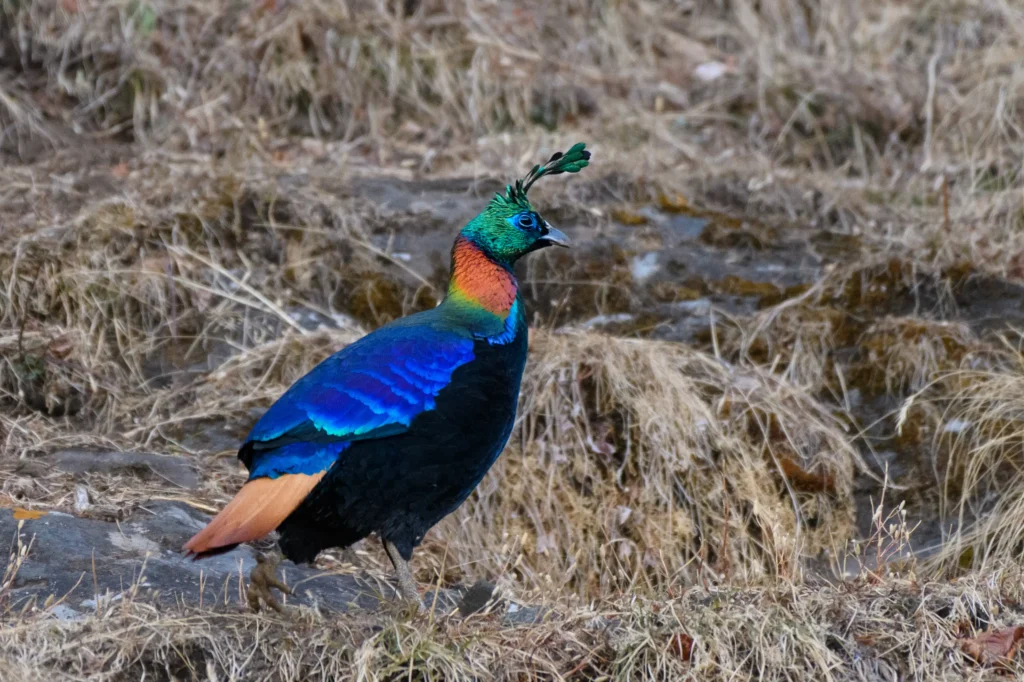
India supports an extraordinary avian population, with official checklists documenting between 1,353 and 1,396 bird species. This represents roughly 12.4% of all bird diversity on the planet. Of these, 75 to 78 species are strictly endemic, occurring within India’s borders and nowhere else on Earth.
The country’s geographical position across multiple biomes—stretching from the trans-Himalayan high plateau and the wet evergreen rainforests of the Western Ghats to the semi-arid Thar desert, the Indo-Gangetic river floodplains, and dense mangrove deltas—creates complex habitat niches. Critical bird habitats are currently safeguarded across 467 Important Bird Areas (IBAs) and 100 Ramsar Wetland Sites.
┌─────────────────────────────────────────────────────────────┐
│ INDIA AVIAN METRICS │
├───────────────────────────────┬─────────────────────────────┤
│ Total Recorded Species │ 1,353–1,396 species │
│ Share of Global Avian Life │ 12.4% │
│ Strict Endemic Species │ 75–78 species │
│ Protected IBAs │ 467 areas │
│ Designated Ramsar Sites │ 100 designated wetlands │
│ GBBC 2026 Global Ranking │ 4th (1,092 species logged) │
└───────────────────────────────┴─────────────────────────────┘
Avian activity is not confined to remote national parks. Urban environments across India sustain large bird populations; Delhi stands as the second-richest capital city globally for bird diversity with over 900 recorded species, surpassed only by Nairobi. In the 2026 Great Backyard Bird Count (GBBC), India secured the 4th global ranking by documenting 1,092 species in a single count period, reflecting active citizen science and widespread species accessibility.
Top 10 Must-See Birds in India (Quick Selection Guide)
If you have limited time or are planning your first dedicated birding trip to India, prioritize these 10 species. They represent the country’s national heritage, rare endemics, long-distance migrants, and distinct forest specialists.
- Indian Peafowl (Pavo cristatus): India’s national bird, easily spotted across grasslands, rural farmland, and urban protected forests nationwide.
- Common Myna (Acridotheres tristis): Ubiquitous urban bird identified by its yellow eye-patch, yellow bill, and bold ground-foraging behavior.
- Rose-ringed Parakeet (Psittacula krameri): Highly active green parakeet common in city gardens, old orchards, and deciduous forests.
- Malabar Grey Hornbill (Ocyceros griseus): Western Ghats endemic that plays a vital role as a seed disperser across southern rainforest canopies.
- Great Indian Bustard (Ardeotis nigriceps): Critically endangered grassland flagship species, with fewer than 150 individuals remaining in arid pockets of Rajasthan and Maharashtra.
- Siberian Crane (Leucogeranus leucogeranus): High-profile endangered winter migrant that covers more than 4,000 km along the Central Asian Flyway.
- White-throated Kingfisher (Halcyon smyrnensis): Broadly distributed hunter known for electric-blue wings, a chocolate head, and a heavy coral bill.
- Spot-billed Pelican (Pelecanus philippensis): Large colonial waterbird with spotted pinkish pouch skin, easily observed at southern riverine sanctuaries.
- Red-vented Bulbul (Pycnonotus cafer): Cheerful, adaptable garden resident recognizable by its dark crest and distinct crimson undertail coverts.
- Bugun Liocichla (Liocichla bugunorum): One of modern ornithology’s rarest finds, discovered in 2006 and restricted entirely to Eaglenest Wildlife Sanctuary in Arunachal Pradesh.
Top 10 Must-See Birds Quick Reference Table
| Rank | Bird Common Name | Scientific Name | Category | Primary Viewing Location | Best Field Season |
| 1 | Indian Peafowl | Pavo cristatus | National Bird / Widespread | Countrywide, Delhi Ridge | Year-round |
| 2 | Common Myna | Acridotheres tristis | Urban Common | City parks, urban outskirts | Year-round |
| 3 | Rose-ringed Parakeet | Psittacula krameri | Urban / Woodland | Northern plains, urban canopies | Year-round |
| 4 | Malabar Grey Hornbill | Ocyceros griseus | Western Ghats Endemic | Thattekad, Anamalai Hills | September–March |
| 5 | Great Indian Bustard | Ardeotis nigriceps | Critically Endangered | Desert National Park, Nannaj | November–February |
| 6 | Siberian Crane | Leucogeranus leucogeranus | Endangered Migrant | Keoladeo National Park | November–February |
| 7 | White-throated Kingfisher | Halcyon smyrnensis | Wetland / Cultivation | Agricultural ponds, lakes nationwide | Year-round |
| 8 | Spot-billed Pelican | Pelecanus philippensis | Colonial Waterbird | Ranganathittu, Kokrebellur | November–February |
| 9 | Red-vented Bulbul | Pycnonotus cafer | Common Resident | Gardens, open scrub country | Year-round |
| 10 | Bugun Liocichla | Liocichla bugunorum | Altitudinal Endemic | Eaglenest Wildlife Sanctuary | January–March |
Complete Guide to the Top 50 Birds in India
Urban & Common Birds (Species 1–15: Easy Identification)
These 15 species form the foundation of Indian birding. They can be found in city municipal parks, agricultural boundaries, hotel grounds, and suburban tree lines without visiting distant reserves.
┌────────────────────────────────────────────────────────┐
│ SPECIES 1–15: URBAN & COMMON │
├────────────────────────────────────────────────────────┤
│ 1. Indian Peafowl 9. White-throated Kingfisher│
│ 2. House Crow 10. House Sparrow │
│ 3. Common Myna 11. Rock Pigeon │
│ 4. Rose-ringed Parakeet 12. Red-wattled Lapwing │
│ 5. Red-vented Bulbul 13. Oriental Magpie-Robin │
│ 6. Black Kite 14. Black Drongo │
│ 7. Coppersmith Barbet 15. Laughing Dove │
│ 8. Indian Robin │
└────────────────────────────────────────────────────────┘
1. Indian Peafowl (Pavo cristatus)
- Category: National Bird / Resident Breeder
- Field Marks: Males display a metallic blue neck, upright fan crest, and an elongated upper-tail train patterned with iridescent eyespots. Females (peahens) are mottled brown with a pale throat and metallic green lower neck.
- Habitat: Deciduous forests, river scrub, agricultural clearings, and urban gardens.
- Best Locations: Lodhi Garden (Delhi), Sariska Tiger Reserve (Rajasthan), Keoladeo National Park (Rajasthan).
- Peak Season: Visible year-round; males fan displays during the pre-monsoon and monsoon mating seasons (May to August).
- Vocalization: A loud, carrying, trumpeting “may-awe, may-awe” call, frequently delivered from tall roost trees at dawn and dusk.
Naturalist Field Note: Peafowl roost high in stout trees (such as Terminalia or Neem) at night to stay clear of ground predators like leopards and feral dogs. Morning sightings are best around scrub edges as they drop down to feed on grain, shoots, and snakes.
2. House Crow (Corvus splendens)
- Category: Urban Scavenger / Resident
- Field Marks: Slender profile compared to the Jungle Crow; easily identified by a contrasting smoky-grey neck, collar, and breast against a glossy black body, crown, and bill.
- Habitat: Heavily populated towns, cities, railway stations, and seashores. Avoids dense contiguous forests.
- Best Locations: Common throughout every town and city in India.
- Peak Season: Year-round.
- Vocalization: A nasal, harsh, repetitive “karr-karr”.
3. Common Myna (Acridotheres tristis)
- Category: Urban Resident / Adaptable Omnivore
- Field Marks: Rich vinous-brown body, jet-black hood, bold bare yellow skin around the eyes, bright yellow bill and legs, and prominent white wing patches visible in flight.
- Habitat: Lawns, suburban roadsides, open fields, and city markets.
- Best Locations: Urban parks nationwide including Sanjay Van (Delhi) and Cubbon Park (Bengaluru).
- Peak Season: Year-round.
- Vocalization: A diverse assortment of liquid gurgles, harsh chirps, and metallic chatter: “keek-keek-keek, churr-churr”.
4. Rose-ringed Parakeet (Psittacula krameri)
- Category: Common Resident Parakeet
- Field Marks: Slender, bright grass-green body with a long, graduated pointed tail and heavy red hook-bill. Adult males show a narrow rose-pink and black neck ring; females and juveniles lack the black ring.
- Habitat: Old orchards, urban wooded avenues, cultivated groves, and dry deciduous forests.
- Best Locations: Sunder Nursery (Delhi), city outskirts across northern and central India.
- Peak Season: Year-round; very active around nesting tree hollows from February to April.
- Vocalization: High-pitched, shrieking flight calls: “kee-ak, kee-ak”.
5. Red-vented Bulbul (Pycnonotus cafer)
- Category: Resident Garden Songbird
- Field Marks: Sooty-brown body with a scalloped scale pattern, slightly crested black head, dark brown face, and a distinct crimson vent patch under the tail base.
- Habitat: Residential hedges, scrub jungles, roadside verges, and agricultural plantations.
- Best Locations: Common throughout India; found in nearly all suburban gardens.
- Peak Season: Year-round.
- Vocalization: Cheerful, rapid, short musical phrases: “be-care-ful” or “pick-per-dick”.
6. Black Kite (Milvus migrans)
- Category: Urban Raptor / Scavenger
- Field Marks: Dark brown plumage with long, angled wings and a diagnostic shallowly forked tail that shifts continuously during soaring flight.
- Habitat: City skies, slaughterhouses, garbage landfills, harbors, and riverbanks.
- Best Locations: High densities over Old Delhi, Yamuna riverfront, and coastal fish landing centers in Mumbai.
- Peak Season: Year-round; winter numbers are augmented by migratory subspecies from Central Asia.
- Vocalization: A thin, drawn-out musical whinny: “cheheel-cheheel-cheheel”.
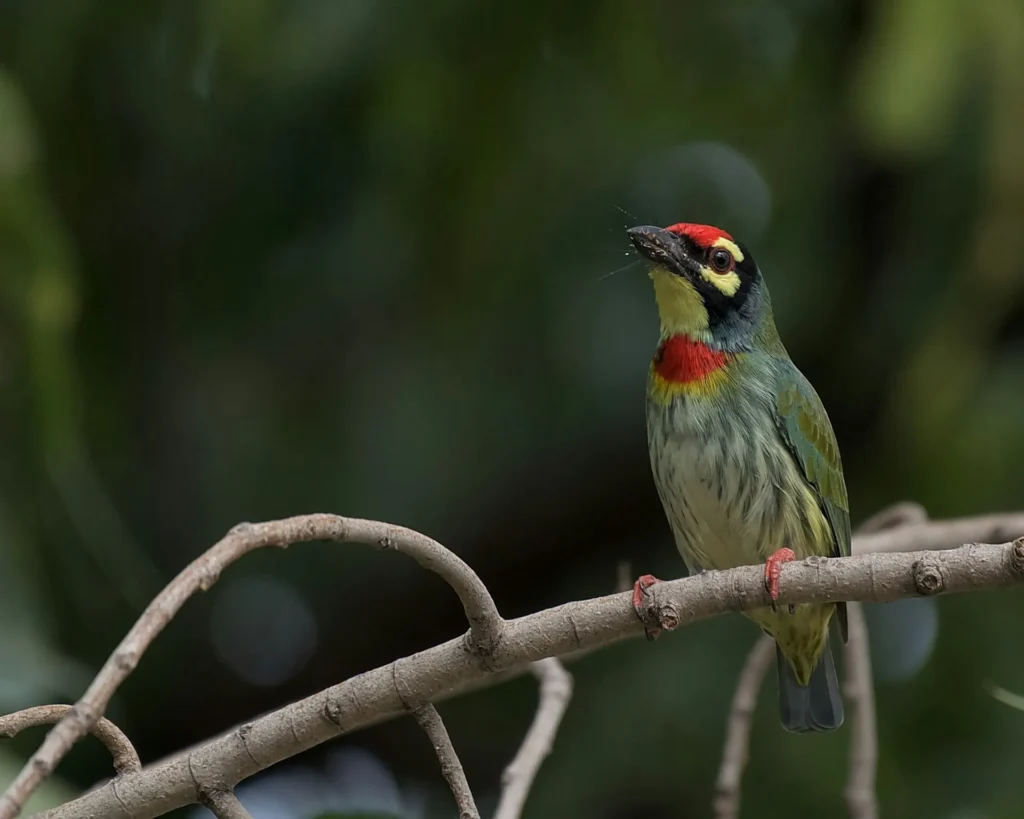
7. Coppersmith Barbet (Psilopogon haemacephalus)
- Category: Small Canopy Frugivore
- Field Marks: Stocky, short-tailed green barbet with a bright crimson forehead, crimson breast band, yellow throat, and bold black eye-stripes.
- Habitat: Fruiting Ficus (fig) trees, wooded urban gardens, roadside avenues, and dry open country.
- Best Locations: Lodhi Garden (Delhi), Theosophical Society Gardens (Chennai).
- Peak Season: Year-round; calls continuously during warming spring and summer months.
- Vocalization: A loud, rhythmic, metallic bell-like strike repeated endlessly: “tuk… tuk… tuk” (sounding like copper metal being hammered).
Naturalist Field Note: Spotting a Coppersmith Barbet requires patience because its green back matches the foliage. Stand beneath a fruiting fig tree and look for small branch tremors near the crown, directly tracing the repetitive “tuk” call.
8. Indian Robin (Copsychus fulicatus)
- Category: Ground Insectivore / Resident
- Field Marks: Sexually dimorphic. The male is glossy blue-black with a white shoulder patch and a chestnut-rufous patch beneath the upright cocked tail. The female is ash-brown with a paler rufous vent.
- Habitat: Rocky scrub, stony hillsides, dry open country, and arid garden perches.
- Best Locations: Hampi boulders (Karnataka), Thar desert fringes, and drier urban wastelands across central India.
- Peak Season: Year-round.
- Vocalization: Short, rising territorial whistles and sharp “chick” alert calls.
9. White-throated Kingfisher (Halcyon smyrnensis)
- Category: Tree Kingfisher / Broad-Spectrum Hunter
- Field Marks: Electric turquoise-blue back, wings, and tail contrasting against a rich chocolate-brown head, neck, and lower belly. Features a clean white throat and bib with a dagger-like red bill.
- Habitat: Agricultural fields, canal banks, garden ponds, mangrove borders, and city swamps. Regularly hunts on dry ground away from water.
- Best Locations: Keoladeo National Park (Rajasthan), Ranganathittu Bird Sanctuary (Karnataka), and village ponds nationwide.
- Peak Season: Year-round.
- Vocalization: A loud, rattling, descending territorial laugh: “killy-killy-killy-killy”.
10. House Sparrow (Passer domesticus)
- Category: Urban Commensal / Delhi State Bird
- Field Marks: Compact finch-like build. The male has a grey crown, chestnut nape, black bib on the throat, and streaked brown mantle. The female is unstreaked sand-brown below with a buffy supercilium (eyebrow) stripe.
- Habitat: Residential buildings, traditional markets, grain shops, and village courtyards.
- Best Locations: Old walled residential districts, grain mandis in north India, and semi-rural homesteads.
- Peak Season: Year-round.
- Vocalization: Familiar social chirping: “cheep… chirrup”.
11. Rock Pigeon (Columba livia)
- Category: Feral / Cliff Resident
- Field Marks: Slate-grey plumage, glossy green-purple iridescence on the neck, two distinct black wing bars, and a dark terminal tail band.
- Habitat: Old monuments, bridges, multi-story buildings, grain silos, and natural cliff gorges.
- Best Locations: Historic forts (Jaipur, Jodhpur), urban metro stations, and public plazas across all states.
- Peak Season: Year-round.
- Vocalization: Deep, vibrating throat coos: “gurr-guk… gurr-guk”.
12. Red-wattled Lapwing (Vanellus indicus)
- Category: Wetland & Grassland Wader
- Field Marks: Bronze-brown mantle, jet-black head, neck, and breast, contrasting clean white cheek patches running down the flanks, long yellow legs, and fleshy crimson eye-wattles.
- Habitat: Lake margins, wet paddy fields, open grazing grounds, and rural golf courses.
- Best Locations: Sultanpur National Park (Haryana), Keoladeo National Park (Rajasthan), village reservoirs.
- Peak Season: Year-round.
- Vocalization: A high, nervous, alarm call sounding like: “did-he-do-it… did-he-do-it… pity-to-do-it” (locally named “Titori”).
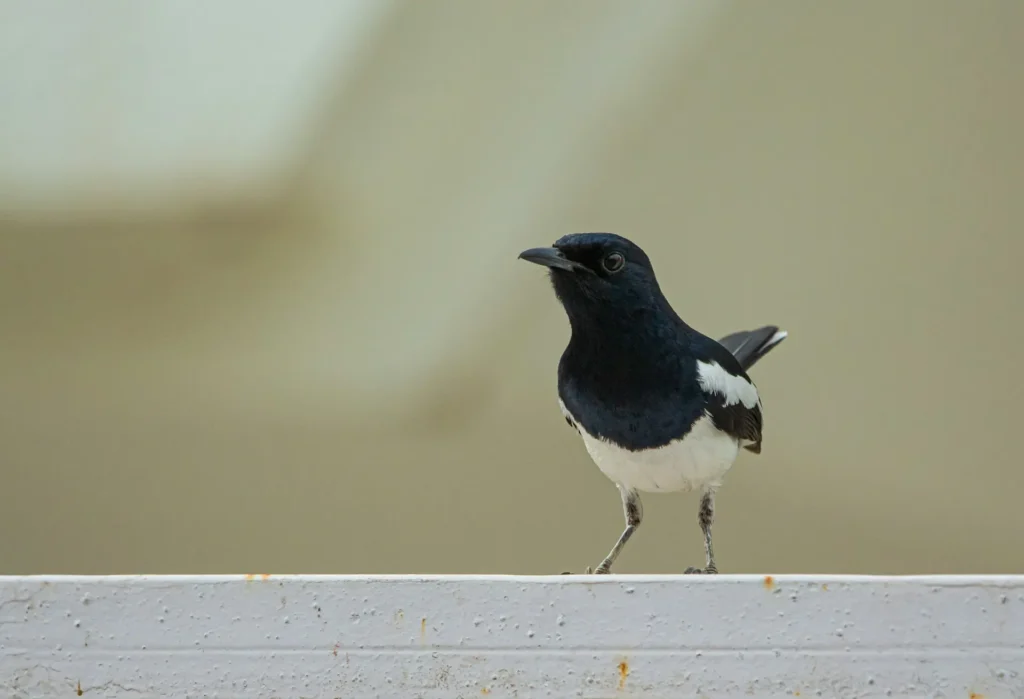
13. Oriental Magpie-Robin (Copsychus saularis)
- Category: Woodland & Garden Songbird
- Field Marks: Clean black-and-white pattern. The male features glossy black upperparts and breast with white underparts and a broad white wing bar. The female is dull charcoal-grey where the male is black. Both hold their tails cocked upright.
- Habitat: Shaded orchards, town gardens, forest clearings, and bamboo groves.
- Best Locations: Corbett National Park fringes, residential gardens in Bengaluru and Pune.
- Peak Season: Year-round; sings from high perches at first light from March to July.
- Vocalization: A rich, varied, melodious whistle delivered in prolonged territorial phrases.
14. Black Drongo (Dicrurus macrocercus)
- Category: Insectivorous Aerial Hunter
- Field Marks: Completely jet-black plumage with a distinct metallic blue-green sheen, small white rictal spot at the bill base, and a deeply forked tail.
- Habitat: Open pastures, road telegraph wires, cattle fields, and semi-arid scrub.
- Best Locations: Countryside power lines and open scrub reserves nationwide.
- Peak Season: Year-round.
- Vocalization: A harsh, rasping screech combined with mimicked alarm calls of raptors: “ti-ti-tiu, chich-churr”.
15. Laughing Dove (Spilopelia senegalensis)
- Category: Dry Country Columbid
- Field Marks: Slender, pinkish-brown dove with a blue-grey wing patch, white outer tail tips, and a checkered black-and-rufous “necklace” on the sides of the throat.
- Habitat: Arid thorn scrub, dry cultivated edges, suburban gardens, and village margins.
- Best Locations: Drier zones of Rajasthan, Gujarat, Haryana, and central plateau scrubs.
- Peak Season: Year-round.
- Vocalization: A low, rhythmic, bubbling coo: “coo-coo-roo… doo-doo-doo”, resembling gentle human laughter.
Forest & Garden Species (Species 16–25: Semi-Urban & Woodland Access)
Moving beyond the common city birds, this group represents species that thrive in semi-urban environments, shaded orchards, and fragmented woodlands. They require a bit more observation to spot but are accessible without traveling deep into national parks.
┌────────────────────────────────────────────────────────┐
│ SPECIES 16–25: FOREST & GARDENS │
├────────────────────────────────────────────────────────┤
│ 16. Asian Koel 21. Indian Golden Oriole │
│ 17. Indian Grey Hornbill 22. Eurasian Hoopoe │
│ 18. Rufous Treepie 23. Black-rumped Flameback │
│ 19. Jungle Babbler 24. Common Tailorbird │
│ 20. Cattle Egret 25. Indian Pitta │
└────────────────────────────────────────────────────────┘
16. Asian Koel (Eudynamys scolopaceus)
- Category: Garden / State Bird of Kerala
- Field Marks: Highly sexually dimorphic. The male is a glossy, iridescent black with striking ruby-red eyes; the female is heavily speckled and barred with brown and white.
- Habitat: Large fruiting trees, dense urban gardens, and deciduous forests.
- Best Locations: Widespread across India; highly visible in Kerala’s urban canopies.
- Peak Season: Year-round.
- Vocalization: The iconic, echoing, and haunting “koo-oo, koo-oo” call that rises in pitch, particularly dominant during the pre-monsoon months.
17. Indian Grey Hornbill (Ocyceros birostris)
- Category: Urban Forest / State Bird of Chandigarh
- Field Marks: A medium-sized, silver-grey bird with a long tail, black casque (crest) on a curved heavy bill, and yellow bill tips. It lacks the bright colors and facial wattles of larger forest hornbills.
- Habitat: Old avenues with tall Ficus and mango trees, urban parks, and dry deciduous forests.
- Best Locations: Delhi parks (like Lodhi Garden), Chandigarh (where it is the state bird), and central Indian cities.
- Peak Season: Year-round.
- Vocalization: A sharp, squeaky, kite-like “k-a-w-e” or high-pitched squeal.
18. Rufous Treepie (Dendrocitta vagabunda)
- Category: Social Garden Corvid
- Field Marks: A distinctively long-tailed bird with a cinnamon-rufous body, a blackish head and breast, and contrasting silver-grey and white wing patches.
- Habitat: Wooded gardens, open scrub forests, and national park buffer zones.
- Best Locations: Ranthambore, Bandhavgarh, and larger city parks with tall trees.
- Peak Season: Year-round.
- Vocalization: Highly vocal, producing a variety of sounds including a shrill, metallic “kotri-kotri” and softer, musical flute-like notes.
19. Jungle Babbler (Turdoides striata)
- Category: Noisy Garden Resident
- Field Marks: A thrush-sized, dull earthy-brown and grey bird with a pale yellow bill and a somewhat untidy, streaked appearance.
- Habitat: Garden shrubbery, forest undergrowth, and rural hedges.
- Best Locations: Found in virtually every urban garden and scrub patch across the country.
- Peak Season: Year-round.
- Vocalization: Known for moving in groups of six to ten (earning the local name “Seven Sisters”), they communicate with constant, harsh, squeaking, and babbling chatters.
Photography Tip: Jungle Babblers are highly active and rarely stay still. To photograph them, pre-focus on a clear patch of ground near a leaf-litter pile; they will inevitably hop into the open while aggressively foraging for insects.
20. Cattle Egret (Bubulcus ibis)
- Category: Agricultural Wetland Specialist
- Field Marks: A stocky white heron with a relatively short, thick yellow bill. During the breeding season (monsoon), adults develop golden-orange plumes on the head, neck, and back.
- Habitat: Dry pastures, freshly ploughed fields, and wetlands, almost always in association with grazing livestock.
- Best Locations: Farmlands and rural village margins throughout India.
- Peak Season: Year-round.
- Vocalization: Mostly silent outside of breeding colonies; occasionally issues harsh croaks.
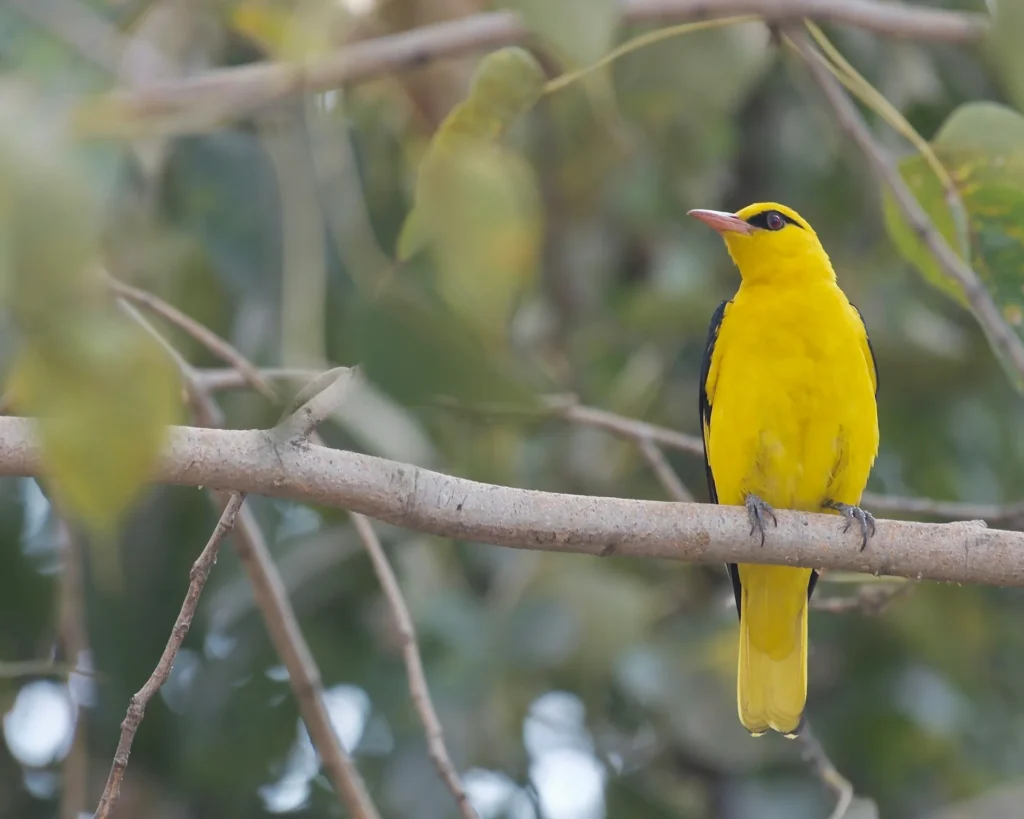
21. Indian Golden Oriole (Oriolus kundoo)
- Category: Forest & Canopy Songbird
- Field Marks: The adult male is a brilliant, eye-catching golden-yellow with stark black wings and a black eye-stripe. Females and juveniles are a more camouflaged yellowish-green with streaked underparts.
- Habitat: Large leafy trees, broadleaf forests, and mature orchards.
- Best Locations: Forest patches across central and northern India; frequently spotted in large urban green spaces during summer.
- Peak Season: Highly active and vocal during the spring breeding season (March–May).
- Vocalization: A rich, liquid, whistling “peelak-peelak” that carries far through the canopy.
22. Eurasian Hoopoe (Upupa epops)
- Category: Open Country Forager
- Field Marks: Unmistakable. Pinkish-fawn body, striking black-and-white striped wings and tail, a long, curved, tweezer-like bill, and a prominent crest that it fans open upon landing.
- Habitat: Open lawns, short-grass pastures, orchards, and agricultural borders.
- Best Locations: Rural farmland and large manicured lawns (like golf courses) across the subcontinent.
- Peak Season: Primarily a winter migrant to many parts of India, though resident populations exist.
- Vocalization: A soft, resonant, far-carrying “hud-hud-hud” (which gives the bird its common local name).
23. Black-rumped Flameback (Dinopium benghalense)
- Category: Garden Woodpecker
- Field Marks: A medium-sized woodpecker with a brilliant golden-yellow back, black-and-white patterned face and underparts, and a bright crimson crest (males have a full red crown; females have a black forecrown spotted with white).
- Habitat: Urban avenues, coconut plantations, orchards, and open woodlands.
- Best Locations: Easily found scaling the trunks of old trees in urban areas and forest fringes nationwide.
- Peak Season: Year-round.
- Vocalization: A loud, sharp, rattling trill, often emitted in flight.
24. Common Tailorbird (Orthotomus sutorius)
- Category: Small Garden Resident
- Field Marks: A tiny (12 cm) but energetic bird with bright olive-green upperparts, pale underparts, a rufous crown, and a long tail that is frequently cocked straight up.
- Habitat: Dense garden shrubbery, lantana thickets, and forest edges.
- Best Locations: Thick gardens and residential bushes across the country.
- Peak Season: Year-round.
- Vocalization: A remarkably loud, repetitive “tink-tink-tink-tink” that sounds entirely out of proportion to its small size.
25. Indian Pitta (Pitta brachyura)
- Category: Forest Floor Skulker
- Field Marks: A colorful, stubby-tailed bird often called the “Navrang” (nine colors). It features a green back, blue wing patches, a buffy-orange belly with a bright crimson vent, and a black face mask.
- Habitat: Shaded forest floors, dense leaf litter, and scrub jungles.
- Best Locations: Thattekad Bird Sanctuary (Kerala) and central Indian tiger reserves during the monsoon.
- Peak Season: Breeds in the sub-Himalayas during summer and migrates to central and southern India (September–March).
- Vocalization: A clear, sharp, two-note whistle: “wheet-tieu”, usually heard at dawn and dusk.
Endemic & Rare Forest Specialists (Species 26–35: Serious Birder Targets)
For experienced birdwatchers and listers, these ten species are primary targets. Tracking them down often requires traveling to remote ranges, hiring local expert guides, and navigating challenging terrain. Several of these birds are highly restricted by geography or are facing critical population bottlenecks.
┌────────────────────────────────────────────────────────┐
│ SPECIES 26–35: ENDEMICS & RARITIES │
├────────────────────────────────────────────────────────┤
│ 26. Malabar Grey Hornbill 31. Bugun Liocichla │
│ 27. Nilgiri Flycatcher 32. Great Indian Bustard │
│ 28. Malabar Parakeet 33. White-rumped Vulture │
│ 29. Flame-throated Bulbul 34. Long-billed Vulture │
│ 30. Malabar Trogon 35. Red-headed Vulture │
└────────────────────────────────────────────────────────┘
26. Malabar Grey Hornbill (Ocyceros griseus)
- Category: Western Ghats Endemic
- Field Marks: Distinguishable from the Indian Grey Hornbill by its lack of a casque (the ridge on the upper bill) and a more pronounced orange-yellow bill. The plumage is a uniform slate-grey.
- Habitat: Dense evergreen and moist-deciduous rainforests of the Western Ghats.
- Best Locations: Thattekad (Kerala), Dandeli, and the Anamalai ranges.
- Peak Season: September to March, avoiding the heavy monsoon rains.
- Conservation Status: Near Threatened. It represents one of the 22 crucial endemic species of the Western Ghats.
27. Nilgiri Flycatcher (Cyornis nilgiriensis)
- Category: Western Ghats Altitudinal Endemic
- Field Marks: The male is a striking, deep indigo blue-grey overall with a slightly paler belly and a small black bill; females are duller.
- Habitat: High-elevation montane forests and shola grasslands.
- Best Locations: Ooty, the Nilgiri hills, and Valparai plateaus.
- Peak Season: September to March.
28. Malabar Parakeet (Psittacula calthrapae)
- Category: Western Ghats Endemic
- Field Marks: A brilliantly colored parakeet with a blue-grey head, bright green body, a distinct black collar, and a short, vibrant yellow-tipped tail. Males feature a red upper mandible, while females have a black one.
- Habitat: Evergreen and moist deciduous forests.
- Best Locations: Deep forest tracks within the Western Ghats.
- Peak Season: Year-round.
29. Flame-throated Bulbul (Pycnonotus gularis)
- Category: Endemic / State Bird of Goa
- Field Marks: A visually stunning bulbul with a jet-black head, olive-green upperparts, pale yellow underparts, and a sharply contrasting, brilliant orange-red throat patch.
- Habitat: Thick evergreen and riparian forests.
- Best Locations: Bhagwan Mahaveer Sanctuary (Goa) and the broader Western Ghats.
- Peak Season: September to March.
30. Malabar Trogon (Harpactes fasciatus)
- Category: Forest Endemic / Highly Photogenic
- Field Marks: The male is spectacular, featuring a black head, yellowish-brown back, and a crimson-red belly separated from the head by a white necklace. The female has an ochre-orange belly and brownish head. Both have black-and-white barred wing coverts.
- Habitat: Mid-canopy of dense evergreen forests.
- Best Locations: Thattekad Bird Sanctuary (Kerala) and broadleaf Western Ghats forests.
- Peak Season: September to March.
Responsible Tourism Tip: The Malabar Trogon is sensitive to disturbance and flash photography. When tracking this species, strictly follow the “no playback” rule. Using artificial calls to draw them out disrupts their natural foraging and exposes them to predators.
31. Bugun Liocichla (Liocichla bugunorum)
- Category: Micro-Endemic / Global Rarity
- Field Marks: A small babbler-like bird with an olive-green body, a vivid orange-yellow face mask, a black cap, and striking red, yellow, and black wing patches.
- Habitat: Dense evergreen forest undergrowth at altitudes of roughly 2,000 meters.
- Best Locations: Found exclusively in the Eaglenest Wildlife Sanctuary in Arunachal Pradesh.
- Peak Season: January to March.
- Significance: Discovered only in 2006 and named after the local Bugun tribe, this bird remains one of the most sought-after sightings for global listers. Finding it requires an expert local guide and immense patience.
32. Great Indian Bustard (Ardeotis nigriceps)
- Category: Critically Endangered / State Bird of Rajasthan
- Field Marks: A massive, ostrich-like ground bird standing up to 100 cm tall. It features a black crown, a long pale neck, and a brown body with black-and-white wing bars.
- Habitat: Open, arid, short-grass plains and scrublands.
- Best Locations: Desert National Park near Jaisalmer (Rajasthan) and the Nannaj Sanctuary (Maharashtra).
- Peak Season: November to February (which overlaps with their lekking, or courtship, displays).
- Conservation Status: India’s rarest bird, with a global population of fewer than 150 individuals. Habitat loss and fatal collisions with overhead power lines remain its primary threats.
33. White-rumped Vulture (Gyps bengalensis)
- Category: Critically Endangered Scavenger
- Field Marks: A medium-sized, dark brown vulture (approx. 70 cm) with a diagnostic white neck ruff and a prominent white rump patch visible in flight.
- Habitat: Open country, forests, and rural landscapes.
- Best Locations: Jatayu Conservation Breeding Centre (Pinjore, Haryana), and active release sites in Maharashtra and Assam.
- Conservation Status: Reduced to an estimated global population of 8,000 (roughly 6,000 in India). The species was devastated by the veterinary drug diclofenac, but 14 individuals were successfully released into the wild in Maharashtra in April 2025, and 6 more are slated for release in Assam in January 2026.
34. Long-billed Vulture (Gyps indicus)
- Category: Critically Endangered Scavenger
- Field Marks: A large, heavily built vulture (approx. 80 cm) characterized by a pale sandy-brown body, a dark, naked head and neck, and a remarkably long, heavy black bill.
- Habitat: Rocky cliffs, crags, and open scrub country where it traditionally nests.
- Best Locations: Jatayu Centre and surrounding craggy hills of central India.
- Conservation Status: The wild population stands at approximately 5,000 individuals. Following aggressive captive breeding efforts, 20 Long-billed Vultures were released into the wild in Maharashtra in April 2025.
35. Red-headed Vulture (Sarcogyps calvus)
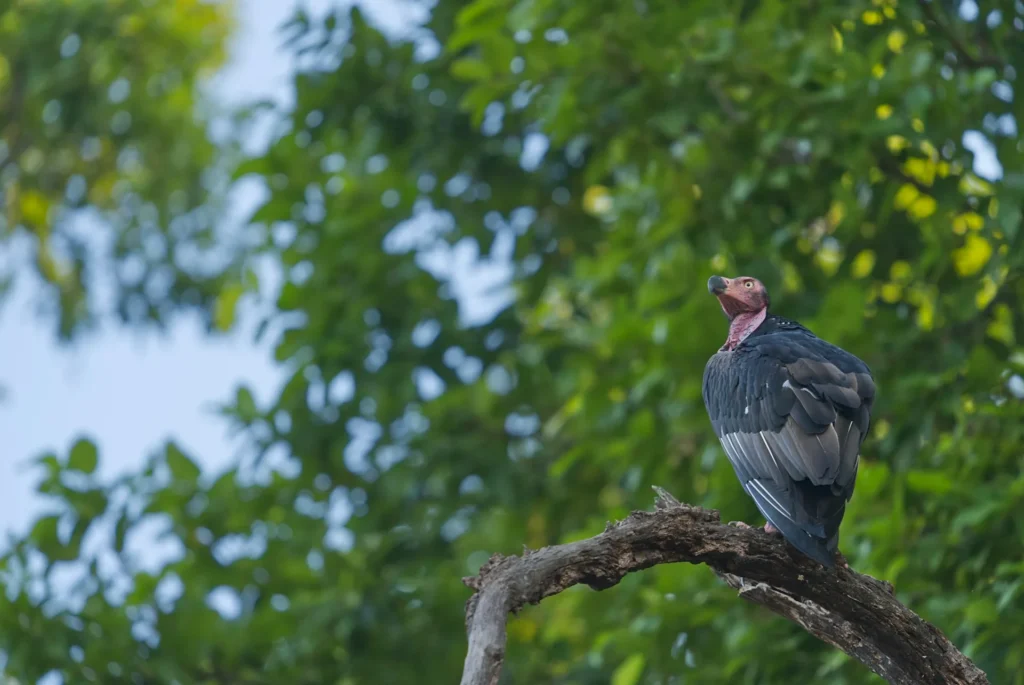
- Category: Critically Endangered Scavenger
- Field Marks: Unmistakable among Indian raptors. It features a deep black body, broad wings (approx. 75 cm), prominent white patches at the base of the neck and on the thighs, and a striking, bare reddish-orange head.
- Habitat: Wooded hills, dry deciduous forests, and open countryside.
- Best Locations: Central Indian tiger reserves and specific release sites in Assam.
- Conservation Status: Only around 2,000 individuals remain globally. Six individuals are scheduled for release in Assam in January 2026, marking the culmination of a 15-year dedicated conservation effort by the Bombay Natural History Society (BNHS).
Migratory Winter Visitors (Species 36–42: Seasonal Flyway Arrivals)
Every winter, India becomes the southern terminus of the Central Asian Flyway. Millions of birds cross the Himalayas from Siberia, Europe, and Central Asia to escape freezing temperatures. These seven species are the highlights of the winter birding calendar.
┌────────────────────────────────────────────────────────┐
│ SPECIES 36–42: MIGRATORY WINTER VISITORS │
├────────────────────────────────────────────────────────┤
│ 36. Siberian Crane 40. Demoiselle Crane │
│ 37. Bar-headed Goose 41. Amur Falcon │
│ 38. Greater Flamingo 42. Ruddy Shelduck │
│ 39. Northern Pintail │
└────────────────────────────────────────────────────────┘
36. Siberian Crane (Leucogeranus leucogeranus)
- Category: Endangered Winter Migrant
- Field Marks: A towering white crane (approx. 140 cm) with distinctive black wingtips visible only in flight, and long red legs.
- Origin: Siberia, completing a migration of over 4,000 km.
- Best Locations: Keoladeo National Park (Rajasthan) is the key viewing site.
- Peak Season: November to February.
- Conservation Status: Highly endangered, with fewer than 3,000 individuals remaining globally due to hunting and habitat loss along their migration route.
37. Bar-headed Goose (Anser indicus)
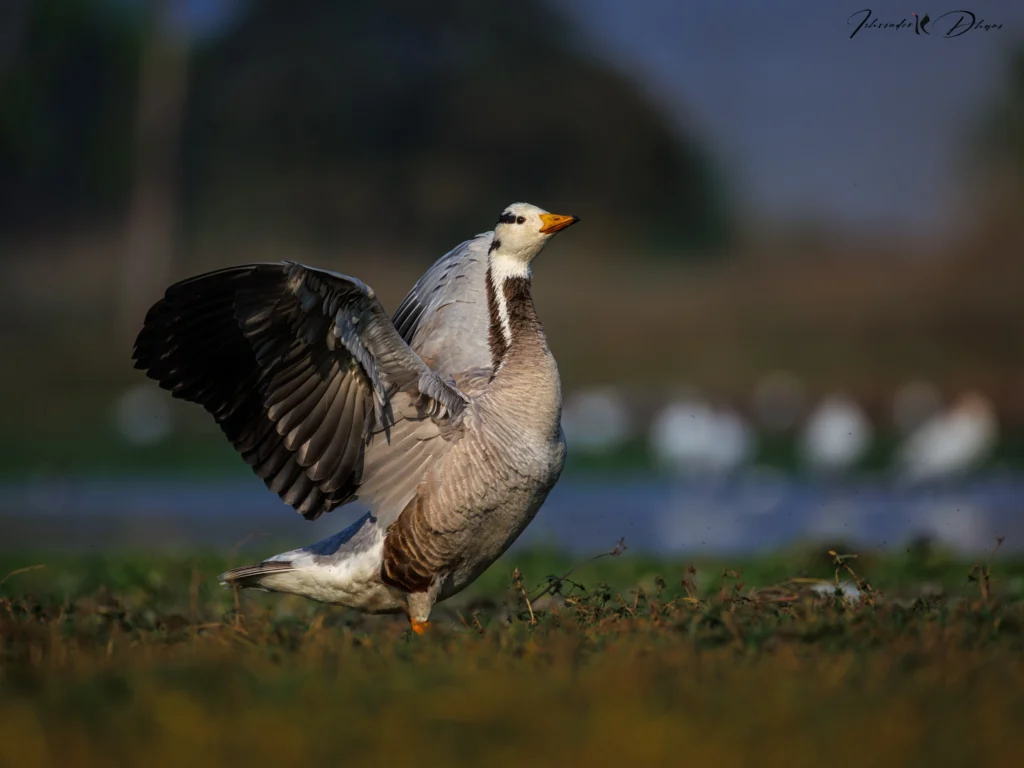
- Category: High-Altitude Migrant
- Field Marks: A pale grey goose (approx. 70 cm) easily identified by its white head featuring two distinct black bars wrapping around the back of the skull.
- Origin: Central Asia.
- Best Locations: High-altitude wetlands in Himachal Pradesh and Uttarakhand, as well as northern plains water bodies.
- Peak Season: November to February.
- Significance: Renowned for flying at extraordinary altitudes, passing 29,000 feet directly over the Himalayas during migration.
38. Greater Flamingo (Phoenicopterus roseus)
- Category: Coastal & Saline Migrant
- Field Marks: A massive waterbird standing up to 150 cm tall, featuring pale pink-white plumage and a massive 360 cm (nearly 12-foot) wingspan.
- Origin: Africa and the Middle East.
- Best Locations: Coastal wetlands including Chilika Lake (Odisha), Nal Sarovar, and the Little Rann of Kutch (Gujarat).
- Peak Season: November to February.
39. Northern Pintail (Anas acuta)
- Category: Wetland Duck
- Field Marks: An elegant, sleek brown duck (approx. 55 cm) notable for the male’s long, sharply pointed central tail feathers and crisp white breast.
- Origin: Europe and Central Asia.
- Best Locations: Lakes, open marshes, and Keoladeo National Park.
- Peak Season: November to February.
40. Demoiselle Crane (Grus virgo)
- Category: Grassland Migrant
- Field Marks: A small, elegant grey crane (approx. 100 cm) with a distinct white fringe of feathers running down the back of its neck.
- Origin: Central Asia.
- Best Locations: Khichan village in Rajasthan, where they gather in the thousands to feed.
- Peak Season: November to February.
41. Amur Falcon (Falco amurensis)
- Category: Long-Distance Migratory Raptor
- Field Marks: A small (30 cm) dark-grey falcon with striking bright red legs and cere (fleshy area above the bill).
- Origin: Migrates from Siberia to Africa, using India as a crucial stopover point.
- Best Locations: Donyi Polo Island in Nagaland and coastal areas of Kerala.
- Peak Season: October–November (southern migration) and February–March (northern return).
- Significance: Undertakes the longest known migration of any raptor, covering 22,000 km. Previously hunted heavily, it is now strictly protected during its Nagaland stopovers.
42. Ruddy Shelduck (Tadorna ferruganela)
- Category: Wetland Migrant
- Field Marks: A large (60 cm), striking duck with rich orange-brown plumage, a pale creamy head, and a contrasting black bill and tail.
- Origin: Central Asia.
- Best Locations: Inland wetlands, riverbanks, and city lakes across northern India, including Delhi.
- Peak Season: November to February.
Waterbirds & Wetland Species (Species 43–50: Sanctuary Specialists)
India’s lakes, rivers, and coastal lagoons host enormous congregations of waterbirds. To observe these eight species, focus your travel on designated wetland sanctuaries and Ramsar sites rather than dense forests.
┌────────────────────────────────────────────────────────┐
│ SPECIES 43–50: WETLAND & WATERBIRDS │
├────────────────────────────────────────────────────────┤
│ 43. Painted Stork 47. Common Teal │
│ 44. Spot-billed Pelican 48. Northern Shoveler │
│ 45. Sarus Crane 49. Siberian Rubythroat │
│ 46. Rosy Pelican 50. Eurasian Spoonbill │
└────────────────────────────────────────────────────────┘
43. Painted Stork (Psittoplus leucocephalus)
- Category: Colonial Wetland Wader
- Field Marks: A large (85 cm) white stork heavily marked with a yellow bill, an unfeathered orange face, pink-white wings, and a black-and-white barred breast band.
- Habitat: Large marshes, shallow lakes, and flooded trees.
- Best Locations: Keoladeo National Park (Rajasthan) and Ranganathittu Bird Sanctuary (Karnataka).
- Peak Season: November to February, when they form massive, noisy breeding colonies.
44. Spot-billed Pelican (Pelecanus philippensis)
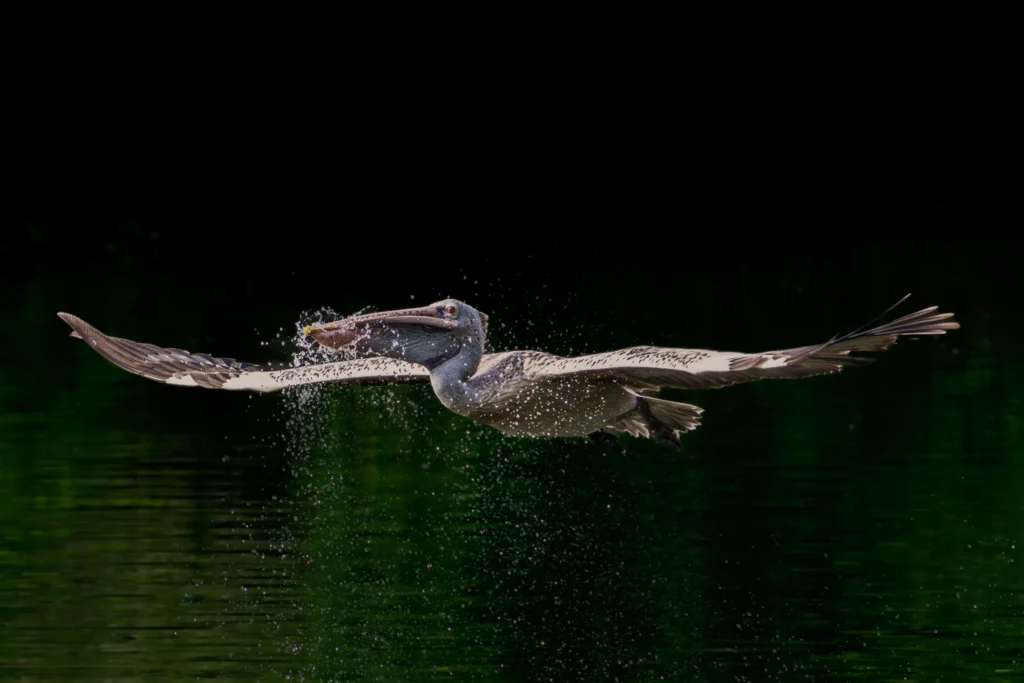
- Category: Colonial Waterbird
- Field Marks: A large, grey-white pelican featuring a prominent 150 cm wingspan and a distinct pinkish bill marked with dark spots along the upper mandible.
- Habitat: Large rivers, reservoirs, and inland lakes.
- Best Locations: Ranganathittu (where it is easily viewed from boats) and Keoladeo National Park.
- Peak Season: November to February for nesting colonies.
45. Sarus Crane (Grus antigone)
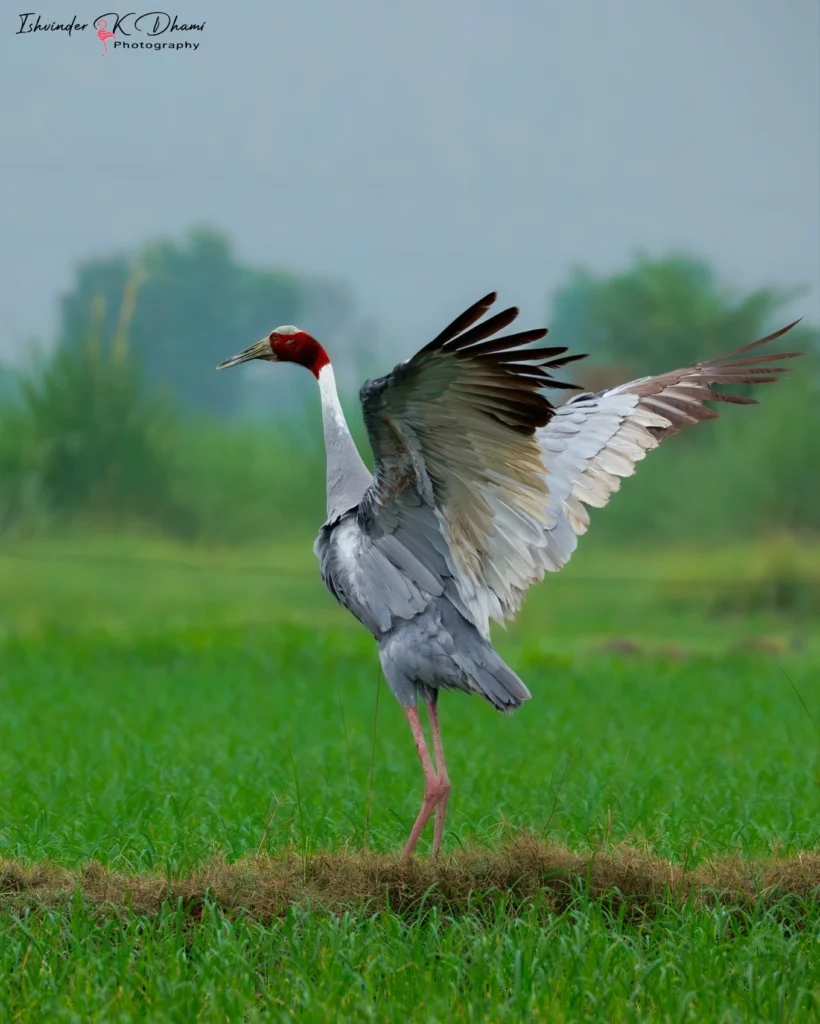
- Category: Wetland Resident / State Bird of Uttar Pradesh
- Field Marks: Standing at an imposing 150 cm, it features an entirely pale grey body contrasted by a bright red, naked head and upper neck, supported by the longest legs of any crane.
- Habitat: Open wetlands, marshes, and agricultural rice fields.
- Best Locations: Surha Tal Ramsar site (Uttar Pradesh) and Keoladeo National Park.
- Peak Season: Year-round; permanent resident.
- Significance: The world’s tallest flying bird.
46. Rosy Pelican (Pelecanus onococrotus)
- Category: Massive Migratory Pelican
- Field Marks: Considerably larger than the Spot-billed Pelican. Measures 180 cm in length with pinkish-white plumage, a massive bill pouch, and a staggering 360 cm (12-foot) wingspan.
- Origin: Northern Europe and Central Asia.
- Best Locations: Northern Indian wetlands, particularly Keoladeo.
- Peak Season: November to February.
47. Common Teal (Anas crecca)
- Category: Small Wetland Duck
- Field Marks: A highly compact duck (approx. 35 cm). Males have a greyish body, a chestnut head, and a sweeping metallic-green eye stripe extending to the nape.
- Origin: Europe and Central Asia.
- Best Locations: Margins of wetlands and shallow lakes across northern and central India.
- Peak Season: November to February.
48. Northern Shoveler (Spatula clypeala)
- Category: Distinctive Wetland Duck
- Field Marks: Medium-sized (50 cm) duck easily identified by its disproportionately huge, flattened, spoon-shaped bill used for filtering food. Males feature orange-brown flanks and a dark green head.
- Origin: Europe and Central Asia.
- Best Locations: Keoladeo National Park and large freshwater wetlands.
- Peak Season: November to February.
49. Siberian Rubythroat (Calliope calliope)
- Category: Migratory Warbler
- Field Marks: A tiny (14 cm) bird with grey-brown plumage, a strong white eyebrow, and (in males) a brilliant, unmistakable ruby-red throat patch.
- Origin: Northeast Siberia.
- Best Locations: Tall wetland grasses and thick underbrush in Northeast India.
- Peak Season: November to February.
50. Eurasian Spoonbill (Platalea leucorodia)
- Category: Distinctive Wetland Wader
- Field Marks: A tall (80 cm), entirely white wading bird with black legs and a long, spatulate, spoon-shaped black bill.
- Origin: Europe and Africa.
- Best Locations: Wetland shallows and mudflats, particularly in Keoladeo.
- Peak Season: November to February.
Field Identification Guide: Recognizing Birds by Key Features
Accurate field identification relies on rapidly analyzing a combination of features before the bird flies away. Use this guide to cross-reference plumage colors, relative size, distinctive calls, and foraging behavior.
Color-Based Identification Patterns
Color is often the first characteristic a beginner notices. Use this matrix to narrow down species based on their dominant plumage.
| Dominant Color | Key Species to Look For | Diagnostic Field Features | Best Viewing Conditions |
| Blue | White-throated Kingfisher, Purple Sunbird, Malabar Trogon | Iridescent wings or back catching the light. | Early morning light (5:00 AM – 9:00 AM). |
| Green | Rose-ringed Parakeet, Malabar Parakeet, Indian Greenbulb | Brightly colored body; blends heavily into canopy foliage. | Year-round; look for movement in the mid-canopy. |
| Red | Red-vented Bulbul, Red-wattled Lapwing, Flame-throated Bulbul | Distinct red accent patches (vent, eye-ring, or throat). | Year-round across urban and forest habitats. |
| Yellow | Indian Golden Oriole, Coppersmith Barbet | Bold yellow head markings or entire body plumage. | Highly visible during the spring breeding season. |
| Purple | Purple Sunbird (Male) | Metallic, iridescent purple-black reflecting in sunlight. | Morning light reveals the true color over black. |
| Black & White | Oriental Magpie-Robin, Black Drongo, House Crow | Stark contrast patterns; easy to spot in open areas. | Year-round, often perched on exposed branches or wires. |
Relative Size Reference Scale
Estimating a bird’s size in the field can be difficult without a point of reference. Compare the bird you see against these familiar size brackets.
| Size Bracket | Typical Length | Wingspan Estimate | Familiar Visual Reference | Example Indian Species |
| Tiny | < 10 cm | 12–15 cm | Mouse size | Purple Sunbird, Wren Babblers |
| Small | 10–20 cm | 25–30 cm | Pigeon size | Common Myna, Bulbul, Robin, Parakeet |
| Medium | 20–40 cm | 40–50 cm | Crow size | Asian Koel, Hornbill, Kingfisher, Lapwing |
| Large | 40–70 cm | 100–150 cm | Duck size | Indian Peafowl, Storks, Pelicans, Egrets |
| Giant | 70+ cm | 200–360 cm | Human height | Great Indian Bustard, Sarus Crane, Greater Flamingo |
Distinctive Vocalizations and Calls
In dense forests or thick urban canopies, you will frequently hear a bird long before you see it.
| Call Description | Primary Species | Call Transcription | Peak Activity |
| Metallic | Coppersmith Barbet | Rhythmic “tuk-tuk-tuk” resembling hammered metal. | Dawn and dusk throughout the day. |
| Whistling | Indian Golden Oriole | Melodious, far-carrying “peelak-peelak”. | Early morning during spring. |
| Cawing | House Crow | Loud, harsh, nasal “karr-karr”. | Active and vocal all day. |
| Shrill | Rufous Treepie & Lapwing | “Kotri-kotri” (Treepie) or rapid “Ti-tori-ti” (Lapwing). | Dawn and daytime. |
| Haunting | Asian Koel | Echoing, rising “koo-oo, koo-oo”. | Dawn, particularly pre-monsoon. |
Foraging Behaviors and Ecological Niches
Observing where and how a bird feeds provides vital clues to its identity.
- Ground Feeders: Species like the Indian Robin, Red-vented Bulbul, and Red-wattled Lapwing forage in the open. The Indian Robin often flaps its wings and cocks its tail to show off its white shoulder stripe while on the ground.
- Tree Dwellers: Parakeets, Mynas, Hornbills, and the Asian Koel spend their time in the canopy. Look for them in urban fruit trees and tall garden borders.
- Aquatic Hunters: Kingfishers dive sharply for fish, Pelicans feed cooperatively in columns, and Storks wade slowly through shallows. Focus on lake edges, riverbanks, and marshlands to spot them.
- Scavengers and Aerial Hunters: Black Kites, House Crows, and critically endangered Vultures circle on thermals above cities and coastlines seeking carrion or human refuse.
Expert Field Tip: Start by categorizing the bird’s habitat (ground, tree, or water), estimate its size using the reference table, and listen to its call. This process of elimination will help you identify the majority of common Indian birds within seconds.
Where to Spot Each Species: Regional Birding Destinations
India’s geographic diversity requires birders to plan regional itineraries rather than attempting a countrywide sweep in a single trip. The following destinations represent the most productive hubs for intersecting high species counts with accessibility.
Regional Birding Hubs Comparison
| Sanctuary / Location | State | Key Species Count | Primary Bird Targets | Accessibility |
| Keoladeo National Park | Rajasthan | 370–400+ | Siberian Crane, Painted Stork, Sarus Crane | Excellent; 230 km from Delhi. Paved trails for walking or cycling. |
| Corbett National Park | Uttarakhand | 550+ | Himalayan Monal, Red Jungle Fowl, Hornbills | Good; 290 km from Delhi. Requires safari vehicle bookings. |
| Eaglenest Wildlife Sanctuary | Arunachal Pradesh | ~500 | Bugun Liocichla, Blyth’s Tragopan, Ward’s Trogon | Extremely remote; requires permits, expert guides, and 4×4 vehicles. |
| Thattekad Bird Sanctuary | Kerala | 250 | Malabar Trogon, Sri Lanka Frogmouth, Hornbills | Good; accessible via eco-cottages. Dense forest requires walking. |
| Chilika Lake | Odisha | Wetland Ecosystem | Greater Flamingos, Pelicans, Wintering Ducks | Good; explored primarily via local boat safaris. |
North India: Himalayan Slopes and Indo-Gangetic Plains
Northern India offers a distinct altitudinal gradient. Keoladeo National Park in Rajasthan (formerly Bharatpur) stands as a premier wetland, hosting between 370 and 400 species, including massive breeding colonies of Painted Storks and rare wintering Siberian Cranes. Further north, Corbett National Park in Uttarakhand provides access to over 550 species of broadleaf and sub-Himalayan birds, such as the Red Jungle Fowl. For higher-altitude species like the Cheer Pheasant, birders head to Pangot near Nainital.
Northeast India: Rainforests and Altitudinal Endemics
The northeastern states offer dense, pristine evergreen forests that host highly restricted endemic species. Eaglenest Wildlife Sanctuary in Arunachal Pradesh is the exclusive home of the Bugun Liocichla, discovered in 2006, alongside ~500 other species. The Mishmi Hills provide a 5,000-meter altitude gradient, sheltering the Mishmi Wren Babbler and Sclater’s Monal. In Assam, Kaziranga National Park is critical for spotting the endangered Greater Adjutant and Bengal Florican among wintering Central Asian migrants.
Field Note: Birding in Northeast India is physically demanding. Destinations like Eaglenest are extremely remote, intersect with wild elephant corridors, and require specialized permits and expert local guides.
West India: Arid Grasslands and Saline Wetlands
Western India is defined by stark salt flats and scrub ecosystems. Nal Sarovar Bird Sanctuary in Gujarat, a designated Ramsar site, draws large numbers of Rosy Pelicans, storks, and herons between November and February. Nearby, the 5,000 sq. km Little Rann of Kutch transforms from a barren salt flat into a seasonal marshland, supporting 300 bird species including Lesser and Greater Flamingos, the Demoiselle Crane, and the Sociable Lapwing.
South India: Western Ghats Sholas and Island Ecosystems
South India is dominated by the Western Ghats, a mountain range sheltering 22 regionally endemic bird species. Thattekad Bird Sanctuary in Kerala (founded by Dr. Salim Ali) is heavily recognized as a significant Sub-Himalayan habitat, harboring 250 species including the Indian Pitta, Malabar Trogon, and Sri Lanka Frogmouth. Far offshore, the Andaman and Nicobar Islands present tropical rainforest habitats hosting 27 specific endemic species and subspecies, most notably the Narcondam Hornbill which is restricted to a single island.
East India: Mangrove Deltas and Brackish Lagoons
The eastern coast focuses on massive marine and brackish wetland systems. The Sundarbans in West Bengal—a 10,000 sq. km UNESCO World Heritage mangrove forest—supports over 300 bird species, including the Masked Finfoot, Mangrove Pitta, and Brown-winged Kingfisher, best explored via boat safaris. Further south in Odisha, Chilika Lake spans 1,100 sq. km as Asia’s largest brackish lagoon, becoming a primary wintering ground for thousands of Greater Flamingos and pelicans.
Urban Hotspots: Delhi, Mumbai, and Bengaluru
Birding in India does not strictly require wilderness travel. Delhi ranks as the second richest city globally for bird diversity (following Nairobi), holding records for 900 species. Hotspots like Lodhi Garden and Sanjay Van provide year-round access to the Indian Peafowl, Indian Grey Hornbill, and White-throated Kingfisher. In Mumbai, Marine Drive and Sanjay Gandhi National Park are productive for coastal wetland species and forest commoners. Bengaluru birders frequently utilize Lalbagh and Cubbon Park, with the Spot-billed Pelican colonies of Ranganathittu located just 90 km away.
Seasonal Birding Calendar: When to Plan Your Safari
Timing dictates visibility. Migratory arrivals, breeding plumage displays, and nesting behaviors follow strict seasonal rhythms across the subcontinent.
Seasonal Activity Calendar
| Season | Months | Primary Avian Activity | Key Target Species |
| Winter | Nov – Feb | Migratory arrivals from Central Asia and Siberia. | Siberian Crane, Amur Falcon, Greater Flamingo, Bar-headed Goose. |
| Spring | Mar – May | Resident courtship, vocalization, and breeding displays. | Indian Golden Oriole, Peafowl, Hornbills. |
| Monsoon | Jun – Sep | Widespread resident nesting; wetland expansion. | Coppersmith Barbet, Jungle Babbler, Black-rumped Flameback. |
| Autumn | October | Transition period; early migrants arrive while residents are active. | Transition diversity across all regions; Amur Falcon arrival (south). |
Winter Migratory Season (November–February)
Winter is the most productive period for birdwatching in India. The arrival of migratory species via the Central Asian Flyway maximizes species counts. Sites like Keoladeo, Chilika, and the Little Rann of Kutch reach peak capacity with populations of Siberian Cranes, Demoiselle Cranes, Northern Pintails, and Rosy Pelicans. The weather remains cool and dry, though early mornings in the northern plains and Himalayas can be remarkably cold.
Spring Courtship and Resident Breeding (March–May)
As temperatures rise, resident species begin their breeding cycles. This is the optimal window to observe elaborate courtship displays, such as the Indian Peafowl fanning its tail, and to hear peak vocalizations from the Indian Golden Oriole and Asian Koel. Broadleaf forests in the Western Ghats and Corbett National Park offer high visibility as trees shed their leaves before the rains.
Monsoon Nesting and Plumage (June–September)
While heavy rain and leeches make forest access challenging, the monsoon triggers a massive nesting response among resident species. Landscapes turn green and wetlands fill, providing essential resources for emerging chicks. Species like the Laughing Dove, Coppersmith Barbet, and various babbler groups are highly active around nests.
Autumn Transition Window (October)
October is frequently cited as the single best transitional month for overall birding. Post-monsoon skies are clear, resident species remain highly active, and the first waves of winter migrants—including the Amur Falcon pushing through southern India—begin to land.
Photography Tip: Regardless of the season, avian activity and vocalizations peak at dawn (5:00 AM to 9:00 AM) and dusk (4:00 PM to 6:00 PM). Schedule field sessions during these hours to secure the best lighting and highest sighting probabilities.
Conservation Status: Protecting Threatened Species
India serves as a critical stronghold for several globally threatened species. Habitat loss, high-voltage power lines, and agricultural chemicals have forced specific populations into steep declines, necessitating aggressive modern conservation responses.
Conservation Status Summary
| Species | Threat Level | Estimated Wild Population | Primary Threats | Key Conservation Sites |
| Great Indian Bustard | Critically Endangered | < 150 individuals | Power line collisions, habitat loss | Desert NP (Rajasthan), Nannaj (Maharashtra) |
| White-rumped Vulture | Critically Endangered | ~8,000 global (~6,000 India) | Veterinary drug poisoning (glossypiel/diclofenac) | Jatayu Centre, Maharashtra/Assam release sites |
| Long-billed Vulture | Critically Endangered | ~5,000 global | Veterinary drug poisoning | Jatayu Centre, Madhya Pradesh release sites |
| Red-headed Vulture | Critically Endangered | ~2,000 global | Veterinary drug poisoning | Assam release sites (BNHS programs) |
Great Indian Bustard: Grassland Status and Survival
The Great Indian Bustard (the state bird of Rajasthan) is currently India’s rarest bird, with a wild population of fewer than 150 individuals. Confined to arid grassland pockets in Rajasthan, Gujarat, and Maharashtra (where the Nannaj Sanctuary holds only 2 remaining individuals), the species is severely threatened by fatal strikes against overhead power lines and historic hunting. Conservationists are actively implementing capture-breeding programs and awareness campaigns to stabilize the remaining flocks.
The Indian Vulture Crisis and Captive Breeding Recovery
India’s three resident vulture species—the White-rumped, Long-billed, and Red-headed Vultures—are all classified as Critically Endangered. Their populations collapsed rapidly due to poisoning from glossypiel (and diclofenac), a veterinary drug used in cattle that causes fatal kidney failure in scavenging birds feeding on carcasses. Today, the White-rumped Vulture numbers roughly 6,000 in India, while the Long-billed and Red-headed populations hover at 5,000 and 2,000 respectively.
Conservation Milestones (2025–2026 Releases and Ramsar Expansion)
Recent years have marked significant turning points for Indian ornithology. On Earth Day (April 22, 2025), a major milestone was achieved when 34 critically endangered vultures (20 Long-billed and 14 White-rumped) were successfully moved from the Jatayu Conservation Breeding Centre in Haryana to Maharashtra, alongside the first major vulture releases in Madhya Pradesh.
This momentum continued into 2026. In January 2026, the Bombay Natural History Society (BNHS) scheduled the release of six critically endangered vultures in Assam, culminating a 15-year captive breeding effort. Simultaneously, the Tamil Nadu Forest Department moved to formalize a dedicated Vulture Safe Zone to protect remaining wild populations. On a broader habitat scale, India officially reached a landmark of 100 Ramsar Sites in June 2026, with the inclusion of the Jai Prakash Narayan Bird Sanctuary (Surha Tal) in Uttar Pradesh, securing vast tracts of crucial waterbird habitat.
Beginner’s Field Kit and Safari Ethics
You do not need expensive equipment to begin birdwatching in India. Starting locally and investing in a few essential items will provide a much better experience than purchasing heavy, complicated gear before you understand field basics.
Recommended Optics and Field Clothing
A heavy camera is less useful than a good pair of binoculars for a beginner.
- Binoculars: Choose 8×42 or 10×42 binoculars; these magnifications offer high light transmission without being too heavy for extended field use. Basic models cost between ₹1,500 and ₹3,000, while durable mid-range options run from ₹5,000 to ₹10,000.
- Field Clothing: Always wear neutral colors (olive, brown, or dull green) to avoid startling wildlife. Include comfortable walking shoes, a wide-brimmed hat, and rain gear if traveling during the monsoon.
- Accessories: Carry a minimum of two liters of water, SPF 50+ sun protection, and a dedicated lens cleaning kit to protect your optics from high humidity and trail dust. If you choose to photograph, a DSLR camera with a 300mm or longer lens is recommended.
Digital Identification Apps and Citizen Science Tools
Heavy field guides are useful at the lodge, but mobile apps are highly practical in the field.
- eBirdIndia: A free, comprehensive app for tracking sightings and identifying regional Indian birds.
- iNaturalist: A global citizen science app that features robust, localized Indian identification guides.
- Digital Field Guides: The digital version of “Birds of India” by Salim Ali remains the authoritative reference for behavior and distribution.
Ethical Field Protocols and Nest Protection
The welfare of the bird always takes priority over a sighting or a photograph.
- Maintain Distance: Keep a minimum distance of 10 to 15 meters from any bird, and extend this to 50+ meters if you spot an active nest.
- Keep Quiet: Speak in low tones and keep physical movements minimal to avoid triggering a bird’s flight response.
- Respect Habitat Rules: Stay on designated sanctuary trails, do not remove native plants, and always hire certified local guides to support conservation-focused local economies.
Common Birdwatching Mistakes in India
- Using Audio Playback: Never play recorded bird calls from your phone to attract a species. This aggressively disrupts natural territorial and foraging behavior and is strictly prohibited in most sanctuaries.
- Birding at the Wrong Time: Walking into a park at noon will result in very few sightings. Birds are highly active and vocal during the cooler hours of 5:00 AM to 9:00 AM, and again from 4:00 PM to 6:00 PM.
- Ignoring Urban Wildlife: Beginners often assume they must travel to a national park to see birds. Cities like Delhi host over 900 species; start by observing the complex behaviors of the birds in your own backyard.
- Using Flash Photography: Never use a flash, especially in dense, shaded forests like the Western Ghats. It disorients the birds and can temporarily blind nocturnal or crepuscular species.
20 Frequently Asked Questions About Birdwatching in India
1. What is the national bird of India?
The Indian Peafowl (Pavo cristatus), a culturally significant and widespread species found across the country.
2. How many bird species are recorded in India?
India hosts between 1,353 and 1,396 bird species, representing roughly 12.4% of all global avian diversity.
3. Which birds are endemic to India?
There are 75 to 78 endemic bird species found only in India. High concentrations exist in the Western Ghats (22 species) and the Andaman Islands (27 species).
4. What is the rarest bird in India?
The Great Indian Bustard is India’s rarest bird, with fewer than 150 individuals remaining in the wild.
5. Where can I spot the Great Indian Bustard?
The remaining populations are confined primarily to the Nannaj Sanctuary in Maharashtra (which holds only two individuals) and the arid grasslands near Jaisalmer, Rajasthan.
6. What are the most common birds in Delhi?
Delhi is the second richest bird city globally; its most common species include the House Crow, Common Myna, Rose-ringed Parakeet, Red-vented Bulbul, Indian Peafowl, and the House Sparrow (Delhi’s state bird).
7. Which migratory birds visit India in winter?
Key winter arrivals include the Siberian Crane, Greater Flamingo, Demoiselle Crane, Northern Pintail, Bar-headed Goose, Amur Falcon, and Rosy Pelican.
8. What is the best month for birdwatching in India?
November through February is the peak window for migratory species, while October is widely considered the best transition month overall.
9. Where can I see hornbills in India?
The Indian Grey Hornbill is common in urban areas (and is the state bird of Chandigarh), the Malabar Grey Hornbill is endemic to the Western Ghats, and the Great Hornbill serves as the state bird for both Arunachal Pradesh and Kerala.
10. Do Indian states have official state birds?
Yes, 36 states and Union Territories have designated official birds. Examples include the Great Indian Bustard (Rajasthan), the Flame-throated Bulbul (Goa), and the Asian Koel (Kerala).
11. Which Indian birds are critically endangered?
The Great Indian Bustard, White-rumped Vulture, Long-billed Vulture, and Red-headed Vulture are all classified as Critically Endangered.
12. Where can I spot the Siberian Crane?
The highly endangered Siberian Crane migrates 4,000 km to winter in Keoladeo National Park in Rajasthan between November and February.
13. What are the easiest birds for beginners to identify?
Urban residents like the Indian Peafowl, Common Myna, Rose-ringed Parakeet, Red-vented Bulbul, and House Crow are easy to locate and have distinct, unmistakable features.
14. Which Indian birds are best for photography?
The White-throated Kingfisher, Malabar Trogon, Indian Peafowl, Spot-billed Pelican, and the Great Indian Bustard offer excellent photography opportunities due to their bold colors or striking sizes.
15. Where can I see the Bugun Liocichla?
The Bugun Liocichla was discovered in 2006 and is found exclusively within the Eaglenest Wildlife Sanctuary in Arunachal Pradesh.
16. What are the most colorful birds native to India?
Top colorful species include the Purple Sunbird (iridescent purple), White-throated Kingfisher (turquoise), Indian Golden Oriole (bright yellow), and the Malabar Trogon (crimson red).
17. Which vulture species are found in India?
India is home to the White-rumped, Long-billed, and Red-headed Vultures. All suffered massive declines but are currently part of active release and captive breeding programs.
18. Where is the best place to observe Painted Storks?
Keoladeo National Park in Rajasthan hosts massive breeding colonies, and the Ranganathittu boat sanctuary in Karnataka offers close viewing.
19. What birds can I see from my backyard in India?
Most Indian gardens host the Common Myna, Rose-ringed Parakeet, Red-vented Bulbul, House Crow, Indian Robin, Purple Sunbird, Oriental Magpie-Robin, Coppersmith Barbet, and Jungle Babbler.
20. How can I identify Indian birds by their calls?
Listen for distinct phrasing: the Coppersmith Barbet’s metallic “tuk-tuk-tuk”, the Golden Oriole’s melodious “peelak-peelak”, the House Crow’s harsh “karr-karr”, the Rufous Treepie’s shrill “kotri-kotri”, and the Asian Koel’s rising “koo-oo”.
Conclusion & Next Steps
India’s avian landscape—encompassing 1,353 to 1,396 species across 467 Important Bird Areas and 100 Ramsar sites—presents a world-class environment for wildlife observation. You do not need to book an expensive safari to start. The country’s strong urban birding culture, recognized by a 4th place global ranking in the 2026 Great Backyard Bird Count, proves that exceptional wildlife exists within our city limits.
Your Beginner Action Plan
- Target Your First 10 Species: Step outside and locate the Indian Peafowl, Common Myna, Rose-ringed Parakeet, Red-vented Bulbul, House Crow, White-throated Kingfisher, Indian Robin, Purple Sunbird, Oriental Magpie-Robin, and Red-wattled Lapwing.
- Acquire Basic Optics: Purchase an entry-level 8×42 binocular and download the free eBirdIndia application.
- Plan Seasonally: Practice your skills on resident backyard birds during the spring and summer, then plan a trip to a sanctuary like Keoladeo or Chilika between November and February to witness the winter migrants.
- Download Your Field Resource: To track your sightings effectively, download a complete India Top 50 Birds Checklist PDF to log your life list, note specific behavioral observations, and organize your seasonal travel planning.
Whether you are tracking the metallic call of a Coppersmith Barbet in a Delhi park or searching for the elusive Bugun Liocichla in the dense broadleaf forests of Arunachal Pradesh, practical observation and patience will always be your best tools in the field.