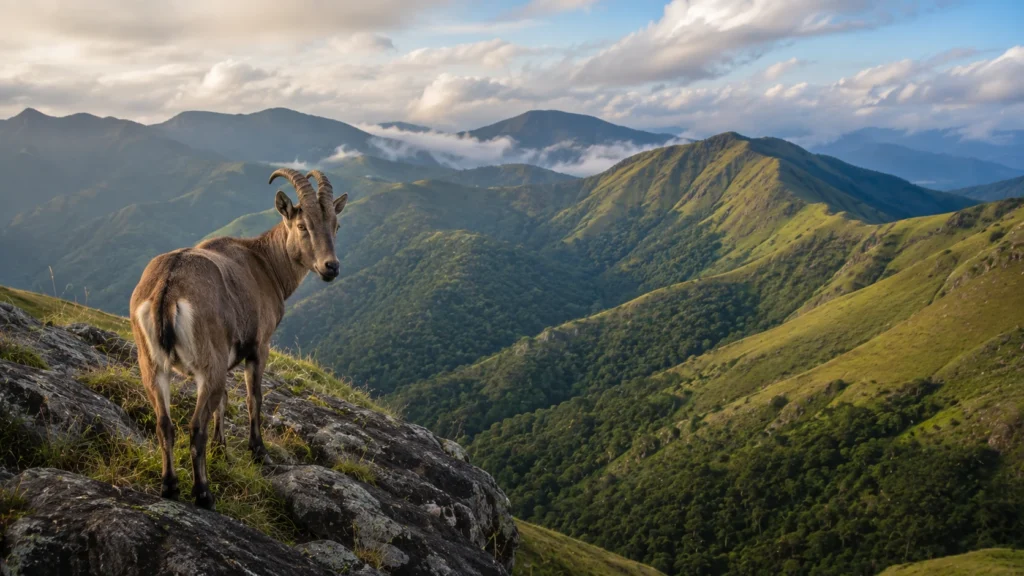
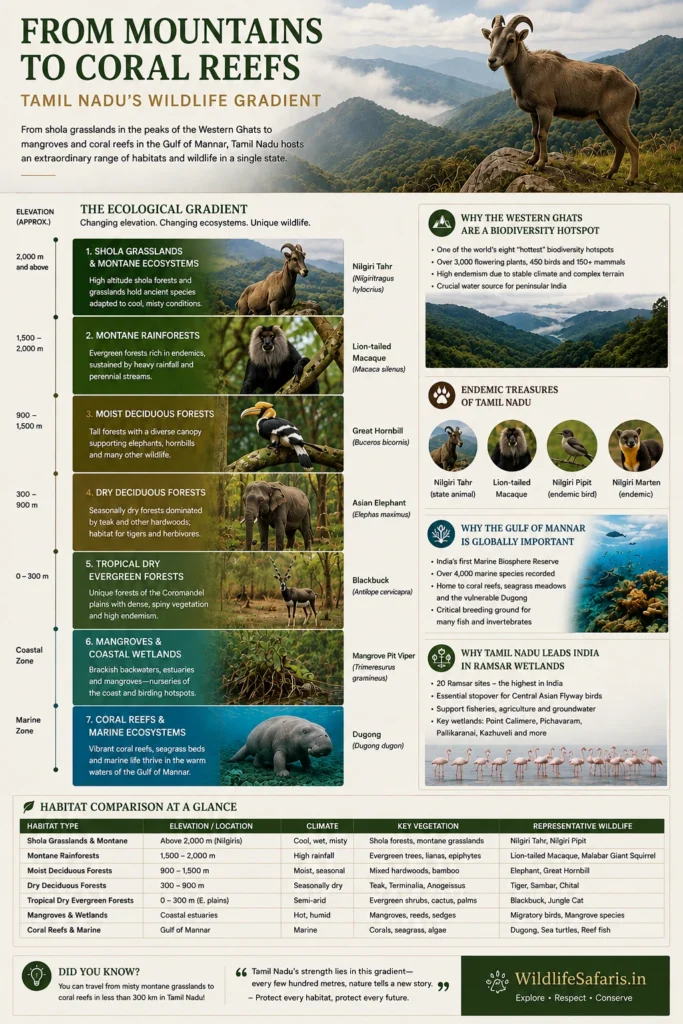
Tamil Nadu, the southernmost state of the Indian peninsula, presents a striking ecological tapestry that spans the Coromandel Coast along the Bay of Bengal to the towering, mist-shrouded peaks of the Western and Eastern Ghats, which converge at the Nilgiris. Experiencing a distinct climate driven largely by the retreating northeast monsoon, the state sustains a forest cover of roughly twenty per cent. Its vegetation features a dramatic gradient, ranging from coastal mangroves and the highly specialised tropical dry evergreen forests on the eastern plains to pristine tropical montane rainforests and high-altitude shola grasslands in the Western Ghats.
The state is globally significant for both its terrestrial and marine biodiversity, anchored by three vast Biosphere Reserves: Nilgiri, Gulf of Mannar, and Agasthyamalai. The Western Ghats are a crucible of endemism, harbouring the state animal, the endangered Nilgiri tahr, which expertly navigates the precipitous slopes of Mukurthi and Eravikulam (bordering Kerala), alongside the lion-tailed macaque. The state boasts five thriving Tiger Reserves—Mudumalai, Anamalai, Sathyamangalam, Kalakad Mundanthurai, and Srivilliputhur-Megamalai—creating immense contiguous landscapes that support massive populations of the Asian elephant and Bengal tiger.
Off the southeast coast, the Gulf of Mannar Marine National Park protects South Asia’s first marine biosphere reserve, offering sanctuary to extensive coral reefs and the globally vulnerable dugong (sea cow). Furthermore, Tamil Nadu holds the extraordinary distinction of hosting twenty Ramsar-designated wetlands—the highest number in India. Sites like Point Calimere, Pichavaram, and Pallikaranai marsh provide critical refuge for millions of migratory birds along the Central Asian Flyway. Conservation in Tamil Nadu efficiently blends sophisticated urban wildlife management, such as the blackbuck populations within Chennai’s Guindy National Park, with aggressive protection of its vast, rugged hinterlands.
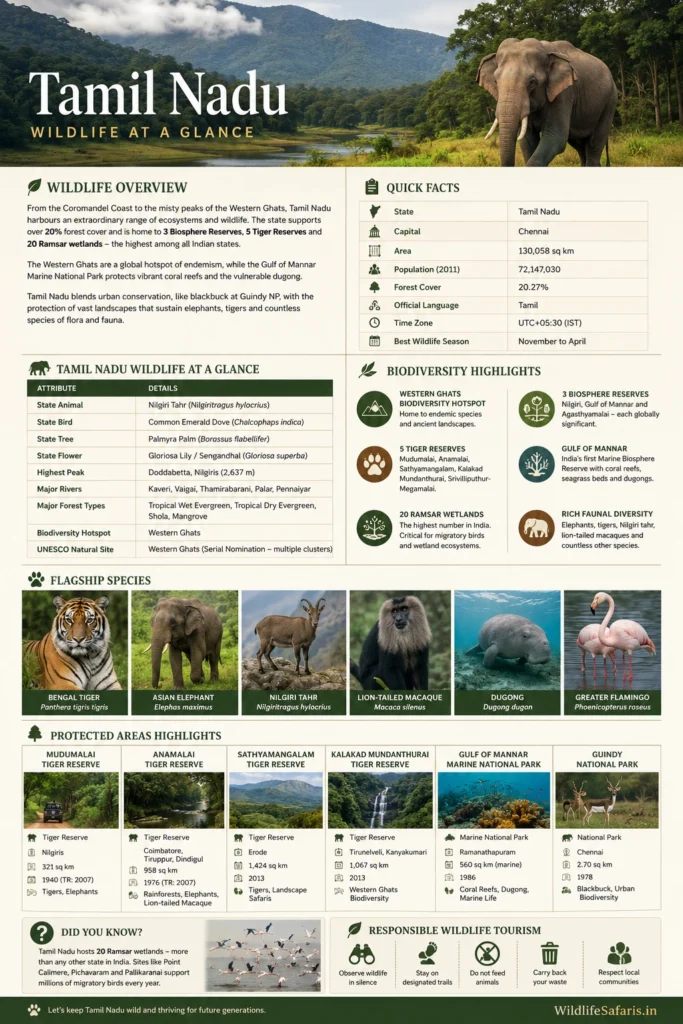
Quick Facts Table
| Category | Details |
| State / Union Territory | Tamil Nadu |
| Capital | Chennai |
| Area | 130,058 sq km |
| Population | 72,147,030 (2011 Census) |
| Forest Cover | 20.27% |
| Official Language(s) | Tamil |
| Time Zone | UTC+05:30 (IST) |
| Best Wildlife Season | November to April |
State Wildlife Master Table
| Attribute | Details |
| State / Union Territory | Tamil Nadu |
| Capital | Chennai |
| Geographic Region | Coromandel Coast, Western Ghats, Eastern Ghats |
| Total Area | 130,058 sq km |
| Forest Cover | 20.27% |
| State Animal | Nilgiri Tahr (Nilgiritragus hylocrius) |
| State Bird | Common Emerald Dove (Chalcophaps indica) |
| State Tree | Palmyra Palm (Borassus flabellifer) |
| State Flower | Gloriosa Lily / Sengandhal (Gloriosa superba) |
| Highest Peak | Doddabetta, Nilgiris (2,637 m) |
| Major Rivers | Kaveri, Vaigai, Thamirabarani, Palar, Pennaiyar |
| Major Forest Types | Tropical Wet Evergreen, Tropical Dry Evergreen, Shola, Mangrove |
| Biodiversity Hotspot | Western Ghats |
| UNESCO Natural Sites | Western Ghats (Serial Nomination – multiple clusters) |
| Biosphere Reserves | Nilgiri, Gulf of Mannar, Agasthyamalai |
| Tiger Reserves | Mudumalai, Anamalai, Sathyamangalam, Kalakad Mundanthurai, Srivilliputhur-Megamalai |
| Elephant Reserves | Nilgiri, Coimbatore, Anamalai, Srivilliputhur, Agasthyamalai |
| National Parks | Guindy, Gulf of Mannar Marine, Indira Gandhi (Anamalai), Mudumalai, Mukurthi |
| Wildlife Sanctuaries | 30+ Sanctuaries (including Point Calimere, Grizzled Squirrel, Vedanthangal, Kodaikanal) |
| Conservation Reserves | Tiruppadaimarathur, Suchindram Theroor, Kadavur Slender Loris |
| Community Reserves | Not officially specified |
| Ramsar Sites | 20 Sites (including Point Calimere, Pichavaram, Pallikaranai, Kazhuveli) |
| Important Bird Areas (IBAs) | 35+ IBAs including Pulicat Lake, Vedanthangal, Gulf of Mannar |
| Major Wildlife Corridors | Sathyamangalam-Mudumalai Corridor, Elephant Corridors of the Nilgiris |
| Flagship Mammals | Bengal Tiger, Asian Elephant, Nilgiri Tahr, Lion-tailed Macaque, Dugong |
| Flagship Birds | Common Emerald Dove, Greater Flamingo, Great Hornbill, Spot-billed Pelican |
| Endemic Wildlife | Nilgiri Tahr, Lion-tailed Macaque, Nilgiri Pipit, Nilgiri Marten |
| Best Wildlife Destinations | Mudumalai TR, Anamalai TR, Gulf of Mannar, Vedanthangal |
| Best Time for Wildlife Tourism | November to April |
| Nearest International Airports | Chennai, Coimbatore, Madurai, Tiruchirappalli |
| Official Forest Department Website | forests.tn.gov.in |
Protected Areas Summary Table
| Protected Area | Category | District | Area (sq km) | Year Established | Famous For |
| Anamalai Tiger Reserve (Indira Gandhi NP) | Tiger Reserve | Coimbatore, Tiruppur | 958.59 | 1989 (NP), 2007 (TR) | Lion-tailed Macaque, Great Hornbill, Elephants |
| Mudumalai Tiger Reserve | Tiger Reserve | Nilgiris | 321.00 (Core) | 1940 (NP), 2007 (TR) | High Tiger Density, Dhole, Asian Elephant |
| Sathyamangalam Tiger Reserve | Tiger Reserve | Erode | 1,411.60 | 2013 (TR status) | Eastern & Western Ghats Confluence, Leopards |
| Kalakad Mundanthurai Tiger Reserve (KMTR) | Tiger Reserve | Tirunelveli, Kanyakumari | 895.00 | 1988 | Agasthyamalai Ecology, Tigers, River Source |
| Srivilliputhur-Megamalai TR | Tiger Reserve | Virudhunagar, Theni | 1,016.57 | 2021 (TR status) | Grizzled Giant Squirrel, Tiger Corridors |
| Gulf of Mannar Marine NP | National Park | Ramanathapuram, Thoothukudi | 6.23 (Islands) | 1980 | Dugong, Coral Reefs, Marine Dolphins |
| Mukurthi National Park | National Park | Nilgiris | 78.46 | 1990 | Nilgiri Tahr, Pristine Shola Grasslands |
| Guindy National Park | National Park | Chennai | 2.70 | 1976 | Urban Blackbuck, Spotted Deer, Jackal |
| Point Calimere WLS | Wildlife Sanctuary | Nagapattinam | 377.00 | 1967 | Ramsar Site, Flamingos, Blackbuck, Feral Ponies |
| Vedanthangal Bird Sanctuary | Wildlife Sanctuary | Chengalpattu | 0.30 | 1936 | Oldest Bird Sanctuary in India, Heronry |
| Pichavaram Mangrove Forest | Wildlife Sanctuary | Cuddalore | 1,478.64 (Ramsar area) | 2022 (Ramsar) | World’s second-largest mangrove forest |
Wildlife Highlights
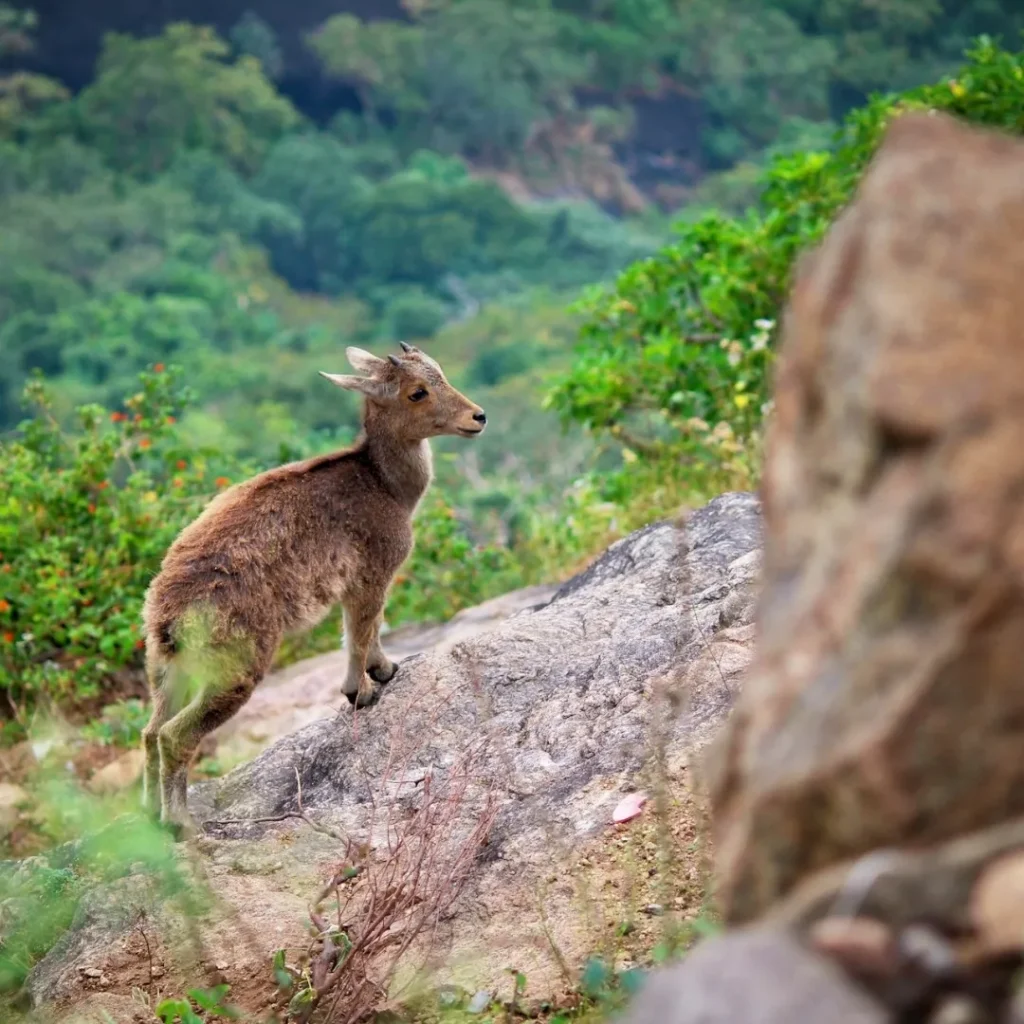
Image : A Juvenile Nilgiri Tahr
- Top Mammals: Bengal Tiger, Asian Elephant, Nilgiri Tahr, Lion-tailed Macaque, Dugong (Sea Cow), Grizzled Giant Squirrel, Dhole (Indian Wild Dog), Indian Leopard, Blackbuck, Nilgiri Marten, Slender Loris.
- Top Birds: Common Emerald Dove, Great Hornbill, Greater Flamingo, Spot-billed Pelican, Painted Stork, Sri Lanka Frogmouth, Nilgiri Wood Pigeon.
- Reptiles & Amphibians: King Cobra, Malabar Pit Viper, Mugger Crocodile, Olive Ridley Sea Turtle, numerous endemic shieldtail snakes.
- Flagship Flora: Palmyra Palm, Gloriosa Lily (Sengandhal), Kurinji (Strobilanthes kunthiana), extensive Teak and Sandalwood forests, coastal Mangroves (Rhizophora).
- Best Wildlife Experiences: Elephant safaris and tiger tracking in Mudumalai, observing the Lion-tailed Macaque in the rainforests of Valparai (Anamalai), glass-bottom boat rides over Gulf of Mannar corals, and winter birding at Vedanthangal and Pichavaram.
Conservation Challenges
- Linear Infrastructure through Corridors: Highways traversing crucial elephant corridors, particularly around Mudumalai and Sathyamangalam (such as the NH-181 and NH-948), result in tragic roadkills and severely restrict the genetic flow of mega-herbivores.
- Human-Elephant Conflict (HEC): Rapid agricultural expansion and the proliferation of tea/coffee estates in the Nilgiris and Anamalai landscapes push elephants into direct conflict with humans over shrinking resources, leading to significant crop damage and casualties.
- Invasive Weeds: The insidious spread of invasive species like Lantana camara, Prosopis juliflora, and Senna spectabilis chokes the native undergrowth in dry deciduous reserves, drastically reducing natural fodder for deer and elephants.
- Marine Poaching and Pollution: The Gulf of Mannar faces persistent threats from illegal bottom-trawling, coral mining, and industrial effluent discharge, which degrade the sensitive coral reefs and threaten the highly endangered Dugong.
- Wetland Encroachment: Despite holding the highest number of Ramsar sites, coastal and urban wetlands (like Pallikaranai marsh) battle continuous pressure from garbage dumping, untreated sewage, and unregulated real estate development.
- Shola Degradation: The unique, high-altitude Shola-grassland mosaics of the Nilgiris are highly susceptible to climate change and historical conversions into commercial wattle and eucalyptus plantations.
Responsible Wildlife Tourism
- Observe Night Traffic Bans: Strictly adhere to night-time driving bans on highways passing through Mudumalai and Sathyamangalam. These rules are vital to prevent nocturnal roadkills of elephants, leopards, and amphibians.
- Respect High-Altitude Ecology: When visiting Mukurthi National Park, remain solely on designated trails. The Shola grasslands are incredibly fragile, and trampling destroys the delicate root systems of endemic flora.
- Marine Etiquette: Do not touch, kick, or stand on the coral reefs when snorkelling or taking boat rides in the Gulf of Mannar. Corals are living, highly sensitive organisms.
- Quiet Birdwatching: At ancient, compact heronries like Vedanthangal, maintain absolute silence. Loud noises from tourists cause immense stress to thousands of nesting birds.
- Avoid Wild Feeding: Never feed the Bonnet Macaques or Nilgiri Langurs along the ghat roads to Valparai or Ooty; it habituates them to vehicles and drastically increases their mortality rate.
- Ethical Primate Viewing: If encountering Lion-tailed Macaques in the Anamalai ranges, keep a respectful distance and do not use flash photography.
Did You Know?
- Tamil Nadu holds the impressive record for the highest number of Ramsar sites (Wetlands of International Importance) in India, totaling 20 sites as of 2026.
- The Gulf of Mannar was the first Marine Biosphere Reserve to be established in South and South-East Asia.
- Guindy National Park in Chennai is one of the very few national parks in the world situated entirely within the limits of a major metropolitan city.
- Sathyamangalam Tiger Reserve acts as an indispensable ecological bridge, connecting the Eastern Ghats and the Western Ghats, facilitating massive wildlife migrations.
- The state flower, the Gloriosa Lily (Sengandhal), contains highly toxic alkaloids but is extensively harvested for its profound medicinal properties.
- Vedanthangal Bird Sanctuary is arguably the oldest water bird sanctuary in India; the local villagers have fiercely protected the nesting birds for over 250 years, recognising that the bird guano acts as a natural, potent fertiliser for their crops.
Safari Planning : Topics Cluster
- How to book a wildlife safari in India?
- Park by Park Online Safari Booking Guide
- Tiger Safari India Planning Workbook
- Park by Park Safari Permits Guide
- National Parks Permit Guide – Park by Park Guide
- Tatkal Safari Booking Guide – Last Minute Safari Permits Booking
- Tiger Safari in India Cost
- Indian Wildlife Safari Budget Planner
- Jeep vs Canter Safari
- Best time for Tiger Sightings in India
- How far advanced should you book safari permits?
- Can foreigners book Indian Wildlife Safari online?
- Special Permits Guide for Foreigners and Domestic Visitors
- How to book a Safari Permit online in India? 2026 step by step guide
- Senior Citizens Friendly Safari Planning
- Multi Generation Family Safari Planning
- 50 things to know before your first safari in India