
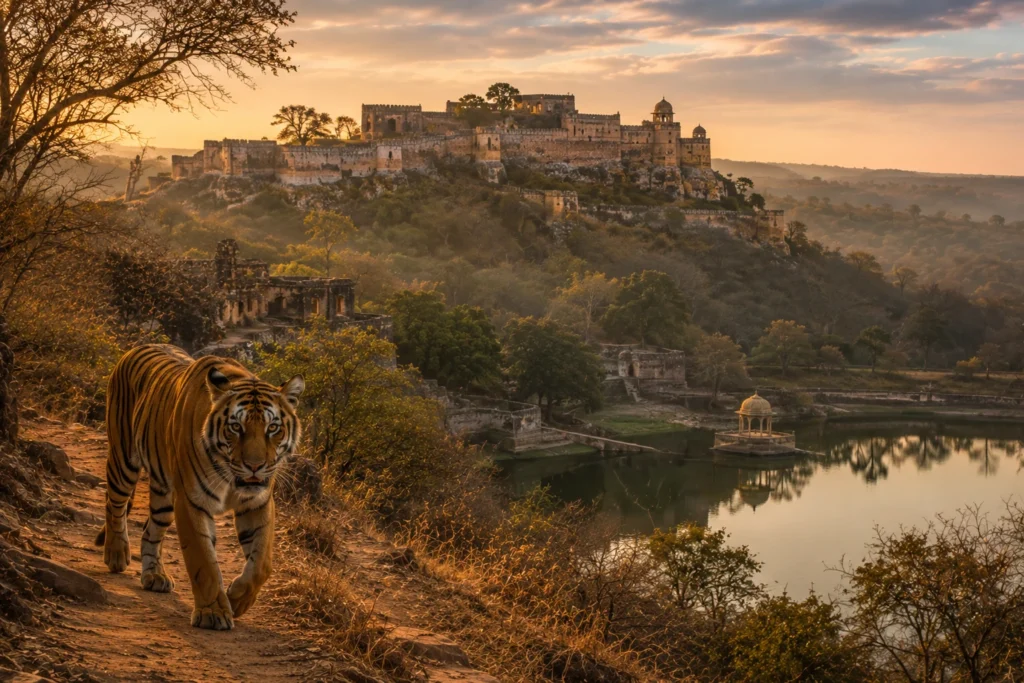
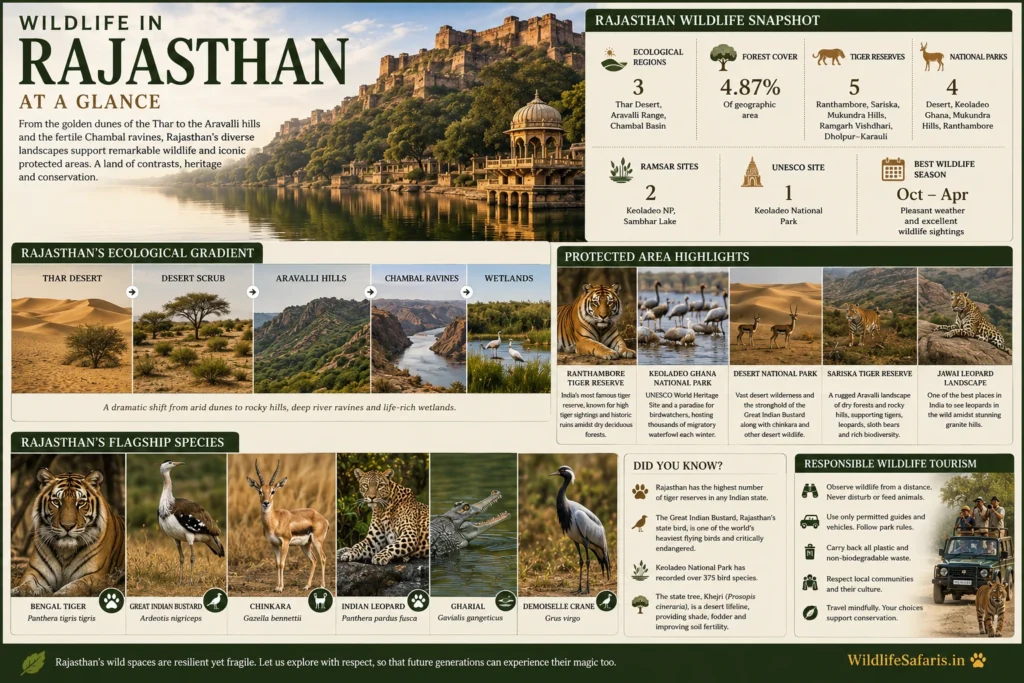
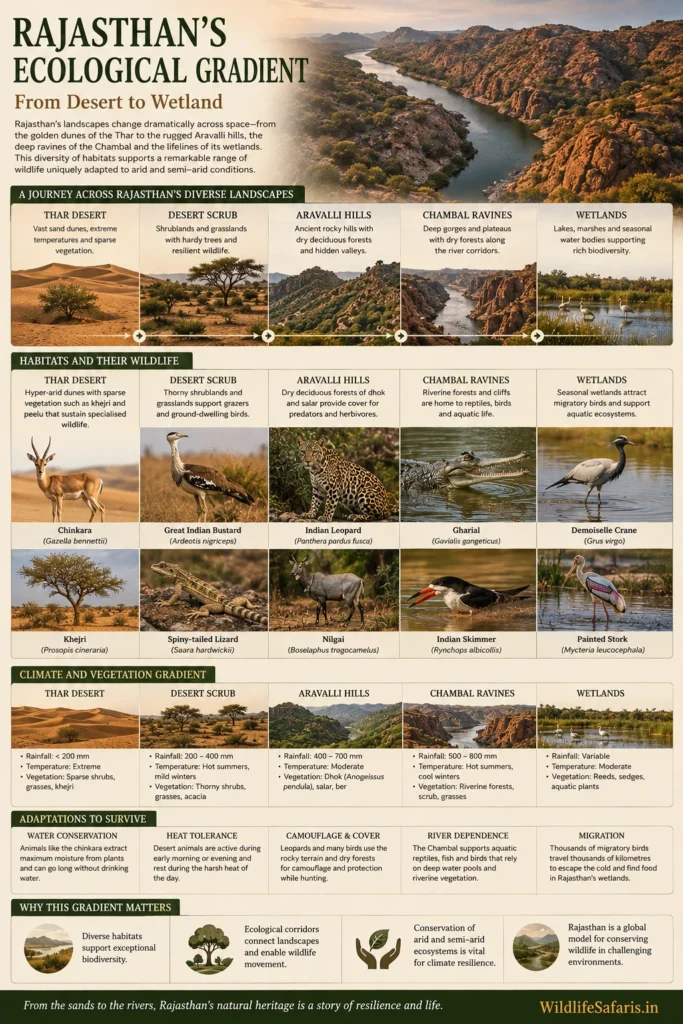
Rajasthan, India’s largest state by area, encompasses a starkly beautiful and highly diverse ecological gradient. The topography transitions from the hyper-arid, sweeping sand dunes of the Thar Desert in the west to the ancient, rugged Aravalli Range bisecting the state, and further into the fertile, riverine ravines of the Chambal basin in the southeast. Experiencing a predominantly arid to semi-arid climate, the state records a low forest cover of approximately 4.87 per cent of its geographical area. However, the vegetation is highly specialised, featuring tropical dry deciduous forests, expanses of thorny scrub, and unique desert flora dominated by the state tree, the resilient Khejri.
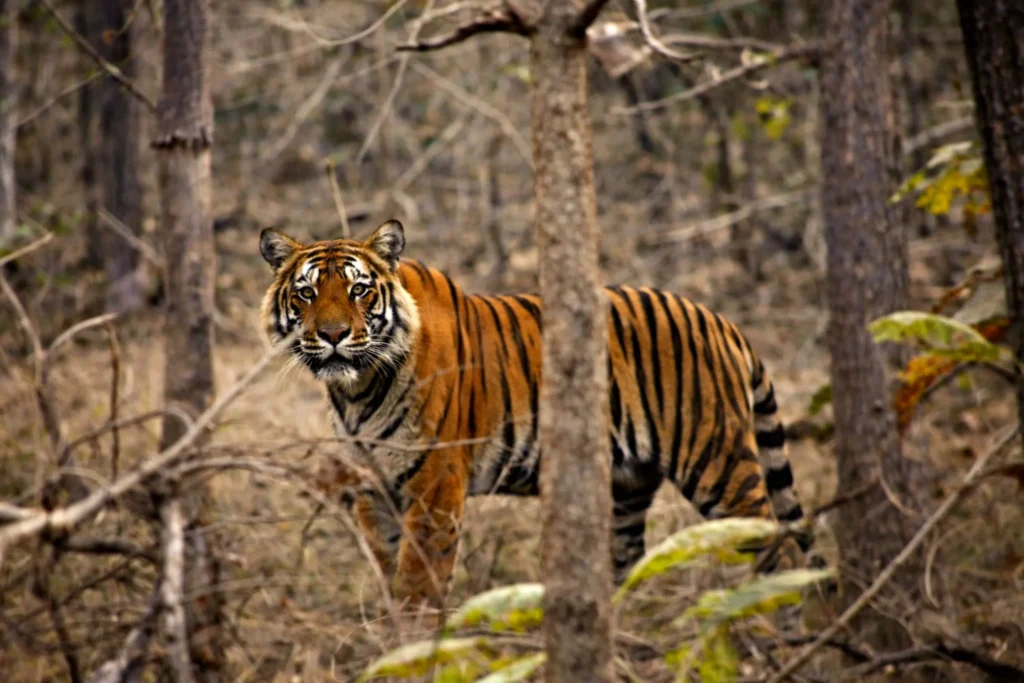
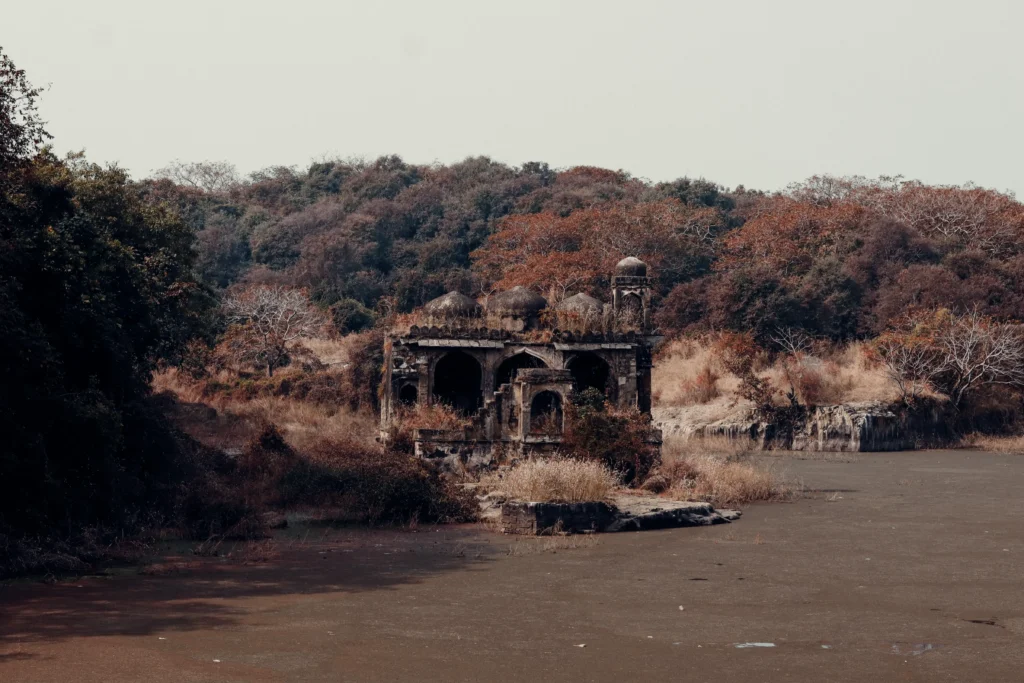
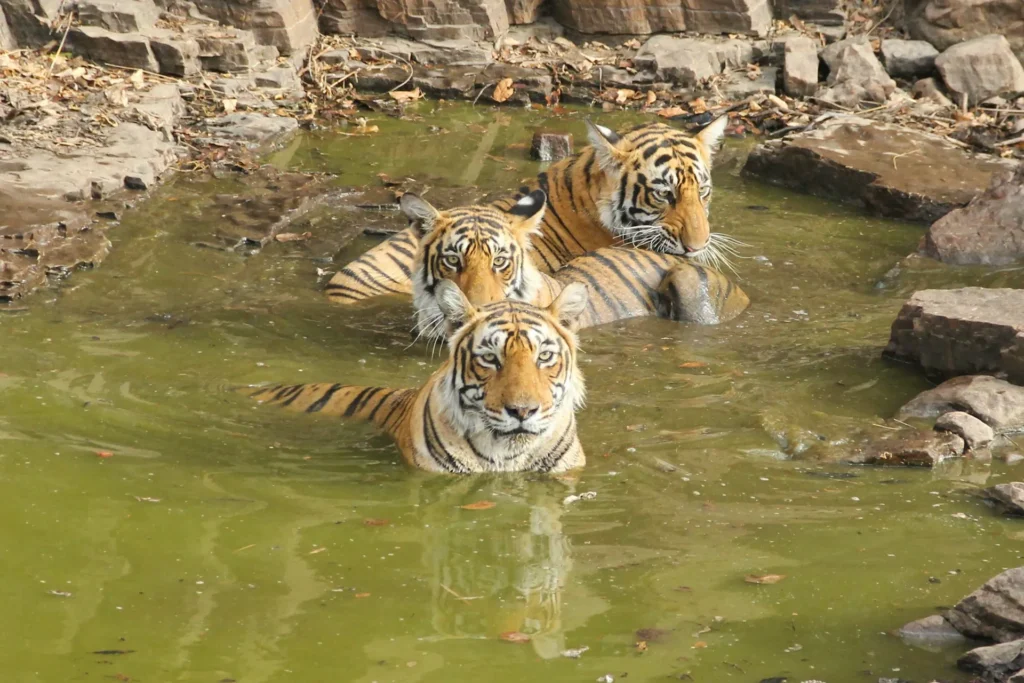
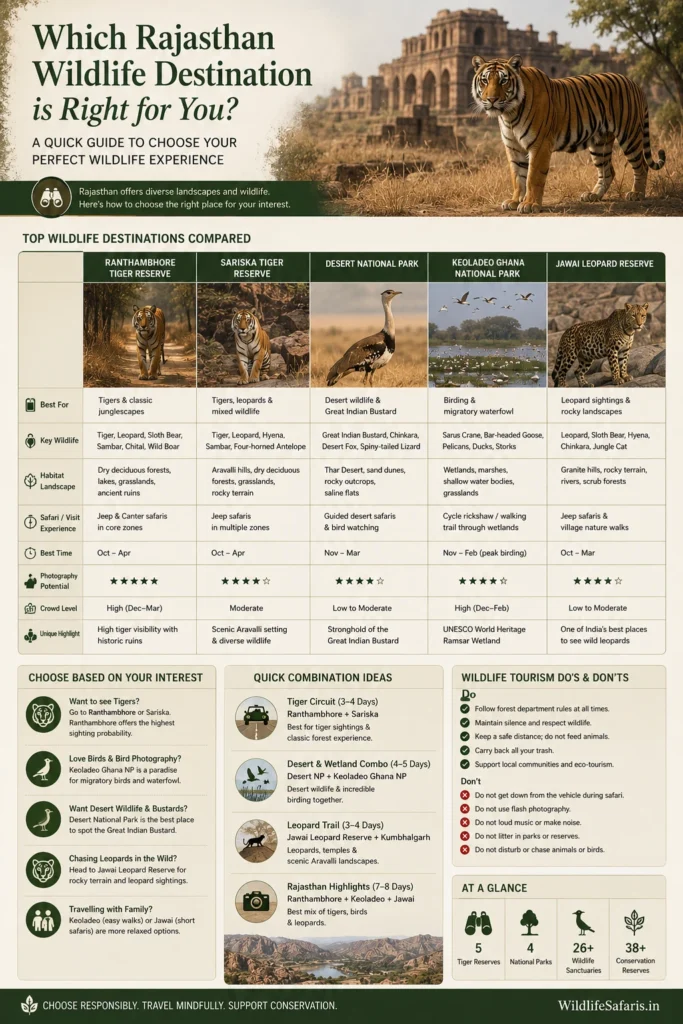
Despite its arid reputation, Rajasthan is a premier global destination for mega-fauna conservation, anchored by a robust network of five Tiger Reserves: Ranthambore, Sariska, Mukundra Hills, Ramgarh Vishdhari, and the recently notified Dholpur-Karauli. The dry deciduous Dhok forests of Ranthambore offer some of the highest Bengal tiger visibility in the world, framed by ancient ruins. Further west, the vast expanses of the Desert National Park serve as the ultimate stronghold for the critically endangered Great Indian Bustard, the designated state bird, alongside the chinkara (Indian gazelle), the state animal.
Rajasthan’s aquatic ecosystems are equally indispensable. Keoladeo National Park in Bharatpur, a designated UNESCO World Heritage Site and Ramsar wetland, functions as a critical wintering ground for thousands of Palearctic migratory waterfowl. The vast, hypersaline Sambhar Lake, another Ramsar site, attracts massive congregations of flamingos. Conservation in Rajasthan is a complex balancing act, actively mitigating intense human-wildlife conflict around expanding tiger territories, protecting the critically endangered bustards from high-tension power lines, and safeguarding the fragile Aravalli corridors from illegal mining. The state remains a flagship model for arid-land conservation and highly regulated, heritage-integrated wildlife tourism.
Quick Facts Table
| Category | Details |
| State / Union Territory | Rajasthan |
| Capital | Jaipur |
| Area | 342,239 sq km |
| Population | 68,548,437 (2011 Census) |
| Forest Cover | 4.87% |
| Official Language(s) | Hindi (Rajasthani/Marwari widely spoken) |
| Time Zone | UTC+05:30 (IST) |
| Best Wildlife Season | October to April |
State Wildlife Master Table
| Attribute | Details |
| State / Union Territory | Rajasthan |
| Capital | Jaipur |
| Geographic Region | Thar Desert, Aravalli Range, Chambal Basin |
| Total Area | 342,239 sq km |
| Forest Cover | 4.87% |
| State Animal | Chinkara (Gazella bennettii) / Camel (Camelus dromedarius – Livestock) |
| State Bird | Great Indian Bustard / Godawan (Ardeotis nigriceps) |
| State Tree | Khejri (Prosopis cineraria) |
| State Flower | Rohida (Tecomella undulata) |
| Highest Peak | Guru Shikhar, Mount Abu (1,722 m) |
| Major Rivers | Chambal, Banas, Luni, Mahi, Sabarmati |
| Major Forest Types | Tropical Dry Deciduous, Tropical Thorn, Desert Scrub |
| Biodiversity Hotspot | Not officially specified |
| UNESCO Natural Sites | Keoladeo National Park |
| Biosphere Reserves | None |
| Tiger Reserves | Ranthambore, Sariska, Mukundra Hills, Ramgarh Vishdhari, Dholpur-Karauli |
| Elephant Reserves | None |
| National Parks | Desert, Keoladeo Ghana, Mukundra Hills, Ranthambore, Sariska |
| Wildlife Sanctuaries | 26 Sanctuaries (including Kumbhalgarh, Mount Abu, Tal Chhapar, National Chambal, Sitamata) |
| Conservation Reserves | 38+ Reserves (including Jhalana, Jawai Bandh, Bisalpur) |
| Community Reserves | Not officially specified |
| Ramsar Sites | Keoladeo National Park, Sambhar Lake |
| Important Bird Areas (IBAs) | Keoladeo, Desert NP, Tal Chhapar, Sambhar Lake, Khichan |
| Major Wildlife Corridors | Ranthambore-Kuno Corridor, Aravalli Leopard Corridor |
| Flagship Mammals | Bengal Tiger, Indian Leopard, Chinkara, Blackbuck, Sloth Bear, Caracal |
| Flagship Birds | Great Indian Bustard, Sarus Crane, Demoiselle Crane, Indian Skimmer |
| Endemic Wildlife | Not officially specified |
| Best Wildlife Destinations | Ranthambore TR, Keoladeo NP, Desert NP, Jawai Leopard Reserve |
| Best Time for Wildlife Tourism | October to April (Summers are extremely harsh but optimal for tiger tracking) |
| Nearest International Airports | Jaipur International Airport (Sanganer) |
| Official Forest Department Website | forest.rajasthan.gov.in |
Protected Areas Summary Table
Note: Rajasthan has a vast network of protected areas. The table highlights all National Parks, Tiger Reserves, and highly prominent Wildlife Sanctuaries and Conservation Reserves.
| Protected Area | Category | District | Area (sq km) | Year Established | Famous For |
| Ranthambore National Park | Tiger Reserve | Sawai Madhopur | 282.03 (Core NP) | 1980 (NP), 1973 (TR) | Bengal Tiger, Ancient Fort, Banyan Trees |
| Keoladeo National Park | National Park | Bharatpur | 28.73 | 1981 | UNESCO Site, Migratory Waterfowl, Sarus Crane |
| Desert National Park | National Park | Jaisalmer, Barmer | 3,162.00 | 1981 | Great Indian Bustard, Chinkara, Sand Dunes |
| Mukundra Hills National Park | Tiger Reserve | Kota, Chittorgarh | 199.55 (Core NP) | 2004 (NP), 2013 (TR) | Ravine Ecosystem, Sloth Bear, Tiger Relocation |
| Sariska Tiger Reserve | Tiger Reserve | Alwar | 1,213.34 | 1982 (NP), 1978 (TR) | Successful Tiger Relocation, Leopard, Aravallis |
| Ramgarh Vishdhari TR | Tiger Reserve | Bundi | 1,501.89 | 2022 (TR status) | Crucial Tiger Corridor, Indian Wolf, Jackal |
| Dholpur-Karauli TR | Tiger Reserve | Dholpur, Karauli | 599.64 | 2023 (TR status) | Chambal Ravines, Bengal Tiger, Corridors |
| Kumbhalgarh Wildlife Sanctuary | Wildlife Sanctuary | Rajsamand, Pali | 610.53 | 1971 | Indian Wolf, Leopard, Sloth Bear, Historic Fort |
| National Chambal Sanctuary | Wildlife Sanctuary | Kota, Sawai Madhopur | 564.03 | 1979 | Gharial, Gangetic Dolphin, Indian Skimmer |
| Tal Chhapar Wildlife Sanctuary | Wildlife Sanctuary | Churu | 7.19 | 1966 | Massive Blackbuck Herds, Harriers, Open Grassland |
| Sitamata Wildlife Sanctuary | Wildlife Sanctuary | Pratapgarh | 422.94 | 1979 | Flying Squirrel, Teak Forests, Leopard |
| Jhalana Leopard Conservation Reserve | Conservation Reserve | Jaipur | 35.07 | 2017 | Urban Leopards, Striped Hyena |
| Jawai Bandh Leopard Conservation Reserve | Conservation Reserve | Pali | 19.79 | 2013 | Leopards coexisting with Rabari community |
Wildlife Highlights
- Top Mammals: Bengal Tiger, Indian Leopard, Chinkara (Indian Gazelle), Blackbuck, Sloth Bear, Indian Wolf, Desert Fox, Caracal, Striped Hyena, Desert Cat.
- Top Birds: Great Indian Bustard, Sarus Crane, Demoiselle Crane (thousands winter in Khichan), Bar-headed Goose, Painted Stork, Indian Skimmer, Steppe Eagle, MacQueen’s Bustard.
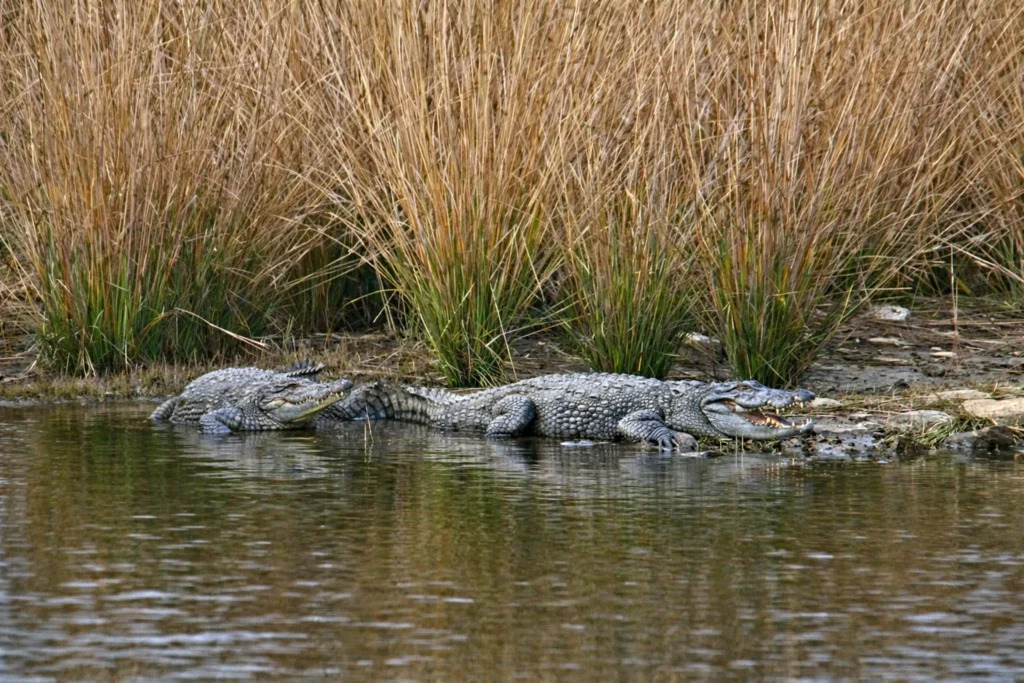
- Reptiles & Amphibians: Gharial (Chambal River), Mugger Crocodile, Desert Monitor Lizard, Saw-scaled Viper, Spiny-tailed Lizard.
- Flagship Flora: Khejri (Prosopis cineraria), Rohida (Tecomella undulata), Dhok (Anogeissus pendula), Khair (Senegalia catechu), Banyan.
- Best Wildlife Experiences: Open-jeep tiger safaris in the heritage landscape of Ranthambore, birdwatching by cycle-rickshaw in Keoladeo, tracking leopards among the granite boulders of Jawai, and desert dune safaris in Jaisalmer.
Conservation Challenges
- Great Indian Bustard Extinction Threat: The state bird numbers are critically low (hovering around 100-150 globally). The primary threat is lethal collision and electrocution from high-tension power lines crisscrossing the Desert National Park landscape.
- Aravalli Degradation: Rampant and often illegal stone mining in the Aravalli hills severely destroys the oldest mountain range in India, permanently severing critical leopard and tiger migratory corridors between Rajasthan and Haryana.
- Tiger Overpopulation and Conflict: Ranthambore Tiger Reserve faces a “good problem” of tiger overpopulation. The core is heavily saturated, forcing young, dispersing tigers into human-dominated landscapes, escalating severe human-wildlife conflict.
- Invasive Species: The aggressive spread of Prosopis juliflora (Vilayati Babul) aggressively outcompetes native desert flora like Khejri, depleting groundwater and ruining grassland habitats for herbivores.
- Feral Dogs: In arid regions, packs of feral dogs act as apex predators, hunting Chinkara, Blackbuck fawns, and posing a severe threat to ground-nesting birds like the Great Indian Bustard.
- Water Scarcity: Prolonged droughts in the western districts lead to high wildlife mortality, forcing animals to rely on artificial waterholes sustained by the forest department.
Responsible Wildlife Tourism
- Silence Near Big Cats: Ranthambore and Sariska attract massive tourist volumes. When a tiger or leopard is sighted, maintain absolute silence, remain seated, and do not urge drivers to crowd the animal.
- Support Local Eco-Guides: In Keoladeo National Park, hire the officially trained cycle-rickshaw pullers who double as exceptional, sharp-eyed birding guides.
- No Off-Roading in the Desert: The Thar desert ecosystem is highly fragile. Driving off designated tracks in the Desert National Park destroys the burrows of spiny-tailed lizards and the nests of desert birds.
- Respect the Rabari Community: When visiting Jawai, respect the semi-nomadic Rabari herdsmen whose deep cultural tolerance allows leopards to thrive in their midst without conflict.
- Dress in Earth Tones: Wear khaki, beige, or olive green to blend into the dry deciduous and desert environments. Bright colours startle wildlife.
- Zero Littering: Carry all plastic bottles and wrappers out of the sanctuaries. Plastic waste is highly lethal to desert herbivores like the Chinkara, which may ingest it while foraging.
Did You Know?
- Keoladeo National Park was entirely man-made, originally constructed as a duck-hunting reserve by the Maharajas of Bharatpur before evolving into a globally recognised UNESCO World Heritage Site.
- Sariska Tiger Reserve made global conservation history in 2008 by becoming the first reserve in the world to successfully relocate and breed tigers after the local population was completely wiped out by poachers.
- Jhalana Leopard Reserve, situated right in the heart of Jaipur city, boasts one of the highest densities of leopards in the world, thriving in an urban ecosystem.
- The Great Indian Bustard, heavily protected in the Desert National Park, is one of the heaviest flying birds in the world and was a strong early candidate for India’s national bird.
- Tal Chhapar Wildlife Sanctuary is a unique, flat saline depression where visitors can witness spectacular, African-savannah-like scenes of hundreds of Blackbucks leaping (pronking) through the open grass.
- The village of Khichan in Jodhpur hosts up to 20,000 Demoiselle Cranes every winter, entirely sustained by the local Jain community who feed them tonnes of grain daily.
Rajasthan Wildlife : Topics Cluster
- Ranthambore National Park
- Desert National Park
- Jawai Leopard Safari
- Jhalana vs Jawai Leopard Safari
- Wildlife Tourism in Rajasthan
- Wildlife Biodiversity in Western India
- Mukundra Hills Tiger Reserves
- Sariska National Park
- Keoladeo National Park
- Great Indian Bustard
- Chinkara
Safari Planning : Topics Cluster
- How to book a wildlife safari in India?
- Park by Park Online Safari Booking Guide
- Tiger Safari India Planning Workbook
- Park by Park Safari Permits Guide
- National Parks Permit Guide – Park by Park Guide
- Tatkal Safari Booking Guide – Last Minute Safari Permits Booking
- Tiger Safari in India Cost
- Indian Wildlife Safari Budget Planner
- Jeep vs Canter Safari
- Best time for Tiger Sightings in India
- How far advanced should you book safari permits?
- Can foreigners book Indian Wildlife Safari online?
- Special Permits Guide for Foreigners and Domestic Visitors
- How to book a Safari Permit online in India? 2026 step by step guide
- Senior Citizens Friendly Safari Planning
- Multi Generation Family Safari Planning
- 50 things to know before your first safari in India
Ranthambore National Park : Topics Cluster
- Ranthambore Complete Safari Guide
- Best Zones in Ranthambore
- Ranthambore Safari Zones Explained
- Ranthambore Safari Booking Step by Step Guide
- Ranthambore Safari Timings
- Ranthambore : Summer vs Winter
- Ranthambore Safari Costs
- Delhi to Rathambore
- Weekend Itinerary
- Ranthambore Naturalist Guide
- Ranthambore Photography
- How many days are enough?
- Ranthambore Luxury Wildlife Lodges
- Luxury Safari Stays in Ranthambore
- Ranthambore Best Hotels
- Wildlife in Rajasthan
- Ranthambore Common Safari Mistakes
- Ranthambore Foreign Visitors Guide (upcoming)
- Complete Ranthambore Luxury Safari Guide (upcoming)