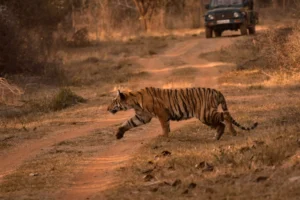
Compare Africa’s top 10 wildlife safaris by wildlife, best time to visit, safari style, and travel goals to choose the right African safari.
Top 10 Wildlife Safaris in Africa: The Best Safari Destinations for the Big Five, Great Migration & More
Africa remains the benchmark against which wildlife destinations around the world are measured. Few places offer the same combination of abundant wildlife, varied landscapes, and safari experiences—from open grasslands filled with migrating wildebeest to floodplains explored by traditional mokoro canoe and mountain forests where endangered gorillas can be observed on foot. The continent is also home to roughly one-third of the world’s biodiversity, making it one of the most important regions for wildlife conservation and nature-based tourism.
Choosing where to go, however, is not straightforward. A first-time visitor hoping to see the Big Five may have very different priorities from a wildlife photographer searching for elusive leopards or a traveller interested in gorilla trekking. No single safari destination is “best” for everyone.
This guide compares ten of Africa’s leading wildlife safari destinations based on their strengths, signature wildlife, safari styles, accessibility, and the type of traveller they suit best. Rather than simply ranking famous parks, the goal is to help you choose the safari that matches your interests.
How We Chose These Safari Destinations
This list is based on several practical criteria rather than popularity alone.
The destinations were evaluated using factors including:
- Diversity and quality of wildlife viewing.
- Presence of signature species such as the Big Five, gorillas, or large predator populations.
- Unique safari experiences, including walking, boating, mokoro, and classic game drives.
- Seasonal wildlife events such as the Great Migration.
- Accessibility and tourism infrastructure.
- Variety of accommodation and safari styles.
- Overall value for different types of travellers.
Well-known destinations naturally feature prominently, but each park has earned its place for different reasons. For example, Botswana’s Okavango Delta offers a water-based safari unlike anywhere else, while South Luangwa is widely regarded as one of Africa’s leading walking safari destinations. Gorilla trekking in Uganda and Rwanda is included because it provides one of the continent’s most distinctive wildlife experiences, even though it differs significantly from traditional vehicle-based safaris.
Quick Comparison: Top 10 Wildlife Safaris in Africa
| Destination | Country | Best Known For | Best For | Typical Safari Style | Budget Tier |
| Serengeti National Park | Tanzania | Great Migration, predators | First-time visitors, photographers | Game drives, balloon safaris | $$$ |
| Maasai Mara National Reserve | Kenya | Great Migration, Big Cats | Short safaris, first-time visitors | Game drives | $$$ |
| Kruger National Park & Sabi Sands | South Africa | Big Five, leopard sightings | Self-drive and luxury travellers | Self-drive, guided drives | $$-$$$$ |
| Okavango Delta | Botswana | Water safaris | Luxury and exclusive safaris | Mokoro, boats, game drives | $$$$ |
| Chobe National Park | Botswana | Large elephant herds | River safaris | Boat cruises, game drives | $$$ |
| Ngorongoro Crater | Tanzania | Dense wildlife in compact area | Short visits, Big Five | Game drives | $$$ |
| Etosha National Park | Namibia | Waterhole wildlife viewing | Self-drive travellers | Self-drive, guided drives | $$ |
| South Luangwa National Park | Zambia | Walking safaris | Experienced safari travellers | Walking, game drives | $$$ |
| Hwange National Park | Zimbabwe | Elephant populations | Repeat safari visitors | Game drives | $$$ |
| Bwindi / Volcanoes | Uganda / Rwanda | Mountain gorillas | Gorilla trekking | Guided trekking | $$$$ |
Decision Guide
- Want to witness the Great Migration? Choose Serengeti or Maasai Mara.
- Looking for a flexible self-drive safari? Kruger National Park is difficult to beat.
- Prefer exclusive, low-density safaris? Okavango Delta is among Africa’s finest choices.
- Dreaming of close encounters with mountain gorillas? Bwindi Impenetrable Forest or Volcanoes National Park offer experiences unlike any traditional safari.
- Interested in walking with expert guides? South Luangwa stands out for its long association with walking safaris.
1. Serengeti National Park, Tanzania
Best for: The Great Migration, predator sightings, and first-time African safaris
If you can visit only one safari destination in Africa, the Serengeti is one of the strongest choices. It combines vast open plains, year-round wildlife, and one of the world’s greatest animal movements—the Great Migration. Even outside migration season, the park supports large populations of predators and herbivores, making it rewarding throughout the year.
Why it ranks among Africa’s best
The Serengeti’s greatest strength is variety. Rather than relying on a single attraction, it offers changing wildlife spectacles as animals move across different habitats throughout the year. Visitors may spend one day watching thousands of wildebeest crossing open plains and the next observing lions resting under acacia trees or cheetahs hunting in the grasslands.
Its sheer size also helps distribute visitors, allowing many areas to remain relatively uncrowded despite the park’s popularity.
Wildlife highlights
The Serengeti is particularly known for:
- Wildebeest migration
- Zebra and gazelle herds
- Lions
- Leopards
- Cheetahs
- Elephants
- Buffalo
- Hyenas
- Crocodiles along river crossings
- Extensive birdlife
Although many visitors arrive hoping to witness dramatic river crossings, these occur only during specific stages of the migration. Even without them, the Serengeti delivers excellent wildlife viewing throughout the year.
Best time to visit
There is no single “best” month because wildlife movements change seasonally.
Different times suit different interests:
- Migration viewing
- Predator action around migrating herds
- Calving season
- General game viewing during the dry season
Rather than chasing one famous event, plan your visit around the wildlife behaviour you most want to experience.
Safari styles
The Serengeti supports several ways to explore:
- Traditional game drives
- Luxury fly-in safaris
- Mobile migration camps
- Hot-air balloon safaris in selected areas
This variety makes it suitable for both first-time visitors and experienced safari travellers.
Advantages
- One of Africa’s most complete safari destinations.
- Excellent predator sightings.
- Home to the Great Migration.
- Wide range of accommodation.
- Suitable for nearly every travel style.
Things to consider
- Peak migration periods attract more visitors.
- Distances inside the park are substantial.
- Wildlife locations change with the seasons, so itinerary planning is important.
Expert Tip
Don’t choose the Serengeti only because of river crossings. Many experienced safari guides consider predator interactions, calving season, and quieter months equally rewarding.
Photography Tip
Carry both a wide-angle lens for dramatic landscapes and a telephoto lens for wildlife. The Serengeti’s open plains often create opportunities to photograph animals within their habitat rather than as isolated subjects.
2. Maasai Mara National Reserve, Kenya
Best for: Big cats, shorter safari itineraries, and witnessing the Great Migration in Kenya
The Maasai Mara offers many of the same wildlife experiences as the neighbouring Serengeti but within a smaller, easier-to-explore reserve. For travellers with limited time, this concentration of wildlife is one of its biggest advantages.
It is particularly well known for lion, cheetah, and leopard sightings and forms the northern stage of the Great Migration.
Why it stands out
The Mara’s relatively compact size means visitors often spend less time driving between wildlife sightings than in much larger parks.
Combined with Nairobi’s international flight connections, this makes it a practical destination for travellers planning a shorter African safari.
Wildlife highlights
Expect opportunities to see:
- Lions
- Leopards
- Cheetahs
- Elephants
- Buffalo
- Wildebeest
- Zebras
- Hippos
- Crocodiles
- Numerous antelope species
The reserve is especially popular with wildlife photographers because predators are frequently active in its open grasslands.
Best time to visit
The Maasai Mara offers wildlife viewing throughout the year, but international interest increases during the migration season when herds move between Tanzania and Kenya.
Outside migration months, resident wildlife continues to provide rewarding game drives.
Safari styles
Visitors can choose from:
- Classic game drives
- Luxury tented camps
- Balloon safaris
- Private conservancy safaris adjoining the reserve
Nearby conservancies often provide a quieter safari experience while complementing visits to the main reserve.
Advantages
- Outstanding predator sightings.
- Easier logistics than many larger safari regions.
- Excellent choice for first-time visitors.
- Strong tourism infrastructure.
- Combines well with other Kenya attractions.
Things to consider
- Popular during migration season.
- Certain areas can become busy during peak wildlife events.
- Accommodation prices often rise during high-demand periods.
Field Note
Many visitors compare the Maasai Mara and Serengeti as rivals. In reality, they form parts of the same ecosystem. Choosing between them often depends more on your travel itinerary, preferred country, available time, and seasonal wildlife movements than on wildlife quality alone.
3. Kruger National Park & Sabi Sands, South Africa
Best for: Big Five safaris, self-drive holidays, and luxury private-reserve experiences
Kruger National Park is one of Africa’s most accessible safari destinations and offers exceptional flexibility. Independent travellers can explore much of the park by self-drive, while neighbouring private reserves such as Sabi Sands provide guided luxury safaris with a greater emphasis on close wildlife encounters.
Together, they cater to an unusually broad range of budgets and travel styles.
Why this combination is unique
Most African safari destinations require visitors to join guided tours throughout their stay.
Kruger is different.
Confident drivers can explore extensive road networks independently while still having access to excellent wildlife viewing. Those seeking a more exclusive experience can instead stay in adjacent private reserves, where guided vehicles often operate under different rules and focus on personalised game viewing.
This combination is difficult to match elsewhere in Africa.
Wildlife highlights
Kruger and Sabi Sands are well known for:
- The Big Five
- Leopard sightings
- Lions
- Elephants
- Rhinos
- Buffalo
- Wild dogs
- Extensive birdlife
Sabi Sands, in particular, has built a reputation for consistent leopard encounters, although wildlife sightings can never be guaranteed.
Best time to visit
Wildlife viewing generally becomes easier during the dry season as vegetation thins and animals gather around water sources.
The park remains open throughout the year, giving visitors flexibility when planning itineraries.
Safari styles
- Self-drive safaris
- Guided game drives
- Luxury lodge safaris
- Family-friendly safaris
- Photographic safaris
Few destinations offer such a broad range of experiences within one safari ecosystem.
Advantages
- Excellent infrastructure.
- Suitable for independent travellers.
- Wide accommodation choices.
- Strong Big Five reputation.
- Easy international access.
Things to consider
- The park is very large, requiring careful route planning.
- Wildlife sightings depend on patience rather than simply driving between popular locations.
- Private reserves generally cost significantly more than self-drive visits.
Decision Guide: Kruger or Sabi Sands?
| If you want… | Better choice |
| Maximum value | Kruger National Park |
| Self-drive freedom | Kruger National Park |
| Luxury lodges | Sabi Sands |
| Guided tracking | Sabi Sands |
| Higher chance of close leopard encounters | Sabi Sands |
| Flexible budget options | Kruger National Park |
Responsible Tourism Tip
Whether driving yourself or joining guided safaris, keep a respectful distance from wildlife, avoid requesting off-road driving where it is not permitted, and follow park regulations. Responsible visitor behaviour helps reduce disturbance to animals and supports long-term conservation goals.
4. Okavango Delta, Botswana
Best for: Exclusive safaris, water-based wildlife experiences, and experienced safari travellers
The Okavango Delta offers one of Africa’s most distinctive safari experiences. Instead of focusing solely on game drives across open plains, many visitors explore its seasonal floodplains by traditional mokoro (dugout canoe), motorboat, or on foot with experienced guides. This combination of land and water habitats creates a safari that feels very different from destinations such as the Serengeti or Kruger.
Why it stands out
Unlike many river systems that flow into the sea, the Okavango River spreads into the Kalahari Basin, creating a vast inland delta of channels, lagoons, islands, and floodplains. Seasonal flooding transforms the landscape and influences where wildlife gathers, making water a defining feature of the safari experience.
The Delta is also known for relatively low visitor numbers in many concession areas, offering a quieter and more exclusive atmosphere than some of Africa’s busiest parks.
Wildlife highlights
The Delta supports a wide variety of wildlife, including:
- Elephants
- Lions
- Leopards
- Buffalo
- Hippos
- Crocodiles
- Antelope species adapted to wetlands
- Rich birdlife
The changing mix of dry land and waterways means visitors often encounter wildlife from different perspectives during the same trip.
Best time to visit
Water levels vary seasonally, influencing safari activities. During periods of higher flooding, mokoro excursions and boat safaris become major highlights, while traditional game drives continue in surrounding dry areas.
Rather than asking “When is the best time?”, consider which safari activities matter most to you.
Safari styles
The Okavango Delta offers:
- Mokoro safaris
- Boat safaris
- Guided walking safaris
- Traditional game drives
- Fly-in luxury safaris
Few African destinations provide such a varied combination of safari experiences.
Advantages
- Unique water-based safaris.
- Diverse habitats.
- Excellent birdwatching opportunities.
- Low-density tourism in many concessions.
- Strong appeal for repeat safari travellers.
Things to consider
- Generally among Africa’s more expensive safari destinations.
- Many camps are accessible only by light aircraft.
- Safari logistics are more complex than in destinations with road access.
Field Note
Many first-time visitors assume the Delta is only about boats. In reality, the combination of waterways, islands, floodplains, and dry woodland means many itineraries include both water-based activities and conventional game drives.
Photography Tip
Water reflections, early morning mist, and wildlife approaching channels create opportunities for compositions that are difficult to capture in more traditional safari landscapes.
5. Chobe National Park, Botswana
Best for: Elephant encounters and river safaris
If elephants are at the top of your wildlife wish list, Chobe National Park deserves serious consideration. The park has earned an international reputation for its large elephant populations and for safari cruises along the Chobe River, where wildlife often gathers at the water’s edge.
Why it ranks highly
Many safari destinations rely almost entirely on vehicle-based game drives.
Chobe offers something different.
Boat safaris allow visitors to observe wildlife from water level, providing views and photographic opportunities that are rarely possible from vehicles.
Watching elephants swim across the river or families drinking along the banks is one of the park’s defining experiences.
Wildlife highlights
Chobe is especially known for:
- Large elephant herds
- Buffalo
- Hippos
- Crocodiles
- Lions
- Antelope species
- Diverse birdlife
Because many animals depend on the river, wildlife viewing can be particularly productive along the waterfront.
Best time to visit
Wildlife viewing generally improves when animals concentrate around permanent water sources, although the park offers rewarding experiences throughout much of the year.
Safari styles
Visitors typically combine:
- River cruises
- Game drives
- Luxury lodge stays
- Multi-park itineraries
Many travellers pair Chobe with Victoria Falls or the Okavango Delta.
Advantages
- Outstanding elephant viewing.
- River safaris complement traditional game drives.
- Excellent photography opportunities.
- Easy combination with other southern African destinations.
Things to consider
- Certain river sections can become busy during peak tourism periods.
- Wildlife distribution varies between different parts of the park.
Expert Tip
Plan both a morning game drive and an afternoon river cruise. The two activities often reveal different animal behaviour and complement each other rather than competing.
6. Ngorongoro Crater, Tanzania
Best for: Seeing a wide variety of wildlife in a relatively compact area
Ngorongoro Crater offers a safari experience unlike any other on this list. Rather than covering vast distances across open ecosystems, visitors descend into a large volcanic caldera where diverse wildlife lives within a relatively contained landscape.
For travellers with limited time, this concentration of animals is one of the crater’s greatest strengths.
Why it is special
The crater’s enclosed geography creates conditions where many species can be seen during a single game drive.
This does not guarantee sightings of every animal, but it often reduces the amount of driving required compared with larger national parks.
Wildlife highlights
Visitors commonly hope to see:
- Lions
- Elephants
- Buffalo
- Rhinos
- Hippos
- Hyenas
- Zebra
- Wildebeest
- Numerous bird species
The combination of grasslands, wetlands, and forested sections supports a wide variety of wildlife within a relatively small area.
Best time to visit
The crater is a year-round destination, although weather and visitor numbers vary seasonally.
Many travellers include it as part of a broader northern Tanzania safari alongside the Serengeti.
Safari styles
- Half-day game drives
- Full-day crater safaris
- Guided wildlife tours
- Combined northern Tanzania itineraries
Advantages
- High wildlife density.
- Excellent for shorter visits.
- Easy to combine with Serengeti safaris.
- Suitable for first-time visitors.
Things to consider
- Popular with organised safari tours.
- Day visits can become busy during peak travel seasons.
- Wildlife viewing occurs within a relatively confined landscape compared with larger parks.
Decision Guide
If your schedule allows only one or two safari days in northern Tanzania, Ngorongoro offers one of the highest concentrations of wildlife viewing available in a limited timeframe.
7. Etosha National Park, Namibia
Best for: Self-drive safaris and waterhole wildlife viewing
Etosha National Park is one of southern Africa’s best destinations for independent travellers. Its good road network and clearly marked routes make self-drive safaris practical, while numerous natural and artificial waterholes create predictable places to observe wildlife, particularly during the dry season.
Why it stands apart
Many African safaris involve actively searching for wildlife across large landscapes.
Etosha often works differently.
Instead of constantly driving, visitors frequently wait near productive waterholes where animals arrive to drink. This slower style of wildlife watching rewards patience and careful observation.
Wildlife highlights
The park supports:
- Elephants
- Lions
- Rhinos
- Giraffes
- Zebras
- Springbok
- Oryx
- Numerous bird species
Waterholes often attract multiple species throughout the day, making them excellent locations for extended wildlife observation.
Best time to visit
The dry season is particularly rewarding because animals depend more heavily on permanent water sources, increasing activity around waterholes.
Safari styles
- Self-drive safaris
- Guided game drives
- Photography-focused trips
- Family road trips
Advantages
- One of Africa’s best self-drive parks.
- Excellent wildlife viewing around waterholes.
- Good visitor infrastructure.
- Flexible itineraries.
Things to consider
- Wildlife viewing differs from parks dominated by vast migrations.
- Success often depends on spending time at productive waterholes rather than covering long distances.
Photography Tip
Instead of moving quickly between locations, spend longer at active waterholes. Patient observation often reveals changing wildlife behaviour as different species arrive throughout the day.
Responsible Tourism Tip
When viewing wildlife at waterholes, remain inside designated viewing areas, avoid disturbing animals that are drinking, and resist the temptation to move closer than park regulations allow. Animals depend on these water sources, especially during dry periods.
8. South Luangwa National Park, Zambia
Best for: Walking safaris and immersive wildlife experiences
South Luangwa National Park has earned an international reputation as one of Africa’s leading destinations for walking safaris. While game drives remain an important part of most itineraries, many visitors come specifically for the opportunity to explore the bush on foot with experienced guides.
Walking changes the pace of a safari. Instead of covering long distances in search of large mammals, attention shifts to animal tracks, bird calls, insects, plants, and the subtle signs that reveal how wildlife uses the landscape.
Why it deserves a place in the top ten
Many safari destinations focus almost exclusively on sightings.
South Luangwa focuses equally on understanding wildlife.
Experienced guides interpret tracks, explain predator-prey relationships, identify birds by their calls, and demonstrate how seemingly ordinary features of the bush fit together as part of a larger ecosystem.
For travellers who have already experienced traditional game drives, this deeper level of interpretation can make South Luangwa especially rewarding.
Wildlife highlights
The park supports:
- Lions
- Leopards
- Elephants
- Buffalo
- Hippos
- Crocodiles
- Large variety of antelope
- Extensive birdlife
As elsewhere in Africa, wildlife sightings depend on seasonal conditions and a degree of luck, but the park enjoys a strong reputation for diverse wildlife viewing.
Best time to visit
Wildlife viewing generally becomes easier as vegetation thins during the dry season, although exact timing depends on seasonal conditions.
Safari styles
- Walking safaris
- Guided game drives
- Fly-in safaris
- Wildlife photography trips
Advantages
- One of Africa’s best walking safari destinations.
- Highly trained guiding tradition.
- Excellent opportunities to learn animal behaviour.
- Appeals to repeat safari visitors.
Things to consider
- Walking safaris usually have minimum age requirements.
- Some activities require reasonable mobility and fitness.
- Visitors interested only in vehicle safaris may find other destinations offer greater variety.
Field Note
A walking safari is not about getting closer to dangerous animals than a vehicle allows. The emphasis is on learning to observe wildlife safely while understanding the smaller details of the bush that are often missed during game drives.
9. Hwange National Park, Zimbabwe
Best for: Elephant viewing and quieter safari experiences
Hwange National Park is Zimbabwe’s largest national park and is widely recognised for its elephant populations. Although it receives less international attention than destinations such as the Serengeti or Kruger, many experienced safari travellers value Hwange for its combination of diverse wildlife and comparatively lower visitor numbers.
Why it stands out
One of Hwange’s strengths is that it often feels less crowded than some of Africa’s better-known safari parks.
For travellers seeking a quieter wildlife experience without sacrificing species diversity, that can be a significant advantage.
Wildlife highlights
Visitors may encounter:
- Elephants
- Lions
- Buffalo
- Leopards
- Wild dogs
- Giraffes
- Numerous antelope species
- Rich birdlife
Elephants remain one of the park’s defining attractions throughout much of the year.
Best time to visit
As in many southern African parks, wildlife tends to become easier to locate during drier periods when animals gather around reliable water sources.
Safari styles
- Guided game drives
- Walking safaris
- Photographic safaris
- Multi-country itineraries
Hwange is frequently combined with visits to nearby Victoria Falls.
Advantages
- Strong elephant viewing.
- Fewer crowds than some iconic parks.
- Suitable for repeat safari travellers.
- Complements southern African travel routes.
Things to consider
- Less internationally known than neighbouring safari destinations.
- Longer travel itineraries may be required depending on your overall route.
Photography Tip
Don’t focus only on close-up wildlife portraits. Hwange’s open landscapes provide opportunities to photograph elephants and other animals within their wider environment, helping to tell a stronger visual story.
10. Bwindi Impenetrable Forest (Uganda) & Volcanoes National Park (Rwanda)
Best for: Gorilla trekking and once-in-a-lifetime primate encounters
Although gorilla trekking differs fundamentally from a traditional safari, it remains one of Africa’s most sought-after wildlife experiences.
Instead of spending the day in a vehicle searching open landscapes, visitors hike through mountain forests with trained trackers to locate habituated groups of endangered mountain gorillas.
The experience is slower, more physically demanding, and highly focused on a single species, but for many travellers it becomes the highlight of an African journey.
Why gorilla trekking belongs on this list
Wildlife travel in Africa extends beyond the classic Big Five.
Gorilla trekking offers an opportunity to observe one of our closest living relatives in its natural habitat while supporting conservation programmes and local communities through carefully managed tourism.
It complements rather than replaces a traditional safari.
Wildlife highlights
The primary attraction is:
- Mountain gorillas
Depending on location, visitors may also encounter:
- Golden monkeys (in some areas)
- Forest birds
- Other rainforest wildlife
Unlike game-drive destinations, the emphasis here is quality of observation rather than the number of species seen.
Best time to visit
Trekking takes place throughout much of the year, although trail conditions vary with rainfall.
Weather influences hiking difficulty more than wildlife availability.
Safari styles
- Guided gorilla trekking
- Forest hiking
- Combined East Africa safari itineraries
Many travellers combine gorilla trekking with a classic safari in Kenya or Tanzania.
Advantages
- One of the world’s most distinctive wildlife experiences.
- Supports conservation-focused tourism.
- Close observation of mountain gorillas.
- Complements traditional safaris.
Things to consider
- Trekking requires a reasonable level of fitness.
- Gorilla permits are generally limited.
- The experience differs significantly from vehicle-based safaris.
Responsible Tourism Tip
Always follow your guide’s instructions during gorilla treks. Maintaining appropriate distances, avoiding unnecessary noise, and respecting viewing rules help minimise disturbance to these endangered primates and support long-term conservation efforts.
Which African Safari Is Best for Your Travel Style?
Choosing the “best” safari depends more on your priorities than on rankings. The table below can help narrow your options.
| Travel Goal | Recommended Destination | Why It Fits |
| First African safari | Serengeti | Excellent all-round wildlife and safari infrastructure |
| Great Migration | Serengeti or Maasai Mara | Seasonal wildebeest migration and predator action |
| Big Five | Kruger National Park | Strong reputation for Big Five sightings with flexible travel options |
| Luxury safari | Okavango Delta | Exclusive camps and diverse safari activities |
| Self-drive adventure | Etosha or Kruger | Well-developed road networks and visitor facilities |
| Walking safari | South Luangwa | Internationally recognised walking safari tradition |
| River safari | Chobe National Park | Wildlife viewing from boats along the Chobe River |
| Elephant encounters | Chobe or Hwange | Both are especially known for elephant viewing |
| Wildlife photography | Serengeti, Maasai Mara, or Sabi Sands | Open habitats and strong predator viewing |
| Gorilla trekking | Bwindi or Volcanoes National Park | Dedicated mountain gorilla experiences |
Decision Guide
Choose Serengeti if you want a classic African safari with the widest range of wildlife experiences.
Choose Maasai Mara if you have limited time but still want outstanding wildlife viewing.
Choose Kruger if flexibility, self-drive travel, or varied budgets are important.
Choose Okavango Delta if you prefer quieter, more exclusive safaris with water-based activities.
Choose South Luangwa if understanding wildlife behaviour interests you as much as seeing animals.
Choose Bwindi or Volcanoes National Park if your dream is to observe mountain gorillas in their natural forest habitat.
Best Time to Go on Safari in Africa
There is no single best month for an African safari. Wildlife movements, rainfall, vegetation, and water availability vary across regions, so the ideal time depends on what you hope to experience.
Rather than planning around a calendar alone, start by identifying your wildlife priorities.
Dry Season
For many destinations, the dry season is considered the easiest time for wildlife viewing because:
- Vegetation becomes thinner.
- Animals gather around permanent water sources.
- Roads are generally easier to navigate.
- Wildlife is often easier to spot over longer distances.
This is why many first-time safari visitors choose the dry season.
Green Season
The wetter months offer a different experience.
Depending on the destination, visitors may enjoy:
- Greener landscapes.
- Young animals after seasonal births.
- Excellent birdwatching.
- Fewer visitors in some parks.
Although wildlife may be more dispersed, many photographers appreciate the softer light and lush scenery.
Planning Around the Great Migration
Many travellers try to schedule their safari around the Great Migration.
This can be rewarding, but it is important to remember that the migration is a moving natural event rather than a fixed attraction. Herd locations change throughout the year, so itinerary planning should always consider current seasonal movements rather than relying on a single month.
Expert Tip
Instead of asking, “When is the best month for Africa?” ask, “What wildlife behaviour do I most want to see?” That approach usually leads to a better safari itinerary.
Practical Safari Planning Guide
How Many Days Do You Need?
While even a short safari can be rewarding, most travellers benefit from spending several days in one destination rather than rushing between multiple parks.
A slower itinerary allows more opportunities to observe natural animal behaviour instead of simply building a species checklist.
National Parks vs Private Reserves
| National Parks | Private Reserves |
| Larger public protected areas | Smaller privately managed conservation areas |
| Usually lower cost | Usually higher cost |
| More visitors during peak season | Lower vehicle density |
| Excellent for first-time visitors | Often provide more personalised experiences |
| Regulations may be stricter | Activities may vary depending on reserve policies |
Neither option is universally better.
National parks provide outstanding wildlife experiences for most travellers, while private reserves often focus on smaller groups, luxury accommodation, and specialised guiding.
Choosing the Right Safari Style
Different safari styles suit different interests.
Game Drives
The classic safari experience and the best choice for first-time visitors.
Walking Safaris
Ideal for travellers interested in ecology, tracking, and learning about the bush beyond large mammals.
Boat Safaris
Excellent for observing wildlife that depends on rivers and wetlands.
Mokoro Safaris
Offer a quiet, water-level perspective through Botswana’s Okavango Delta.
Gorilla Trekking
A specialised wildlife experience centred on mountain gorillas rather than traditional game viewing.
Responsible Wildlife Tourism
Responsible tourism helps ensure that wildlife tourism supports conservation rather than harming it.
Simple practices include:
- Never encourage guides to approach animals too closely.
- Keep noise to a minimum.
- Follow park regulations.
- Stay inside designated areas.
- Never feed wildlife.
- Respect guidance from professional safari guides.
Responsible visitor behaviour contributes to conservation while creating a better experience for everyone.
Common Mistakes First-Time Safari Travellers Make
Choosing a destination based only on rankings
The “best” safari depends on your interests. A photographer, family, and birdwatcher may all prefer different destinations.
Expecting guaranteed sightings
Wildlife is free-ranging. Even Africa’s finest parks cannot promise sightings of particular species.
Focusing only on the Big Five
Many memorable safari moments involve animal behaviour, landscapes, birds, or smaller species rather than simply ticking off famous mammals.
Trying to visit too many parks
Spending more time in fewer destinations usually produces a more rewarding safari than constantly changing locations.
Ignoring seasonality
Different parks perform differently throughout the year. Research seasonal wildlife patterns before choosing travel dates.
Assuming every safari is the same
Walking safaris, river safaris, self-drive trips, luxury lodges, and gorilla trekking all provide very different experiences.
Frequently Asked Questions
Which is the best wildlife safari in Africa?
There is no universal answer. Serengeti is one of the strongest all-round choices, while destinations such as the Okavango Delta, Kruger, and Bwindi excel for different travel goals.
Which safari is best for first-time visitors?
Serengeti, Maasai Mara, and Kruger National Park are among the easiest recommendations because they combine excellent wildlife with well-developed tourism infrastructure.
Where can I see the Big Five?
Kruger National Park, Sabi Sands, Serengeti, Maasai Mara, Ngorongoro Crater, and several Botswana destinations all offer opportunities to see the Big Five.
Where can I witness the Great Migration?
The Serengeti ecosystem in Tanzania and Kenya’s Maasai Mara host different stages of the Great Migration.
Is Kenya or Tanzania better?
Both offer world-class safaris. Tanzania provides the larger Serengeti ecosystem, while Kenya’s Maasai Mara offers excellent wildlife within a more compact reserve.
Is Botswana worth the higher cost?
Travellers seeking exclusive camps, fewer vehicles, and unique water-based safaris often consider Botswana well worth the additional expense.
Which safari is best for elephants?
Chobe National Park and Hwange National Park are particularly well known for elephant viewing.
Which safari is best for photography?
Serengeti, Maasai Mara, Sabi Sands, and Chobe are among the leading choices, although each offers different photographic opportunities.
Which destination is best for self-drive safaris?
Kruger National Park and Etosha National Park are widely regarded as two of Africa’s leading self-drive safari destinations.
Can I combine gorilla trekking with a traditional safari?
Yes. Many travellers combine gorilla trekking in Uganda or Rwanda with game-drive safaris in East Africa.
What is the best safari for families?
Kruger National Park is often a practical choice because of its infrastructure and wide range of accommodation options.
Are walking safaris safe?
When conducted with trained guides and under established safety procedures, walking safaris are a well-established part of African wildlife tourism.
Are boat safaris available?
Yes. Chobe National Park and the Okavango Delta are among Africa’s best-known destinations for water-based safaris.
How many days should I plan?
Several days in one destination generally provide a better experience than rushing through multiple parks.
Should I choose a national park or a private reserve?
Choose according to your budget, preferred style of travel, and the level of exclusivity you want rather than assuming one is always superior.
Conclusion
Africa offers an extraordinary diversity of safari experiences, but the best destination depends on what you hope to see and how you want to travel.
If your priority is witnessing the Great Migration, the Serengeti and Maasai Mara remain outstanding choices. For flexible travel and classic Big Five safaris, Kruger National Park is difficult to beat. Those seeking quieter, more exclusive experiences may find the Okavango Delta especially rewarding, while South Luangwa provides one of the continent’s finest introductions to walking safaris. Travellers whose dream is to encounter mountain gorillas should look towards Bwindi Impenetrable Forest or Volcanoes National Park, where carefully managed trekking offers a very different but equally memorable wildlife experience.
Rather than searching for the single “best” safari, think about the wildlife, landscapes, and activities that matter most to you. Matching your destination to those priorities will usually have a greater impact on your trip than following any ranking.