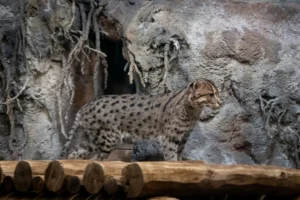
Discover every civet species found in India, how to identify them, where they occur, their conservation status, ecological role, and responsible wildlife viewing tips.
Civet Species of India: Identification, Distribution, Habitat & Conservation Guide
Introduction
Most wildlife enthusiasts visit India’s forests hoping to see tigers, leopards, elephants, or bears. Yet many of the country’s most fascinating mammals remain almost invisible because they are active after dark. Civets belong to this lesser-known group of nocturnal mammals.
Although they are often mistaken for cats, civets are not members of the cat family. They belong to the family Viverridae, a distinct group of small to medium-sized carnivorous mammals found across Asia and Africa. India is home to several civet species, ranging from adaptable animals that occasionally venture near villages to one of the world’s rarest mammals—the Malabar Large-spotted Civet, which is now considered Critically Endangered.
Despite their secretive habits, civets perform important ecological functions. By feeding on fruits, insects, rodents, reptiles, and other small animals, they help maintain healthy forest ecosystems. Fruit-eating species also disperse seeds over large distances, contributing to forest regeneration.
Interest in India’s civets has grown in recent years as camera-trap surveys and genetic research have improved scientists’ understanding of their distribution, behaviour, and conservation needs. These studies have also highlighted significant knowledge gaps, particularly for rare species whose populations remain poorly understood.
This guide brings together the latest information from wildlife research to help you:
- Learn which civet species occur in India.
- Understand how to identify them.
- Discover where they live.
- Explore their ecological role.
- Understand the conservation challenges they face.
- Learn how wildlife travellers can observe them responsibly.
What Are Civets?
Civets are mammals belonging to the family Viverridae, a group that also includes genets, binturongs, and linsangs. Although their long bodies, pointed faces, and tails may resemble those of cats, civets evolved along a different evolutionary path and possess several anatomical and behavioural differences.
Most Indian civets share several characteristics:
- Elongated bodies with relatively short legs.
- Pointed muzzle and sensitive whiskers.
- Long, often ringed tails.
- Dense fur marked with spots, stripes, or bands depending on the species.
- Large eyes adapted for low-light conditions.
- Well-developed scent glands used for territorial marking and communication.
They are primarily nocturnal, spending daylight hours resting in dense vegetation, tree hollows, rocky crevices, or abandoned burrows. Shortly after sunset, they become active in search of food, using their keen sense of smell and hearing to locate prey and ripe fruit.
Unlike specialised predators, most civets are opportunistic omnivores. Their diet varies with habitat and season but typically includes:
- Fruits
- Small mammals
- Birds and eggs
- Insects
- Reptiles
- Amphibians
- Crabs and other invertebrates where available
This flexible feeding behaviour allows several species, particularly the Small Indian Civet, to survive in both natural forests and modified landscapes.
Why Civets Matter to Forest Ecosystems
Although they rarely receive the attention given to larger carnivores, civets play several important ecological roles.
Fruit-eating species disperse seeds through their droppings, helping regenerate tropical forests. Carnivorous species help regulate populations of rodents, insects, and other small animals, contributing to ecological balance. Because many civets require healthy forest habitats, researchers also regard them as useful indicators of ecosystem condition.
Field Note: Many visitors never realise a civet has passed nearby. Camera-trap studies have shown that these mammals frequently use forest roads and trails at night, often only hours after daytime safari vehicles have left the area.
Civet Species Found in India
India supports five recognised civet species. Some are widespread and adaptable, while others are restricted to specific forest ecosystems. Together, they represent a diverse group of nocturnal mammals that occupy habitats ranging from tropical rainforests to agricultural landscapes. Understanding the differences between these species helps naturalists, photographers, and wildlife travellers appreciate their ecological roles and conservation needs.
Indian Civet Species at a Glance
| Common Name | Scientific Name | Main Distribution | IUCN Status* |
| Large Indian Civet | Viverra zibetha | Northeast India and adjoining regions | Least Concern |
| Small Indian Civet | Viverricula indica | Much of mainland India | Least Concern |
| Brown Palm Civet | Paradoxurus jerdoni | Western Ghats | Endemic to the Western Ghats |
| Malabar Large-spotted Civet | Viverra civettina | Western Ghats (historic range) | Critically Endangered |
| Masked Palm Civet | Paguma larvata | Parts of Northeast India | Least Concern globally |
*Readers should always refer to the latest IUCN Red List assessments, as conservation evaluations may change over time.
Large Indian Civet (Viverra zibetha)
The Large Indian Civet is India’s biggest civet species. It occurs mainly in the forests of Northeast India, where its range connects with populations across Southeast Asia. Although globally classified as Least Concern, local populations may decline because of habitat loss and hunting.
Identification
This species has:
- A long, muscular body.
- A grey to yellowish coat with dark spots.
- Distinct black bands across the neck.
- A bushy tail marked with alternating dark and light rings.
- A pointed muzzle and relatively short legs.
Adults are noticeably larger and heavier than the Small Indian Civet, making size one of the easiest field identification features.
Habitat
Large Indian Civets prefer:
- Evergreen forests
- Semi-evergreen forests
- Moist deciduous forests
- Dense secondary woodland
Although primarily associated with forests, they may occasionally use plantations or agricultural edges where natural cover remains.
Diet
Their varied diet includes:
- Fruits
- Rodents
- Birds
- Reptiles
- Insects
- Amphibians
This flexible feeding behaviour allows them to exploit seasonal food resources.
Conservation
The greatest pressures on the species include:
- Habitat fragmentation
- Hunting for meat
- Local persecution
- Declining forest quality
Although the species remains relatively widespread, these threats have caused regional declines in several parts of its range.
Small Indian Civet (Viverricula indica)
The Small Indian Civet is the most widespread civet in India and is also the species most likely to survive near villages and cultivated landscapes. Its adaptability explains why it is encountered more frequently than many of its forest-dependent relatives.
Identification
Key features include:
- Slender body.
- Grey coat with rows of black spots.
- Long tail with distinct black rings.
- Dark facial markings around the eyes.
- Pointed snout.
Although similar in appearance to the Large Indian Civet, it is considerably smaller and lighter.
Habitat
The species occupies an unusually broad range of habitats, including:
- Dry deciduous forests
- Scrublands
- Grasslands
- Agricultural fields
- Plantations
- Forest edges
Its tolerance of disturbed habitats makes it one of India’s most adaptable small carnivores.
Behaviour
The Small Indian Civet is largely solitary and nocturnal. During daylight hours it shelters in thick vegetation, abandoned burrows, rock crevices, or dense undergrowth before emerging after sunset to forage.
Ecological Role
Besides feeding on insects and rodents, it consumes many fruits, helping disperse seeds across both natural forests and modified landscapes.
Photography Tip: If you are hoping to photograph a Small Indian Civet, avoid using bright flash photography at close range. Low-intensity lighting and responsible night photography minimise disturbance to these nocturnal mammals.
Brown Palm Civet (Paradoxurus jerdoni)
The Brown Palm Civet is one of India’s most distinctive endemic mammals, found only in the Western Ghats. Unlike the spotted civets, it spends much of its life in trees and is strongly associated with evergreen forests. Recent camera-trap research has improved understanding of its activity patterns and habitat use.
Identification
Unlike the spotted civets, this species has:
- Uniform brown fur.
- Rounded face.
- Long tail.
- No obvious body spots.
- A more cat-like appearance.
Its plain brown coat makes it relatively easy to distinguish from other Indian civets.
Habitat
Brown Palm Civets prefer:
- Tropical evergreen forests.
- Shola forests.
- Mature rainforest canopy.
Because they spend considerable time in trees, they are even harder to observe than ground-dwelling civets.
Diet
Their diet is dominated by fruit but also includes:
- Insects
- Small vertebrates
- Nectar
- Flowers
Their fruit-rich diet makes them particularly important seed dispersers in Western Ghats forests.
Conservation
Although not as threatened as the Malabar Large-spotted Civet, the Brown Palm Civet depends heavily on intact rainforest habitats. Continued fragmentation of evergreen forests remains its principal long-term conservation concern.
Rare Species, Identification Guide, Distribution and Habitat
Malabar Large-spotted Civet (Viverra civettina)
The Malabar Large-spotted Civet is among India’s rarest mammals and is considered one of the country’s highest conservation priorities. Endemic to the Western Ghats, it is listed as Critically Endangered, and confirmed records from the wild remain extremely scarce. While some people assume the species is extinct, there is currently no conclusive evidence to support that conclusion. Researchers continue to recommend carefully targeted surveys and monitoring rather than declaring the species lost.
Identification
Historically, the species was recognised by:
- A relatively large body.
- Greyish coat with prominent dark spots.
- Dark stripes on the neck.
- Ringed tail.
- Longer legs than the Small Indian Civet.
- Broad head with a pointed muzzle.
Because so few confirmed individuals have been documented in recent decades, much of what is known comes from historical specimens preserved in museum collections.
Historic Distribution
The Malabar Large-spotted Civet was historically associated with the lowland forests of the Western Ghats, particularly in parts of:
- Kerala
- Karnataka
Today, its precise distribution remains uncertain because verified sightings are extremely rare.
Habitat
The species is believed to have preferred:
- Lowland evergreen forests.
- Moist deciduous forests.
- Dense forest with thick undergrowth.
Many of these habitats have undergone extensive conversion to plantations, agriculture, and settlements.
Conservation Challenges
Research identifies several major threats:
- Loss of lowland forest habitat.
- Habitat fragmentation.
- Hunting.
- Small and isolated populations.
- Limited confirmed records, making conservation planning difficult.
Recent studies have also focused on analysing museum specimens to better understand the species’ taxonomy and historical distribution. These efforts may help guide future conservation strategies.
Expert Tip: The absence of recent sightings does not necessarily prove extinction. Many nocturnal mammals remain undetected for years, especially in fragmented tropical forests.
Masked Palm Civet (Paguma larvata)
The Masked Palm Civet has a more limited distribution within India, occurring mainly in parts of Northeast India where its range extends into East and Southeast Asia. Although globally assessed as Least Concern, it is far less familiar to most Indian wildlife travellers than the Large or Small Indian Civets.
Identification
Characteristic features include:
- Pale grey to buff coat.
- Dark facial mask around the eyes.
- Pointed muzzle.
- Long tail.
- Slender body.
The dark facial markings are usually the easiest way to distinguish it from other Indian civets.
Habitat
Typical habitats include:
- Evergreen forests.
- Montane forests.
- Mixed broadleaf forests.
Like the Brown Palm Civet, it spends much of its time in trees.
How to Identify Indian Civets
Because civets are usually active at night and are often seen only briefly, recognising the key differences between species is more useful than trying to remember every marking.
Comparison of Indian Civet Species
| Species | Key Identification Features | Typical Habitat |
| Large Indian Civet | Large size, spotted body, striped neck, ringed tail | Forests of Northeast India |
| Small Indian Civet | Smaller build, rows of black spots, ringed tail | Forests, scrub, farmland |
| Brown Palm Civet | Uniform brown coat, no body spots, arboreal | Evergreen forests of Western Ghats |
| Malabar Large-spotted Civet | Large spotted body, historically in lowland forests | Western Ghats |
| Masked Palm Civet | Pale coat with distinctive facial mask | Forests of Northeast India |
Look Beyond the Coat Pattern
Naturalists often rely on several features together:
- Overall body size.
- Tail length and ring pattern.
- Presence or absence of spots.
- Facial markings.
- Behaviour (ground-dwelling versus arboreal).
- Habitat type.
Camera-trap photographs frequently capture only one side of an animal, so habitat and behaviour can be just as important as coat markings.
Distribution and Habitat
Different civet species occupy different parts of India, reflecting variations in climate, vegetation, and forest structure.
Western Ghats
The Western Ghats support the highest diversity of Indian civets. They are home to:
- Brown Palm Civet.
- Malabar Large-spotted Civet (historic range).
- Small Indian Civet in suitable habitats.
The extensive evergreen forests provide fruit, shelter, and tree cover essential for arboreal species.
Northeast India
The forests of Northeast India are the primary stronghold of the Large Indian Civet and the Masked Palm Civet. These regions retain extensive tropical and subtropical forests that support a wide variety of nocturnal mammals.
Central and Peninsular India
The adaptable Small Indian Civet occurs across much of mainland India. It is found in:
- Dry deciduous forests.
- Mixed woodland.
- Scrubland.
- Agricultural landscapes.
- Forest edges.
Its broad ecological tolerance explains why it has a much wider distribution than the more specialised forest species.
Human-dominated Landscapes
Not all civets avoid people. Small Indian Civets sometimes forage around villages, plantations, orchards, and agricultural fields, especially where food and vegetation remain available. However, increasing urbanisation and habitat fragmentation reduce suitable habitat for many populations.
Responsible Tourism Tip: Civets are naturally shy and nocturnal. If you are fortunate enough to encounter one during a night safari, observe quietly, avoid blocking its path, and never encourage guides to use excessive spotlighting or baiting for better views.
Behaviour, Ecology, Conservation and Wildlife Watching
Behaviour and Ecology
Civets are among India’s least-seen mammals because they are primarily nocturnal and generally avoid human activity. Most spend the day resting in dense vegetation, tree hollows, rocky crevices, or abandoned burrows before emerging after dusk to forage. Their secretive lifestyle explains why much of what scientists know today comes from camera-trap studies rather than direct observation.
A Flexible and Opportunistic Diet
Most Indian civets are omnivores, feeding on whatever resources are seasonally available. Their diet may include:
- Wild fruits
- Rodents
- Birds and eggs
- Insects
- Reptiles
- Amphibians
- Crabs and other small invertebrates
This adaptability allows species such as the Small Indian Civet to survive across a wide range of habitats, from forests to agricultural landscapes. Brown Palm Civets, however, consume a higher proportion of fruit and therefore play an especially important role in seed dispersal.
Why Civets Matter
Although rarely seen, civets perform valuable ecological functions.
Seed Dispersal
Fruit-eating civets swallow seeds and later deposit them in different parts of the forest, helping many plant species regenerate naturally.
Natural Pest Control
Species that feed on rodents, insects, and other small animals help regulate prey populations and contribute to healthy forest ecosystems.
Indicators of Forest Health
Because several civet species depend on intact forests, changes in their distribution can provide useful information about habitat quality and long-term ecosystem health.
Conservation Status of Indian Civets
The conservation outlook varies greatly between species. Some remain relatively widespread, while others survive only in fragmented populations.
Conservation Overview
| Species | General Conservation Situation | Major Threats |
| Large Indian Civet | Widespread but declining locally | Hunting, habitat loss |
| Small Indian Civet | Adaptable and widespread | Local persecution, habitat degradation |
| Brown Palm Civet | Dependent on intact evergreen forests | Forest fragmentation |
| Malabar Large-spotted Civet | Critically Endangered | Habitat loss, fragmentation, hunting |
| Masked Palm Civet | Stable in much of its range | Local habitat change |
The Malabar Large-spotted Civet requires the greatest conservation attention because of its extremely small and uncertain population. In contrast, globally common species can still experience significant local declines if forests continue to disappear.
Major Threats
Habitat Loss
Conversion of forests into plantations, agriculture, infrastructure, and settlements has reduced suitable habitat, particularly in the Western Ghats.
Habitat Fragmentation
Even where forests remain, they are often divided into isolated patches. Small populations become separated, reducing opportunities for movement and breeding.
Hunting
Some civets have historically been hunted for meat or for their scent glands. Although legal protections now exist, illegal hunting continues in some areas.
Human-Wildlife Conflict
Civets occasionally enter farms or orchards in search of food, leading to conflict with people. Education and habitat conservation remain important for reducing such conflicts.
Research and Monitoring
Because civets are elusive and mostly active at night, researchers rely on specialised survey techniques.
Camera Traps
Motion-sensitive camera traps have transformed knowledge of Indian civets. They reveal:
- Activity patterns.
- Habitat preferences.
- Relative abundance.
- Seasonal movements.
- Previously unknown distributions.
Recent studies of the Brown Palm Civet in the Western Ghats have provided valuable information about its ecology and behaviour.
Museum Collections
Historical museum specimens remain important for studying rare species, particularly the Malabar Large-spotted Civet. Scientists continue to examine these collections to improve understanding of taxonomy, historical distribution, and conservation priorities.
Citizen Science
The research brief also highlights opportunities for responsible citizen science. Wildlife enthusiasts can contribute valuable observations through properly documented photographs and ethically collected records, while always respecting wildlife and protected-area regulations.
Expert Tip: A single verified camera-trap image can significantly improve scientific knowledge of poorly studied nocturnal mammals. Always report unusual sightings to the relevant forest department or recognised biodiversity platforms rather than sharing precise locations publicly.
Where Can You See Civets in India?
Seeing a civet in the wild requires patience, realistic expectations, and a little luck. Even experienced naturalists may spend years in Indian forests without a confirmed sighting.
Best Regions
Based on current knowledge, the best regions include:
- Western Ghats – Brown Palm Civet and the historic range of the Malabar Large-spotted Civet.
- Northeast India – Large Indian Civet and Masked Palm Civet.
- Many parts of mainland India – Small Indian Civet in suitable habitats.
Responsible Wildlife Watching
If you join a night safari or guided nocturnal walk:
- Maintain a respectful distance.
- Keep noise to a minimum.
- Avoid repeated spotlighting.
- Never request guides to bait wildlife.
- Do not reveal the exact locations of extremely rare species online.
These practices reduce stress on animals and support ethical wildlife tourism.
Decision Guide
| Your Interest | Best Choice |
| Seeing the most widespread civet | Small Indian Civet |
| Observing an arboreal endemic | Brown Palm Civet in the Western Ghats |
| Learning about India’s rarest civet | Malabar Large-spotted Civet (through conservation literature rather than expecting a sighting) |
| Exploring Northeast India’s civets | Large Indian Civet and Masked Palm Civet |
Common Misconceptions, FAQs and Conclusion
Common Misconceptions About Indian Civets
Civets are among India’s most misunderstood mammals. Correcting these misconceptions helps improve both public awareness and conservation efforts.
Misconception 1: All Civets Are the Same
Reality: India is home to several civet species that differ in size, appearance, habitat, behaviour, and conservation status. Some, like the Small Indian Civet, are relatively widespread, while the Malabar Large-spotted Civet is considered Critically Endangered.
Misconception 2: Civets Are Cats
Reality: Despite the common term “civet cat,” civets are not members of the cat family (Felidae). They belong to the family Viverridae, which also includes genets, binturongs, and linsangs.
Misconception 3: The Malabar Large-spotted Civet Is Officially Extinct
Reality: The species is currently classified as Critically Endangered, not extinct. Confirmed sightings are extremely rare, but researchers continue surveys because the absence of records does not prove extinction.
Misconception 4: Civets Are Dangerous to Humans
Reality: Civets are shy, solitary animals that usually avoid people. They are far more likely to retreat than confront humans when encountered in the wild.
Misconception 5: Civets Have Little Ecological Importance
Reality: Civets contribute to healthy ecosystems by dispersing seeds, controlling populations of small animals and insects, and forming part of complex forest food webs.
Practical Checklist for Wildlife Travellers
Before planning a trip where civets may occur:
✔ Understand that sightings are uncommon.
✔ Choose destinations known for healthy forest habitats rather than expecting guaranteed encounters.
✔ Join only authorised night safaris where permitted.
✔ Carry a red-light torch if guides recommend one.
✔ Avoid flash photography unless specifically permitted and necessary.
✔ Never request baiting or disturbance of wildlife.
✔ Report unusual sightings responsibly without revealing precise locations of rare species.
Frequently Asked Questions
1. How many civet species are found in India?
India supports five recognised civet species, including the Large Indian Civet, Small Indian Civet, Brown Palm Civet, Malabar Large-spotted Civet, and Masked Palm Civet.
2. Which is the rarest civet in India?
The Malabar Large-spotted Civet is considered India’s rarest civet and is listed as Critically Endangered.
3. Are civets nocturnal?
Yes. Most civets are active from dusk until dawn and spend daylight hours resting in sheltered locations.
4. Where are civets most commonly found?
Their distribution varies by species. The Western Ghats support several endemic species, while Northeast India is important for the Large Indian Civet and Masked Palm Civet. The Small Indian Civet occurs across much of mainland India.
5. What do civets eat?
They are opportunistic omnivores that feed on fruits, insects, rodents, reptiles, amphibians, birds, eggs, and other small animals depending on seasonal availability.
6. Are civets important for forests?
Yes. Fruit-eating species disperse seeds over considerable distances, helping regenerate forests, while others help regulate populations of rodents and insects.
7. Can civets be seen during a normal safari?
Usually not. Because they are nocturnal, sightings during daytime jeep safaris are uncommon. Specialised night surveys or camera traps are far more effective for documenting them.
8. Why are civets threatened?
Major threats include habitat loss, forest fragmentation, hunting, and human disturbance. These pressures affect species differently depending on their habitat requirements.
9. What is the best way to photograph a civet?
Use ethical night-photography practices, minimise disturbance, avoid excessive spotlighting, and always follow the instructions of authorised guides.
10. Can travellers contribute to civet conservation?
Yes. Responsible wildlife tourism, reporting verified sightings to appropriate authorities, supporting conservation organisations, and respecting protected-area regulations all contribute to better long-term conservation outcomes.
Conclusion
Although they rarely receive the attention given to India’s larger mammals, civets are an essential part of the country’s forest ecosystems. From the adaptable Small Indian Civet to the elusive Brown Palm Civet and the critically endangered Malabar Large-spotted Civet, each species contributes to ecological processes such as seed dispersal, pest regulation, and maintaining healthy forest food webs.
Modern camera-trap surveys, museum research, and conservation initiatives are steadily improving our understanding of these secretive mammals. At the same time, habitat loss and fragmentation continue to threaten several species, highlighting the importance of protecting intact forests and supporting long-term research.
For wildlife travellers, the true reward lies not simply in seeing a civet but in understanding its role within the forest. Whether or not you encounter one during your travels, knowing that these nocturnal mammals are quietly shaping India’s ecosystems offers a deeper appreciation of the country’s natural heritage.
By practising responsible wildlife tourism, respecting protected areas, and supporting conservation efforts, every visitor can help ensure that India’s civets continue to survive in the forests they have inhabited for thousands of years.