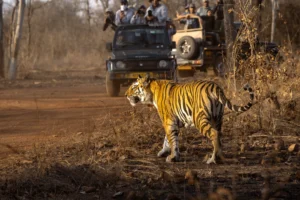
Plan your wildlife trip to India with expert guidance on park-by-park sighting odds, the best months to visit, and practical booking tips for top safaris.
Planning Your Indian Wildlife Safari: The Reality on the Ground
India hosts roughly 91,000 documented faunal species and around 45,500 plant species. This represents about 7% to 8% of total global species diversity, spread across four distinct global biodiversity hotspots: the Himalaya, the Western Ghats, Indo-Burma, and Sundaland in the Andaman and Nicobar Islands.
For most visitors, planning a safari here revolves around the flagship species: the country is home to over 70% of the world’s wild tigers. However, successful wildlife travel in India requires more than just knowing which animal lives in which park. It requires understanding distinct wet and dry seasonal shifts, navigating complex regional permit systems, and adjusting your expectations regarding how safaris operate here compared to other parts of the world.
You cannot simply drive your own vehicle into most core protected areas. Forest department regulations usually require visitors to use authorized vehicles accompanied by registered naturalists. These rules exist to manage human impact, fund anti-poaching measures, and support local community-based tourism.
Quick Snapshot: Flagship Wildlife and Where to See Them
To help you decide where to focus your time, this table outlines the top protected areas for specific flagship species, the most productive months for sightings, and recent density statistics where applicable.
| Target Species | Best Parks / Reserves | Best Months for Sightings | Notes on Density & Probability |
| Bengal Tiger | Bandhavgarh, Ranthambore, Kanha, Corbett, Bandipur | February to May | High density in specific reserves; Corbett reports ~19.56 tigers/100 km² and Bandipur ~19.83/100 km². |
| One-Horned Rhinoceros | Kaziranga | November to April | Kaziranga holds roughly one-third of the global population; density is highly concentrated at ~18.65 tigers/100 km² overlapping with rhino territory. |
| Snow Leopard | Hemis National Park, Ladakh regions | December to March | Sightings require multi-day high-altitude trekking; specialized tracking is necessary. |
| Asiatic Lion | Gir National Park | December to April | The only wild population in the world; sightings are heavily managed. |
| Asian Elephant | Periyar, Bandipur, Nagarhole | November to May | Highly visible near water sources during the dry season. |
How to Read Sighting Odds and Densities
When planning a trip, travelers frequently search for the parks that guarantee sightings. It is important to state clearly: there are no guaranteed sightings in wild habitats.
Instead of looking for guarantees, evaluate a park’s wildlife density and sighting probability.
- Absolute Population vs. Density: A park might have a large total population of tigers, but if the park is massive and heavily forested, your chances of seeing one remain low. Conversely, high-density parks—such as Bandipur (~19.83 tigers/100 km²) or Corbett (~19.56 tigers/100 km²)—concentrate animals into smaller, navigable areas, increasing your odds.
- The Crowding Misconception: A common misconception is that more tourists equate to more eyes on the ground, and therefore better sightings. In reality, severe crowding can reduce sighting quality and stress the animals. Timing your visit and carefully choosing the specific zone within a park matters far more than following crowds.
- Seasonal Visibility: Wildlife visibility changes drastically throughout the year. In the post-monsoon months (October to December), the forest is thick, green, and water is plentiful everywhere, meaning animals have no reason to visit predictable waterholes. By April and May, the undergrowth dies back and water sources dry up, forcing wildlife out into the open.
Expert Tip:
If you are prioritizing photography or high-probability tiger sightings, book your safaris during the dry heat of April or May. The temperatures will be uncomfortable, but the lack of foliage and the reliance on permanent waterholes significantly improves visibility.
Best Parks to See Tigers
Selecting the right park to see a Bengal tiger depends entirely on whether you prioritize high density, clear photography conditions, or specific habitat types. While India contains dozens of tiger reserves, a handful of parks consistently offer the most reliable sighting opportunities due to their geography and animal habituation.
Bandhavgarh National Park: High Probabilities and the Tala Zone
If your primary goal is to maximize your chances of seeing a tiger in a limited timeframe, Bandhavgarh is historically one of the most reliable options because of its high concentration of tigers within its core tourism areas.
The park’s Tala zone is the best choice for first-time visitors seeking high-probability sighting areas. The terrain consists of steep rocky hills and low-lying meadows, which naturally channel wildlife toward predictable paths. Because of its reputation, permits for the Tala zone sell out months in advance.
If you cannot secure a Tala permit, the adjoining Magdhi and Khitauli zones are excellent alternatives. As the tiger population inside the park has grown, these buffer and secondary core zones have developed distinct, well-documented resident tiger territories.
Photography Tip:
Bandhavgarh’s bamboo thickets can create harsh, dappled lighting conditions. Position your vehicle to catch tigers as they cross the wide, open fire lines or sand tracks where the light is uniform.
Ranthambore National Park: Open Terrains and Photography
Ranthambore is the ideal choice for wildlife photographers who want clear, unobstructed shots of tigers moving through dry deciduous forests and historical ruins.
The park’s semi-arid landscape in Rajasthan features less dense undergrowth than the central or northeastern forests, meaning animals are significantly easier to track visually. The tigers here are also highly habituated to safari vehicles, meaning they frequently continue their natural behavior—hunting, patrolling boundaries, or nursing cubs—even when vehicles are nearby.
The park is divided into ten zones. Zones 1 through 5 are the historic core areas and are generally favored for sightings, though zones 6 through 10 offer good terrain and lower vehicle crowding during peak months.
Jim Corbett, Kanha, and Tadoba: Density vs. Visibility
Choosing between Jim Corbett, Kanha, or Tadoba depends on whether you prioritize raw scientific density, scenic forest landscapes, or flexible safari options.
- Jim Corbett National Park: Corbett holds a high tiger density of approximately 19.56 tigers per 100 km². The Dhikala zone is the most sought-after sector here, characterized by expansive river valleys (chaurs) that allow you to spot wildlife from great distances.
- Kanha National Park: Kanha offers a classic sal forest and open grassland landscape. While the absolute density may require more patience than Bandhavgarh, its long-standing conservation infrastructure and massive meadows make tracking an educational experience led by highly skilled naturalists.
- Tadoba-Andhari Tiger Reserve: Located in Maharashtra, Tadoba features dry deciduous forests that become exceptionally dry in summer. It is favored for its reliable sightings around permanent lakes and artificial water holes when temperatures rise.
Practicalities: Tiger Safari Permits, Timings, and Costs
To secure your preferred safari zone and vehicle, you must book your entry permits through official state forest department portals several months before your travel date.
Safaris are strictly regulated and divided into morning and afternoon shifts, with fixed entry and exit times. The forest department places a hard cap on the number of vehicles allowed inside each zone per shift to prevent crowding.
You can choose between two main vehicle types:
- Jeeps (Gypsies): Open-top, 6-seater 4×4 vehicles. They offer the best flexibility, maneuvering speed, and low angles for photography.
- Canters: Open-top, 20-seater shared buses. These are more economical options and work well for larger families, though they are louder and restricted to major forest roads.
Each vehicle is legally required to carry an authorized driver and a registered forest department naturalist. Private vehicles are generally not allowed inside the core zones.
GRASSLAND, RIVERINE & HIGH-ALTITUDE MEGAFAUNA
Rhino, Elephant and Grassland Encounters
While tigers dominate India’s wildlife tourism marketing, the country’s grassland and riverine ecosystems offer distinct safari experiences focused on massive herbivores. These environments require different tracking strategies and are often more productive for varied, multi-species photography.
Kaziranga National Park — Rhinos and Riverine Safaris
Kaziranga is the definitive destination for seeing the greater one-horned rhinoceros because it holds approximately one-third of the global population. The park is characterized by tall elephant grass, marshland, and dense tropical broadleaf forests fed by the Brahmaputra River.
Due to recent conservation successes, the park has seen a massive surge in demand. Between October 1, 2024, and May 18, 2025, Kaziranga recorded a record-breaking 443,636 visitors. This increase means booking your safari slots well in advance is essential.
While jeep safaris are the standard way to explore the central and western ranges, Kaziranga also offers specialized boat safaris. These provide a quiet, low-impact way to observe wildlife along the riverbanks, particularly during the early morning mist. Keep in mind that Kaziranga is also a top tiger density hotspot, recording approximately 18.65 tigers per 100 km², meaning your chances of a secondary big cat sighting here are highly favorable.
The best time to visit is between November and April. The park closes completely during the monsoon season when the Brahmaputra floods the plains.
Field Note:
The tall elephant grass in Kaziranga can easily obscure animals during the early winter months. As the season progresses into February and March, controlled burning by the forest department clears large patches of grass, drastically improving visibility for rhinos and smaller mammals.
Asian Elephants — Periyar and Bandipur
For reliable wild elephant sightings, the southern Indian deciduous forests and Western Ghats are the most productive regions.
Bandipur National Park and the adjoining Nagarhole National Park offer excellent open-terrain viewing of wild herds migrating and feeding, especially during the dry season when they congregate near the Kabini River backwaters.
Periyar National Park in Kerala provides a different approach, characterized by a large artificial lake surrounded by dense evergreen forest. Here, boat safaris are the primary method of wildlife viewing, allowing you to watch herds of elephants drinking and bathing along the shoreline without the noise and intrusion of a jeep engine.
Responsible Tourism Tip:
When planning your trip, distinguish clearly between observing wild elephants in national parks and visiting captive elephant camps. Ethical wildlife travel prioritizes seeing animals in their natural habitat and avoiding establishments that offer elephant rides.
High-Altitude Encounters — Snow Leopard and Himalayan Species
Tracking snow leopards requires discarding the standard Indian safari template. There are no jeeps, no comfortable forest lodges inside the core areas, and no guaranteed daily schedules.
Hemis National Park and Ladakh Trekking Logistics
The best places to track snow leopards are the high-altitude trans-Himalayan regions of Ladakh, specifically around Hemis National Park.
To see a snow leopard, you must be prepared for a multi-day trekking expedition in extreme winter conditions. The primary viewing season is from December to March. During these months, heavy snowfall at higher elevations forces the snow leopards and their primary prey—blue sheep (bharal) and ibex—down into the lower valleys where human spotters can track them.
This type of wildlife travel relies heavily on specialized local trackers who use high-powered spotting scopes to scan the ridgelines. Because the terrain is vast and the animal’s camouflage is highly effective, sightings are usually from a considerable distance.
Decision Guide: Is a Snow Leopard Expedition Right for You?
- Physical Fitness: You must be comfortable trekking for hours at altitudes exceeding 3,500 meters (11,500 feet) in sub-zero temperatures.
- Patience: Days can pass with only tracks and scat as evidence.
- Equipment: You will need specialized extreme-winter clothing and long telephoto lenses (minimum 500mm to 600mm) if you intend to photograph the animals across deep ravines.
COASTAL, MANGROVE & UNIQUE HABITATS
Coastal, Mangrove, and Unique Habitats
Beyond the classic jungles and high-altitude mountains, India offers highly specialized ecosystems that require entirely different approaches to wildlife tracking. These regions host endemic species found nowhere else on the subcontinent.
Sundarbans National Park: Mangrove Tigers and Estuaries
The Sundarbans offers one of the most challenging and distinct tiger safaris in the world. This massive tidal mangrove forest spans the delta of the Ganges, Brahmaputra, and Meghna rivers.
Unlike the dry forests of Central India where you track tigers by jeep, all safaris in the Sundarbans are conducted by boat. You navigate through a complex network of estuarine channels, scanning the muddy banks for pugmarks (tracks) and movement in the dense mangrove roots.
The tigers here are adapted to a semi-aquatic life and are known to swim wide rivers. However, because of the impenetrable terrain and the reliance on waterways, sighting probabilities are lower than in parks like Bandhavgarh. The Sundarbans is better appreciated as a complete estuarine ecology experience, where you also search for saltwater crocodiles, fishing cats, Irrawaddy dolphins, and numerous bird species.
Safety and Boat Rules:
For safety reasons, you are not permitted to disembark onto the forest floor. Safaris rely entirely on authorized motorboats or larger cruise vessels, and it is strictly mandatory to follow forest department guidelines regarding safe distances from the banks.
Gir National Park: The Asiatic Lion Safari
If you want to see lions in the wild outside of Africa, Gir National Park in Gujarat is your only option. It is the final refuge of the endangered Asiatic lion.
The landscape here consists of dry deciduous scrub forest, which provides excellent visibility, particularly during the dry months from December to April. Because the lions are apex predators with a concentrated territory, the tracking methods and sighting probabilities are highly reliable. Similar to the central Indian tiger reserves, you must book open-top jeep safaris well in advance through the Gujarat forest department portal.
Marine and Coastal Wildlife: Andamans and the Gulf of Mannar
India’s extensive coastline and island territories offer excellent opportunities for marine wildlife viewing.
- The Andaman Islands: The warm waters here are known for coral reef ecosystems, dugongs (sea cows), and sea turtles. Snorkeling and diving are the primary methods for viewing marine life, though you must use certified dive operators who adhere to ecological guidelines.
- Gulf of Mannar and Goa: The Gulf of Mannar Marine National Park is a critical habitat for dolphins, whales, and various turtle species. In Goa, ethical boat tours operate to view Indo-Pacific humpback dolphins, though it is crucial to select operators who maintain a respectful distance and do not crowd the pods.
- Olive Ridley Turtles: The eastern coast, particularly Odisha, hosts massive arribadas (mass nesting events) of olive ridley turtles. Access to nesting beaches is heavily restricted to protect the eggs, so visiting requires coordinating with local conservation authorities or approved eco-tourism programs.
Birding Hotspots and the Western Ghats
India is a major destination for ornithologists and casual birdwatchers alike, hosting hundreds of resident and migratory species.
The Western Ghats, extending down the western coast of the peninsula, is a globally recognized biodiversity hotspot. Protected areas in the Nilgiri pockets, such as Silent Valley National Park or Eravikulam, offer high-altitude shola forests that shelter numerous endemic bird species.
For dedicated birding, smaller wetland sanctuaries often provide better experiences than the major tiger reserves. Bharatpur Bird Sanctuary (Keoladeo National Park) in Rajasthan is one of the most famous wetlands in the world for migratory waterfowl, best visited between November and February.
Photography Tip for Birding:
Wetland birding often requires shooting across expanses of water. Bring the longest telephoto lens you can manage (at least 400mm to 600mm) and a sturdy tripod. Morning light offers the best reflection and minimizes atmospheric haze over the water.
PRACTICAL PLANNING, ETHICS, FAQS, AND CONCLUSION
Safari Vehicle Comparison
Before booking your permits, it is helpful to understand how different vehicle choices impact your wildlife viewing and movement inside the parks.
| Safari Type | Pros | Cons | Best Use Case |
| Jeep (Gypsy) | Open-top design provides high maneuvering speed, flexible routing, and low angles for photography. | Higher cost per person if you are not sharing the vehicle with a group. | Dedicated wildlife photography, tracking specific predators, and small groups. |
| Canter | Economical per-seat pricing; ideal for larger groups or families traveling together. | Louder engine noise and strictly restricted to major forest transit tracks. | Budget-conscious travelers and large family groups. |
| Boat | Silent operation, low impact on wildlife, and clear viewing angles along riverbanks. | Confined entirely to navigable river channels, estuaries, or lakes. | Exploring riverine or mangrove environments like Kaziranga, Periyar, and the Sundarbans. |
Booking and Permit Summary
Securing access to India’s protected areas requires navigating distinct state-managed booking systems and strict habitat rules.
- How to Book: All core zone entry permits must be secured online through the respective official state forest department portals.
- Booking Windows: Major reserves open booking windows 90 to 120 days in advance. Permits for high-demand sectors, such as the Tala zone in Bandhavgarh or the Dhikala zone in Corbett, often sell out almost immediately.
- Permit Caps: The forest department enforces a strict daily limit on the number of vehicles allowed inside both core and buffer zones during each shift to control human impact.
- Authorized Personnel: Every vehicle entry requires hiring an authorized local driver and a registered forest department naturalist at the park gate. Private vehicles are generally prohibited from entering core tourism zones.
Common Mistakes to Avoid
Avoiding these frequent travel errors will significantly improve your tracking success and support local conservation efforts:
- Assuming More Crowds Equate to More Sightings: Many travelers believe that a high volume of vehicles increases the chances of spotting wildlife. In reality, heavy vehicle crowding can cause stress to animals, changing their behavior and forcing them to retreat into dense cover. Selecting a quieter zone or off-peak timing often yields better results.
- Expecting Guaranteed Sightings in All Tiger Parks: Sighting probabilities vary significantly based on wildlife density, undergrowth thickness, and local terrain. Managing your expectations using documented density statistics—such as Corbett’s 19.56 tigers per 100 km² or Bandipur’s 19.83 tigers per 100 km²—helps you appreciate the wider ecosystem even when apex predators remain hidden.
- Relying on Standard Camera Lenses for Close-Up Shots: Indian forest regulations enforce strict ethical distances between vehicles and wildlife. If you expect clear shots without a telephoto lens, you will likely be disappointed. Photographers should use lenses with a minimum focal length of 400mm to 600mm.
- Overlooking the Infrastructure of Secondary Zones: When primary core zone permits are sold out, travelers often cancel their plans. However, adjoining buffer zones often host well-documented animal territories and feature lower vehicle traffic, providing a more relaxed viewing environment.
Frequently Asked Questions
Which Indian parks offer the highest chance of seeing a Bengal tiger?
Parks with high tiger densities and open dry terrain offer the most regular sightings. Bandhavgarh, Ranthambore, Tadoba, and Kanha are top choices due to established tracking infrastructure and habituated wildlife. High-density parks like Corbett and Bandipur also provide strong sighting probabilities, though thick vegetation requires patience.
Where can I see the one-horned Indian rhinoceros?
Kaziranga National Park in Assam is the primary destination, holding roughly one-third of the world’s wild greater one-horned rhinoceros population. The park’s marshes and alluvial grasslands offer highly reliable viewing opportunities from November through April.
Where and when is the best chance to see snow leopards?
The high-altitude valleys of Ladakh, particularly around Hemis National Park, offer the best tracking opportunities. The most effective season is winter, specifically from December to March, when freezing temperatures force the leopards and their prey down into lower valleys.
How do I book safaris, authorised guides, and permits?
Safaris and entry permits must be booked directly through official state government forest department websites. Authorised guides and drivers are assigned systematically at the designated park gates upon verification of your permits and identification documents.
Are night safaris allowed in Indian national parks?
Rules vary significantly by state and park. While core zones are strictly closed to visitors after sunset, select parks offer regulated night safaris within designated buffer zones to observe nocturnal species. Always verify the current regional forest department guidelines before planning your itinerary.
Conclusion
A successful wildlife safari in India relies on careful preparation and an understanding of natural cycles rather than luck. By prioritizing factual density statistics, booking permits months in advance through official channels, and respecting the strict rules set by local forest departments, you ensure a safe and highly educational travel experience. Choosing responsible travel practices directly funds anti-poaching operations and supports the local communities living alongside these protected habitats.
Top Wildlife Destinations : Topics Cluster
- Top 10 Tiger Reserves Ranked by Tiger Sightings
- Top 25 National Parks in India
- Indian Wildlife Bucket List : Top 25 Experiences
- India Wildlife : Top 20 Destinations
- Why India is a world class safari destination?
- Corbett vs Ranthambore
- Kanha vs Bandhavgarh
- Tadoba vs Pench Parks Comparison
- Best Family-friendly Wildlife Destinations
- Best Wildlife Destinations for Couples