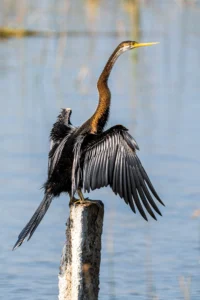
Discover India’s grassland birds, where to see them, identification tips, major threats, conservation efforts, and the best birdwatching destinations.
Introduction
India’s wildlife is often associated with forests, tigers, elephants, and rainforests. Yet some of the country’s most specialised and threatened birds live in landscapes that many people overlook—its grasslands.
From the dry plains of Rajasthan to the rolling savannas of Gujarat, the floodplain grasslands of Assam, and the high-altitude meadows of the Western Ghats and Trans-Himalaya, grasslands support a unique community of birds that have evolved to thrive in open habitats. Species such as the Great Indian Bustard, Lesser Florican, Bengal Florican, and Nilgiri Pipit depend on these ecosystems for nesting, feeding, and breeding.
Unfortunately, these habitats have declined rapidly over the past few decades. Large areas have been converted to agriculture, plantations, infrastructure, or urban development. In many places, grasslands have long been mistaken for “wastelands,” leading to tree planting and land-use changes that unintentionally destroy the open habitats many specialist birds require. Recent assessments also indicate that grassland birds are among India’s fastest-declining groups of birds.
For birdwatchers, photographers, and wildlife travellers, grasslands offer a very different experience from forest birding. Birds are often easier to observe in open landscapes, courtship displays can be spectacular during the breeding season, and many species exhibit fascinating behaviours adapted to life on the ground.
This guide explains what makes India’s grassland birds unique, introduces the habitats they depend on, highlights the country’s best birding locations, examines the conservation challenges they face, and offers practical advice for responsible wildlife travel.
Why India’s Grasslands Matter
Grasslands are ecosystems—not wastelands
Grasslands are frequently misunderstood. Because they lack dense tree cover, they have often been viewed as degraded land waiting to be “improved” through plantations or development. Ecologists now recognise that many of India’s natural grasslands are ancient ecosystems with their own plants, insects, mammals, reptiles, and birds.
These open habitats perform important ecological functions. They support grazing wildlife, help maintain soil health, store carbon below ground, regulate water movement, and provide habitat for numerous species found nowhere else. Healthy grasslands also sustain pastoral communities whose traditional grazing practices have shaped these landscapes for generations.
For birds, the value of grasslands lies in their openness. Many species rely on unobstructed visibility to detect predators, perform courtship displays, or forage for insects and seeds. Even scattered trees introduced into open grasslands can make habitats less suitable for some specialist species.
Field Note: A grassland with very few trees is not necessarily degraded. In many parts of India, that open landscape is exactly what specialist birds need to survive.
Why grassland birds are highly specialised
Grassland birds are adapted to conditions that differ greatly from forests. Many nest directly on the ground, where tall grasses provide camouflage rather than physical protection. Others use seasonal changes in vegetation height to time breeding and feeding.
These birds often have cryptic plumage that blends into dry grasses, making them surprisingly difficult to spot despite living in open country. Some species, such as the Lesser Florican, become far more visible during the breeding season, when males perform spectacular aerial display flights above the grasslands.
Many grassland specialists are also highly sensitive to habitat changes. A field converted to intensive agriculture, invaded by woody vegetation, or fragmented by roads and powerlines may no longer provide suitable breeding habitat.
Because many species occupy relatively narrow ecological niches, even modest changes in vegetation structure can have significant impacts on their populations.
The Decline of India’s Open-Country Birds
Recent assessments have identified grassland birds as one of the country’s most threatened groups. Several flagship species, including the Great Indian Bustard, Bengal Florican, and Lesser Florican, have experienced severe population declines and now require intensive conservation efforts.
The causes vary across regions but often include habitat conversion, infrastructure development, changing agricultural practices, invasive plant species, and collisions with overhead power lines. Climate change is also emerging as an additional concern, particularly in high-altitude grasslands.
While protected areas play an important role, many grassland birds spend much of their lives outside formally protected landscapes. Conserving these species therefore depends not only on national parks and wildlife sanctuaries but also on sustainable management of working landscapes used by local communities.
What Are Grassland Birds?
Grassland birds are species that depend primarily on open habitats dominated by grasses rather than forests. While some may occasionally use scrub, agricultural fields, or lightly wooded areas, their breeding success and long-term survival depend on maintaining extensive open landscapes.
Not all birds seen in grasslands are true grassland specialists. Raptors, pigeons, and many common birds may forage in these areas without relying on them for nesting or breeding. Specialist grassland birds, however, are closely tied to the structure, seasonal growth, and ecological processes of grassland ecosystems.
Understanding this distinction helps explain why some species disappear even when grassland appears to remain. Changes that seem minor to people—such as the spread of shrubs, conversion to plantations, or intensive grazing—can fundamentally alter habitat quality for birds that have evolved over thousands of years to live in open country.
Grassland Birds of India You Should Know
India’s grasslands support a diverse bird community, but only a relatively small number of species are true grassland specialists. These birds have evolved to live in open landscapes where visibility, seasonal grasses, and ground nesting are essential for survival.
Some are residents found throughout the year, while others move locally in response to rainfall or breeding conditions. Several have become conservation flagships because their declining populations reflect the wider loss of India’s grassland ecosystems.
The species below are among the most significant birds that wildlife travellers and birdwatchers should know.
Great Indian Bustard (Ardeotis nigriceps)
The Great Indian Bustard is India’s most iconic grassland bird and one of the world’s most threatened large birds. Once distributed across much of the Indian subcontinent, it now survives only in a few fragmented landscapes, with Rajasthan supporting the largest remaining population.
Standing over a metre tall, males are considerably larger than females and display a distinctive black crown, pale neck, white underparts, and long legs adapted for walking across open plains.
Unlike many birds that spend much of their time in trees, bustards live almost entirely on the ground. They feed on insects, seeds, small reptiles, berries, and occasionally small vertebrates, changing their diet according to seasonal availability.
Where to See It
Sightings are now largely restricted to parts of western Rajasthan, particularly around Desert National Park. Smaller populations survive in a few other states, but sightings there are extremely uncommon.
Conservation Status
The Great Indian Bustard is listed as Critically Endangered, with only a very small wild population remaining. Habitat loss, collisions with overhead power lines, infrastructure development, and low breeding success are among the major challenges facing its recovery.
Field Note: Seeing a Great Indian Bustard in the wild is never guaranteed. Responsible birdwatchers should prioritise supporting conservation efforts over simply adding the species to a life list.
Lesser Florican (Sypheotides indicus)
The Lesser Florican is famous for one of the most remarkable breeding displays in the bird world. During the monsoon, males leap several metres into the air repeatedly while calling, creating spectacular aerial displays above tall grasslands.
Outside the breeding season, however, the species becomes extremely secretive and blends almost perfectly into surrounding vegetation.
Males develop striking black-and-white breeding plumage with elongated head plumes, while females remain well camouflaged throughout the year.
Where to See It
The species occurs mainly in western and central India, particularly in parts of Rajasthan, Gujarat, Madhya Pradesh, and Maharashtra where suitable monsoon grasslands remain.
Best Time
The breeding season during the southwest monsoon offers the highest chance of observing display behaviour.
Conservation Status
The Lesser Florican is classified as Endangered. Conversion of native grasslands into intensive agriculture and fragmentation of breeding habitat continue to drive population declines.
Photography Tip: Observe displaying males from a considerable distance using binoculars or a telephoto lens. Approaching display sites too closely may disrupt breeding behaviour.
Bengal Florican (Houbaropsis bengalensis)
The Bengal Florican occupies a very different type of grassland from its western relative. It depends largely on the tall floodplain grasslands of northern and northeastern India.
Like the Lesser Florican, males perform aerial display flights during the breeding season, although sightings are generally much less frequent.
Where to See It
Suitable habitat survives mainly in parts of Assam and a few protected floodplain grasslands.
Conservation Status
The Bengal Florican is also one of Asia’s most threatened grassland birds. Declining floodplain grasslands, changing land use, and habitat fragmentation have severely reduced its range.
Indian Courser (Cursorius coromandelicus)
The Indian Courser is one of the easiest grassland specialists to recognise thanks to its upright posture, long legs, and distinctive facial pattern.
Rather than hopping like many birds, coursers often run swiftly across open ground while searching for insects and other small prey.
Their sandy-brown plumage provides excellent camouflage against dry grasslands and open scrub.
Where to See It
Indian Coursers occur across much of peninsular India in dry open country with sparse vegetation.
Early morning and late afternoon are usually the best times to observe them actively feeding.
Nilgiri Pipit (Anthus nilghiriensis)
The Nilgiri Pipit is found nowhere else in the world outside the high-elevation grasslands of the Western Ghats.
Unlike many widespread pipits, this species is closely tied to montane grasslands and is particularly vulnerable to habitat conversion.
Large areas of native grassland have been replaced by plantations of wattle, eucalyptus, and pine, reducing the amount of suitable habitat available.
Where to See It
Birdwatchers searching for the Nilgiri Pipit typically visit the higher reaches of the Nilgiris, Eravikulam National Park, Mukurthi National Park, and other montane grassland landscapes.
Conservation Importance
Because of its restricted range, the Nilgiri Pipit serves as an important indicator of the health of the Western Ghats’ high-altitude grasslands.
Rufous-tailed Lark (Ammomanes phoenicura)
This attractive lark is a characteristic resident of India’s dry grasslands and open scrub.
Its rich rufous tail is often visible in flight, while its melodious song is commonly heard during the breeding season.
Like many larks, it spends much of its time walking on the ground searching for seeds and insects.
Its plumage blends remarkably well with dry soils and sparse grasses, making careful observation essential.
Indian Grassbird (Graminicola bengalensis)
The Indian Grassbird prefers dense grasslands and reedbeds, where it often remains hidden for long periods.
Although difficult to see, its repetitive song frequently reveals its presence.
Patient observers who remain still may eventually see the bird climbing grass stems or making short flights between patches of vegetation.
Chestnut-bellied Sandgrouse (Pterocles exustus)
This species is well adapted to the arid grasslands and semi-deserts of western India.
Sandgrouse undertake regular flights between feeding areas and water sources, often early in the morning and late in the evening.
Their swift, direct flight and cryptic plumage make them fascinating birds to observe in open landscapes.
Malabar Lark (Galerida malabarica)
The Malabar Lark inhabits dry open habitats across parts of southern India.
Its distinctive crest and varied song help separate it from other larks.
Although less threatened than some grassland specialists, it remains dependent on open habitats that are increasingly fragmented in many regions.
Other Grassland Specialists Worth Watching For
Depending on the region and season, birdwatchers may also encounter several other species associated with India’s grasslands, including:
- Ashy-crowned Sparrow-Lark
- Black-crowned Sparrow-Lark
- Greater Short-toed Lark (winter visitor)
- Oriental Skylark
- Yellow-wattled Lapwing
- Sociable Lapwing (rare winter visitor)
- Indian Bushlark
- Paddyfield Pipit
- Zitting Cisticola
- Singing Bush Lark
Some of these species are widespread, while others occur only in specific habitats or during migration. Together, they contribute to the remarkable diversity of India’s open-country birdlife.
Comparison Table: Flagship Grassland Birds of India
| Species | Main Habitat | Best Known Regions | Conservation Status |
| Great Indian Bustard | Arid grasslands | Rajasthan | Critically Endangered |
| Lesser Florican | Monsoon grasslands | Rajasthan, Gujarat, MP | Endangered |
| Bengal Florican | Floodplain grasslands | Assam | Critically Endangered |
| Nilgiri Pipit | Montane grasslands | Western Ghats | Restricted-range endemic |
| Indian Courser | Dry open plains | Peninsular India | Localised grassland specialist |
Expert Tip: Grassland birdwatching rewards patience more than speed. Walk slowly, scan with binoculars before moving ahead, and pause frequently. Many species remain perfectly still until they feel safe, revealing themselves only to observers who take their time.
Best Places to See Grassland Birds in India
India’s grasslands are scattered across the country rather than concentrated in a single region. Each landscape supports a different community of birds shaped by climate, altitude, rainfall, and vegetation.
Some destinations are renowned for flagship species such as the Great Indian Bustard, while others are better known for larks, coursers, pipits, floricans, or wintering raptors. Understanding what each site offers will help you choose a destination that matches your birding interests.
Desert National Park, Rajasthan
If your primary goal is to search for the Great Indian Bustard, Desert National Park remains the most important destination in India.
Located near Jaisalmer, this vast protected landscape consists of arid grasslands, scrub, sand dunes, and rocky plains. Although bustard sightings are never guaranteed, this region supports the country’s most significant remaining wild population.
Other notable birds include:
- Chestnut-bellied Sandgrouse
- Cream-colored Courser (winter)
- Desert Wheatear
- Egyptian Vulture
- Laggar Falcon
- Various larks and wheatears
Best Time to Visit
October to March offers pleasant weather and good bird activity, although the exact timing for bustard sightings varies.
Suitable For
- Serious birdwatchers
- Wildlife photographers
- Conservation-focused travellers
Decision Guide: If your dream is to see the Great Indian Bustard, plan multiple days rather than a single visit. Even experienced guides cannot guarantee sightings.
Nannaj Grasslands, Maharashtra
Nannaj, near Solapur, is one of India’s best-known grassland birding destinations and has long been associated with Great Indian Bustard conservation.
Although bustard sightings have become increasingly rare, the surrounding grasslands continue to support an impressive diversity of open-country birds.
Birders may encounter:
- Indian Courser
- Yellow-wattled Lapwing
- Rufous-tailed Lark
- Ashy-crowned Sparrow-Lark
- Short-toed Snake Eagle
- Montagu’s Harrier (winter)
- Pallid Harrier (winter)
The area is especially rewarding during winter when migratory raptors arrive in significant numbers.
Banni Grasslands, Gujarat
Stretching across the Kutch region, the Banni Grasslands are among Asia’s largest natural grassland landscapes.
The combination of grasslands, seasonal wetlands, scrub, and nearby salt flats creates exceptional bird diversity throughout the year.
Birdwatchers visiting Banni may see:
- Chestnut-bellied Sandgrouse
- Indian Courser
- Larks
- Harriers
- Falcons
- Cranes during migration
- Numerous wintering waterbirds in nearby wetlands
Because habitats vary considerably across the region, local guides can greatly improve the chances of finding target species.
Field Note: Banni is best explored over two or three days. Different parts of the landscape support different bird communities, making short visits less rewarding.
Velavadar National Park, Gujarat
Velavadar National Park protects one of India’s finest remaining grassland ecosystems.
Although internationally famous for its Blackbuck population, it is equally important for grassland birds and wintering raptors.
Highlights include:
- Lesser Florican (seasonal)
- Harriers
- Larks
- Pipits
- Yellow-wattled Lapwing
- Short-eared Owl (winter)
Velavadar is particularly well known for large communal roosts of harriers during winter, attracting birdwatchers from around the world.
Rollapadu Wildlife Sanctuary, Andhra Pradesh
Rollapadu protects dry grassland habitat in southern India and remains an important refuge for several declining open-country species.
Historically associated with the Great Indian Bustard, the sanctuary now attracts birdwatchers mainly for its grassland specialists and raptors.
Possible sightings include:
- Indian Courser
- Larks
- Pipits
- Harriers
- Short-toed Snake Eagle
- Blackbuck
While bustard sightings have become extremely uncommon, Rollapadu continues to highlight the importance of conserving southern India’s remaining grasslands.
Tal Chhapar Wildlife Sanctuary, Rajasthan
Tal Chhapar demonstrates that even relatively small protected grasslands can support impressive bird diversity.
The sanctuary is particularly popular during winter, when large numbers of migratory raptors arrive from Central Asia.
Birdwatchers regularly look for:
- Montagu’s Harrier
- Pallid Harrier
- Marsh Harrier
- Desert Wheatear
- Larks
- Pipits
- Short-eared Owl
Its flat terrain also makes wildlife observation relatively easy compared with dense forests.
Chambal Landscape
The Chambal River is famous for gharials and river dolphins, but the surrounding grasslands and scrub support several important grassland birds.
Depending on the location, visitors may encounter:
- Indian Courser
- Yellow-wattled Lapwing
- Sandgrouse
- Bushlarks
- Raptors
- Riverine birds along the Chambal itself
Combining grassland birding with river safaris offers excellent wildlife diversity during a single trip.
Western Ghats Montane Grasslands
High-altitude grasslands in the Western Ghats differ dramatically from the dry plains of western India.
Cool temperatures, rolling meadows, and shola forests create habitat for several range-restricted birds found nowhere else.
Key species include:
- Nilgiri Pipit
- Nilgiri Flycatcher
- Black-and-orange Flycatcher
- Painted Bush Quail
- Hill Swallow
Protected areas such as Eravikulam National Park and Mukurthi National Park offer some of the best opportunities to explore these unique ecosystems.
Trans-Himalayan Grasslands
The cold deserts of Ladakh and Spiti represent another form of grassland ecosystem.
Here, sparse alpine vegetation supports birds adapted to extreme climates.
Possible sightings include:
- Horned Lark
- Tibetan Snowfinch
- Hume’s Short-toed Lark
- Tibetan Partridge
- Various accentors and wheatears
These landscapes also provide opportunities to observe Himalayan mammals such as Blue Sheep, Tibetan Wolf, and, with exceptional luck, the Snow Leopard.
Comparison Table: Best Grassland Birding Destinations in India
| Destination | State | Best Time | Key Species |
| Desert National Park | Rajasthan | Oct–Mar | Great Indian Bustard, Sandgrouse |
| Nannaj Grasslands | Maharashtra | Nov–Feb | Courser, Harriers, Larks |
| Banni Grasslands | Gujarat | Nov–Mar | Sandgrouse, Harriers, Larks |
| Velavadar National Park | Gujarat | Nov–Mar | Lesser Florican, Harriers |
| Rollapadu Sanctuary | Andhra Pradesh | Nov–Feb | Courser, Raptors |
| Tal Chhapar Sanctuary | Rajasthan | Oct–Mar | Harriers, Pipits, Wheatears |
| Western Ghats Grasslands | Tamil Nadu & Kerala | Oct–May | Nilgiri Pipit |
| Trans-Himalayan Grasslands | Ladakh & Himachal Pradesh | Jun–Sep | Alpine Larks, Snowfinches |
When Is the Best Time for Grassland Birdwatching?
The ideal season depends on the species you hope to observe.
- October to March: Best overall season for most birdwatchers, with pleasant weather and numerous migratory birds.
- Monsoon (July to September): Excellent for observing breeding displays of species such as the Lesser Florican, although access to some grasslands may become difficult.
- Summer: Useful for studying resident species but often challenging because of high temperatures in many grassland regions.
- High-altitude grasslands: Best visited during the snow-free months, typically from late spring to early autumn.
Expert Tip: Early morning is consistently the most productive time for grassland birdwatching. Birds are more active, temperatures are cooler, and soft light is ideal for photography. Late afternoon can also produce excellent sightings, especially of raptors returning to their roosts.
Why Grassland Birds Are Declining
Grassland birds have become one of India’s most threatened groups of birds because the landscapes they depend on have changed rapidly over the past century. Unlike forests, where habitat loss is often obvious, grassland degradation can be subtle. A grassland may still appear open to people while no longer providing the vegetation structure, food resources, or breeding conditions that specialist birds require.
Several factors often act together, making conservation particularly challenging.
Habitat Conversion
The greatest threat to grassland birds is the loss and fragmentation of native grasslands.
Across many regions of India, natural grasslands have been converted into:
- Intensive agricultural land
- Industrial developments
- Urban expansion
- Roads and transport corridors
- Mining areas
- Irrigation projects
As large continuous grasslands become divided into smaller patches, bird populations become isolated. Smaller populations are generally more vulnerable to disturbance, reduced breeding success, and local extinction.
Ground-nesting birds are especially affected because even small changes in land use can destroy nesting sites.
When Tree Planting Becomes a Problem
Planting trees is often promoted as an environmental solution, but not every landscape naturally supports forests.
Many of India’s grasslands are ancient ecosystems that evolved without dense tree cover. Converting these open habitats into plantations can unintentionally remove the conditions that grassland specialists need.
Research from regions such as the Nilgiris has shown that replacing native grasslands with plantations has contributed to long-term declines in several specialist bird species.
This does not mean tree planting is harmful everywhere. Rather, conservation efforts should restore the right habitat in the right place.
Field Note: Healthy grasslands are complete ecosystems in their own right. Conserving them often means protecting open landscapes rather than adding more trees.
Agricultural Intensification
Traditional grazing systems and low-intensity farming have coexisted with grassland birds for centuries.
Modern agricultural practices can change this balance by:
- Removing native grasses
- Using pesticides that reduce insect prey
- Harvesting during nesting periods
- Replacing diverse vegetation with monocultures
- Increasing mechanisation
Some birds continue to forage in farmland, but successful breeding often requires nearby natural grasslands.
Power Lines and Energy Infrastructure
One of the most significant threats facing large grassland birds is collision with overhead power lines.
Large, heavy birds such as the Great Indian Bustard have limited forward vision during flight and often struggle to detect cables stretching across open landscapes.
Because bustards fly relatively low, collisions with transmission lines have become a major conservation concern in parts of western India.
Researchers and conservation agencies are working on mitigation measures including:
- Underground cabling in sensitive areas
- Installing bird diverters on power lines
- Better planning of future infrastructure
- Monitoring collision hotspots
These measures aim to reduce mortality while balancing conservation with infrastructure development.
Invasive Plants and Shrub Encroachment
Native grasslands rely on a particular vegetation structure.
Invasive woody plants can gradually transform open habitats into dense scrub, reducing suitable nesting and feeding areas.
In parts of southern India, the spread of non-native plantation species has altered montane grasslands that support birds such as the Nilgiri Pipit.
Maintaining native grassland vegetation is therefore as important as protecting the land itself.
Climate Change
Climate change is an emerging concern for many grassland ecosystems.
Possible impacts include:
- Changes in rainfall patterns
- Altered grass growth
- Shifts in breeding seasons
- Reduced insect availability
- Increased frequency of droughts
- Changing migration timing
Scientists are continuing to study how these changes may affect India’s grassland birds, particularly those with restricted distributions.
Comparison Table: Major Threats and Their Impacts
| Threat | Primary Impact on Grassland Birds | Species Most Affected |
| Habitat conversion | Loss of breeding habitat | Nearly all specialists |
| Agricultural intensification | Reduced nesting success and food | Floricans, larks, pipits |
| Power lines | Collision mortality | Great Indian Bustard |
| Invasive vegetation | Habitat degradation | Nilgiri Pipit and other specialists |
| Climate change | Long-term habitat alteration | High-altitude and habitat specialists |
Conservation Efforts
Although many grassland birds continue to decline, numerous organisations, researchers, local communities, and government agencies are working to improve their future.
Conservation today focuses not only on protecting birds but also on restoring the ecosystems they depend on.
Great Indian Bustard Recovery Programme
The Great Indian Bustard has become the flagship species for grassland conservation in India.
Recovery efforts include:
- Protection of remaining breeding habitats
- Scientific monitoring
- Captive breeding initiatives
- Habitat management
- Measures to reduce power-line collisions
Because the remaining wild population is very small, every successful breeding attempt is considered important for the species’ long-term survival.
Protected Areas Help—but They Are Not Enough
National parks and wildlife sanctuaries protect some of India’s best remaining grasslands.
However, many grassland birds spend part or all of their lives outside protected areas.
This means conservation must also involve:
- Community-managed grasslands
- Village commons
- Grazing lands
- Privately owned landscapes
- Agricultural mosaics
Protecting only isolated reserves is unlikely to conserve wide-ranging grassland species over the long term.
Community-Based Conservation
Many grasslands have been shaped by traditional pastoral communities over centuries.
Where local people remain involved in conservation, outcomes can benefit both wildlife and livelihoods.
Examples include:
- Sustainable grazing practices
- Seasonal protection of nesting areas
- Habitat restoration
- Community monitoring
- Awareness programmes
Successful conservation often depends on cooperation rather than exclusion.
Citizen Science Is Playing a Bigger Role
Thousands of birdwatchers now contribute observations through platforms such as eBird.
These records help scientists:
- Track bird distributions
- Monitor migration
- Detect population changes
- Identify new conservation priorities
Citizen science has become an increasingly valuable source of information, especially across landscapes that are difficult to monitor continuously.
Expert Tip: Even common bird observations matter. Repeated records collected over many years help researchers understand long-term changes in bird populations.
How Wildlife Travellers Can Help
Responsible birdwatchers can make a meaningful contribution to grassland conservation through simple actions.
Choose Responsible Local Guides
Experienced local guides often know bird behaviour, seasonal movements, and sensitive nesting areas. Hiring them also supports local livelihoods linked to conservation.
Stay on Existing Tracks
Driving off established tracks can damage fragile grassland vegetation and disturb ground nests that are almost impossible to detect.
Keep a Respectful Distance
Many grassland birds rely on camouflage rather than flight to avoid predators. Approaching too closely may force them to abandon nests or interrupt breeding displays.
Avoid Playback During Breeding
Using recorded bird calls to attract birds may increase stress, particularly during the nesting season. Playback should be used sparingly and only where permitted.
Share Useful Observations
Submitting sightings to citizen science projects can improve understanding of species distributions and seasonal movements.
Responsible Tourism Tip
A successful birdwatching trip should leave the habitat exactly as you found it. The best wildlife photographers and birders are often those who disturb wildlife the least.
Practical Checklist Before Visiting Grassland Birding Sites
✔ Carry binoculars before relying on photography.
✔ Wear neutral-coloured clothing.
✔ Start birding shortly after sunrise.
✔ Carry enough drinking water.
✔ Respect local regulations.
✔ Keep noise to a minimum.
✔ Avoid disturbing displaying or nesting birds.
✔ Hire experienced local guides whenever possible.
✔ Record observations responsibly.
✔ Leave no litter behind.
Birdwatching and Photography Tips
Watching grassland birds requires a different approach from birding in forests. Most species rely on camouflage rather than dense vegetation for protection, making patience and careful observation far more effective than covering large distances quickly.
Best Time of Day
Early morning is usually the most productive period for grassland birdwatching.
During the first few hours after sunrise:
- Birds are actively feeding.
- Temperatures are cooler.
- Wind is generally lighter.
- Soft light improves visibility and photography.
Late afternoon can also be rewarding, particularly for observing raptors returning to roosts and birds becoming active after the heat of the day.
Midday is often less productive during summer because many birds reduce activity during high temperatures.
Best Seasons
The ideal season depends on your target species.
| Season | What to Expect |
| October–March | Best overall birding conditions with pleasant weather and many winter visitors. |
| July–September | Breeding displays of species such as the Lesser Florican, although access may be affected by monsoon rains. |
| April–June | Resident species remain visible, but birding can be challenging because of heat. |
| High-altitude grasslands | Best visited during the snow-free months, generally from late spring to early autumn. |
Essential Equipment
You do not need expensive equipment to enjoy grassland birdwatching, but a few essentials can make a significant difference.
Binoculars
A good pair of binoculars is often more valuable than a camera. Many grassland birds remain distant, and binoculars allow you to study behaviour without causing disturbance.
Field Guide or Bird Identification App
A reliable field guide or bird identification app can help distinguish similar-looking species such as larks, pipits, and coursers.
Camera
If photography is your goal, a telephoto lens is generally more useful than approaching birds closely. Keeping your distance results in more natural behaviour and reduces disturbance.
Clothing
Choose neutral-coloured clothing that blends into the landscape. Bright colours can make birds more cautious, especially in open habitats where movement is easily detected.
Other Useful Items
- Drinking water
- Hat and sunscreen
- Lightweight walking shoes
- Notebook or birding app for recording observations
- GPS or offline maps in remote areas
Photography Tip: Spend time observing a bird’s behaviour before taking photographs. Many species follow regular feeding routes or return repeatedly to the same perch, allowing better opportunities without disturbing them.
Ethical Bird Photography
Responsible photography should always take priority over obtaining a close image.
Good practices include:
- Maintain a comfortable distance.
- Avoid flushing birds into flight.
- Never approach active nests.
- Minimise time spent near breeding birds.
- Use longer lenses instead of moving closer.
- Follow local regulations regarding photography.
For species such as the Great Indian Bustard and Lesser Florican, excessive disturbance can interrupt feeding or breeding behaviour. A photograph is never worth compromising the welfare of the bird.
Common Mistakes Birdwatchers Make
Even experienced birdwatchers can unintentionally reduce their chances of success or disturb wildlife. Avoiding these common mistakes will improve both your experience and the well-being of the birds.
Visiting at the Wrong Time
Many first-time visitors begin birding late in the morning when bird activity has already declined. Starting shortly after sunrise usually produces far better results.
Walking Too Quickly
Grassland birds often remain motionless until danger passes. Moving slowly and pausing frequently gives you a much better chance of spotting well-camouflaged species.
Focusing Only on Rare Birds
Searching exclusively for flagship species such as the Great Indian Bustard can mean overlooking the remarkable diversity of larks, pipits, coursers, sandgrouse, and harriers that make grasslands so rewarding.
Ignoring Weather Conditions
Strong winds reduce bird activity and make observation more difficult. Calm mornings generally provide the best conditions.
Getting Too Close
Approaching birds too closely may force them to abandon feeding areas or nests. Observing from a respectful distance almost always results in more natural behaviour.
Forgetting That Grasslands Change Seasonally
The same grassland can look completely different between the monsoon and the dry season. Vegetation height, flowering grasses, insect abundance, and bird activity all vary through the year.
Frequently Asked Questions
What are grassland birds?
Grassland birds are species that depend primarily on open habitats dominated by grasses for feeding, nesting, and breeding. Many are highly specialised and cannot easily adapt to forests or heavily modified landscapes.
Which is the rarest grassland bird in India?
The Great Indian Bustard is widely regarded as India’s most threatened grassland bird and one of the world’s rarest large birds.
Where can I see the Great Indian Bustard?
The best opportunity is in parts of Rajasthan, particularly around Desert National Park, although sightings are never guaranteed.
Which is the best season for grassland birdwatching?
For most destinations, October to March offers the most comfortable weather and excellent bird diversity. The monsoon is particularly rewarding for observing breeding displays of floricans.
Are India’s grasslands protected?
Some important grasslands are protected within national parks and wildlife sanctuaries, but many significant habitats lie outside protected areas and depend on community-based conservation and sustainable land management.
Why are grassland birds declining?
The principal causes include habitat conversion, agricultural intensification, invasive vegetation, infrastructure such as power lines, and other forms of habitat fragmentation. Climate change is also becoming an increasing concern in some regions.
Why can tree planting sometimes harm grassland birds?
Natural grasslands evolved as open ecosystems. Planting dense tree cover in these habitats can alter vegetation structure and reduce suitable habitat for species that depend on open landscapes.
Can beginners enjoy grassland birdwatching?
Absolutely. Open landscapes often make it easier to observe bird behaviour than dense forests. Hiring an experienced local guide can make the experience even more rewarding.
Do I need an expensive camera?
No. A good pair of binoculars is usually more valuable for birdwatching than a camera. If you enjoy photography, a telephoto lens allows you to capture images while maintaining a respectful distance.
How can I help conserve grassland birds?
You can support conservation by practising responsible birdwatching, contributing observations to citizen science platforms, hiring local guides, respecting protected areas, and helping raise awareness about the importance of conserving grassland ecosystems.
Conclusion
India’s grasslands are among the country’s least appreciated wildlife habitats, yet they support an extraordinary collection of birds found nowhere else or surviving in only a few remaining landscapes. From the towering Great Indian Bustard and the spectacular display flights of the Lesser Florican to the subtle beauty of larks, pipits, and coursers, these birds reflect the health of ecosystems that have long been misunderstood.
Protecting grassland birds is about more than saving individual species. It requires recognising that open landscapes are valuable ecosystems deserving the same attention as forests, wetlands, and mountains. Conservation depends on protecting remaining habitats, restoring degraded grasslands where appropriate, reducing avoidable threats such as power-line collisions, and supporting the communities that have traditionally lived alongside these landscapes.
For wildlife travellers, grassland birding offers a different perspective on India’s natural heritage. It rewards patience, careful observation, and an appreciation of subtle behaviours rather than dramatic encounters. Whether you are searching for a globally threatened bustard in Rajasthan, listening for a hidden grassbird in a marsh, or watching harriers glide across Gujarat’s open plains, every visit helps build awareness of these remarkable ecosystems.
The future of India’s grassland birds will depend on continued conservation, informed land management, and responsible wildlife tourism. By visiting thoughtfully and supporting local conservation efforts, birdwatchers can play a small but meaningful role in ensuring that these open landscapes continue to echo with birdsong for generations to come.
At sunrise, the grasslands are often alive with sound long before most birds become visible. Harriers quarter low over the grass, larks begin singing from small mounds, and coursers start feeding before the heat builds.
Great Indian Bustard
Focus on:
- slow deliberate walk
- alert posture
- enormous size
Lesser Florican
Focus on:
- monsoon display
- impossible-to-see outside breeding season
Indian Courser
Focus on:
- constantly running
- stopping abruptly
- hunting insects
Nilgiri Pipit
Focus on:
- walking through misty grasslands
- quiet calls
- endemic habitat
Birdwatchers love behaviour.
- feeding behaviour
- courtship
- flight style
- vocalisations
- nesting habits
- daily activity patterns
Larks vs Pipits
Florican vs Bustard
Dry vs Wet Grasslands
- how grasslands sound at dawn
- how difficult birds are to detect
- why binoculars matter
- how wind changes bird activity
- how burnt grasslands affect sightings
- how monsoon transforms the landscape
- “Open-country birds of India”
- “Birding in Indian grasslands”
- “Grassland bird identification”
- “Best grasslands for birdwatching in India”
“Grassland birding often rewards patience rather than distance covered. Spending twenty minutes quietly scanning a single patch of grass frequently produces more sightings than walking several kilometres.”
- “How to scan a grassland effectively”
- “Why grassland birding differs from forest birding”
- “Typical one-day grassland birding routine”
- “Grassland bird calls and listening techniques”
- “Weather and wind effects on bird activity”
- “Choosing binoculars for open-country birding”