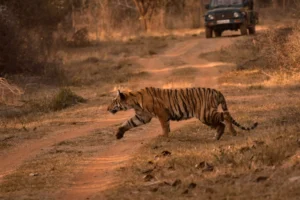
Discover India’s ultimate wildlife bucket list featuring tiger safaris, rhinos, lions, snow leopards, birds, and practical travel planning tips.
India Wildlife Bucket List: 20 Incredible Wildlife Experiences Every Nature Traveller Should Have
India offers one of the world’s widest ranges of wildlife experiences. In a single country, you can search for Bengal tigers in central India’s dry forests, watch one-horned rhinoceroses grazing across Assam’s floodplains, track snow leopards in the high Himalayas, cruise through mangrove forests looking for elusive predators, or spend a morning photographing thousands of migratory birds.
Few destinations combine such varied landscapes with so many iconic species. Tropical rainforests, grasslands, wetlands, deserts, mangroves, alpine valleys and mountain ranges all support different wildlife communities, making India suitable for both first-time safari travellers and experienced naturalists.
Rather than ranking parks, this guide presents a practical wildlife bucket list. Each destination has been included because it offers something distinctive—whether it is the best place to see a particular species, a unique ecosystem, or a memorable safari experience.
The guide also explains when to visit, what each destination is known for, and how to plan an itinerary that matches your interests.
Why India Belongs on Every Wildlife Traveller’s Bucket List
India is home to an extraordinary variety of habitats, allowing travellers to experience completely different wildlife journeys without leaving the country.
Depending on where you travel, you may encounter:
- Bengal tigers in central Indian forests
- Indian one-horned rhinoceroses in Assam
- Asiatic lions in Gir
- Snow leopards in Ladakh
- Asian elephants in southern India
- Gharials and Gangetic dolphins in river ecosystems
- Thousands of resident and migratory birds across wetlands
- Saltwater crocodiles and mangrove wildlife in the Sundarbans
This diversity means there is no single “best” wildlife destination in India. The right choice depends on what you hope to see and the type of experience you enjoy.
Some travellers dream of photographing a tiger at close range. Others prefer birdwatching, tracking elusive mountain wildlife, or exploring lesser-known ecosystems. India offers opportunities for all of them.
How to Use This Bucket List
This guide is organised around experiences rather than simply listing national parks.
For every destination you’ll learn:
- Why it deserves a place on a wildlife bucket list
- The iconic wildlife it is known for
- The best time to visit
- The type of safari or wildlife experience available
- Practical planning advice for travellers
Some destinations are ideal for first-time visitors because they are easy to reach and have well-developed tourism infrastructure. Others require more planning but reward visitors with experiences that are difficult to find anywhere else in the world.
Field Note
Wildlife sightings are never guaranteed. Weather, season, habitat conditions, animal behaviour, and a measure of luck all influence what you see. The most rewarding wildlife trips focus not only on finding a single species but also on appreciating the wider landscape, smaller animals, birds, and the natural processes that make each protected area unique.
The Ultimate India Wildlife Bucket List
1. Experience a Tiger Safari in Bandhavgarh National Park
If seeing a Bengal tiger is your highest priority, Bandhavgarh National Park in Madhya Pradesh deserves a place at the top of your bucket list. The park has long been regarded as one of India’s finest tiger destinations because of its healthy tiger population within a relatively compact safari area.
Bandhavgarh combines open meadows, bamboo forests, rocky hills and dense woodland, creating varied habitats that support a wide range of wildlife. While tiger sightings are never guaranteed, many visitors choose Bandhavgarh specifically because it offers a realistic chance of encountering one.
Why Visit
- Excellent destination for tiger enthusiasts
- Compact safari zones make exploration easier
- Beautiful mix of forests, grasslands and cliffs
- Rich history centred around the ancient Bandhavgarh Fort
Wildlife Highlights
- Bengal Tiger
- Indian Leopard
- Sloth Bear
- Gaur
- Sambar Deer
- Chital
- Wild Boar
- Numerous raptors and woodland birds
Best Time to Visit
October to June.
March to June generally offers better wildlife visibility as vegetation becomes thinner and animals visit water sources more frequently.
Photography Tip
Early morning safaris often provide softer light for photography, while summer dust can create dramatic backlit scenes when wildlife walks along forest tracks.
2. Explore Ranthambore National Park
Ranthambore is one of India’s most recognisable wildlife destinations and is often recommended for first-time safari visitors. The combination of ancient ruins, lakes and dry deciduous forests creates landscapes that are as memorable as the wildlife itself.
The park’s historic Ranthambore Fort overlooks much of the reserve, giving the landscape a distinctive character rarely found elsewhere in India.
Why Visit
- Easy to combine with Jaipur, Delhi and Agra
- Well-developed tourism infrastructure
- Excellent destination for first-time safari travellers
- Unique combination of history and wildlife
Wildlife Highlights
- Bengal Tiger
- Leopard
- Sloth Bear
- Marsh Crocodile
- Hyena
- Nilgai
- Sambar
- Over 300 bird species
Best Time to Visit
October to June.
Summer months generally improve wildlife viewing near lakes and waterholes.
Field Note
Many visitors arrive expecting frequent tiger sightings. While Ranthambore has produced many famous tiger photographs, every safari is different. Appreciating the park’s landscapes, birdlife and historic ruins makes the experience rewarding even without a tiger encounter.
3. Discover Kanha National Park
Kanha National Park offers one of India’s most complete forest safari experiences. Vast sal forests, open grasslands and peaceful meadows create scenery that many visitors consider among the country’s most beautiful protected landscapes.
The park is especially well known for successful conservation efforts involving the hardground barasingha, a swamp deer subspecies once close to extinction.
Why Visit
- Beautiful forest landscapes
- Excellent biodiversity
- Important conservation success story
- Comfortable safari infrastructure
Wildlife Highlights
- Bengal Tiger
- Hardground Barasingha
- Leopard
- Wild Dog (Dhole)
- Gaur
- Sloth Bear
- Sambar
- Hundreds of bird species
Best Time to Visit
October to June.
Winter offers pleasant weather, while late summer generally improves chances of spotting large mammals.
Responsible Tourism Tip
Kanha demonstrates how habitat management and long-term conservation can help recover endangered wildlife populations. Following park rules and supporting responsible tourism contributes to these ongoing efforts.
4. Visit Jim Corbett National Park
Jim Corbett National Park holds a special place in India’s conservation history as the country’s first national park and an important landscape for Project Tiger.
The park contains rivers, grasslands, sal forests and foothills of the Himalayas, making it one of India’s most varied wildlife destinations.
Rather than focusing only on tigers, Corbett rewards visitors who enjoy overall biodiversity and scenic landscapes.
Why Visit
- India’s oldest national park
- Historic importance in wildlife conservation
- Diverse habitats
- Excellent birdwatching opportunities
Wildlife Highlights
- Bengal Tiger
- Asian Elephant
- Leopard
- Otter
- Gharial
- Mugger Crocodile
- Hundreds of resident and migratory birds
Best Time to Visit
Different tourism zones operate during different periods of the year, but the main safari season generally runs from November to June.
Expert Tip
Visitors with multiple safari days should consider exploring different tourism zones rather than repeating the same route. Each zone has its own habitat characteristics and wildlife viewing opportunities.
5. Experience the Wilderness of Tadoba National Park
Tadoba-Andhari Tiger Reserve in Maharashtra has become increasingly popular among experienced wildlife travellers looking for excellent tiger habitat with comparatively fewer visitors than some better-known parks.
The reserve combines bamboo forests, dry deciduous woodland and lakes that attract wildlife throughout the year.
Why Visit
- Strong reputation for tiger sightings
- Growing popularity among wildlife photographers
- Diverse mammal population
- Less crowded than some famous parks during certain periods
Wildlife Highlights
- Bengal Tiger
- Leopard
- Sloth Bear
- Wild Dog
- Gaur
- Sambar
- Chital
- Marsh Crocodile
Best Time to Visit
October to June.
Late summer often provides favourable wildlife viewing around permanent water sources.
6. Visit Kaziranga National Park for One-Horned Rhinoceroses
If your wildlife bucket list includes seeing the Indian one-horned rhinoceros in its natural habitat, Kaziranga National Park in Assam is unmatched.
A UNESCO World Heritage Site, Kaziranga supports the world’s largest population of Indian one-horned rhinoceroses. The park’s floodplain grasslands, wetlands and woodlands also support an extraordinary diversity of wildlife.
Unlike many central Indian parks that focus primarily on tiger safaris, Kaziranga offers a broader large-mammal experience.
Why Visit
- Best place in the world to see Indian one-horned rhinoceroses
- UNESCO World Heritage Site
- Outstanding grassland ecosystem
- Excellent opportunities to observe multiple large mammals during a single safari
Wildlife Highlights
- Indian One-horned Rhinoceros
- Bengal Tiger
- Asian Elephant
- Wild Water Buffalo
- Swamp Deer
- Hog Deer
- Numerous waterbirds and raptors
Best Time to Visit
The park is generally open from November to April, with seasonal closures during the monsoon due to flooding.
Comparison Table: Tiger Parks vs Rhino Destination
| Destination | Best Known For | Ideal Traveller |
| Bandhavgarh | Tiger sightings | Big cat enthusiasts |
| Ranthambore | Tigers and historic landscapes | First-time safari visitors |
| Kanha | Tigers and diverse forests | Families and naturalists |
| Jim Corbett | Wildlife diversity and conservation history | Nature lovers and birdwatchers |
| Tadoba | Tigers and photography | Experienced safari travellers |
| Kaziranga | One-horned rhinoceroses and grassland wildlife | Visitors seeking iconic megafauna |
7. See the Last Wild Asiatic Lions in Gir National Park
Gir National Park and Wildlife Sanctuary in Gujarat offers one of the world’s most distinctive wildlife experiences. It is the only place where Asiatic lions survive in the wild, making it a destination that cannot be replaced by any other safari park.
Although lions are the main attraction, Gir’s dry forests, scrublands and riverine habitats support a surprising diversity of mammals, reptiles and birds.
Why Visit
- The only natural habitat of wild Asiatic lions
- One of India’s great conservation success stories
- Good diversity of mammals beyond lions
- Well-developed safari tourism
Wildlife Highlights
- Asiatic Lion
- Leopard
- Striped Hyena
- Golden Jackal
- Nilgai
- Sambar
- Chital
- Marsh Crocodile
Best Time to Visit
The park is generally open from October to June. Cooler winter months provide comfortable safari conditions, while summer often improves wildlife visibility around water sources.
Expert Tip
Many visitors focus entirely on lions, but Gir also supports one of India’s significant leopard populations. Keep watching rocky hillsides, dry riverbeds and woodland edges throughout your safari.
8. Search for the Snow Leopard in Hemis National Park
For many wildlife enthusiasts, spotting a snow leopard represents a lifetime ambition rather than a routine safari. Hemis National Park in Ladakh offers one of India’s best opportunities to search for this elusive mountain predator.
Unlike jeep safaris in central India, snow leopard expeditions involve trekking through high-altitude valleys with experienced local trackers. Success depends on weather, patience and careful observation rather than covering large distances.
Even without a snow leopard sighting, the dramatic Himalayan landscape makes the journey worthwhile.
Why Visit
- India’s premier snow leopard destination
- High Himalayan scenery
- Opportunity to experience wildlife tracking rather than conventional safaris
- Rich mountain wildlife
Wildlife Highlights
- Snow Leopard
- Himalayan Ibex
- Bharal (Blue Sheep)
- Tibetan Wolf
- Red Fox
- Golden Eagle
- Himalayan Griffon
Best Time to Visit
Winter, particularly between January and March, is generally considered the best period for snow leopard expeditions, when the cats descend to lower elevations following prey.
Field Note
A snow leopard expedition requires realistic expectations. Days may pass without a sighting, and success depends on weather conditions, animal movements and patience. Many travellers describe the tracking experience itself as the highlight of the journey.
9. Watch Asian Elephants in Periyar National Park
Periyar National Park in Kerala offers a different style of wildlife experience compared to the tiger reserves of central India. Large reservoirs surrounded by evergreen and moist deciduous forests create excellent habitat for Asian elephants and numerous bird species.
Boat safaris across Periyar Lake provide a unique perspective, allowing visitors to observe wildlife approaching the shoreline.
Why Visit
- One of India’s best elephant habitats
- Scenic lake-based wildlife viewing
- Variety of guided nature activities
- Pleasant climate for much of the safari season
Wildlife Highlights
- Asian Elephant
- Gaur
- Sambar
- Wild Boar
- Nilgai
- Leopard
- Tiger (occasionally seen)
- Rich birdlife
Best Time to Visit
October to March generally offers comfortable weather, although wildlife can be observed throughout much of the tourism season.
Responsible Tourism Tip
Choose activities conducted by authorised guides and park authorities. Guided walks and boat safaris help minimise disturbance while supporting conservation and local livelihoods.
10. Explore Nagarhole and Bandipur
Located within the Nilgiri Biosphere Reserve, Nagarhole and Bandipur together protect one of southern India’s most important wildlife landscapes.
These forests form part of a larger connected habitat that supports elephants, tigers, leopards and numerous other mammals. Visitors often combine both parks as part of a longer Karnataka wildlife itinerary.
Why Visit
- Extensive forest landscapes
- Excellent elephant viewing
- Healthy populations of large mammals
- Easy combination with Mysuru and Bengaluru
Wildlife Highlights
- Asian Elephant
- Bengal Tiger
- Leopard
- Dhole
- Gaur
- Sloth Bear
- Malabar Giant Squirrel
- Rich bird diversity
Best Time to Visit
October to May.
Late summer often concentrates wildlife around water sources, while winter provides pleasant weather for extended safaris.
11. Cruise Through the Sundarbans Mangrove Forest
The Sundarbans National Park offers one of the most unusual wildlife experiences in India. Instead of travelling by jeep, visitors explore this vast mangrove landscape by boat through a network of tidal rivers and creeks.
The park is famous for its Bengal tigers, although sightings are uncommon because of the dense vegetation and challenging terrain. The experience is about understanding a unique ecosystem rather than expecting frequent encounters with large predators.
Why Visit
- World’s largest mangrove forest
- UNESCO World Heritage Site
- Distinctive boat safari experience
- Exceptional mangrove ecology
Wildlife Highlights
- Bengal Tiger
- Saltwater Crocodile
- Fishing Cat
- Water Monitor Lizard
- Spotted Deer
- Gangetic Dolphin (in some waterways)
- Kingfishers and other wetland birds
Best Time to Visit
November to February generally offers pleasant weather for boat safaris.
Photography Tip
A telephoto lens is useful for photographing birds and distant wildlife, while a wide-angle lens helps capture the expansive mangrove landscapes.
Comparison Table: Unique Wildlife Experiences
| Destination | Signature Experience | Best Known Species | Safari Style |
| Gir | Only wild Asiatic lions | Asiatic Lion | Jeep Safari |
| Hemis | High-altitude wildlife tracking | Snow Leopard | Guided Trek |
| Periyar | Forest and lake exploration | Asian Elephant | Boat & Nature Walk |
| Nagarhole & Bandipur | Southern Indian forests | Elephant, Tiger | Jeep Safari |
| Sundarbans | Mangrove ecosystem | Bengal Tiger | Boat Safari |
12. Visit Keoladeo National Park for World-Class Birdwatching
Keoladeo National Park, also known as Bharatpur Bird Sanctuary, is one of India’s most celebrated birdwatching destinations. Unlike many wildlife parks where large mammals dominate the experience, Keoladeo showcases the extraordinary diversity of resident and migratory birds that depend on its wetlands.
Its compact size and relatively flat terrain also make it one of the easiest protected areas to explore on foot, by bicycle or cycle rickshaw with trained local guides.
Why Visit
- One of India’s premier birdwatching destinations
- UNESCO World Heritage Site
- Suitable for beginners as well as experienced birders
- Easy to explore at a relaxed pace
Wildlife Highlights
- Painted Stork
- Sarus Crane
- Bar-headed Goose
- Pelicans
- Spoonbills
- Herons and Egrets
- Kingfishers
- Numerous ducks, raptors and migratory waterbirds
Best Time to Visit
November to February is generally the best period, when winter migrants greatly increase bird diversity.
Photography Tip
Early mornings provide calm conditions, soft light and active bird behaviour. A telephoto lens is ideal, but even a shorter zoom lens can work well because many birds are surprisingly approachable.
13. Experience Chilika Lake’s Birdlife and Dolphins
Chilika Lake in Odisha is Asia’s largest brackish water lagoon and one of India’s most important wetlands. It is famous for attracting enormous numbers of migratory birds during winter and for its population of Irrawaddy dolphins.
The experience here differs from a traditional national park safari. Visitors spend time on boats exploring islands, mudflats and open water while searching for birds and dolphins.
Why Visit
- Outstanding winter birdwatching
- Opportunity to observe Irrawaddy dolphins
- One of India’s most significant wetland ecosystems
- Excellent destination for nature photographers
Wildlife Highlights
- Irrawaddy Dolphin
- Flamingos
- Pelicans
- Ducks
- Waders
- Herons
- Egrets
- Numerous migratory birds
Best Time to Visit
Winter is generally considered the best season, when migratory birds arrive in large numbers.
Field Note
Boat operators should always maintain a respectful distance from dolphins. Responsible wildlife viewing places the animals’ welfare above obtaining close photographs.
14. Discover Marine Wildlife Around the Andaman Islands
India’s wildlife extends well beyond forests and grasslands. The Andaman Islands offer opportunities to explore marine ecosystems through activities such as snorkelling, diving and responsible boat excursions.
Healthy coral reefs, clear waters and tropical islands support a completely different range of wildlife from mainland national parks.
Why Visit
- Explore India’s marine biodiversity
- Coral reef ecosystems
- Tropical island landscapes
- Excellent opportunities for underwater nature experiences
Wildlife Highlights
- Sea Turtles
- Reef Fish
- Coral Communities
- Dolphins
- Rays
- Coastal Birds
Best Time to Visit
The drier months generally provide calmer seas and better underwater visibility.
Comparison Table: Choosing the Right Wildlife Experience
| Interest | Recommended Destination |
| Best chance of seeing tigers | Bandhavgarh, Tadoba, Ranthambore |
| One-horned rhinoceroses | Kaziranga |
| Asiatic lions | Gir National Park |
| Snow leopards | Hemis National Park |
| Asian elephants | Periyar, Nagarhole, Bandipur |
| Birdwatching | Keoladeo, Chilika, Kaziranga |
| Mangrove ecosystems | Sundarbans |
| Marine wildlife | Andaman Islands |
Planning Your India Wildlife Bucket List
Best Time to Visit
The ideal season depends on the wildlife experience you are seeking.
- October to February: Pleasant weather across most parks, excellent for general safaris and birdwatching.
- March to June: Hotter conditions but often better visibility for large mammals as they gather near water sources.
- Winter (January to March): Best period for snow leopard expeditions in Ladakh.
- Monsoon: Some parks close seasonally due to heavy rainfall or flooding, while others have limited visitor access.
Always check official park schedules before planning your trip, as opening dates and safari operations vary between protected areas.
How Many Parks Should You Combine?
A common mistake is trying to visit too many destinations in a short time.
Instead, consider building your itinerary around a theme.
Big Cat Journey
- Bandhavgarh
- Tadoba
- Gir
Iconic Wildlife Journey
- Kaziranga
- Gir
- Bandhavgarh
Bird and Wetland Journey
- Keoladeo
- Chilika
- Kaziranga
Southern Forest Journey
- Nagarhole
- Bandipur
- Periyar
Choosing two or three well-connected destinations usually provides a more enjoyable experience than rushing through several parks.
Safari Booking Basics
Each protected area has its own booking procedures, tourism zones and safari regulations.
Before travelling:
- Reserve safaris well in advance, especially during popular months.
- Check official opening and closing dates.
- Carry valid identification if required during booking.
- Choose authorised safari operators and guides.
- Arrive early for safari departures.
Booking systems and permit rules may change over time, so always verify current information through official park authorities before making travel plans.
Practical Checklist
Before leaving for your wildlife trip, make sure you have:
- Comfortable earth-coloured clothing
- Hat and sunglasses
- Binoculars
- Camera with extra batteries
- Telephoto lens (if available)
- Drinking water
- Sunscreen
- Insect repellent
- Personal medications
- Lightweight rain protection where appropriate
Responsible Wildlife Tourism
Every visitor plays a role in protecting India’s wildlife.
Good wildlife tourism means:
- Maintaining a safe distance from animals.
- Never feeding wildlife.
- Keeping noise to a minimum.
- Following instructions from guides and park staff.
- Remaining inside designated safari vehicles unless permitted otherwise.
- Avoiding litter and single-use plastics where possible.
- Supporting authorised guides and locally managed tourism businesses.
Responsible behaviour helps reduce disturbance to wildlife while ensuring future visitors can enjoy the same natural environments.
Decision Guide: Which Wildlife Experience Is Right for You?
| If you want to… | Consider visiting… |
| See India’s most famous big cat | Bandhavgarh or Ranthambore |
| Observe rhinos in the wild | Kaziranga |
| Photograph elephants | Periyar or Nagarhole |
| Search for an elusive mountain predator | Hemis |
| Enjoy relaxed birdwatching | Keoladeo |
| Experience a unique boat safari | Sundarbans |
| Explore marine life | Andaman Islands |
Common Mistakes to Avoid
Even experienced travellers can make planning mistakes that reduce the quality of a wildlife trip. Avoiding these common pitfalls can help you enjoy a more rewarding experience.
1. Expecting Guaranteed Wildlife Sightings
Wild animals move freely, and no national park can promise sightings of a particular species. Parks with healthy populations may offer better opportunities, but every safari is different.
Treat every drive as an opportunity to observe the entire ecosystem rather than focusing on a single animal.
2. Visiting at the Wrong Time of Year
India’s wildlife destinations have different peak seasons.
For example:
- Winter is ideal for birdwatching.
- Summer often improves visibility for large mammals.
- Snow leopard expeditions are primarily winter experiences.
- Some parks close during the monsoon.
Checking seasonal conditions before booking can significantly improve your trip.
3. Trying to Visit Too Many Parks
India is a large country, and travel between wildlife destinations can take considerable time.
Instead of rushing through five or six parks in one trip, focus on two or three destinations that match your interests.
You’ll spend more time enjoying wildlife and less time travelling.
4. Booking Safaris Too Late
Popular parks and safari zones often fill well in advance during peak seasons.
If your travel dates are fixed, make safari bookings as early as possible using official or authorised booking channels.
5. Ignoring Smaller Wildlife
Many visitors become so focused on finding tigers or lions that they overlook fascinating birds, reptiles, insects and smaller mammals.
Some of the most memorable wildlife moments come from unexpected encounters rather than the species you planned to see.
6. Wearing Bright Clothing
Neutral earth-coloured clothing is generally more suitable for wildlife viewing.
Avoid bright colours, strong perfumes and unnecessary noise during safaris.
7. Choosing Wildlife Photography Over Wildlife Welfare
Photography should never disturb animals.
Avoid encouraging guides to get too close, block animal movements or pressure wildlife simply for better photographs.
Ethical wildlife viewing always comes first.
Frequently Asked Questions
Which wildlife destination should first-time visitors choose?
Ranthambore, Kanha and Jim Corbett are often good starting points because they combine good tourism infrastructure with rewarding wildlife experiences.
Where can I see Bengal tigers?
Bandhavgarh, Ranthambore, Kanha, Jim Corbett and Tadoba are among India’s best-known tiger destinations.
Where can I see Indian one-horned rhinoceroses?
Kaziranga National Park in Assam is the best-known destination and supports the world’s largest population of Indian one-horned rhinoceroses.
Where are Asiatic lions found?
Wild Asiatic lions occur naturally only in and around Gir National Park and Wildlife Sanctuary in Gujarat.
Where can I search for snow leopards?
Hemis National Park in Ladakh is one of India’s best-known destinations for snow leopard expeditions.
Which destinations are best for birdwatching?
Keoladeo National Park, Chilika Lake and Kaziranga are among India’s premier birdwatching destinations, particularly during winter.
When is the best time for wildlife travel in India?
For many parks, October to February offers pleasant weather, while March to June often improves visibility for large mammals. The ideal season depends on your chosen destination and target species.
Are wildlife sightings guaranteed?
No. Wildlife sightings always depend on natural factors such as animal behaviour, weather, habitat conditions and a degree of luck.
How many safaris should I plan?
If your schedule allows, booking multiple safaris usually provides a better overall experience than relying on a single drive.
Is India suitable for family wildlife holidays?
Many parks welcome families and provide well-organised safari experiences. Choose destinations and accommodation that match the ages and interests of everyone in your group.
Can I visit multiple wildlife destinations in one trip?
Yes, but it’s usually better to combine two or three complementary destinations rather than trying to cover too many parks in limited time.
Why is responsible tourism important?
Responsible tourism helps minimise disturbance to wildlife, supports conservation efforts and benefits local communities that depend on sustainable nature-based tourism.
Conclusion
India offers one of the most diverse wildlife travel experiences anywhere in the world. Few countries allow travellers to search for Bengal tigers in dry forests, observe one-horned rhinoceroses in vast grasslands, look for Asiatic lions in their only natural home, track snow leopards across Himalayan valleys and watch thousands of migratory birds in internationally important wetlands—all within a single destination.
The best wildlife bucket list is not necessarily the longest one. It is the one that matches your interests, travel style and available time. Whether you dream of photographing a tiger, exploring mangrove forests by boat, watching elephants in southern India or spending peaceful mornings with migratory birds, thoughtful planning will help you make the most of your journey.
Most importantly, remember that every visit to a protected area is also an opportunity to support conservation. By following park regulations, respecting wildlife, choosing responsible operators and travelling thoughtfully, you contribute to the long-term protection of India’s extraordinary natural heritage.
Rather than treating this as a checklist to complete in one trip, use it as inspiration for a lifetime of wildlife adventures across India’s remarkable landscapes.
Kanha’s wide meadows bordered by towering sal forests create a very different atmosphere from the rocky terrain of Ranthambore. Safaris here often feel slower and more immersive, with long stretches of forest punctuated by open grasslands where barasingha and gaur graze.
✓ Watch a tiger emerge from morning mist.
✓ See wild rhinos grazing in Kaziranga.
✓ Track snow leopards across Ladakh.
✓ Hear elephants moving through Periyar’s forests.
✓ Cruise through the Sundarbans mangroves.
Morning jeep safari.
Mist rising over grasslands.
Alarm calls echoing through the forest.
Waiting quietly at a waterhole.
Watching elephants cross a road.
| Species | Best Destination | Alternative |
| Tiger | Bandhavgarh | Tadoba |
| Rhino | Kaziranga | — |
| Lion | Gir | — |
| Elephant | Nagarhole | Periyar |
| Snow Leopard | Hemis | — |
| Trip Length | Recommended Parks |
| 5 days | Ranthambore |
| 7 days | Bandhavgarh + Kanha |
| 10 days | Bandhavgarh + Pench + Kanha |
| 14 days | MP + Kaziranga |
Experienced naturalists often recommend spending at least two or three safaris in the same park rather than visiting many parks briefly, as repeated drives increase familiarity with animal behaviour and habitats.
Wildlife movements vary daily. Even in parks known for tiger sightings, guides rely on alarm calls, pugmarks and recent movement reports rather than predetermined routes.
- Best Time to Visit Kaziranga
- Complete Guide to Tiger Safaris in India
- Wildlife Photography Tips
- Safari Booking Guide
- Responsible Wildlife Tourism
Kanha feels very different from most central Indian tiger reserves. Wide meadows emerge unexpectedly from dense sal forests, allowing herds of barasingha, chital and gaur to graze in the open while langurs keep watch from towering trees. Safaris here often feel unhurried, with long drives through cool forest corridors before the landscape opens into expansive grasslands that seem to stretch for kilometres.
Kaziranga’s floodplains create a safari unlike anywhere else in India. Tall elephant grass, marshes and braided rivers dominate the landscape, and it is not unusual to see several one-horned rhinoceroses feeding in the same grassland while wild water buffalo, swamp deer and elephants occupy nearby wetlands. The scale of the landscape often surprises first-time visitors.
A safari in the Sundarbans moves at the pace of the tides rather than along forest roads. Boats weave through narrow mangrove channels where every bend reveals a different landscape of mudflats, tangled roots and tidal creeks. Wildlife sightings require patience, and the excitement comes as much from reading this unique ecosystem as from searching for its elusive tiger.
Bandhavgarh’s mix of bamboo thickets, rocky escarpments and grassy valleys allows tigers to move between shaded forest during the heat of the day and open meadows where deer gather in the cooler hours. This variety of habitats is one reason the park has earned its reputation among wildlife enthusiasts.
- The forest gradually comes alive after sunrise.
- Fresh pugmarks on a dusty track.
- Alarm calls from langurs echoing across a valley.
- Chital suddenly becoming alert.
- Mist lifting from grasslands.
- A crested serpent eagle perched silently above the road.
- Elephants emerging from bamboo.
- Rhinos disappearing into tall grass.
- The smell of damp sal forests after winter mornings.
Ranthambore often feels dramatic, with ancient fort walls, rocky hills and lakes creating striking safari scenery.
Kanha feels quieter and greener, dominated by extensive sal forests and broad meadows.
Bandhavgarh offers a more compact landscape where dense forest alternates with open valleys beneath steep sandstone cliffs.
Tadoba has a noticeably drier character, with bamboo forests and numerous lakes that become important gathering points for wildlife during the hotter months.
Top Wildlife Destinations : Topics Cluster
- Top 10 Tiger Reserves Ranked by Tiger Sightings
- Top 25 National Parks in India
- Indian Wildlife Bucket List : Top 25 Experiences
- India Wildlife : Top 20 Destinations
- Why India is a world class safari destination?
- Corbett vs Ranthambore
- Kanha vs Bandhavgarh
- Tadoba vs Pench Parks Comparison
- Best Family-friendly Wildlife Destinations
- Best Wildlife Destinations for Couples