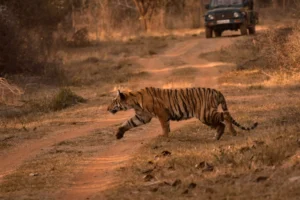
Learn essential wildlife travel safety tips in India, including safari rules, packing advice, responsible tourism practices, and official park guidelines.
Safe Wildlife Travel Tips in India: A Practical Guide to Responsible and Safe Safari Experiences
Introduction
A wildlife safari in India is unlike visiting a museum, monument, or hill station. You are entering the home of wild animals, where your safety depends on respecting nature, following park rules, and listening to trained guides.
Fortunately, wildlife travel in India is generally safe when visitors follow official regulations and behave responsibly. National parks, tiger reserves, and wildlife sanctuaries operate under strict rules designed to reduce risks for both visitors and animals. These rules are supported by the Wildlife (Protection) Act, 1972, National Tiger Conservation Authority (NTCA) guidelines, and instructions issued by individual forest departments.
At the same time, safe wildlife travel is about more than avoiding accidents. Loud conversations, feeding animals, littering, or ignoring guide instructions can disturb wildlife, alter natural behaviour, and negatively affect conservation efforts. Even seemingly harmless actions, such as trying to get closer for a photograph, can increase stress for animals or create dangerous situations.
This guide explains how to travel safely in India’s protected areas, what rules every visitor should know, what to pack, and how responsible behaviour helps protect both wildlife and the places they inhabit.
Why Wildlife Travel Safety Matters in India
Many first-time visitors assume that a safari is simply a drive through a forest in search of wildlife. In reality, it is a carefully managed activity within a protected ecosystem where both visitors and animals have responsibilities—and boundaries.
Safety on safari works in two directions.
First, it protects visitors from unpredictable encounters with wild animals. Tigers, elephants, bears, rhinos, and even smaller species can react defensively if they feel threatened or surprised. Following guide instructions, remaining inside designated vehicles, and maintaining appropriate distances significantly reduce these risks.
Second, safety protects wildlife. Animals that become accustomed to people, vehicles, or food can change their natural behaviour. Repeated disturbance may affect feeding, breeding, hunting, or movement patterns. Responsible tourism aims to minimise these impacts so wildlife continues behaving naturally rather than adapting to human presence.
Modern wildlife tourism therefore balances three equally important goals:
- Keeping visitors safe.
- Protecting wildlife and habitats.
- Supporting long-term conservation through responsible tourism.
Understanding this balance helps explain why national parks enforce rules that may sometimes seem restrictive.
Field Note
Experienced naturalists often point out that the best safari sightings happen when visitors become quiet observers rather than active participants. Remaining patient, avoiding sudden movements, and respecting wildlife usually lead to better animal behaviour—and often better photographs.
What Safe Wildlife Travel Really Means
Safe wildlife travel is not about eliminating every possible risk. Wild animals are unpredictable by nature, and no safari operator can guarantee complete safety or wildlife sightings.
Instead, safe travel means reducing unnecessary risks through responsible behaviour and following established park regulations.
Follow Your Guide’s Instructions
Every authorised safari vehicle is accompanied by trained personnel who understand local wildlife behaviour and park regulations. If a guide asks visitors to remain quiet, avoid movement, or stay seated, those instructions should be followed immediately.
Guides often notice animal behaviour long before visitors do. Their decisions are based on experience rather than caution alone.
Respect Wildlife Behaviour
Wild animals should always be allowed to behave naturally.
Avoid trying to attract their attention by calling out, clapping, making noises, or throwing objects. Even if an animal appears calm, it may react unexpectedly if it feels threatened or cornered.
Remember that observing natural behaviour is one of the greatest rewards of wildlife travel.
Maintain a Safe Distance
Trying to move closer for photographs or a better view is one of the most common mistakes made by inexperienced safari visitors.
Your guide will position the vehicle according to park regulations and animal behaviour. Respecting these distances protects both visitors and wildlife.
Understand That Rules May Vary
While India’s wildlife laws provide the overall legal framework, each protected area has its own operational rules.
Some reserves have introduced stricter measures regarding mobile phone use, vehicle movement, or visitor behaviour. Others may temporarily close zones due to weather, breeding seasons, or conservation requirements. Always follow the latest instructions provided by the local forest department and safari staff.
By understanding these principles before entering a protected area, visitors are far more likely to enjoy a safe, respectful, and rewarding wildlife experience.
India’s Wildlife Laws and Safari Rules
Understanding a few basic rules before your safari can prevent misunderstandings, improve safety, and help protect India’s wildlife. While every national park and tiger reserve has its own operating procedures, most rules are based on the same legal and conservation principles.
The important point for visitors is this: park rules are not merely recommendations—they are often backed by law or official management guidelines. Always follow instructions given by forest officials, naturalists, and safari guides, even if they differ slightly from another park you may have visited.
Wildlife (Protection) Act, 1972
India’s wildlife tourism operates within the framework of the Wild Life (Protection) Act, 1972, which provides legal protection for wild animals, plants, and their habitats.
For visitors, this translates into practical rules such as:
- Stay only in designated tourism areas.
- Do not disturb or harass wildlife.
- Never feed wild animals.
- Avoid damaging vegetation or natural habitats.
- Follow instructions issued by forest authorities.
- Respect restrictions on entry, photography, and vehicle movement where applicable.
The purpose of these regulations is not to make safaris restrictive but to ensure tourism does not interfere with conservation.
National Tiger Conservation Authority (NTCA) Guidelines
Many of India’s most popular wildlife destinations are tiger reserves managed under guidelines issued by the National Tiger Conservation Authority (NTCA).
These guidelines encourage tourism that has a low ecological impact, balancing visitor access with wildlife protection. They also recommend monitoring tourism pressure and managing visitor numbers to avoid excessive disturbance.
For travellers, this means you may encounter:
- Limited safari permits.
- Fixed safari routes.
- Restricted timings.
- Vehicle limits.
- Seasonal closures.
- Zone allocations.
These measures are intended to reduce pressure on sensitive habitats rather than limit visitor enjoyment.
Understanding Core, Buffer and Fringe Zones
Many visitors hear these terms while booking a safari but are unsure what they mean.
Each zone serves a different purpose in wildlife conservation.
| Zone | Primary Purpose | Visitor Access | What Travellers Should Expect |
| Core Zone | Highest level of wildlife protection | Highly regulated | Strict rules, designated safari routes, minimal disturbance to wildlife |
| Buffer Zone | Transition area surrounding the core | Tourism and conservation coexist | Safaris often operate here alongside conservation and community activities |
| Fringe Zone | Areas adjoining protected forests | Managed by local authorities | Villages, agriculture, tourism infrastructure, and wildlife movement may overlap |
The exact definition and visitor access vary between reserves. Some parks have multiple tourism zones, while others may use different management systems. Always rely on the local forest department’s classification for the reserve you are visiting.
Why This Matters
Knowing your allocated zone helps set realistic expectations.
For example:
- Wildlife movement is unpredictable across all zones.
- A core zone does not guarantee tiger sightings.
- Buffer zones can provide rewarding wildlife experiences while reducing tourism pressure on core habitats.
- Rules governing visitor behaviour may differ slightly between zones.
Choosing a safari based solely on the assumption that one zone always offers better sightings is rarely the best approach.
Why Rules Differ Between National Parks
One common question is why different parks have different regulations.
The answer is simple: every protected area has unique wildlife, habitats, visitor numbers, and management challenges.
For example, a tiger reserve with high visitor numbers may introduce stricter controls on vehicle movement or mobile phone use than a smaller sanctuary. Similarly, parks with sensitive breeding areas may temporarily close certain routes during specific seasons.
This flexibility allows park authorities to respond to local conservation needs rather than applying identical rules nationwide.
Essential Wildlife Safety Tips Before Your Safari
Good preparation begins well before your safari vehicle enters the forest.
Most safety incidents are preventable, and many stem from poor planning rather than wildlife behaviour.
Choose a Responsible Safari Operator
Your safari operator has a direct influence on both your experience and your safety.
Look for operators who:
- Use legally authorised safari vehicles.
- Employ experienced naturalists or licensed guides.
- Explain park rules before departure.
- Prioritise ethical wildlife viewing over chasing sightings.
- Respect speed limits and designated routes.
- Support responsible tourism practices.
Be cautious of anyone who promises guaranteed sightings or encourages behaviour that violates park rules. No responsible operator can guarantee encounters with wild animals.
Decision Guide: How to Identify a Responsible Safari Operator
| Good Practice | Warning Sign |
| Provides a clear safety briefing | Focuses only on tiger sightings |
| Respects park rules | Suggests ignoring regulations |
| Employs knowledgeable guides | Has little interest in wildlife interpretation |
| Encourages quiet observation | Encourages shouting or attracting animals |
| Supports conservation | Prioritises entertainment over wildlife welfare |
Attend the Safety Briefing
Some visitors are eager to begin their safari and pay little attention to the guide’s introduction.
This is a mistake.
A safety briefing typically explains:
- Park-specific rules.
- Emergency procedures.
- Behaviour around wildlife.
- Photography etiquette.
- Vehicle protocols.
- Local restrictions.
Even experienced safari travellers should listen carefully because regulations vary between reserves.
Carry the Required Documents
Most safari permits require identification details during booking.
Carry:
- The same government-issued photo ID used for the booking.
- Safari permit or booking confirmation if requested.
- Any additional documentation specified by the park or operator.
Without valid identification, entry may be refused regardless of your booking status.
Prepare Yourself Physically
Wildlife safaris can begin early in the morning, involve long periods of sitting, and expose visitors to changing weather conditions.
Before your safari:
- Stay hydrated.
- Eat a light meal.
- Wear appropriate clothing.
- Carry any personal medication.
- Inform your guide about any mobility or medical concerns before departure.
Being physically prepared allows you to enjoy the experience without unnecessary discomfort.
Expert Tip
Treat your guide as your primary source of information inside the park. While guidebooks and online articles are useful for planning, your guide has real-time knowledge of current wildlife movements, weather conditions, and temporary park restrictions. Following their instructions is one of the simplest ways to improve both your safety and your safari experience.
What to Wear and Pack for a Safe Wildlife Trip
Packing for a wildlife safari isn’t about carrying more equipment—it’s about carrying the right equipment. Comfortable clothing, suitable footwear, and a few practical essentials can make your safari safer and more enjoyable in changing weather conditions.
Before packing, remember that park rules may restrict certain items, so always check the latest instructions from your safari operator or the relevant forest department.
Wear Neutral-Coloured Clothing
Neutral colours help you blend into the surroundings and reduce unnecessary disturbance to wildlife.
Good choices include:
- Olive green
- Khaki
- Brown
- Beige
- Grey
- Earth tones
Avoid:
- Bright red
- Neon colours
- Pure white
- Reflective clothing
Bright colours may attract attention and are generally discouraged in many parks.
Loose, breathable clothing works well during summer, while winter safaris often require multiple layers because early mornings can be surprisingly cold.
Choose Comfortable Footwear
Most jeep safaris involve limited walking, but comfortable shoes are still important.
Recommended options:
- Closed walking shoes
- Comfortable trekking shoes
- Lightweight sports shoes
Avoid:
- High heels
- Slippers
- Loose sandals
If your itinerary includes nature walks or birdwatching outside safari vehicles where permitted, sturdy footwear becomes even more important.
Carry Essential Equipment
A small daypack is usually sufficient.
Useful items include:
- Reusable water bottle
- Hat or cap
- Sunglasses
- Sunscreen
- Personal medicines
- Binoculars
- Camera with extra battery
- Lens cleaning cloth
- Small notebook
- Insect repellent where appropriate
Carry only what you need. Large bags and unnecessary equipment can become inconvenient during long safari drives.
Seasonal Packing Guide
| Season | What to Pack | Practical Advice |
| Summer | Light breathable clothing, hat, sunglasses, sunscreen, reusable water bottle | Heat builds quickly after sunrise. Stay hydrated. |
| Winter | Jacket, fleece, gloves, woollen cap | Morning drives can feel much colder than expected, especially in open vehicles. |
| Monsoon | Waterproof jacket, rain cover, quick-drying clothing | Check whether safaris operate during your travel dates, as many parks partially or fully close during the monsoon. |
Practical Checklist Before Leaving Your Lodge
✔ Government-issued photo ID
✔ Safari permit or booking confirmation
✔ Water bottle
✔ Binoculars
✔ Camera and spare battery
✔ Personal medicines
✔ Cap or hat
✔ Light snacks only if permitted
✔ Small bag for personal belongings
Photography Tip
Pack binoculars before investing in a larger camera lens. Binoculars often help you observe natural animal behaviour from a comfortable distance, especially during sightings where photography isn’t possible.
Safari Etiquette That Keeps Everyone Safe
Good safari etiquette is about much more than being polite. Every rule inside a protected area exists because it reduces risk for visitors while allowing wildlife to behave naturally.
Many accidents and wildlife disturbances happen because visitors ignore simple instructions rather than because animals become aggressive.
Stay Inside the Safari Vehicle
One of the most important safari rules is also the simplest.
Unless specifically instructed by authorised park staff at a designated location, never leave your vehicle.
Wild animals can appear unexpectedly, even when they are not immediately visible. Remaining inside the vehicle provides a predictable presence that animals are generally accustomed to.
Stepping outside without permission can place both you and others at unnecessary risk.
Keep Noise to a Minimum
Speaking quietly allows everyone to enjoy the safari while reducing disturbance to wildlife.
Avoid:
- Shouting
- Playing music
- Loud conversations
- Calling animals
- Clapping
Silence often improves wildlife sightings because animals are more likely to continue their natural behaviour when they are not disturbed.
Use Mobile Phones Responsibly
Mobile phone policies are becoming stricter in several wildlife reserves.
Some parks have introduced restrictions on mobile phone use inside sensitive tourism zones to reduce distractions, discourage selfies, and minimise disturbance to wildlife. Regulations continue to evolve and differ between reserves. Always follow local instructions.
Even where phones are permitted:
- Keep devices on silent mode.
- Avoid speakerphone conversations.
- Do not play videos or music.
- Avoid taking selfies that distract from guide instructions.
Avoid Flash Photography
Flash photography can disturb wildlife, particularly during low-light conditions.
Many safari operators and park authorities discourage or prohibit flash use because repeated flashes may affect animal behaviour. If possible:
- Disable flash before entering the park.
- Increase camera ISO instead.
- Use natural light whenever available.
Never Feed Wildlife
Feeding wild animals is prohibited in protected areas.
Even small amounts of food can:
- Change natural feeding behaviour.
- Encourage animals to approach vehicles.
- Increase conflict between wildlife and people.
- Harm animal health.
If an animal approaches your vehicle, remain calm and allow your guide to manage the situation.
Do Not Litter
Everything you carry into a protected area should leave with you.
Litter such as plastic bottles, wrappers, tissues, and cigarette butts can harm wildlife and damage fragile ecosystems.
Carry a small waste bag if needed and dispose of rubbish after leaving the park.
Follow Your Guide at All Times
Your guide understands:
- Animal behaviour
- Road conditions
- Park regulations
- Temporary closures
- Current wildlife movements
If they ask you to remain seated, stay quiet, or avoid a particular action, follow those instructions immediately.
Safari Do’s vs Don’ts
| Do | Don’t |
| Listen to your guide | Ignore safety instructions |
| Stay inside the vehicle | Step out without permission |
| Speak quietly | Shout or play music |
| Wear neutral clothing | Wear bright colours |
| Maintain distance from wildlife | Ask the driver to move closer |
| Dispose of waste responsibly | Litter the forest |
| Observe patiently | Try to attract an animal’s attention |
| Respect park timings | Pressure the driver to break rules |
What To Do During Wildlife Encounters
Seeing a tiger, elephant, leopard, or bear is exciting, but the safest response is usually the simplest: stay calm and let your guide take the lead.
Wildlife encounters are unpredictable, and every situation is different. There is no single response that applies to every sighting, but some general principles remain consistent.
If You Encounter a Tiger
A tiger that crosses the road or rests near the track is usually behaving naturally.
Remain seated, stay quiet, and avoid sudden movements. Resist the temptation to stand up or lean out of the vehicle for photographs.
If You Encounter Elephants
Wild elephants deserve particular caution because they can change behaviour quickly if they feel threatened.
Your guide may increase distance or wait for elephants to move before proceeding. Follow their instructions without argument.
If You Encounter Bears or Leopards
Both species generally avoid people.
Stay quiet, remain inside the vehicle, and avoid making sudden movements that could startle the animal.
If Wildlife Approaches the Vehicle
Occasionally an animal may walk close to a stationary safari vehicle.
If this happens:
- Stay calm.
- Remain seated.
- Do not reach outside the vehicle.
- Avoid loud conversations.
- Let your guide decide when it is safe to move.
Remember that the vehicle itself is usually perceived by wildlife as a single, non-threatening object. Sudden human movement can change that perception.
Responsible Tourism Tip
A successful safari isn’t measured by how close you get to wildlife but by how little your presence changes the animals’ natural behaviour. Watching an animal behave naturally from a respectful distance is often more rewarding than forcing a close encounter.
Special Advice for Different Travellers
Every wildlife traveller has different needs. A family with young children, a solo traveller, and a wildlife photographer may all visit the same park, but the way they prepare for the safari can differ considerably.
The following recommendations complement the general safety rules and can help make your trip more comfortable and enjoyable.
Family Travel Tips
Wildlife safaris can be an excellent family experience when expectations are realistic.
Children should understand before the safari that:
- Wildlife sightings cannot be guaranteed.
- They should remain seated throughout the drive.
- Loud conversations and shouting should be avoided.
- Animals should never be called or waved at.
Parents should also carry:
- Drinking water
- Light snacks if permitted
- Sun protection
- Warm clothing during winter morning safaris
- Any essential medicines
Choose safari durations that suit younger children. Very early morning drives or long back-to-back safaris may be tiring for them.
Family Travel Tip
Rather than focusing only on spotting a tiger, encourage children to observe birds, insects, animal tracks, trees, and forest sounds. This keeps them engaged throughout the safari, even if large mammals remain elusive.
Solo Travellers
Solo travellers generally have little to worry about on organised safaris.
To make the experience smoother:
- Book through authorised operators.
- Inform your accommodation of your safari schedule.
- Carry emergency contact details.
- Keep your phone charged where its use is permitted.
- Follow your guide’s instructions carefully.
Sharing a safari vehicle with other visitors is common and often provides opportunities to learn from fellow wildlife enthusiasts.
Wildlife Photographers
Photography should never take priority over safety.
Good wildlife photographers focus on observing animal behaviour rather than chasing dramatic images.
Remember to:
- Turn off flash before entering the park.
- Avoid standing up inside the vehicle.
- Keep camera movements smooth and controlled.
- Respect the driver’s positioning.
- Avoid pressuring the guide to approach wildlife more closely.
Sometimes the best photographs come from waiting patiently rather than asking the driver to reposition repeatedly.
First-Time Safari Visitors
If this is your first wildlife safari:
- Arrive with realistic expectations.
- Don’t expect constant wildlife sightings.
- Listen more than you speak.
- Ask your guide questions.
- Enjoy the forest as a whole rather than searching only for one species.
Many experienced safari travellers consider the overall experience—including bird calls, fresh tracks, alarm calls, and changing landscapes—as rewarding as seeing a tiger.
Senior Citizens
Many jeep safaris are suitable for older travellers, provided they are comfortable sitting in an open vehicle for several hours.
Before booking:
- Inform the operator of any mobility concerns.
- Carry regular medication.
- Dress according to the weather.
- Bring drinking water.
- Avoid sudden standing movements while the vehicle is in motion.
If you have a medical condition, discuss it with the operator in advance so they can recommend the most suitable safari option.
Recent Rule Changes Every Traveller Should Know
Wildlife tourism regulations continue to evolve as park authorities balance visitor access with conservation.
Recent policy discussions and park-level changes show a clear trend toward low-impact tourism, with greater emphasis on reducing disturbance to wildlife.
Because these rules can change, always verify the latest instructions before travelling.
Mobile Phone Restrictions
Some tiger reserves have introduced restrictions on mobile phone use inside sensitive safari areas.
The objectives include:
- Reducing distractions for visitors.
- Discouraging risky selfies.
- Minimising noise.
- Preventing crowding around wildlife sightings.
Not every reserve has identical policies, so check local regulations before your visit.
Night Tourism Restrictions
Night tourism is receiving greater scrutiny in parts of India due to concerns about disturbance to nocturnal wildlife.
Where restrictions apply, visitors should respect them rather than looking for unofficial alternatives.
Vehicle Management
Several protected areas are also reviewing:
- Number of safari vehicles.
- Safari timings.
- Visitor carrying capacity.
- Route management.
Although these measures may reduce permit availability, they aim to improve conservation and the quality of the visitor experience over the long term.
Rules Can Change Quickly
Unlike general travel advice, wildlife regulations may change because of:
- Forest fires
- Heavy rainfall
- Animal breeding seasons
- Road damage
- Conservation projects
- Court orders
- Administrative decisions
Always rely on the latest guidance issued by the relevant forest department or your authorised safari operator.
Common Mistakes Wildlife Travellers Make
Avoiding these common mistakes can significantly improve both your safety and your overall safari experience.
- Treating a safari like an amusement ride instead of a visit to a protected habitat.
- Expecting guaranteed sightings of tigers or other large mammals.
- Wearing bright or highly reflective clothing.
- Talking loudly throughout the safari.
- Standing up for photographs.
- Asking the driver to break park rules.
- Feeding wildlife or leaving food behind.
- Throwing litter from the vehicle.
- Ignoring guide instructions.
- Focusing only on one species instead of appreciating the wider ecosystem.
- Assuming rules are identical across every national park.
- Failing to check the latest regulations before travelling.
Frequently Asked Questions
Is wildlife travel in India safe?
Yes. Wildlife travel in India is generally safe when visitors follow park rules, stay inside authorised vehicles, and listen to trained guides. No wildlife activity is completely risk-free, but responsible behaviour greatly reduces potential hazards.
Are wildlife safaris safe for children?
Yes, provided children are supervised, remain seated, and follow guide instructions throughout the safari.
What should I wear?
Wear comfortable clothing in neutral colours such as olive, brown, khaki, or beige. Dress in layers during winter and avoid bright colours.
Can I use my mobile phone during a safari?
Rules vary by reserve. Some parks have introduced restrictions on mobile phone use in sensitive areas, so always check the latest local regulations.
Are drones allowed?
No. Recreational drone use is generally prohibited inside protected areas unless specifically authorised.
Is flash photography allowed?
Flash photography is widely discouraged and may be restricted because it can disturb wildlife.
Can I get out of the safari vehicle?
No. Visitors should remain inside the vehicle unless instructed otherwise by authorised park staff.
What should I do if an animal approaches the vehicle?
Remain calm, stay seated, avoid sudden movements, and allow your guide to manage the situation.
Can I carry food?
Rules vary between parks. Even where food is permitted, never feed wildlife or leave food waste behind.
Are night safaris allowed everywhere?
No. Night safari rules differ across states and protected areas, and some locations have introduced stricter restrictions.
How do I choose a responsible safari operator?
Choose operators that follow park regulations, employ experienced guides, provide safety briefings, and promote ethical wildlife viewing rather than guaranteed sightings.
Do rules differ between parks?
Yes. Operational rules, safari timings, mobile phone policies, and visitor regulations can vary between reserves. Always follow local instructions.
Conclusion
Safe wildlife travel begins long before your safari vehicle enters the forest. It starts with choosing a responsible operator, understanding park rules, packing appropriately, and approaching wildlife with patience and respect.
The most rewarding safaris are rarely those with the closest wildlife encounters. Instead, they are the ones where visitors witness natural behaviour without influencing it. By remaining quiet, following guide instructions, respecting designated routes, and supporting responsible tourism, travellers help ensure that India’s national parks and tiger reserves remain healthy for both wildlife and future generations.
Finally, remember that regulations evolve as conservation priorities change. Before every trip, verify the latest guidelines with the relevant forest department or your safari operator, and treat those instructions as the most authoritative guidance for your visit.
Safari Planning : Topics Cluster
- How to book a wildlife safari in India?
- Park by Park Online Safari Booking Guide
- Tiger Safari India Planning Workbook
- Park by Park Safari Permits Guide
- National Parks Permit Guide – Park by Park Guide
- Tatkal Safari Booking Guide – Last Minute Safari Permits Booking
- Tiger Safari in India Cost
- Indian Wildlife Safari Budget Planner
- Jeep vs Canter Safari
- Best time for Tiger Sightings in India
- How far advanced should you book safari permits?
- Can foreigners book Indian Wildlife Safari online?
- Special Permits Guide for Foreigners and Domestic Visitors
- How to book a Safari Permit online in India? 2026 step by step guide
- Senior Citizens Friendly Safari Planning
- Multi Generation Family Safari Planning
- 50 things to know before your first safari in India
Tiger Safari in India : Topics Cluster
- Tiger Safari Planning Workbook
- Tiger Safari Booking Guide
- Best time for tiger sightings in India
- How to increase chances of tiger sighting?
- Tiger Safari Naturalist Guide
- Tiger Safari India Cost
- How to book a Tiger Safari in India?
- Best Wildlife Tour Operators in India
- Best Destination Cities for Tiger Safaris in India
- Tiger Safari under ₹25000
- Top 10 Budget Tiger Safaris 2026
- Tiger Photography Tips
- Best Tiger Reserves
- Top 10 Tiger Reserves by sighting chances