
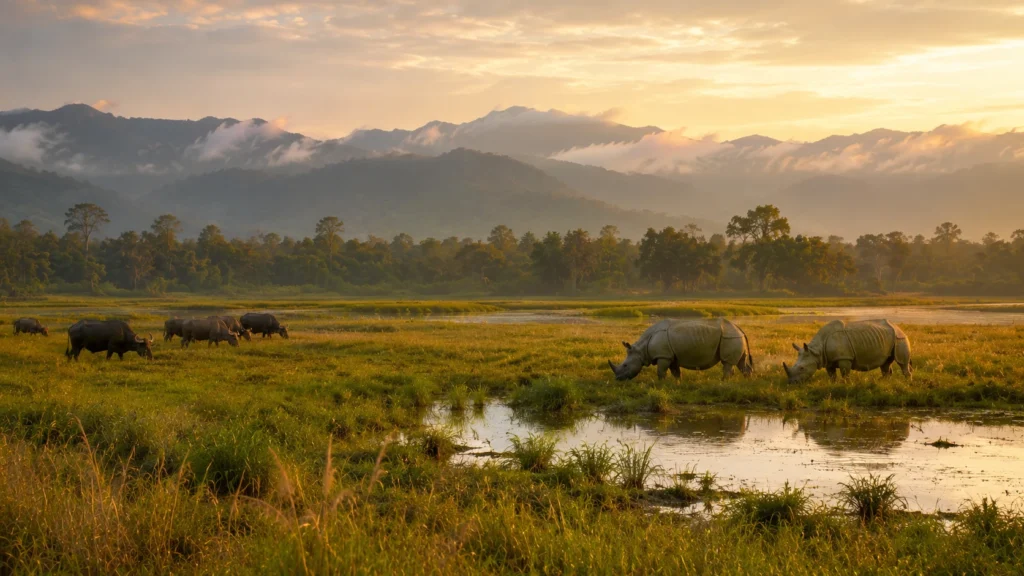
Assam, positioned in the heart of Northeast India, is defined by the sweeping floodplains of the Brahmaputra and Barak river valleys, flanked by the undulating Karbi Anglong plateau and the Barail Range. This geographical positioning, acting as a transition zone between the Indian, Indo-Malayan, and Indo-Chinese biogeographic realms, endows the state with staggering ecological richness. The region experiences a tropical monsoon climate, receiving some of the highest rainfall in the subcontinent. This nurtures a diverse matrix of ecosystems ranging from tropical wet evergreen and semi-evergreen forests to vast stretches of riparian grasslands, riverine wetlands (beels), and moist deciduous woodlands, covering over thirty-six per cent of the state’s total landmass.
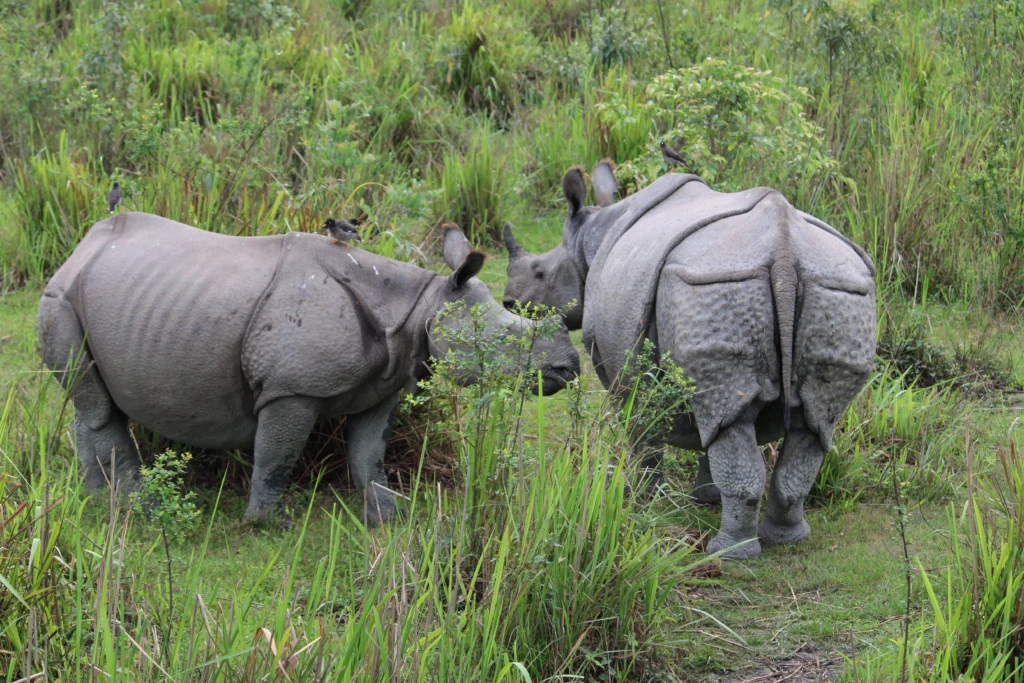
The state is globally renowned as the ultimate stronghold for the greater one-horned rhinoceros, accommodating approximately eighty per cent of the global population, primarily within the iconic Kaziranga National Park. Assam’s robust Protected Area network, which includes seven National Parks and numerous Wildlife Sanctuaries, also supports exceptional densities of the Bengal tiger, Asiatic water buffalo, and the eastern swamp deer. Furthermore, the lush rainforests of Dehing Patkai and the transboundary Himalayan foothill ecosystems of Manas and Raimona provide critical sanctuary for highly elusive mammals, including the clouded leopard, western hoolock gibbon, golden langur, and the pygmy hog.
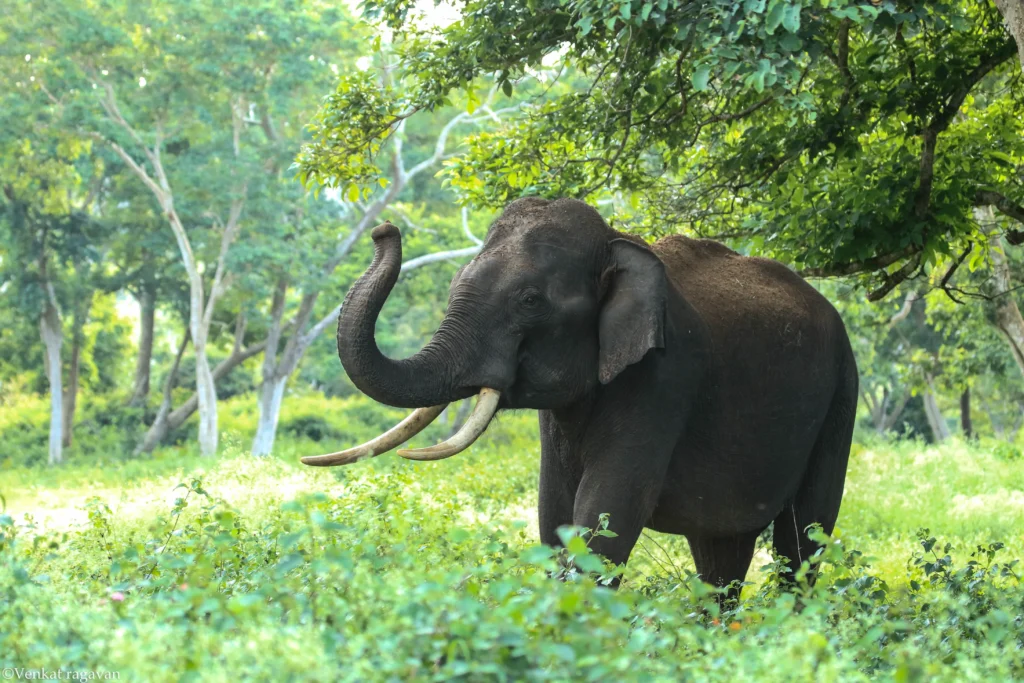
Assam holds a pre-eminent position in global conservation, boasting two UNESCO World Natural Heritage Sites (Kaziranga and Manas) and serving as a crucial flyway for migratory avifauna centered around the Ramsar-designated Deepor Beel. The state’s complex network of five Elephant Reserves facilitates vital migratory corridors across the Brahmaputra landscape. Wildlife tourism in Assam is exceptionally well-developed, offering world-class jeep and boat safaris that contribute significantly to the local economy and community-led conservation efforts. Managing immense annual floods, mitigating human-wildlife conflict, and curtailing poaching remain the central focus of the state’s wildlife management strategy.
Quick Facts Table
| Category | Details |
| State / Union Territory | Assam |
| Capital | Dispur |
| Area | 78,438 sq km |
| Population | 31,205,576 (2011 Census) |
| Forest Cover | 36.11% |
| Official Language(s) | Assamese, Bodo, Bengali |
| Time Zone | UTC+05:30 (IST) |
| Best Wildlife Season | November to April |
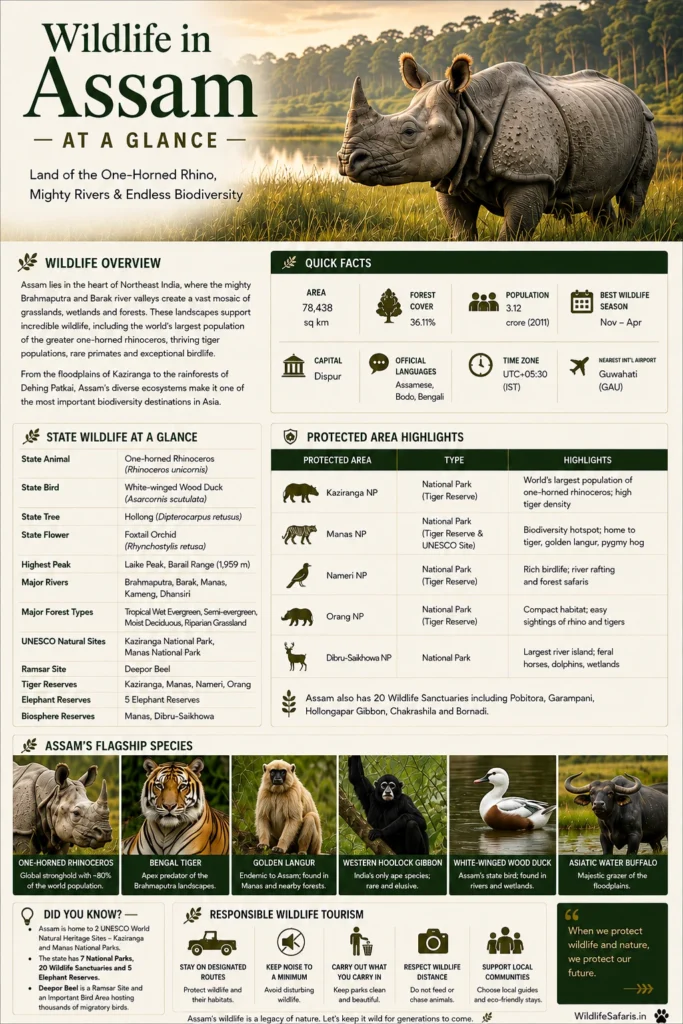
State Wildlife Master Table
| Attribute | Details |
| State / Union Territory | Assam |
| Capital | Dispur |
| Geographic Region | Brahmaputra and Barak Valleys |
| Total Area | 78,438 sq km |
| Forest Cover | 36.11% |
| State Animal | One-horned Rhinoceros (Rhinoceros unicornis) |
| State Bird | White-winged Wood Duck (Asarcornis scutulata) |
| State Tree | Hollong (Dipterocarpus retusus) |
| State Flower | Foxtail Orchid (Rhynchostylis retusa) |
| Highest Peak | Laike Peak, Barail Range (1,959 m) |
| Major Rivers | Brahmaputra, Barak, Manas, Kameng, Dhansiri |
| Major Forest Types | Tropical Wet Evergreen, Semi-evergreen, Moist Deciduous, Riparian Grassland |
| Biodiversity Hotspot | Eastern Himalaya and Indo-Burma |
| UNESCO Natural Sites | Kaziranga National Park, Manas National Park |
| Biosphere Reserves | Manas, Dibru-Saikhowa |
| Tiger Reserves | Kaziranga, Manas, Nameri, Orang |
| Elephant Reserves | Sonitpur, Dihing Patkai, Kaziranga-Karbi Anglong, Dhansiri-Lungding, Chirang-Ripu |
| National Parks | Kaziranga, Manas, Nameri, Orang, Dibru-Saikhowa, Dehing Patkai, Raimona |
| Wildlife Sanctuaries | 20 Sanctuaries (including Pobitora, Garampani, Chakrashila, Bornadi, Hollongapar Gibbon, Burachapori) |
| Conservation Reserves | Not officially specified |
| Community Reserves | Not officially specified |
| Ramsar Sites | Deepor Beel |
| Important Bird Areas (IBAs) | 46 IBAs including Deepor Beel, Kaziranga, Manas, Bherjan-Borajan-Padumoni |
| Major Wildlife Corridors | Kaziranga-Karbi Anglong Corridor, Pakke-Nameri Corridor |
| Flagship Mammals | One-horned Rhinoceros, Bengal Tiger, Asiatic Water Buffalo, Golden Langur, Hoolock Gibbon |
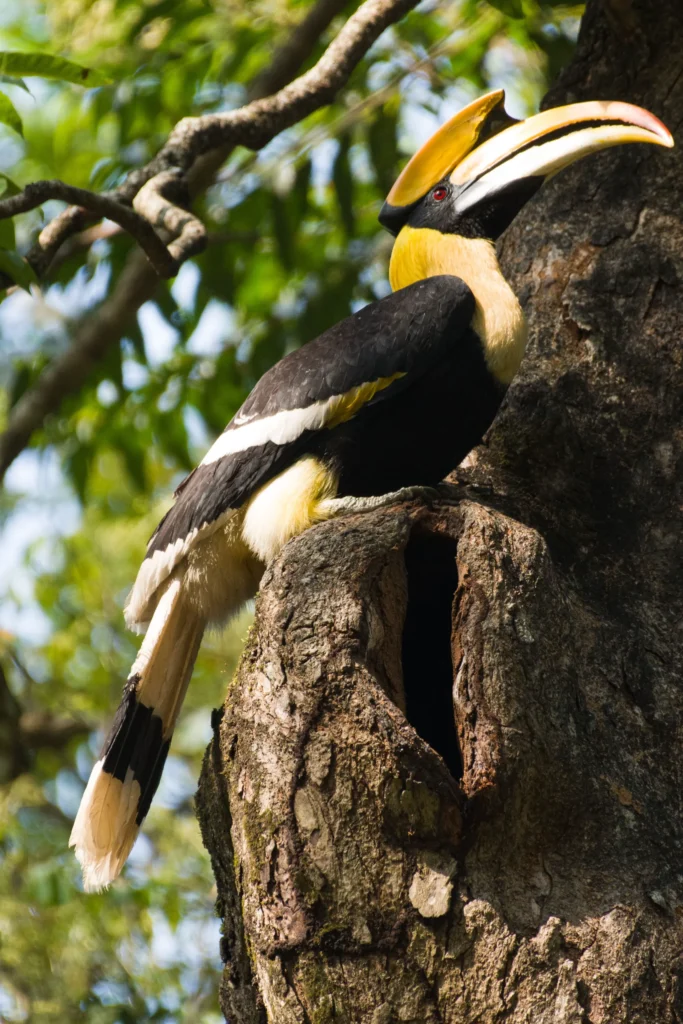
| Flagship Birds | Bengal Florican, Great Hornbill, White-winged Wood Duck, Spot-billed Pelican |
| Endemic Wildlife | Pygmy Hog, Golden Langur, Assam Roofed Turtle |
| Best Wildlife Destinations | Kaziranga NP, Manas NP, Nameri NP, Pobitora WLS |
| Best Time for Wildlife Tourism | November to April |
| Nearest International Airports | Lokpriya Gopinath Bordoloi International Airport (Guwahati) |
| Official Forest Department Website | https://forest.assam.gov.in/ |
Protected Areas Summary Table
| Protected Area | Category | District | Area (sq km) | Year Established | Famous For |
| Dehing Patkai National Park | National Park | Dibrugarh, Tinsukia | 111.19 | 2004 (NP in 2021) | Lowland Rainforest, Clouded Leopard, Primates |
| Dibru-Saikhowa National Park | National Park | Dibrugarh, Tinsukia | 340.00 | 1999 | Feral Horses, White-winged Wood Duck, Gangetic Dolphin |
| Kaziranga National Park | National Park | Golaghat, Nagaon, Sonitpur | 858.98 | 1974 | One-horned Rhinoceros, Bengal Tiger, Asiatic Water Buffalo |
| Manas National Park | National Park | Chirang, Baksa | 500.00 | 1990 | Golden Langur, Pygmy Hog, Bengal Florican |
| Nameri National Park | National Park | Sonitpur | 200.00 | 1998 | White-winged Wood Duck, Asian Elephant, Mahseer |
| Orang National Park | National Park | Darrang, Sonitpur | 78.81 | 1999 | One-horned Rhinoceros, Bengal Tiger, Grasslands |
| Raimona National Park | National Park | Kokrajhar | 422.00 | 2021 | Golden Langur, Asian Elephant, Butterflies |
| Bornadi Wildlife Sanctuary | Wildlife Sanctuary | Udalguri, Baksa | 26.22 | 1980 | Hispid Hare, Pygmy Hog |
| Chakrashila Wildlife Sanctuary | Wildlife Sanctuary | Dhubri, Kokrajhar | 45.56 | 1994 | Golden Langur |
| Deepor Beel Wildlife Sanctuary | Wildlife Sanctuary | Kamrup Metropolitan | 4.14 | 1989 | Avian Wintering Ground, Asian Elephant |
| Garampani Wildlife Sanctuary | Wildlife Sanctuary | Karbi Anglong | 6.05 | 1952 | Hot Springs, Hoolock Gibbon, Orchids |
| Hollongapar Gibbon Sanctuary | Wildlife Sanctuary | Jorhat | 20.98 | 1997 | Western Hoolock Gibbon, Bengal Slow Loris |
| Pobitora Wildlife Sanctuary | Wildlife Sanctuary | Morigaon | 38.81 | 1987 | Highest Density of One-horned Rhinoceros |
Wildlife Highlights
- Top Mammals: Indian One-horned Rhinoceros, Bengal Tiger, Asiatic Water Buffalo, Asian Elephant, Eastern Swamp Deer, Clouded Leopard.
- Top Birds: Bengal Florican, Great Hornbill, White-winged Wood Duck, Greater Adjutant Stork, Spot-billed Pelican, Swamp Francolin.
- Reptiles & Amphibians: Assam Roofed Turtle, King Cobra, Reticulated Python, Gharial, Monitor Lizard.
- Endemic Species: Golden Langur, Pygmy Hog, Hispid Hare (regional endemic).
- Flagship Flora: Hollong, Elephant Grass, Semul (Silk Cotton Tree), diverse orchids including the state flower, Foxtail Orchid.
- Best Wildlife Experiences: Jeep and Elephant-back safaris in Kaziranga, River Rafting in Nameri, walking trails in Hollongapar Gibbon Sanctuary, and Dolphin spotting river cruises in Dibru-Saikhowa.
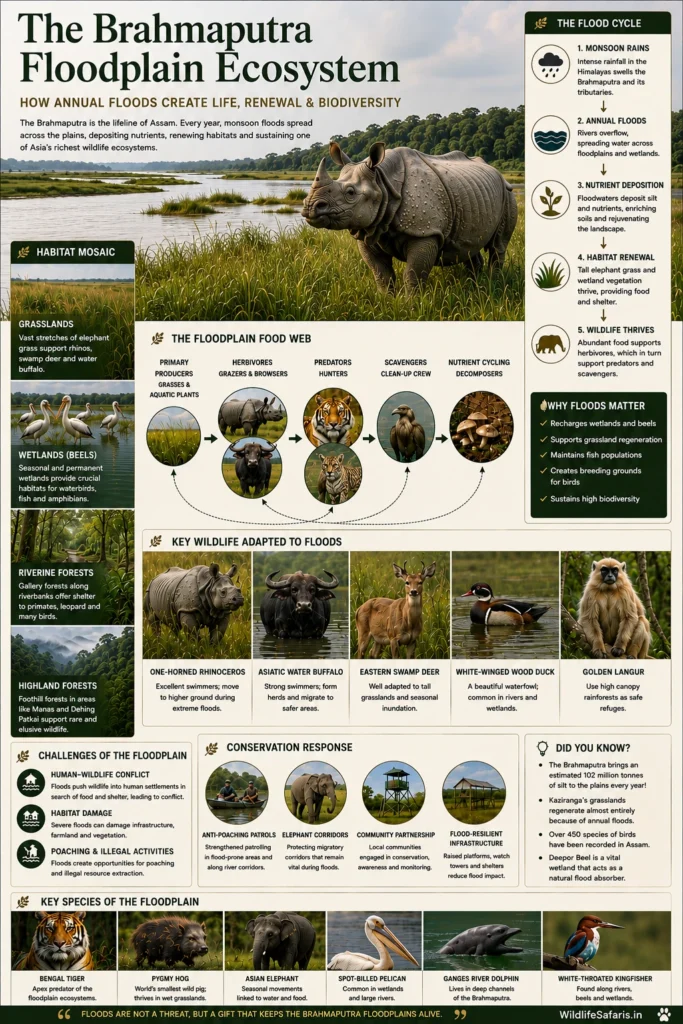
Conservation Challenges
- Annual Floods: While seasonal flooding of the Brahmaputra is essential to maintain the grassland ecology of Kaziranga and Orang, severe mega-floods cause substantial wildlife mortality and force animals toward busy highways and human settlements.
- Poaching: Although significantly curtailed in recent years through stringent anti-poaching measures, the illegal demand for rhinoceros horn and tiger parts remains a persistent latent threat.
- Human-Wildlife Conflict: Extreme fragmentation of elephant corridors, especially in the Sonitpur and Karbi Anglong districts, leads to acute crop depredation and retaliatory actions.
- Habitat Fragmentation: Expanding tea estates, linear infrastructure (highways and railways), and agricultural encroachment sever vital wildlife corridors connecting Kaziranga to the Karbi Anglong hills.
- Invasive Species: Proliferation of invasive weeds, notably Mimosa invisa and Eichhornia crassipes (water hyacinth), choking native wetlands and degrading critical rhinoceros and buffalo foraging grounds.
- Mining and Deforestation: Illegal coal mining and logging in Upper Assam, particularly threatening the fragile lowland rainforests of Dehing Patkai.
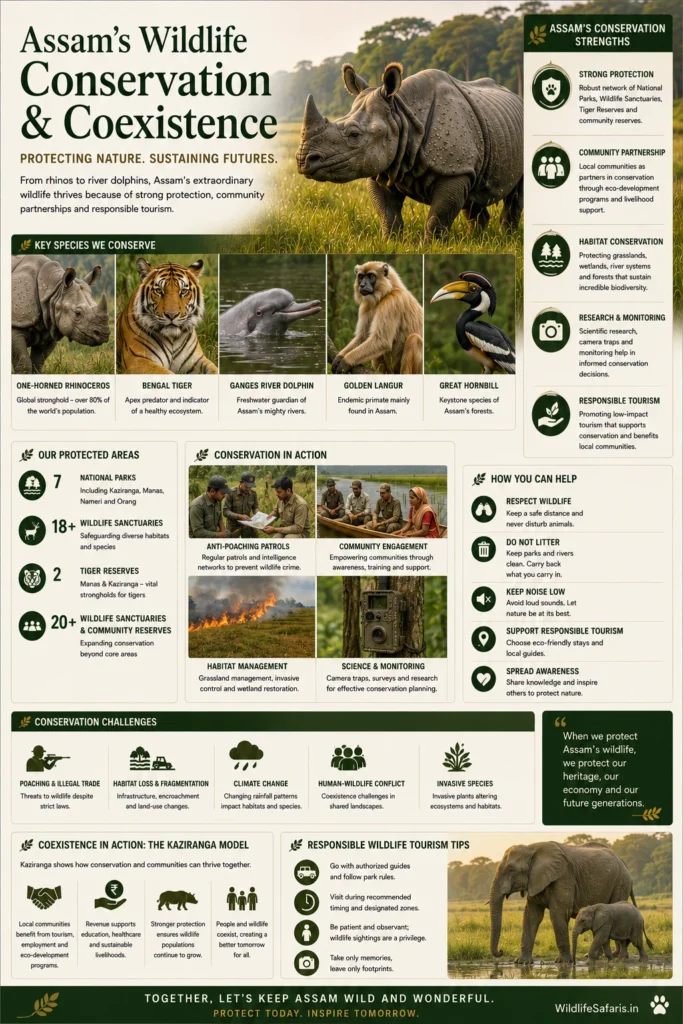
Responsible Wildlife Tourism
- Respect Safari Guidelines: Maintain absolute silence inside the vehicle during safaris; do not insist drivers speed or go off designated forest tracks to chase wildlife.
- Mind the Corridors: When driving on NH-37 along the Kaziranga-Karbi Anglong corridor, strictly adhere to speed limits and yield entirely to crossing wildlife.
- Appreciate Micro-Fauna: Look beyond the “Big Five” (Rhino, Tiger, Elephant, Buffalo, Swamp Deer). Assam’s parks are incredible havens for avifauna, primates, and butterflies.
- No Flash Photography: Ensure camera flashes are turned off, particularly when observing primates like the Hoolock Gibbon in dense canopies.
- Support Local Artisans: Purchase authentic Assamese handicrafts and handlooms from community-run initiatives on the fringes of National Parks to bolster the local conservation economy.
- Zero Waste: Adhere strictly to the state’s plastic-free mandates within Protected Areas, bringing all personal trash back to the hotel.
Did You Know?
- Pobitora Wildlife Sanctuary, despite its small size of roughly 38 square kilometres, harbours the highest concentration of the one-horned rhinoceros in the world.
- Kaziranga National Park is famously known as the home of the “Big Five”: the One-horned Rhinoceros, Royal Bengal Tiger, Asian Elephant, Asiatic Water Buffalo, and Eastern Swamp Deer.
- The Pygmy Hog, the world’s smallest and rarest wild pig, was once thought to be extinct but was rediscovered in Assam and is now successfully bred in captivity for release in Manas and Bornadi.
- Hollongapar Gibbon Sanctuary is the only protected area in India explicitly dedicated to the conservation of a primate species—the Western Hoolock Gibbon, India’s only ape.
- Dibru-Saikhowa National Park is home to a unique population of feral horses, descendants of army camp horses left behind after World War II.
- The Greater Adjutant Stork (locally known as Hargila), once pushed to the brink of extinction, has seen a miraculous revival in Assam due to the grassroots conservation efforts of local village women known as the “Hargila Army.”
- Dehing Patkai, often referred to as the “Amazon of the East,” is the largest continuous stretch of lowland tropical rainforest remaining in India.
Safari Planning : Topics Cluster
- How to book a wildlife safari in India?
- Park by Park Online Safari Booking Guide
- Tiger Safari India Planning Workbook
- Park by Park Safari Permits Guide
- National Parks Permit Guide – Park by Park Guide
- Tatkal Safari Booking Guide – Last Minute Safari Permits Booking
- Tiger Safari in India Cost
- Indian Wildlife Safari Budget Planner
- Jeep vs Canter Safari
- Best time for Tiger Sightings in India
- How far advanced should you book safari permits?
- Can foreigners book Indian Wildlife Safari online?
- Special Permits Guide for Foreigners and Domestic Visitors
- How to book a Safari Permit online in India? 2026 step by step guide
- Senior Citizens Friendly Safari Planning
- Multi Generation Family Safari Planning
- 50 things to know before your first safari in India
Kaziranga National Park : Topics Cluster
- Complete Guide to Kaziranga Detailed Guide
- Kaziranga Safari Quick Guide
- Guwahati to Kaziranga Travel Guide
- Best Resorts near Kaziranga National Park
- 4 Days Assam Wildlife itinerary
- Rhinos conservation
- One Horned Rhinoceros
- Grasslands Ecology
- Wildlife in Assam
- Birding Hotspots in Assam
- Wildlife Tourism in Assam
- Wildlife Tourism in Northeast India
- Biodiversity of Northeast India
- UNESCO World Heritage Sites India Wildlife
- Biodiversity hotspots of India
- Kaziranga Elephant Safaris (upcoming)
- Kaziranga Photography Guide (upcoming)