
Discover essential Bengal tiger facts, their remaining geographic range across South Asia, and the landscape conservation strategies securing their future.
Introduction
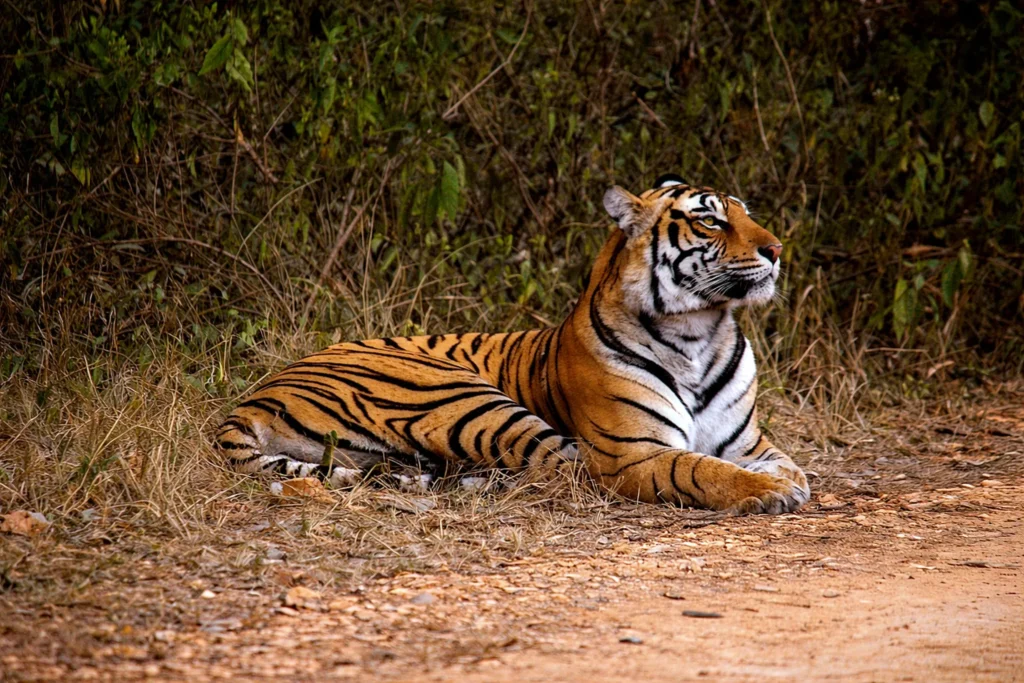
Securing the future of the Bengal tiger requires looking far beyond individual animals. Effective protection depends on understanding the complex relationship between an apex predator, its specific habitat requirements, the availability of prey, and the human communities living alongside it.
While this big cat remains one of the world’s most recognized species, it faces severe long-term survival pressures. Today, wild populations are increasingly restricted to fragmented pockets of their historic range.
This guide provides a practical, research-backed overview of Bengal tiger biology, geographic distribution, and the landscape-scale conservation efforts required to protect them.
What is a Bengal Tiger?
Scientific Classification and Identity
The Bengal tiger is a distinct big cat subspecies scientifically classified as Panthera tigris tigris. It represents the most numerous remaining tiger subspecies in the wild, yet it is classified as Endangered by the International Union for Conservation of Nature (IUCN).
A common misconception is that all wild tigers are identical, or that the term “Bengal tiger” applies universally to any tiger found in Asia. In reality, the Bengal tiger is uniquely adapted to the specific ecosystems of South Asia, distinguishing it from other geographically isolated subspecies like the Amur (Siberian) tiger.
Physical Attributes: Size and Weight
The Bengal tiger is one of the largest carnivores on land. Physical dimensions vary noticeably between genders:
- Males: The largest male Bengal tigers can reach lengths of up to approximately 3.2 meters, a measurement that includes the length of the tail. Mature males can weigh up to roughly 295 kilograms.
- Females: Female tigers are consistently smaller and lighter than males, though they remain formidable apex predators within their territories.
Social Structure and Hunting Behavior
Bengal tigers are solitary hunters. Except for mothers raising cubs or brief pairings during the mating season, individuals live and hunt alone within established home ranges. They rely heavily on cover to stalk their prey, making the density of vegetation in their environment a critical survival factor.
As apex predators, their diet consists primarily of large mammals. They target a variety of native species depending on local availability:
- Ungulates: Large hoofed mammals form the core of their diet.
- Specific Prey: Major prey species include gaur (Indian bison), sambar deer, chital (spotted deer), wild boar, and nilgai.
- Wetland Systems: In specific marshy or coastal environments, their diet may occasionally expand to include wetland-adjacent species like crocodiles.
| Metric / Attribute | Technical Specification DOCX |
| Scientific Name | Panthera tigris tigris |
| IUCN Status | Endangered |
| Maximum Male Length | Approximately 3.2 meters (including tail) |
| Maximum Male Weight | Up to approximately 295 kilograms |
| Primary Social Habit | Solitary |
| Core Diet | Ungulates, gaurs, wild boars, and deer species |
Bengal Tiger Habitat and Geographic Range
A frequent misconception is that Bengal tigers live exclusively in India. While India holds the majority of the population, the survival of this subspecies relies on a transboundary range that spans four South Asian nations: India, Nepal, Bhutan, and Bangladesh.
Historically, tigers roamed across vast, unbroken tracts of Asia. Today, they remain in just a fraction of their historic range, with their populations now concentrated in protected landscapes and specific ecological zones.
Core Countries and Key Landscapes
Tigers cannot survive just anywhere; they require large territories, adequate water, dense cover for stalking, and most importantly, a prey-rich landscape. The major strongholds for the Bengal tiger include:
- The Terai Arc Landscape: A vital stretch of lowland forests and tall grasslands running along the Himalayan foothills of India and Nepal.
- Central Indian Forests: A massive network of deciduous forests and protected areas that forms the core of India’s tiger population.
- Northeast India and Bhutan: Encompassing tropical forests and extending into surprisingly high-altitude habitats.
- The Sundarbans: The world’s largest contiguous mangrove wetland system, situated at the delta of the Ganges, Brahmaputra, and Meghna rivers, shared by India and Bangladesh.
Habitat Diversity and Prey Systems
Bengal tigers are highly adaptable and occupy a variety of hot, humid forests and wetlands. The ecological health of these habitats is directly tied to the availability of prey. A landscape’s carrying capacity—the number of tigers it can naturally support—depends heavily on the recovery and maintenance of ungulate populations.
Table 2: Key Habitat Systems across South Asia
| Habitat Type | Primary Regional Landscapes DOCX | Key Associated Prey DOCX |
| Deciduous & Sal Forests | Central Indian Forests | Sambar deer, chital (spotted deer), gaur |
| Tall Grasslands & Sal Forests | Terai Arc Landscape (India & Nepal) | Ungulates, wild boar |
| Mangrove Wetlands | The Sundarbans (India & Bangladesh) | Deer, wild boar, crocodiles |
| High-Altitude & Tropical Forests | Bhutan & Northeast India | Wild boar, regional ungulates |
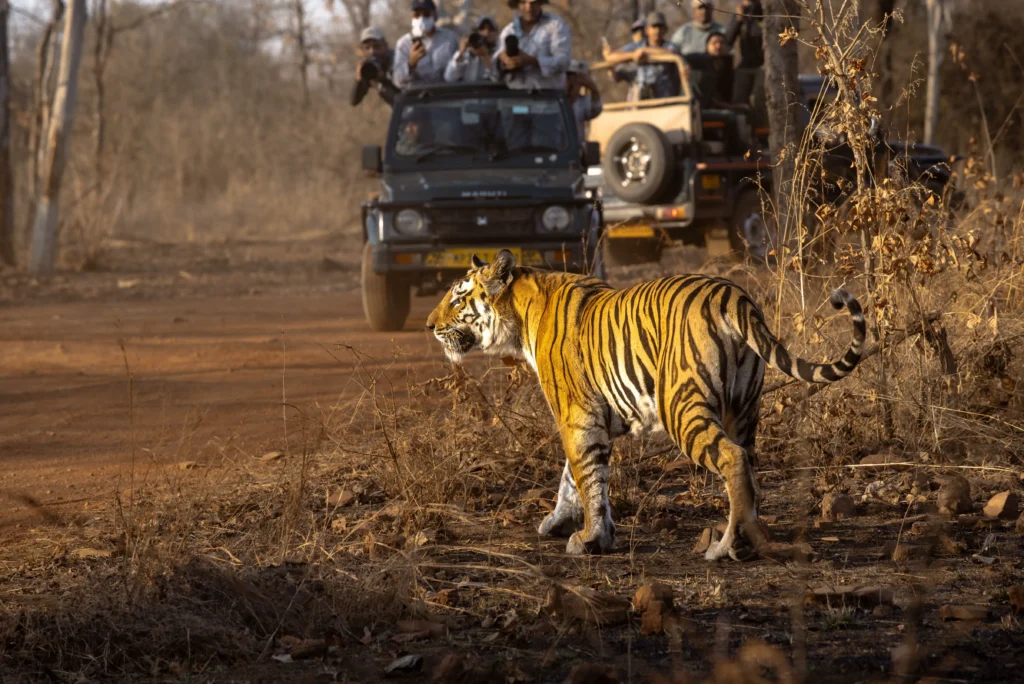
Field Note: The environment heavily dictates tiger behavior and visibility. In the dense, dry deciduous forests of Central India, tigers are frequently observed utilizing dry riverbeds and waterholes during the warmer months. In the Sundarbans, they live an amphibious lifestyle, swimming actively between islands to hunt.
The Critical Role of Tiger Corridors
Treating tiger conservation simply as a matter of guarding individual parks is a flawed approach. Modern conservation biology views Bengal tigers as a metapopulation—a group of spatially separated populations that interact at some level.
To maintain healthy genetics and avoid local extinction, tigers need to move. Young tigers must disperse to establish their own territories. This makes tiger corridors—the tracts of natural habitat or community lands that connect protected areas—absolutely essential.
When roads, railways, and agricultural expansion sever these corridors, tigers become isolated in ecological islands. Therefore, securing the link between protected areas and surrounding community lands is just as critical as protecting the core national parks themselves.
Major Threats to Bengal Tiger Survival
Understanding why the Bengal tiger remains endangered requires looking beyond a single cause. While poaching frequently dominates the news, researchers and conservation organizations like WWF India identify a combination of overlapping pressures that threaten the species’ survival. These include habitat loss, the depletion of their prey base, illegal trade, and direct conflict with expanding human populations.
Habitat Fragmentation and Infrastructure Pressures
Tigers are wide-ranging animals that require extensive, contiguous territories to survive and maintain genetic health. The single greatest threat to their long-term survival is habitat fragmentation.
As human populations grow across South Asia, agricultural expansion, roads, railways, and hydropower projects slice through established wildlife corridors. This infrastructure development isolates tiger populations into small, disconnected “ecological islands”. Furthermore, emerging long-term challenges like climate change and shifting land-use pressures continue to degrade the quality of the remaining habitat.
Poaching and Illegal Wildlife Trade
Despite strict international bans and domestic laws, poaching remains a critical threat to wild populations. The illegal wildlife trade relies on the black-market demand for tiger body parts, bones, and skins. Because a single tiger holds high financial value for international trafficking networks, targeted poaching can quickly devastate local tiger numbers, particularly in smaller, poorly patrolled reserves.
Prey Depletion and Landscape Degradation
A landscape cannot support tigers if it cannot support their food. Prey depletion occurs when the populations of large hoofed mammals—such as sambar, chital, gaur, and wild boar—decline significantly. This decline is typically driven by illegal bushmeat hunting by humans, habitat degradation, and competition with domestic livestock. When the prey base crashes, the carrying capacity of the forest drops, forcing tigers to expand their territories into human-dominated areas to find food.
Table 3: Core Threats and Targeted Conservation Responses
| Primary Threat | Core Impact on Tigers | Specific Conservation Response DOCX |
| Habitat Fragmentation | Isolates populations; causes inbreeding and local extinctions. | Securing and restoring transboundary wildlife corridors. |
| Poaching & Illegal Trade | Direct, rapid reduction of wild individuals. | Anti-poaching patrols and strict enforcement of CITES Appendix I. |
| Prey Depletion | Lowers the carrying capacity of protected areas. | Habitat management and strict protection of ungulate species. |
| Infrastructure Expansion | Cuts through core ranges via roads, rail, and dams. | Mitigating linear infrastructure and implementing green growth policies. |
Human-Tiger Conflict and Coexistence
Drivers of Conflict in Shared Landscapes
Human-tiger conflict is not an isolated or rare event; it is a systemic conservation challenge across South Asia. As protected areas reach their carrying capacity or shrink due to human encroachment, tigers inevitably cross the boundaries of national parks and enter surrounding community lands.
When a tiger enters an agricultural landscape, conflict arises through livestock depredation. In severe cases, encounters result in human injuries or fatalities. These tragic events often trigger retaliatory killings, where local communities poison or shoot tigers to protect their families and livelihoods.
Community Stewardship and Mitigation Solutions
Long-term tiger conservation cannot succeed without the active support of the people who share the landscape with these predators. Modern conservation strategies prioritize community stewardship, transforming local residents from victims of conflict into active guardians of the forest.
Effective conflict mitigation includes:
- Developing rapid-response teams to safely manage tigers that wander into villages.
- Providing swift, fair financial compensation for livestock lost to predators to reduce the incentive for retaliatory killings.
- Improving community infrastructure, such as predator-proof livestock pens and solar-powered street lighting.
- Managing the critical border zones where protected areas meet community fields to minimize overlapping space.
Responsible Tourism Tip: When booking a safari, choose operators that employ local guides and invest a portion of their revenue directly into community development or conflict mitigation programs. Ensuring that local people benefit financially from living near wild tigers is one of the most effective ways to foster coexistence.
Conservation Frameworks and Success Factors
Protecting the Bengal tiger requires coordinated, landscape-level action. Decades of research show that isolated conservation efforts are rarely successful over the long term.
Project Tiger and Protected Area Systems
In India, Project Tiger remains the foundational framework for Bengal tiger protection. Established to safeguard the species and its habitat, this initiative relies on a network of dedicated tiger reserves. These protected areas act as crucial ecological strongholds, sheltering tigers from immediate development pressures while allowing prey populations to stabilize and recover. These reserves utilize intensive anti-poaching patrols and strict monitoring to ensure survival within park boundaries.
Transboundary Monitoring and Recovery Challenges
Because Bengal tigers move naturally across borders, conservation cannot stop at national lines. The nations of India, Nepal, Bhutan, and Bangladesh must collaborate continuously on transboundary monitoring, wildlife corridors, and joint anti-poaching measures.
While populations have stabilized or grown in certain well-protected reserves, the broader recovery of the species remains complex. Britannica states that roughly 2,000–2,500 Bengal tigers remain in the wild globally, though conservation sources often report varying figures depending on the monitoring method and the specific year of the census. Even if local populations recover, the species is not entirely safe; Bengal tigers remain highly vulnerable to long-term landscape degradation, climate change, and infrastructure development.
How Wildlife Travelers Can Support Conservation
Wildlife tourism can either burden an ecosystem or actively fund its protection. To ensure your visit supports Bengal tigers rather than stressing them, consider these practical steps:
- Prioritize Community-Linked Operators: Book with lodges and safari guides that employ local community members and channel a portion of their profits back into local development or human-tiger conflict mitigation.
- Respect Park Regulations: Maintain a safe distance from wildlife, keep noise to a minimum, and never pressure your driver or guide to break speed limits or crowd an animal for a photograph.
- Appreciate the Entire Ecosystem: Show active interest in the forest’s prey species, birdlife, and ecology. When tourists value the whole landscape, it signals to authorities that the entire habitat holds economic and ecological value, not just the apex predator.
Common Misconceptions About Bengal Tigers
- “Bengal tigers only live in India.” While India holds the majority of the population, they also naturally occur in Bangladesh, Nepal, and Bhutan.
- “All tigers are the same.” The Bengal tiger (Panthera tigris tigris) is a distinct subspecies specifically adapted to the environments of South Asia.
- “Poaching is the only problem.” While poaching is highly visible, habitat loss, prey depletion, and infrastructure fragmentation are equally critical, systemic threats.
- “Tigers can survive anywhere if protected.” They cannot; they strictly require large territories and prey-rich landscapes to maintain viable populations.
- “Human-tiger conflict is rare.” Conflict is actually a major, ongoing conservation issue in shared landscapes, frequently leading to tragic retaliatory killings.
- “Population recovery means the species is safe.” The Bengal tiger remains categorized as Endangered, and localized recovery does not erase their vulnerability to large-scale landscape change.
Frequently Asked Questions
1. What is a Bengal tiger? The Bengal tiger (Panthera tigris tigris) is a distinct big cat subspecies and apex predator native to the forests, wetlands, and grasslands of South Asia.
2. Where do Bengal tigers live in the wild? They inhabit the hot, humid forests, grasslands, and mangrove wetlands of India, Bangladesh, Bhutan, and Nepal. Key landscapes include the Terai Arc, Central Indian forests, Northeast India, and the Sundarbans.
3. Is the Bengal tiger currently endangered? Yes. The IUCN classifies the Bengal tiger as Endangered due to severe ongoing threats from habitat fragmentation, poaching, illegal trade, and prey depletion.
4. How many Bengal tigers are left in the wild? Broad global estimates generally place the wild population between 2,000 and 2,500 individuals, though exact numbers vary by year, conservation organization, and the specific monitoring methodology used.
5. What do Bengal tigers eat? They are solitary hunters that primarily prey on large mammals like ungulates, gaurs, and wild boars. In wetland-adjacent ecosystems, their diet can also include crocodiles.
6. How big do Bengal tigers get? Male Bengal tigers are among the largest land carnivores, reaching lengths of up to 3.2 meters (including the tail) and weighing up to approximately 295 kilograms. Females are smaller but remain powerful hunters.
7. What is habitat fragmentation and why does it impact tigers? Habitat fragmentation occurs when roads, railways, and agriculture cut through forests, isolating tiger populations. This restricts their movement, disrupts their genetic diversity, and limits young tigers’ ability to establish new territories.
8. What is Project Tiger? Project Tiger is a major conservation initiative in India aimed at protecting the Bengal tiger by establishing dedicated reserves, funding anti-poaching efforts, and securing crucial habitat.
Conclusion
The survival of the Bengal tiger is far more than a simple matter of guarding a single species; it is a complex landscape challenge that requires balancing the biological needs of an apex predator with the realities of a developing South Asia. Securing a genuine future for the Bengal tiger means vigorously protecting its prey base, maintaining vital ecological corridors across national borders, and fostering practical coexistence with local communities.
As travelers, researchers, and conservation supporters, understanding these factual realities is the first step toward meaningful action. The continued existence of this iconic species depends entirely on our collective ability to protect the wild spaces they call home.
Last Updated: July 2026
Tiger Safari in India : Topics Cluster
- Tiger Safari Planning Workbook
- Tiger Safari Booking Guide
- Best time for tiger sightings in India
- How to increase chances of tiger sighting?
- Tiger Safari Naturalist Guide
- Tiger Safari India Cost
- How to book a Tiger Safari in India?
- Best Wildlife Tour Operators in India
- Best Destination Cities for Tiger Safaris in India
- Tiger Safari under ₹25000
- Top 10 Budget Tiger Safaris 2026
- Tiger Photography Tips
- Best Tiger Reserves
- Top 10 Tiger Reserves by sighting chances