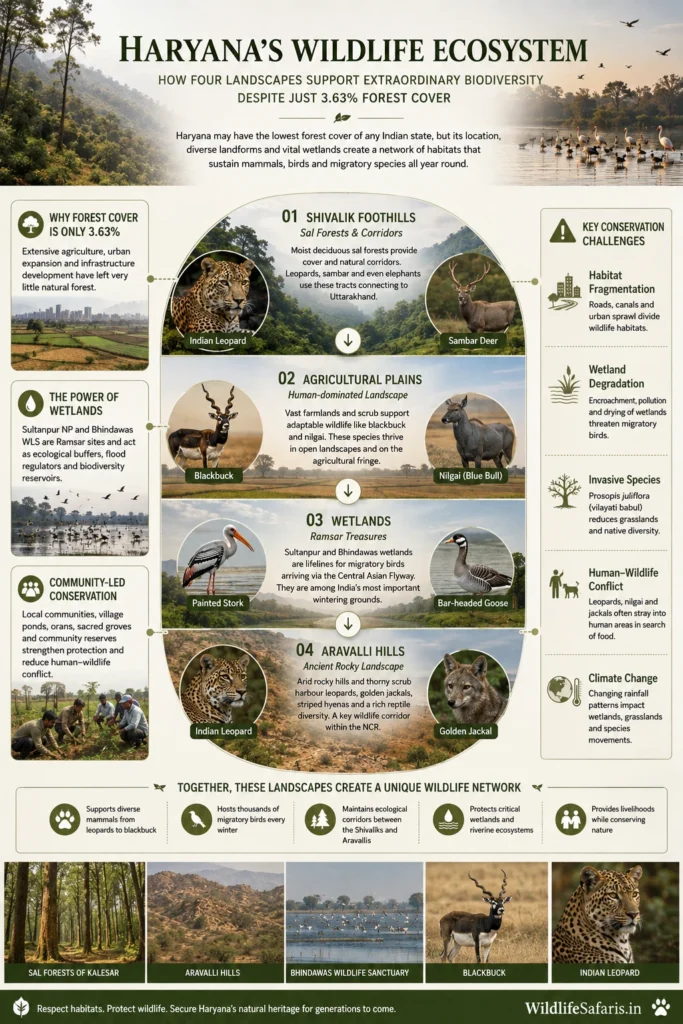
Haryana, situated in the northern plains of India, is predominantly an agrarian state, characterised by expansive agricultural tracts and rapid urbanisation. Consequently, it possesses the lowest forest cover of any Indian state, recorded at less than four per cent of its total geographical area. Despite this ecological constraint, Haryana sustains crucial pockets of biodiversity, anchored by two distinct physiographic zones: the Shivalik foothills in the northeast and the ancient Aravalli range in the south. The state’s vegetation primarily comprises tropical dry deciduous forests in the Shivaliks and thorny scrub in the arid Aravalli tracts, interspersed with vital riverine ecosystems along the Yamuna and Ghaggar rivers.
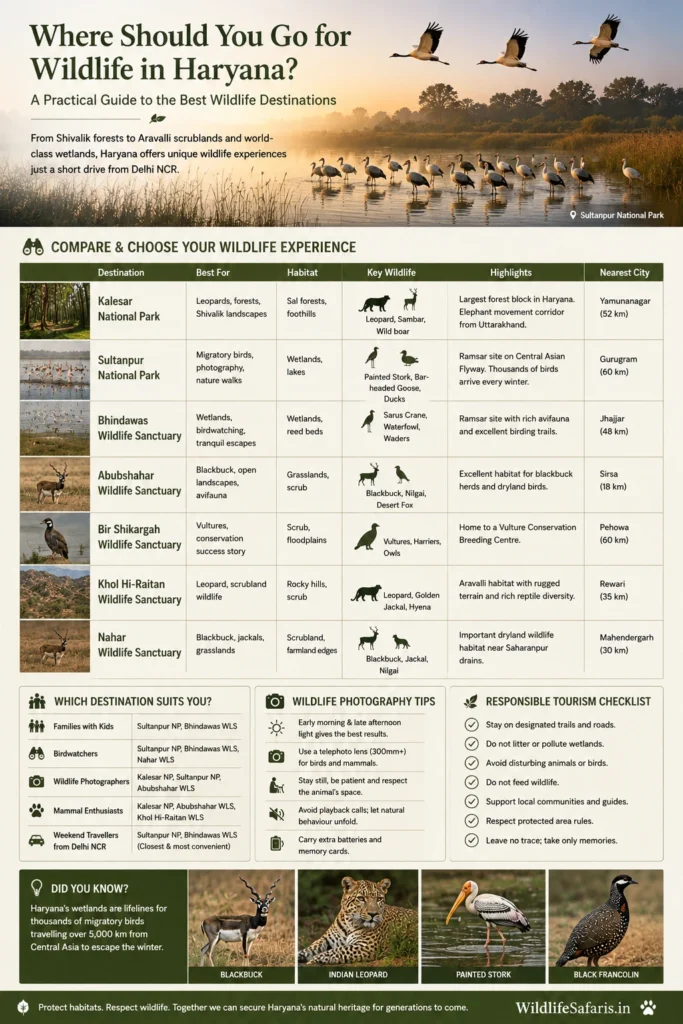
Wildlife conservation in Haryana is highly focused on its two National Parks and eight Wildlife Sanctuaries. Kalesar National Park, nestled in the Shivalik foothills, represents the state’s largest contiguous forest block, dominated by robust sal trees. It provides critical habitat for the Indian leopard, sambar deer, and serves as an occasional migratory corridor for Asian elephants from neighbouring Uttarakhand. In stark contrast, the southern and central regions are celebrated for their avian sanctuaries. Sultanpur National Park and Bhindawas Wildlife Sanctuary, both designated Ramsar sites, function as irreplaceable wintering grounds for thousands of migratory birds traversing the Central Asian Flyway.
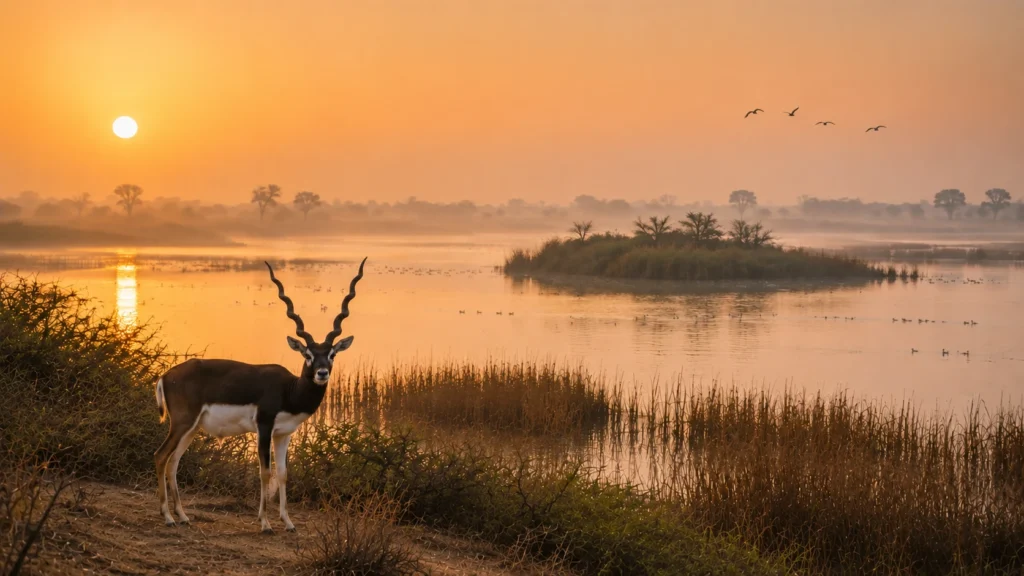
The state animal, the blackbuck, alongside the nilgai (blue bull), navigates the scattered scrublands and agricultural fringes, while the Aravalli hills harbour recovering populations of leopards, golden jackals, and striped hyenas. Haryana’s wildlife management strategy heavily relies on community-driven conservation models, extensive afforestation programmes, and the protection of its fragile wetlands. While terrestrial safaris are limited, the state offers exceptional ornithological experiences, acting as a crucial ecological refuge within the heavily developed National Capital Region.
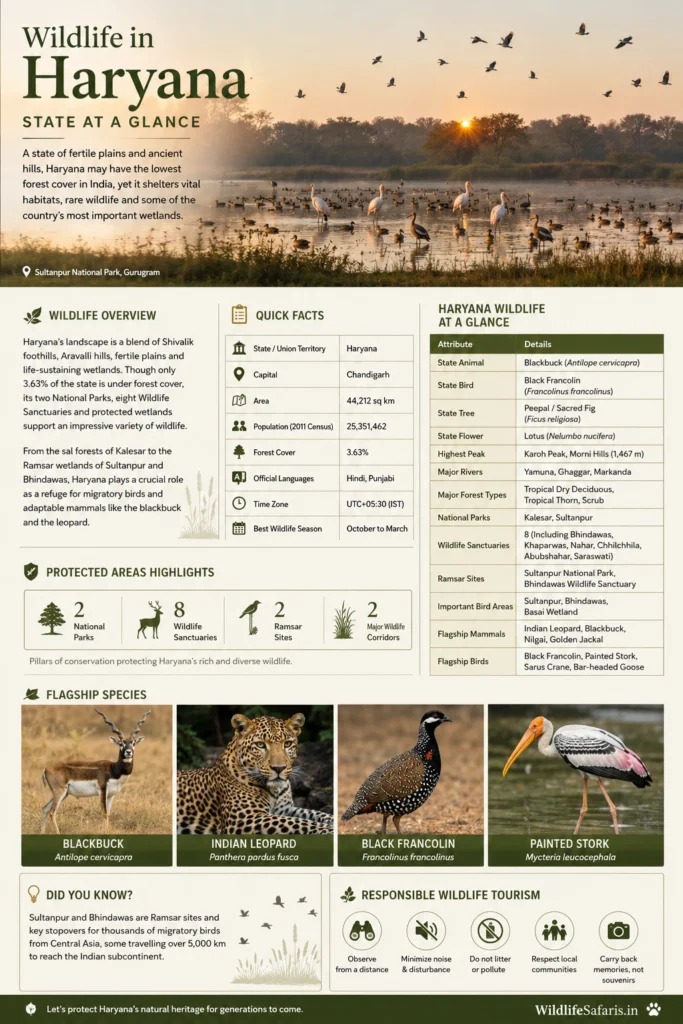
Quick Facts Table
| Category | Details |
| State / Union Territory | Haryana |
| Capital | Chandigarh |
| Area | 44,212 sq km |
| Population | 25,351,462 (2011 Census) |
| Forest Cover | 3.63% |
| Official Language(s) | Hindi, Punjabi |
| Time Zone | UTC+05:30 (IST) |
| Best Wildlife Season | October to March |
State Wildlife Master Table
| Attribute | Details |
| State / Union Territory | Haryana |
| Capital | Chandigarh |
| Geographic Region | Northern Plains, Shivalik Foothills, Aravalli Range |
| Total Area | 44,212 sq km |
| Forest Cover | 3.63% |
| State Animal | Blackbuck (Antilope cervicapra) |
| State Bird | Black Francolin (Francolinus francolinus) |
| State Tree | Peepal / Sacred Fig (Ficus religiosa) |
| State Flower | Lotus (Nelumbo nucifera) |
| Highest Peak | Karoh Peak, Morni Hills (1,467 m) |
| Major Rivers | Yamuna, Ghaggar, Markanda |
| Major Forest Types | Tropical Dry Deciduous, Tropical Thorn, Scrub |
| Biodiversity Hotspot | Not officially specified |
| UNESCO Natural Sites | None |
| Biosphere Reserves | None |
| Tiger Reserves | None |
| Elephant Reserves | None |
| National Parks | Kalesar, Sultanpur |
| Wildlife Sanctuaries | 8 Sanctuaries (including Bhindawas, Khaparwas, Nahar, Chhilchhila, Abubshahar, Saraswati) |
| Conservation Reserves | Saraswati Plantation, Bir Bara Ban |
| Community Reserves | Swarn Jayanti Brahm Sarovar |
| Ramsar Sites | Sultanpur National Park, Bhindawas Wildlife Sanctuary |
| Important Bird Areas (IBAs) | Sultanpur, Bhindawas, Basai Wetland |
| Major Wildlife Corridors | Shivalik Foothill Corridor, Aravalli Ridge Corridor |
| Flagship Mammals | Indian Leopard, Blackbuck, Nilgai, Golden Jackal |
| Flagship Birds | Black Francolin, Painted Stork, Sarus Crane, Bar-headed Goose |
| Endemic Wildlife | Not officially specified |
| Best Wildlife Destinations | Sultanpur NP, Kalesar NP, Bhindawas WLS |
| Best Time for Wildlife Tourism | October to March |
| Nearest International Airports | Indira Gandhi International Airport (New Delhi), Shaheed Bhagat Singh International Airport (Chandigarh) |
| Official Forest Department Website | haryanaforest.gov.in |
Protected Areas Summary Table
| Protected Area | Category | District | Area (sq km) | Year Established | Famous For |
| Kalesar National Park | National Park | Yamunanagar | 46.82 | 2003 | Indian Leopard, Sal Forests, Sambar Deer |
| Sultanpur National Park | National Park | Gurugram | 1.43 | 1991 | Migratory Waterfowl, Painted Stork |
| Abubshahar Wildlife Sanctuary | Wildlife Sanctuary | Sirsa | 115.30 | 1987 | Blackbuck, Nilgai, Avifauna |
| Bhindawas Wildlife Sanctuary | Wildlife Sanctuary | Jhajjar | 4.12 | 1986 | Ramsar Site, Largest Wetland in Haryana |
| Bir Shikargah Wildlife Sanctuary | Wildlife Sanctuary | Panchkula | 7.67 | 1987 | Vulture Conservation and Breeding Centre |
| Chhilchhila Wildlife Sanctuary | Wildlife Sanctuary | Kurukshetra | 0.29 | 1986 | Wintering Waterfowl, Peafowl |
| Khaparwas Wildlife Sanctuary | Wildlife Sanctuary | Jhajjar | 0.83 | 1991 | Avifauna, Wetland Ecology |
| Khol Hi-Raitan Wildlife Sanctuary | Wildlife Sanctuary | Panchkula | 22.27 | 2004 | Indian Leopard, Barking Deer, Jackal |
| Nahar Wildlife Sanctuary | Wildlife Sanctuary | Rewari | 2.11 | 1987 | Blackbuck, Golden Jackal |
| Saraswati Wildlife Sanctuary | Wildlife Sanctuary | Kaithal | 44.83 | 1988 | Wild Boar, Peafowl, Scrub Forests |
Wildlife Highlights
- Top Mammals: Indian Leopard, Blackbuck, Nilgai (Blue Bull), Golden Jackal, Sambar Deer, Barking Deer, Indian Crested Porcupine, Jungle Cat.
- Top Birds: Black Francolin, Painted Stork, Sarus Crane, Bar-headed Goose, Greylag Goose, Northern Shoveler, White-rumped Vulture, Indian Peafowl.
- Reptiles & Amphibians: Indian Rock Python, Monitor Lizard, Spectacled Cobra, Common Krait, Indian Bullfrog.
- Flagship Flora: Sal (Shorea robusta in Kalesar), Kikar (Acacia nilotica), Khair (Senegalia catechu), Dhok (Anogeissus pendula).
- Best Wildlife Experiences: Birdwatching and nature walks in Sultanpur National Park, exploring the dense Shivalik forests of Kalesar, and spotting blackbucks in the open scrub of Nahar and Abubshahar.
Conservation Challenges
- Habitat Fragmentation: Rapid urban expansion and the development of extensive highway networks within the National Capital Region (NCR) severely disrupt wildlife corridors, particularly affecting leopard movement in the Aravalli range.
- Depletion of Water Bodies: Excessive groundwater extraction for agriculture threatens the seasonal wetlands of Sultanpur and Bhindawas, heavily relying on artificial water pumping to sustain migratory bird populations during winter.
- Invasive Species: The widespread proliferation of Prosopis juliflora (Vilayati Kikar) across the Aravalli hills has aggressively outcompeted native flora, altering the fundamental ecology of the scrubland.
- Human-Wildlife Conflict: The shrinking scrubland habitats often force species like nilgai and blackbuck to raid agricultural fields, while leopards occasionally stray into urban peripheries in Gurugram and Faridabad.
- Poaching and Illegal Mining: Localised incidents of illegal stone quarrying in the Aravallis and occasional poaching of herbivores for bushmeat remain persistent threats.
Responsible Wildlife Tourism
- Maintain Silence at Wetlands: When birdwatching at Sultanpur or Bhindawas, keep noise to an absolute minimum to avoid startling massive flocks of migratory birds.
- Dress Appropriately: Wear muted, earthy colours (greens, browns, greys) that blend with the dry scrubland and wetland environments.
- Do Not Feed Wildlife: Strictly avoid feeding monkeys, peafowl, or any feral animals near the sanctuary gates or within the parks.
- Stay on Marked Paths: In Kalesar National Park, never venture off the designated forest tracks; the undergrowth is dense and houses venomous snakes and unpredictable wildlife.
- Follow Photography Ethics: Disable camera flashes, especially when photographing roosting birds or nocturnal species, and never use drone cameras without explicit forest department permits.
- Respect Park Timings: Adhere to the strict entry and exit timings of the National Parks, which are designed to minimise human interference during crucial early morning and late evening foraging hours.
Did You Know?
- Haryana possesses the lowest percentage of forest cover among all Indian states, making its protected areas critically important ecological islands.
- Sultanpur National Park gained international prominence largely due to the efforts of Peter Jackson, a famous British ornithologist and conservationist, who urged the Indian government to protect the wetland in the 1970s.
- Kalesar National Park is ecologically unique in Haryana as it is the only area in the state that supports a natural Sal forest and shares boundaries with three other states: Himachal Pradesh, Uttarakhand, and Uttar Pradesh.
- Bhindawas Wildlife Sanctuary is the largest wetland in Haryana and is a human-made freshwater lake originally constructed to store excess water escaping from the Jawaharlal Nehru Canal.
- The Bir Shikargah Wildlife Sanctuary houses the Jatayu Conservation Breeding Centre (JCBC), an internationally recognised facility pioneering the captive breeding of critically endangered vulture species.
- Despite heavy urbanisation, the Aravalli hills in Gurugram and Faridabad still sustain a breeding population of the Indian Leopard.
Safari Planning : Topics Cluster
- How to book a wildlife safari in India?
- Park by Park Online Safari Booking Guide
- Tiger Safari India Planning Workbook
- Park by Park Safari Permits Guide
- National Parks Permit Guide – Park by Park Guide
- Tatkal Safari Booking Guide – Last Minute Safari Permits Booking
- Tiger Safari in India Cost
- Indian Wildlife Safari Budget Planner
- Jeep vs Canter Safari
- Best time for Tiger Sightings in India
- How far advanced should you book safari permits?
- Can foreigners book Indian Wildlife Safari online?
- Special Permits Guide for Foreigners and Domestic Visitors
- How to book a Safari Permit online in India? 2026 step by step guide
- Senior Citizens Friendly Safari Planning
- Multi Generation Family Safari Planning
- 50 things to know before your first safari in India