
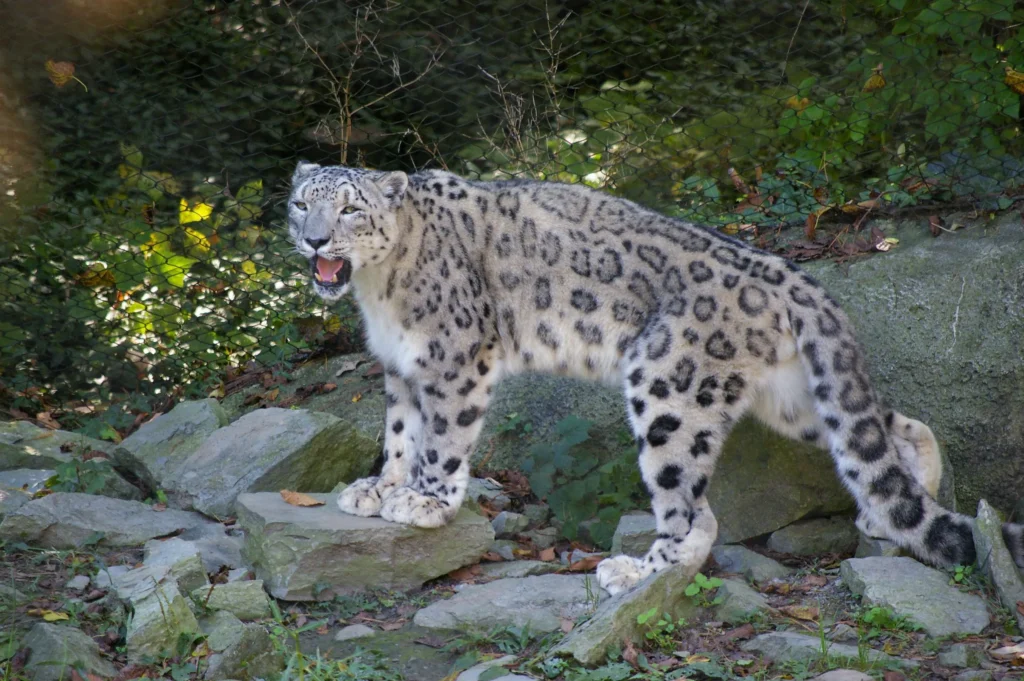
A comprehensive naturalist’s guide to the snow leopard (Panthera uncia). Learn about its high-altitude habitat, behavior, and conservation status in the Indian Himalayas.
Introduction
Planning a trip to the highest altitudes of Central and South Asia requires an understanding of the region’s apex predator: the snow leopard (Panthera uncia). This specialist cat operates in environments that would be fatal to most other large carnivores. For travelers, researchers, and conservationists, understanding this species involves peeling back layers of evolutionary adaptation, precise habitat dependencies, and complex conservation challenges.
This guide provides a practical overview of the snow leopard’s biology, distribution, and daily behavior. It is designed to help you ground your expectations in reality, whether you are planning a high-altitude expedition or studying mountain ecology.
What is a Snow Leopard?
The snow leopard is a large felid specifically adapted to the harsh, cold, and arid mountain ranges of Central and South Asia. Globally, its range spans 12 countries, making it a critical shared resource for transboundary conservation efforts. It serves as an indicator species for the health of alpine ecosystems; where snow leopards thrive, the surrounding water systems, vegetation, and prey populations are typically stable.
Scientific Classification and Legal Status
Understanding the formal protections assigned to the snow leopard helps clarify why travel to its habitat is strictly regulated. The species is legally protected across its entire range, with enforcement mechanisms operating at global, national, and regional levels.
- Scientific Name: Panthera uncia
- Global Conservation Status: Listed as Vulnerable on the IUCN Red List.
- International Trade Protection: Placed under Appendix I of the Convention on International Trade in Endangered Species (CITES), which bans all commercial international trade of the animal or its parts.
- Indian Legal Protection: Classified under Schedule I of the Indian Wildlife (Protection) Act, 1972. This grants it the highest level of legal protection in India, mandate-equivalent to the Bengal tiger, making any hunting, poaching, or unauthorized disturbance a severe criminal offense.
Field Note: The transition from “Endangered” to “Vulnerable” on the IUCN Red List does not mean the snow leopard is safe. It indicates that population decline has slowed or that census methods have improved, but the species remains deeply threatened by human activity and habitat loss.
Why It Is Called the Ghost of the Mountains
The phrase “ghost of the mountains” is a practical description used by field biologists and local communities rather than just a dramatic title. Spotting a snow leopard in the wild is famously difficult due to three distinct factors:
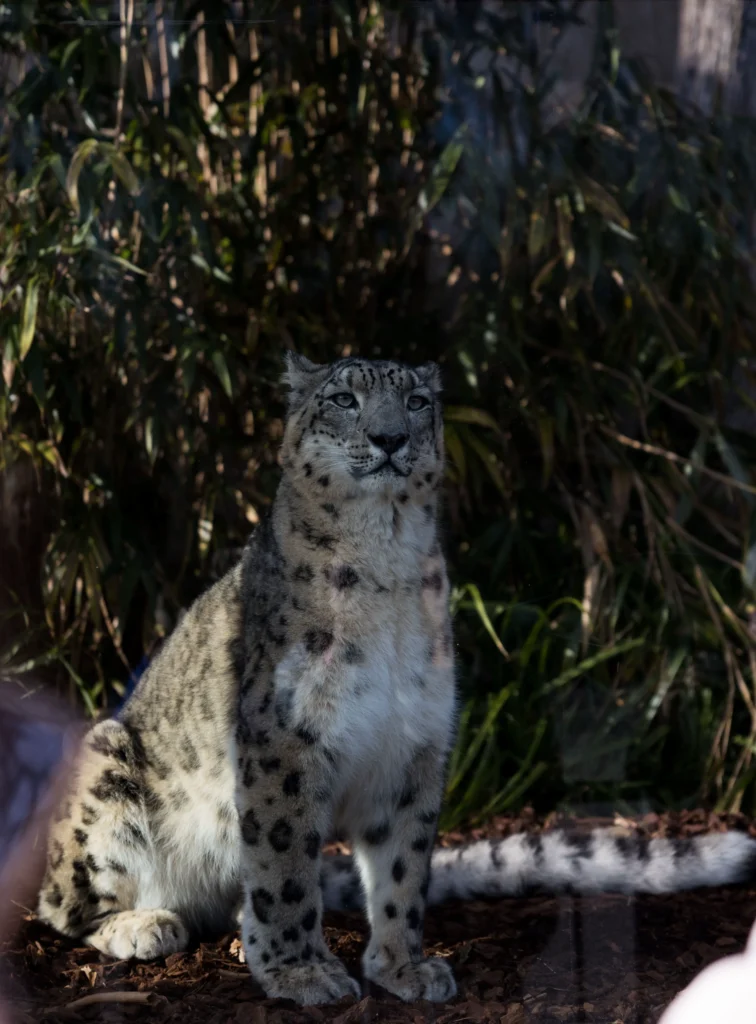
First, their pelage provides near-perfect camouflage against fractured granite, frozen earth, and patchy snow. The fur consists of a light grey or cream-colored base patterned with dark grey-to-black rosettes and spots. This breaks up the cat’s outline completely against the steep, broken terrain.
Second, they are highly solitary and naturally elusive. Unlike lions or even some tigers that may tolerate the distant presence of vehicles, snow leopards actively avoid human presence, utilizing ridgelines and deep ravines to move unseen.
Third, their low population densities mean that even in prime habitat, a single cat may be patrolling an immense area. You can walk along a ridge where a snow leopard passed hours prior and see nothing but subtle tracks or a scrape in the soil.
Species Profile Matrix
The table below outlines the core baselines of the species to provide an immediate reference before we explore their physical traits and habitat preferences in detail.
| Metric | Specification | Legal / Conservation Status |
| Scientific Name | Panthera uncia | N/A |
| IUCN Red List Status | Vulnerable | Global Registry |
| CITES Status | Appendix I | International Law |
| Wildlife Protection Act (India) | Schedule I | National Law |
| Global Wild Population | 3,920 to 6,390 (estimated) | Vulnerable Baseline |
| Indian Wild Population | 400 to 700 (estimated) | Regional Baseline |
| Primary Elevation Range | 3,000 to 5,200 meters | Alpine & Subalpine |
Physical Traits and High-Altitude Adaptations
To understand how a large predator survives in one of the most inhospitable environments on earth, you have to look at its physical engineering. The snow leopard is fundamentally built for extreme cold and steep, uneven terrain.
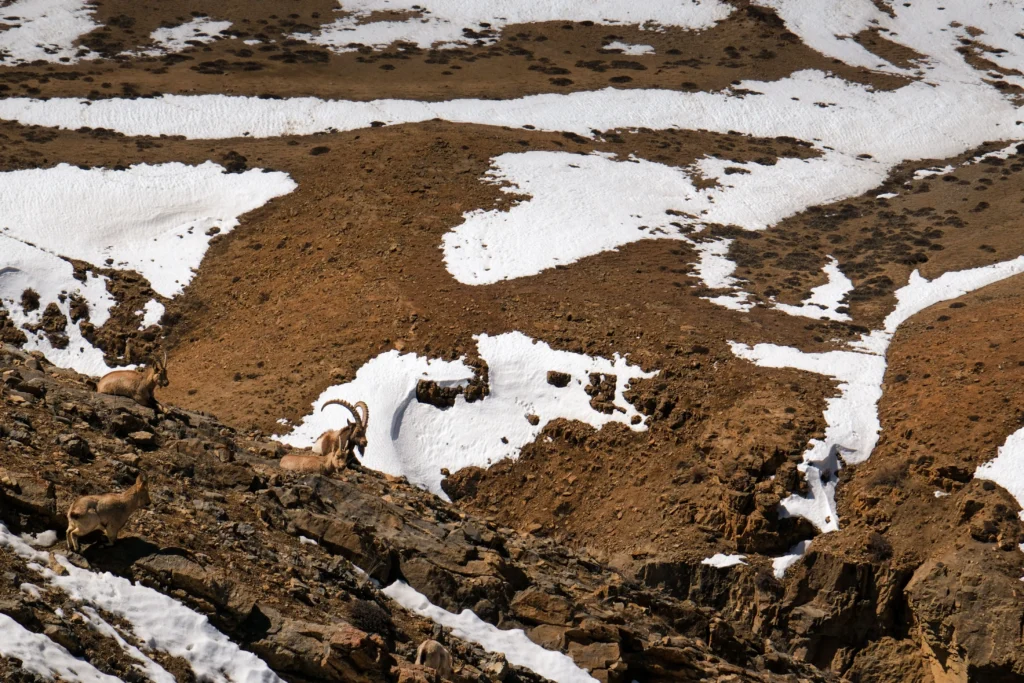
A common misconception among travelers is that these cats live exclusively in deep snow year-round. In reality, they are adapted to dry, rocky alpine and subalpine environments. Their wide paws act like natural snowshoes to distribute their weight, but they are equally important for gripping slick rocks and navigating loose scree on sheer inclines. Their thick fur and highly patterned coats serve a dual purpose: providing critical insulation against freezing temperatures and offering the camouflage necessary to ambush prey in barren, rocky landscapes.
Photography Tip: When scanning a landscape for a snow leopard, do not just look at snowfields. Look at the dry, rocky outcrops and the bases of cliffs where their grey-and-rosette coats make them nearly invisible.
Habitat and Terrain Preferences
Snow leopards do not roam randomly across the mountains; they utilize specific geographic features to travel, hunt, and seek shelter.
Elevation Ranges and Broken Landscapes
In India and across the Himalayas, snow leopards are typically found at elevations ranging from 3,000 to 5,200 meters. They prefer steep, broken terrain characterized by cliffs, ravines, and rocky outcrops.
These specific topographical features are not just a preference; they are a hunting requirement. Because snow leopards lack the long-distance sprinting speed of some other cats, they rely heavily on the cover provided by uneven terrain to get close to their prey before launching an ambush. Ridgelines and cliff bases are frequently used as travel corridors and vantage points.
Global Range vs. Indian Distribution
Globally, the snow leopard’s habitat is spread across 12 countries in Central and South Asia, making transboundary conservation efforts essential for the species’ survival.
Within India, the total estimated snow leopard range covers approximately 120,000 square kilometers. This habitat spans both the western and eastern Himalayas, encompassing a variety of high-altitude ecosystems.
India State and Territory Distribution
| Region / State | Landscape Type |
| Ladakh | High-altitude cold desert, rocky ravines |
| Jammu & Kashmir | Alpine and subalpine mountain ranges |
| Himachal Pradesh | Steep valleys and high-altitude deserts (e.g., Spiti) |
| Uttarakhand | High Himalayan ridges and alpine meadows |
| Sikkim | Eastern Himalayan alpine terrain |
| Arunachal Pradesh | High-altitude Eastern Himalayan habitats |
Home Range and Movement Ecology
One of the most complex aspects of snow leopard ecology is understanding how much space a single cat requires to survive.
The Relationship Between Prey Density and Territory Size
A widespread misconception is that a snow leopard’s home range is a fixed, standard size. In truth, territory size varies dramatically and is dictated entirely by the availability of prey. Because they live in harsh alpine ecosystems where vegetation is sparse, prey animals are often spread thinly across vast areas.
If a region has a high density of prey, a snow leopard does not need to travel far to eat. Conversely, in areas where prey is scarce, a single cat must patrol an enormous territory to find enough food to survive.
Territory Size Variation Based on Prey Density
| Habitat Condition | Estimated Home Range Size | Impact on Sightings |
| Prey-Rich Areas | 30 to 65 sq km | Higher concentration of cats; slightly better chances for responsible viewing. |
| Prey-Poor Areas | Over 1,000 sq km | Cats are highly dispersed; sightings are exceedingly rare. |
This extreme variation in home range size highlights why habitat fragmentation is such a severe threat. When human infrastructure or environmental changes cut off natural travel corridors, snow leopards in prey-poor areas can easily be trapped in territories too small to sustain them.
Behavior and Hunting Ecology
Observing a snow leopard requires understanding its daily rhythms and survival strategies. Life at high altitudes leaves little room for wasted energy, and every aspect of the snow leopard’s behavior is optimized for efficiency and stealth.
Diet and Prey Ecology
The survival of a snow leopard is directly tied to the availability of high-altitude prey. Because mountain ecosystems support less vegetation than lowland forests, prey animals are naturally sparse, forcing the snow leopard to adapt its hunting strategies.
They are ambush predators. Instead of engaging in long, exhaustive chases, snow leopards use the complex topography of their habitat to their advantage. They rely heavily on the cover provided by cliffs, deep ravines, and broken rocky outcrops to creep as close to their prey as possible before striking.
When natural prey depletion occurs—often due to human activity or habitat changes—snow leopards are frequently forced to hunt domestic livestock. This creates severe human-wildlife conflict with local pastoralist communities, making livestock depredation one of the most critical challenges in snow leopard conservation.
Solitary Life and Communication Systems
A persistent misconception is that snow leopards are solitary simply because they are antisocial. In reality, their solitary nature is a strictly practical adaptation. In an environment with sparse prey, large packs or prides cannot find enough food to sustain themselves. Maintaining massive, exclusive territories is necessary for individual survival.
Because they live far apart and patrol massive home ranges, snow leopards need reliable ways to communicate without direct contact. They heavily utilize scent marking along prominent geographical features, particularly ridge lines and the bases of cliffs, to signal their presence, establish territory boundaries, and locate mates.
Unlike many other large cats, snow leopards do not roar. This fundamental physical difference further reinforces their reliance on scent marking and subtle communication rather than long-distance vocalizations.
Activity Patterns
Snow leopards are primarily active at dawn and dusk. These crepuscular activity patterns align with the movement of their prey and provide the optimal low-light conditions needed for effective camouflage and ambush hunting. During the middle of the day, they typically rest and conserve energy, often blending seamlessly into rocky overhangs or cliff edges.
Field Note: If you are planning a wildlife expedition, do not expect midday sightings. The best opportunities for observation always occur in the freezing temperatures of early morning or late evening when the cats are actively patrolling or hunting.
High-Altitude Big Cat Comparison
To better understand the snow leopard’s unique ecological niche, it helps to compare it directly against India’s other apex felines: the common leopard and the tiger.
| Feature | Snow Leopard | Common Leopard | Tiger |
| Vocalization | Does not roar | Roars / Saw-grunts | Roars |
| Primary Elevation Range | 3,000 to 5,200 meters | Broad (lowlands to foothills) | Primarily lowlands and forests |
| Social Structure | Highly solitary; adaptation to sparse prey | Solitary | Solitary |
| Camouflage Strategy | Blends with rocky, alpine terrain | Blends with dappled forest light | Blends with tall grasses/forest undergrowth |
| Key Conservation Threat | Habitat fragmentation & livestock conflict | Habitat loss & human conflict | Poaching & habitat loss |
Conservation Status and Outlook in India
Protecting a species that roams across immense, high-altitude landscapes requires structured, scientific planning. India has established clear conservation frameworks to study, monitor, and protect the snow leopard, though its remote habitat makes implementation a continuous challenge.
Project Snow Leopard and National Initiatives
India launched Project Snow Leopard to strengthen the conservation of high-altitude species and their habitats through a participatory approach. Rather than excluding local communities, the project emphasizes involving indigenous mountain populations as key partners in wildlife monitoring and protection.
Because snow leopards traverse political boundaries across their 12 range countries, transboundary conservation efforts are vital. Collaborative international frameworks help coordinate anti-poaching measures and protect critical wildlife corridors that cross national borders.
The SPAI Assessment and Indian Population Estimates
Estimating the exact number of snow leopards is incredibly difficult due to their elusive nature and the rugged, inaccessible terrain they inhabit. To address this, the Snow Leopard Population Assessment in India (SPAI) was established to create a reliable, scientifically backed population baseline.
- Coverage: The SPAI program successfully surveyed approximately 70% of the potential snow leopard range in India.
- Total Habitat Area: The total potential snow leopard range across India is estimated to cover about 120,000 square kilometers.
- National Population Estimate: Based on the assessment data, the current estimated snow leopard population in India stands between 400 and 700 individuals.
Major Threats to Survival
The long-term survival of the snow leopard is under pressure from several interconnected environmental and human factors.
Habitat Fragmentation and Climate Change
Climate change is rapidly reshaping high-altitude ecosystems. Rising temperatures cause alpine lines to shift, altering vegetation patterns and fragmenting the continuous habitats these cats rely on. When habitats shrink or break apart, small populations become isolated, which limits genetic diversity and disrupts their vast home ranges.
Furthermore, snow leopard conservation is directly linked to downstream water security. The mountain ranges they inhabit serve as crucial water towers for millions of people living in lowland communities; degradation of these ecosystems threatens both wildlife and regional human populations.
Human-Wildlife Conflict and Prey Depletion
As human activities expand into fragile alpine regions, the threats to snow leopards increase significantly:
- Prey Depletion: Overgrazing by domestic livestock and land-use changes often push native herbivores—such as blue sheep and ibex—out of their natural feeding grounds, causing wild prey numbers to fall.
- Livestock Conflict: When their natural prey is depleted, snow leopards frequently target domestic livestock for survival. This leads to severe human-wildlife conflict and can result in retaliatory killing by herders who rely entirely on their animals for economic survival.
- Poaching and Illicit Trafficking: Despite strict legal protection under Schedule I of the Wildlife (Protection) Act, snow leopards remain vulnerable to illegal poaching and the illicit trafficking of their skins and body parts in underground markets.
Threats vs. Solutions Matrix
| Primary Threat | Ecological Impact | Conservation Solution |
| Prey Depletion | Forces cats to target livestock, increasing conflict. | Habitat management to support native wild prey populations. |
| Livestock Conflict | Leads to retaliatory killings by pastoralist communities. | Community-based conservation programs and livestock compensation. |
| Habitat Fragmentation | Isolates populations and disrupts large home ranges. | Protecting transboundary corridors and vital migration paths. |
| Poaching & Trafficking | Directly reduces numbers of an already rare species. | Stricter anti-poaching enforcement and legal protection. |
Practical Guide for Wildlife Travelers
Traveling to see a snow leopard is fundamentally different from a traditional vehicle-based tiger or leopard safari. It requires physical preparation, an understanding of alpine environments, and a high tolerance for challenging weather conditions.
Key Locations for Responsible Observations in India
India’s snow leopard range covers approximately 120,000 square kilometers across the high-altitude regions of Jammu & Kashmir, Ladakh, Himachal Pradesh, Uttarakhand, Sikkim, and Arunachal Pradesh. For travelers, the cold deserts and steep valleys of Ladakh and Himachal Pradesh (such as the Spiti Valley) currently offer the most established infrastructure for wildlife viewing.
Responsible Tourism Tip: Sightings are never guaranteed. The terrain is immense, and the cats are sparse. Choose operators who prioritize ethical viewing distances, employ local mountain guides, and do not bait the animals. Your visit should contribute to the local economy, which helps offset the costs of human-wildlife conflict for pastoralist communities.
Planning a High-Altitude Safari Safely
Snow leopards typically occupy elevations between 3,000 and 5,200 meters. At these heights, oxygen levels are significantly lower, and temperatures routinely drop below freezing.
- Altitude Acclimatization: Never rush your ascent. Build buffer days into your itinerary strictly for acclimatization to prevent acute mountain sickness.
- Optics Over Movement: Rather than hiking vast distances every day, successful spotting relies on sitting in strategic, elevated positions for hours, scanning ridgelines and cliff bases with high-quality spotting scopes and binoculars.
Common Misconceptions About Snow Leopards
Even among wildlife enthusiasts, several myths persist about the species. Correcting these is essential for setting realistic expectations.
- “Snow leopards are endangered in India.” While highly threatened and rare, their official global IUCN status is Vulnerable, not Endangered. They are, however, granted Schedule I protection in India, the highest legal safeguard available.
- “They live only in snow.” Despite their name, they spend much of their time in dry, rocky alpine and subalpine terrain. They are adapted to cold, broken landscapes, not just deep snowfields.
- “They roar like tigers.” Snow leopards cannot roar. They communicate primarily through scent marking, scrapes, and non-roaring vocalizations.
- “They are solitary because they are antisocial.” Their solitary nature is a strict ecological necessity. The sparse prey density in the Himalayas cannot support groups of large predators.
- “Their home range is a fixed size.” Territory size is dictated entirely by food availability. In prey-rich zones, it can be 30–65 square kilometers; in prey-poor areas, a single cat may require over 1,000 square kilometers to survive.
- “Snow leopard tourism is easy.” Accessing their habitat demands serious logistical planning, altitude safety protocols, and realistic expectations regarding the low probability of sightings.
Frequently Asked Questions
What is the scientific name of the snow leopard? The scientific name is Panthera uncia.
Is the snow leopard found in India, and in which states? Yes. In India, they are found in the high-altitude regions of Jammu & Kashmir, Ladakh, Himachal Pradesh, Uttarakhand, Sikkim, and Arunachal Pradesh.
How many snow leopards are in India? The current estimated population in India is between 400 and 700 individuals.
What is the population of snow leopards worldwide? Global estimates suggest there are only 3,920 to 6,390 snow leopards left in the wild, spread across 12 countries in Central and South Asia.
What do snow leopards eat? They hunt native high-altitude herbivores like blue sheep and ibex. When natural prey is depleted due to habitat degradation, they may hunt domestic livestock, leading to severe conflict with herders.
What is Project Snow Leopard? It is a national initiative in India designed to conserve high-altitude wildlife and their habitats through a participatory approach, actively involving local mountain communities in conservation efforts.
What is SPAI? SPAI stands for the Snow Leopard Population Assessment in India. It is a rigorous scientific effort that recently surveyed about 70% of the potential snow leopard range in the country to establish a reliable population baseline.
Conclusion
The snow leopard remains one of the most compelling and elusive predators on earth, perfectly adapted to the harsh realities of the Himalayas. But its value extends far beyond its status as a highly sought-after sighting for wildlife travelers.
As an apex predator, the presence of Panthera uncia indicates a balanced alpine ecosystem. Conserving the “ghost of the mountains” is directly tied to protecting the vast mountain ranges that serve as the primary water towers for millions of people downstream. Through initiatives like Project Snow Leopard, transboundary cooperation across its 12 range countries, and the global awareness raised by the UN’s International Day of the Snow Leopard, the focus is shifting toward holistic habitat protection. Ultimately, securing the future of the snow leopard means securing the ecological stability of the high mountains themselves.