
Discover India’s elusive lesser-known wild cats. Learn about the habitats, rare behaviors, and critical conservation needs of these elusive felids.
Lesser Known Wild Cats of India
Beyond the Famous Four
India is widely recognized as one of the most important countries for wild cat diversity, supporting a remarkably high number of felid species relative to its total land area. Most global attention and domestic wildlife tourism center heavily on the country’s large, high-profile apex predators: the Bengal tiger, Asiatic lion, leopard, and snow leopard.
However, these celebrated species represent only the surface of the country’s true feline wealth. A distinct group of smaller, highly elusive, and frequently underreported wild cats inhabits the subcontinent’s forests, mountains, and wetlands, playing roles that are just as vital to the survival of these environments.
The Reality of India’s Felid Diversity
Shifting focus to these lesser-known felids reveals a complex network of predators that outnumber the larger cats in species diversity. While a standard safari itinerary rarely targets them, understanding their presence changes how we view Indian ecosystems.
These animals are not merely miniature versions of tigers or leopards; they are highly specialized hunters that fill precise ecological niches, from the tree canopies of the Northeast to the reed beds of coastal wetlands.
What Makes a Wild Cat “Lesser-Known”?
Defining the Boundaries of Indian Felids
To plan a purposeful wildlife trip or understand regional ecology, travelers must first separate popular terminology from biological realities. The term “big cat” is frequently used in tourism to describe large, roaring apex predators, yet India holds several wild cats that challenge simple classification due to their unique physical traits, specialized habits, or evolutionary positions.
The table below outlines the primary distinctions between the well-documented large predators and the lesser-known felids that form the core of India’s deeper wilderness.
Table 1: Big Cats vs. Lesser-Known Wild Cats Explainer
| Feature | Well-Known Big Cats (e.g., Tiger, Lion, Leopard) | Lesser-Known Wild Cats (e.g., Clouded Leopard, Fishing Cat, Rusty-Spotted Cat) |
| Popular Perception | Highly celebrated, main drivers of national park tourism. | Frequently overlooked, rarely featured in mainstream travel itineraries. |
| Primary Habitats | Deciduous forests, semi-arid tracts, alpine zones. | Deep forest canopies, specialized wetlands, scrublands, and agricultural mosaics. |
| Research History | Extensively tracked via direct sighting, telemetry, and long-term population studies. | Historically under-recorded, relying heavily on modern non-invasive tracking tools. |
| Observation Complexity | Visually prominent; habits allow for structured safari tracking in specific zones. | Extremely difficult to spot directly due to cryptic coloring and cautious behavior. |
Behavioral and Habitat Barriers to Observation
The primary reason these species remain unfamiliar to the public is their intense aversion to detection. The majority of India’s smaller and rarer wild cats are strictly solitary and nocturnal, limiting their activity to the hours when human presence in protected areas is restricted.
Furthermore, several of these species are heavily dependent on dense, structurally complex habitats that are difficult to survey, such as impenetrable marshlands, steep montane slopes, and thick rainforest canopies.
Field Note: Unlike tigers, which regularly utilize open dirt tracks inside national parks, smaller felids lean heavily on dense cover. A leopard cat or rusty-spotted cat will utilize the vegetation margin as a primary hunting strip, melting away into the brush at the first sound of an approaching vehicle.
Why These Species Matter for Ecosystem Integrity
Indicators of Landscape Health
Lesser-known wild cats are exceptional indicators of ecosystem health. Because many are evolutionary specialists, their presence or sudden absence gives conservationists immediate, reliable data regarding the stability of a habitat.
For example, the presence of the fishing cat confirms the functional health of a wetland’s fish populations and reed structure, while the clouded leopard’s survival relies directly on the continuity of old-growth forest canopies. If these micro-habitats degrade, these specialized cats are the first to experience population declines, signaling wider environmental trouble before it impacts larger mammals.
The Necessity of Landscape-Level Planning
Scientific and conservation literature consistently highlights a critical reality: large carnivores and smaller wild cats in India regularly survive outside the boundaries of formal national parks. They inhabit human-dominated landscapes, commercial tea estates, and rural agricultural mosaics.
Consequently, traditional park-centric protection models are insufficient on their own. Safeguarding India’s rich felid diversity requires landscape-level planning that maintains secure wildlife corridors and protects natural habitats from being severed by linear infrastructure like highways and railways.
Species Guide to India’s Elusive Felids
Understanding India’s lesser-known wild cats requires looking beyond size and focusing on specialization. Each of these felids has evolved to master a specific environment, from the high canopies of the Northeast to the tidal mudflats of the Sundarbans.
To help travelers and wildlife enthusiasts understand what sets these animals apart, the table below compares their critical traits and highlights why they are so challenging to observe in the wild.
Table 2: Species Overview Matrix
| Species | Primary Habitat | Activity Pattern | Detection Difficulty |
| Clouded Leopard | Dense forests, high canopies | Primarily nocturnal / Crepuscular | Extremely high (arboreal and cryptic) |
| Asiatic Golden Cat | Forests, montane regions | Nocturnal / Crepuscular | Very high (solitary and forest-dependent) |
| Fishing Cat | Wetlands, mangroves, marshes | Nocturnal | High (restricted to vulnerable marshlands) |
| Leopard Cat | Forests, agricultural mosaics, tea estates | Nocturnal | Moderate to High (adaptable but cautious) |
| Rusty-Spotted Cat | Scrublands, dry deciduous forests | Strictly nocturnal | Extremely high (very small size) |
| Jungle Cat | Grasslands, scrub, agricultural edges | Diurnal / Crepuscular | Moderate (often active during daylight) |
Clouded Leopard (Neofelis nebulosa)
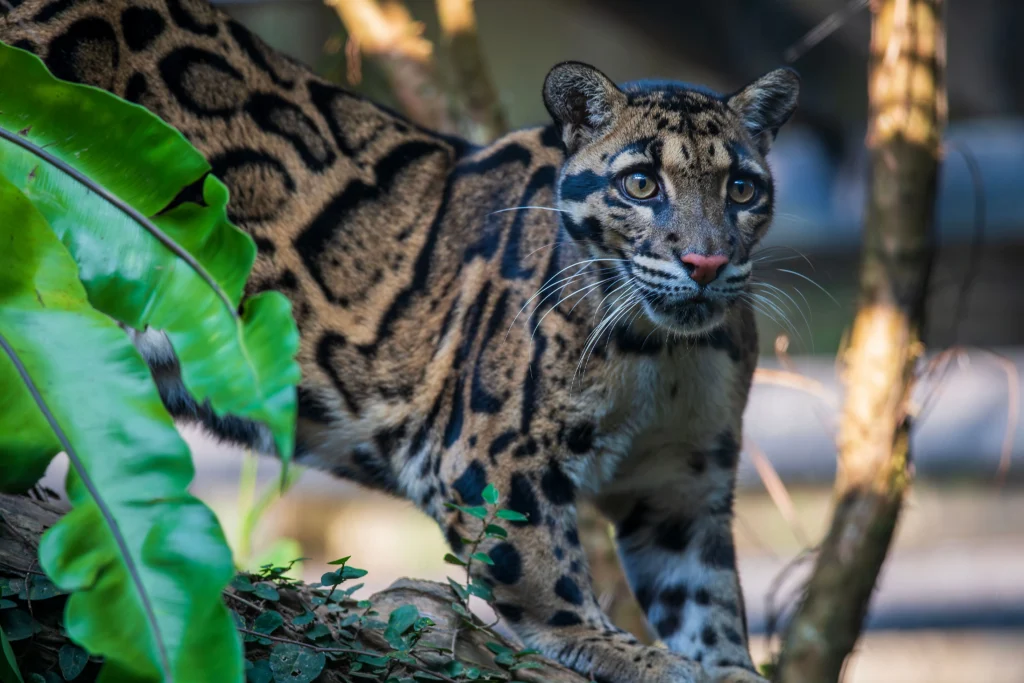
The clouded leopard bridges the physical gap between large apex predators and smaller wild cats. Found primarily in the dense forests of Northeast India and the Himalayan foothills, this species is highly adapted for arboreal life. Its stout legs, rotating rear ankles, and exceptionally long tail allow it to navigate thick forest canopies with ease.
Because it operates within deep, complex structural environments and is primarily active at night, direct sightings by travelers are exceedingly rare. Most of the current data regarding the clouded leopard in India comes from systematic camera trapping rather than observational safaris.
Asiatic Golden Cat (Catopuma temminckii)
Sharing much of its range with the clouded leopard in Northeast India, the Asiatic golden cat is a medium-sized, forest-dependent felid. It is notable for its morphological diversity; while frequently golden or reddish-brown, this species exhibits several coat variations, including spotted and entirely melanistic (black) forms.
The Asiatic golden cat relies on dense undergrowth for hunting and concealment. Habitat fragmentation from deforestation and infrastructure development remains a primary threat to its isolated populations.
Fishing Cat (Prionailurus viverrinus)
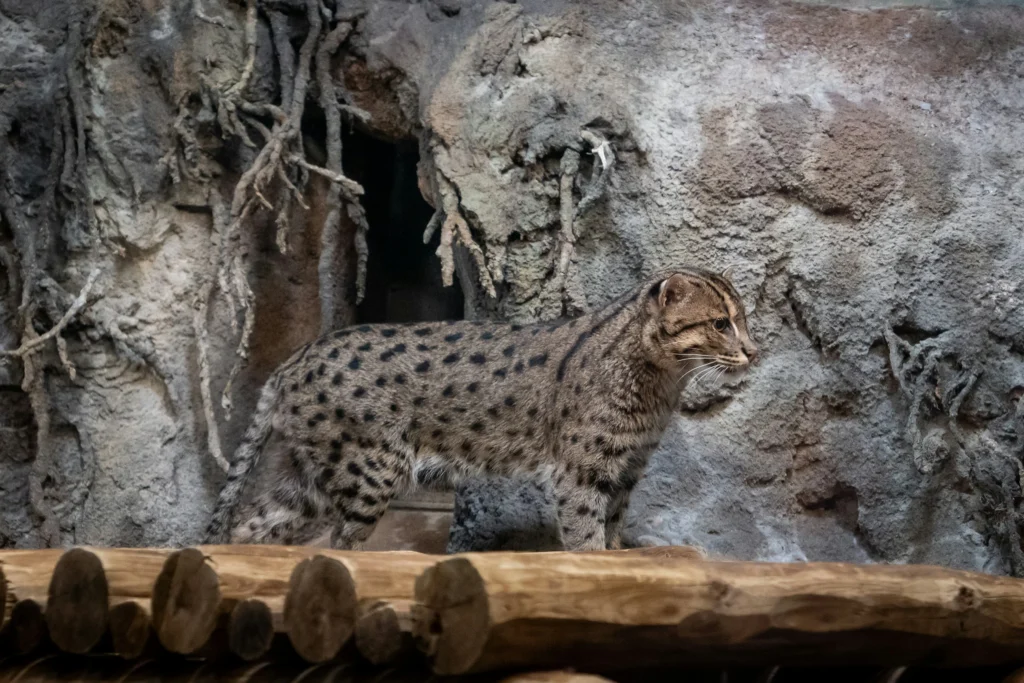
Despite frequently appearing in searches for “lesser known big cats,” the fishing cat is actually a robust, medium-sized felid that is entirely wetland-dependent. Its distribution is directly tied to marshes, oxbow lakes, and mangroves, with strongholds in landscapes like the Sundarbans.
The fishing cat is an evolutionary specialist that hunts fish and aquatic prey. Because its survival is inextricably linked to water bodies, it faces severe pressure from the draining of wetlands for agriculture and commercial development.
Expert Tip: If you want to understand fishing cat conservation, you must look outside traditional tiger reserves. Much of their critical habitat exists in unprotected, human-dominated wetlands where community awareness is essential for their survival.
Leopard Cat (Prionailurus bengalensis)
The leopard cat is one of India’s most widespread small cats, occupying a diverse range of habitats from natural forests to modified agricultural mosaics and commercial tea estates. About the size of a domestic cat but marked with leopard-like rosettes, it is highly adaptable.
While its flexibility allows it to survive alongside human populations, this proximity also exposes the leopard cat to significant risks, particularly road mortality and retaliatory killings when mistaken for leopard cubs by local residents.
Rusty-Spotted Cat (Prionailurus rubiginosus)
Ranking among the smallest wild cats in the world, the rusty-spotted cat is a secretive inhabitant of scrublands, dry deciduous forests, and agricultural edges. In India, it is primarily found in the Western Ghats and central Indian forests.
Due to its diminutive size and strictly nocturnal habits, it is exceptionally elusive. This cat is an active hunter of rodents, frogs, and insects, quietly navigating the undergrowth long after safari vehicles have left the parks.
Jungle Cat (Felis chaus)
The jungle cat is perhaps the most frequently observed of India’s lesser-known felids. Unlike the strictly nocturnal species on this list, the jungle cat is often active during the day (diurnal) or at twilight (crepuscular).
It prefers grasslands, scrub habitats, and agricultural borders rather than dense forest interiors. Recognizable by its long legs and slightly tufted ears, the jungle cat has successfully adapted to human-altered landscapes, utilizing tall crops and irrigation canals for cover and hunting.
Habitat and Range by Region
To understand where India’s lesser-known wild cats live, it is helpful to look at the country through the lens of specific ecosystems rather than just state boundaries. Unlike the tiger, which occupies a wide variety of forest types across the subcontinent, many smaller felids are restricted to highly specific ecological zones.
The table below outlines the primary strongholds for these rare species, highlighting the distinct environments they require to survive.
Table 3: Regional Strongholds
| Region / Landscape | Key Species | Primary Habitat Types |
| Northeast India & Himalayan Foothills | Clouded Leopard, Asiatic Golden Cat | Dense forests, high canopies, montane regions |
| Sundarbans & Eastern Coastal Zones | Fishing Cat | Mangroves, marshes, coastal wetlands |
| Western Ghats & Central India | Rusty-Spotted Cat | Scrublands, dry deciduous forests |
| Widespread (Multiple Regions) | Leopard Cat, Jungle Cat | Agricultural mosaics, tea estates, grasslands, scrub |
Northeast India and the Himalayan Foothills
The dense forests and montane terrains of Northeast India and the Himalayan foothills are critical strongholds for wild cat diversity. This region supports species specifically adapted to vertical environments, most notably the clouded leopard and the Asiatic golden cat.
The structural complexity of old-growth forests here is essential. The clouded leopard requires unbroken canopies for hunting and movement, making it highly sensitive to logging and forest clearing.
Wetlands and Mangroves
While wetlands are traditionally associated with birdwatching, they are equally vital for specialized mammalian predators. The fishing cat relies entirely on marshes, oxbow lakes, and mangrove ecosystems, with significant populations found in the Sundarbans and the Terai landscapes.
These habitats are under severe pressure. Because wetlands are frequently drained for agriculture, aquaculture, and commercial development, the fishing cat faces a direct and ongoing threat to its primary living space.
Forests, Mosaics, and Human-Dominated Landscapes
A significant portion of India’s wild cat population lives outside formal protected areas. The leopard cat, jungle cat, and rusty-spotted cat frequently inhabit human-dominated landscapes. Commercial tea estates, agricultural mosaics, scrublands, and rural borders act as vital secondary habitats for these adaptable species.
This reality underscores the need for corridor conservation. Protecting isolated national parks is not enough; maintaining safe ecological linkages across agricultural land is required to sustain healthy populations of these smaller felids.
The Science of the Invisible: Monitoring Felids
Because many of India’s lesser-known cats are nocturnal, solitary, and heavily dependent on dense vegetation, direct observation by researchers and wildlife guides is rare. The lack of baseline data for some species places them at higher risk, as it is difficult to protect an animal if conservationists cannot accurately measure its population or range.
To overcome these barriers, modern wildlife research relies heavily on non-invasive monitoring tools.
The Role of Camera Traps
Camera trapping has revolutionized the study of elusive carnivores in India. Motion-activated cameras placed strategically along forest trails, water sources, and canopy branches provide the majority of current distribution records for species like the clouded leopard and rusty-spotted cat.
This technology allows researchers to map felid presence in hard-to-survey habitats without disturbing the animals or relying on chance encounters.
Genetic Sampling and DNA Monitoring
When visual confirmation is impossible, researchers turn to genetic tools. Collecting biological material such as scat (feces) and hair snags allows scientists to extract DNA.
This non-invasive sampling helps determine species presence, track individual animals, and assess the genetic health of isolated populations. For species surviving in fragmented habitats, this genetic data is essential for planning effective conservation corridors.
Conservation Status and Modern Threats
While high-profile initiatives have bolstered populations of India’s larger apex predators, the country’s lesser-known wild cats face a complex and often underreported set of modern threats. Because these species frequently occupy specialized niches or live entirely outside protected national parks, their survival requires different conservation strategies.
Habitat Loss, Fragmentation, and Linear Infrastructure
The most severe threat to India’s wild cats is the rapid loss and fragmentation of their primary habitats. For wetland specialists like the fishing cat, the conversion of marshes and mangroves into agricultural land or commercial aquaculture represents a direct loss of hunting grounds.
In forested regions, linear infrastructure—specifically the construction of new highways, railways, and power lines—slices through essential wildlife corridors. For canopy-dependent species like the clouded leopard, fragmented forests isolate populations and severely restrict their ability to hunt and breed.
Conflict and Road Mortality
Because adaptable species like the leopard cat and jungle cat frequently utilize agricultural mosaics and the edges of human settlements, they are highly vulnerable to human-wildlife conflict. Leopard cats, for example, are sometimes killed in retaliation when local residents mistake them for the cubs of larger, more dangerous leopards. Furthermore, as road networks expand through rural and forested areas, vehicular mortality has become a significant and growing cause of death for these nocturnal hunters.
The Data Gap: Why No Data Means High Risk
A critical challenge in protecting lesser-known felids is the historical lack of baseline data. Poorly studied species can be at high risk precisely because they are under-monitored. If conservationists and policymakers do not have accurate population estimates or distribution maps, it becomes incredibly difficult to justify the funding, policy changes, and habitat protection required to save them.
Where and How to Travel Responsibly
Best Landscapes for Ethical Awareness
While observing these cats directly is difficult, travelers can support their conservation by visiting and financially supporting the landscapes they depend on.
- For Wetland Cats: The Sundarbans and the Terai marshes offer excellent opportunities to learn about the fishing cat’s ecosystem.
- For Canopy and Montane Cats: Exploring the protected forests of Northeast India provides insight into the dense, vertical habitats required by the clouded leopard and Asiatic golden cat.
Setting Realistic Expectations for Sighting Probabilities
Expert Tip: If you travel to India specifically expecting to photograph a rusty-spotted cat or a clouded leopard, you will likely leave disappointed.
Unlike tiger safaris, where alarm calls and tracking techniques yield relatively high sighting probabilities, smaller cats are notoriously cryptic. Approach your journey as an opportunity to appreciate the broader ecosystem. Support local guides, respect park rules regarding night drives, and prioritize learning about habitat conservation over securing a checklist photograph.
Common Mistakes and Myths
To fully understand India’s feline diversity, we must correct several persistent misconceptions:
- Myth: Only tigers, lions, and leopards matter.
- Fact: India’s lesser-known felids are ecologically vital. They are indicators of ecosystem integrity, reflecting the health of specific environments like wetlands and dense canopies.
- Myth: Small cats are easy to spot because there are more of them.
- Fact: Many of these species are strictly nocturnal, heavily camouflaged, and extremely elusive. They actively avoid human presence.
- Myth: If a cat is seen outside a national park, the area is not important.
- Fact: Human-modified landscapes, including tea estates and agricultural mosaics, serve as highly valuable secondary habitats and necessary movement corridors for several cat species.
- Myth: Wetlands are primarily for birdwatching.
- Fact: Wetlands are critical mammalian habitats, serving as the sole environment for the highly specialized fishing cat.
Frequently Asked Questions
1. What are the lesser known big cats of India? While technically “small cats” in biological terms, the most notable lesser-known felids in India include the clouded leopard, Asiatic golden cat, fishing cat, leopard cat, rusty-spotted cat, and jungle cat.
2. Which wild cat species are found in India? India is home to a vast array of felids. Beyond the Bengal tiger, Asiatic lion, leopard, and snow leopard, the country supports numerous smaller species ranging from the high-altitude Eurasian lynx to the wetland-dwelling fishing cat.
3. Is the clouded leopard found in India? Yes, the clouded leopard is found in the dense forests and canopies of Northeast India and the Himalayan foothills.
4. Is the Asiatic golden cat found in India? Yes, the Asiatic golden cat inhabits the montane regions and dense forests of Northeast India, often sharing its range with the clouded leopard.
5. Is the fishing cat a big cat? No, it is categorized biologically as a small cat, though it is a robust and powerful predator. It relies entirely on wetland and mangrove ecosystems to hunt aquatic prey.
6. Is the jungle cat a big cat? No, the jungle cat is a small wild cat. It is frequently active during the day or twilight and adapts well to grasslands and agricultural edges.
7. Is the rusty-spotted cat found in India? Yes, the rusty-spotted cat is found primarily in the Western Ghats and central Indian dry deciduous forests and scrublands.
8. Which is the rarest cat in India? While exact population numbers are difficult to verify due to monitoring challenges, species like the clouded leopard and rusty-spotted cat are among the most difficult to observe and record.
9. Where are clouded leopards found in India? They are heavily restricted to the intact forest canopies of Northeast India and the Eastern Himalayas.
10. Where are fishing cats found in India? They are found in coastal wetlands, marshes, and mangroves, with prominent populations in the Sundarbans and the Terai landscape.
Conclusion
India’s wildlife narrative has long been dominated by the roar of the tiger and the shadow of the leopard. However, the true depth of the country’s biodiversity is found in the quiet, unseen spaces: the marshlands where the fishing cat hunts, the high branches navigated by the clouded leopard, and the scrublands patrolled by the rusty-spotted cat.
Protecting these lesser-known wild cats requires a shift in how we view conservation and travel. It demands that we look beyond isolated national parks and advocate for landscape-level health, securing wetlands, maintaining forest corridors, and fostering coexistence in agricultural spaces. By understanding and valuing these elusive predators, we take a vital step toward preserving the complete, intricate web of India’s natural heritage.