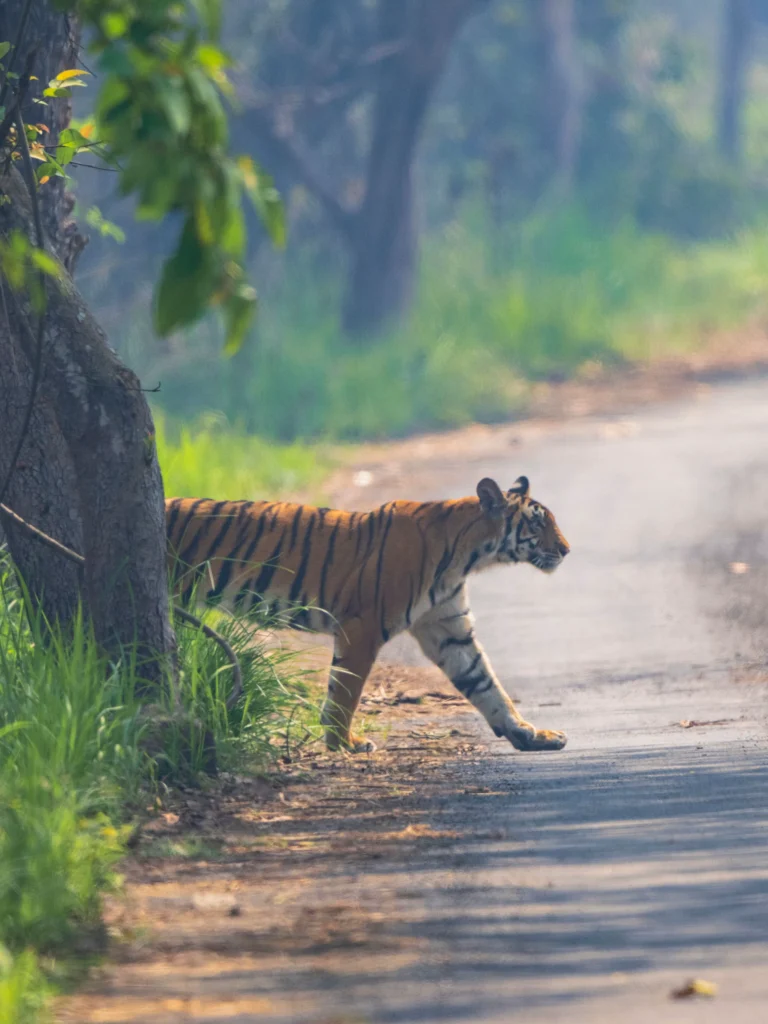
Compare and choose from India’s 58 official tiger reserves. Our ranked guide helps you find the best destinations for sightings, photography, and family safaris.
Introduction, Ranking Methodology & Understanding Size vs. Quality
Choosing the right destination for a wildlife safari requires more than throwing a dart at a map. The National Tiger Conservation Authority (NTCA) currently lists 58 tiger reserves across India. Because India’s tiger-reserve network continues to expand, this official NTCA list provides the most accurate and up-to-date baseline for travelers.
Project Tiger reserves serve as the backbone of India’s tiger conservation framework, but they offer vastly different experiences for visitors. A dense, evergreen forest in the Western Ghats will demand completely different tracking skills than the dry, open plateaus of Central India. Families planning a two-night trip need accessible infrastructure, while dedicated photographers often prioritize specific landscapes and lighting conditions.
This guide moves beyond generic lists to rank reserves based on a transparent methodology, helping you choose the exact park that matches your travel priorities.
How We Rank India’s Tiger Reserves
Because “best” means something different to every traveler, we do not use a single subjective list. Instead, we evaluate and rank reserves based on a multi-factor framework:
- Sighting Potential: The frequency and reliability of observing tigers and key co-predators like leopards and dholes.
- Landscape Variety: The visual appeal of the terrain for observation and photography.
- Infrastructure and Accessibility: How easily travelers can reach the park from major airports, and the quality of local accommodation.
- Safari Quality: Tourism pressure, zone management, and the overall quality of the guiding.
- Broader Biodiversity: The presence of diverse birdlife, prey base (such as sambar, chital, and barasingha), and other large mammals like elephants and rhinos.
Understanding Reserve Size vs. Safari Quality
A common misconception among first-time visitors is that the biggest reserve is automatically the best choice. In reality, size does not dictate safari quality.
NTCA official data shows a massive variation in reserve sizes. For example, Nagarjunsagar-Srisailam is listed as the largest tiger reserve in India, covering a total area of 3,296.31 sq km. On the other end of the spectrum, the NTCA table lists Bor as one of the smallest reserves, measuring just 816.27 sq km in total area.
To manage these landscapes effectively, NTCA explains that tiger reserves operate on a core-buffer strategy. The core areas retain stronger protection to minimize human impact, while the buffer zones support compatible use, including eco-tourism and community activities.
Expert Tip: Do not choose a safari destination based purely on a reserve’s total square kilometer footprint. A massive reserve with dense foliage and difficult terrain may yield fewer sightings than a small, dry-deciduous reserve where visibility is high. Focus instead on the quality of the specific safari zones open to the public.
Top Tiger Reserves Ranked by Travel Goal
Before committing to a destination, it is critical to align the reserve’s specific strengths with your travel expectations. Use the decision matrix below to identify which parks best match your primary goal.
Top Reserves by Travel Goal Matrix
| Best For… | Recommended Reserve | State | Signature Experience | Sighting Reliability |
| First-Time Visitors | Ranthambore | Rajasthan | Open woodland tracking and ancient fort ruins | High |
| Reliable Sightings | Bandhavgarh & Tadoba | MP & Maharashtra | High predator density and dry-deciduous terrain | Very High |
| Photography & Scenery | Kanha | Madhya Pradesh | Misty meadows, tall sal forests, and barasingha | Moderate to High |
| Families & Short Trips | Jim Corbett | Uttarakhand | Excellent resort infrastructure and mixed terrain | Moderate |
| Birding & Biodiversity | Kaziranga | Assam | One-horned rhinos, elephant safaris, and wetlands | Moderate (Tigers) / High (Overall) |
Best Overall for First-Time Visitors: Ranthambore Tiger Reserve
Ranthambore is the best choice for most first-time visitors because it offers easy access from the popular Golden Triangle tourist route, well-established tourism infrastructure, and an open, dry-deciduous terrain. This lack of dense undergrowth means visibility is excellent, making it much easier for untrained eyes to spot movement in the brush.
- State: Rajasthan
- Terrain: Dry deciduous forest, lakes, and historical ruins
- Why it works for beginners: The combination of striking scenery, centuries-old architecture inside the park, and relatively habituated tigers makes for a highly rewarding introduction to wildlife tracking.
Decision Guide: Choose Ranthambore if you want to comfortably combine a wildlife safari with a cultural tour of Rajasthan. If you prefer a deeply remote, quiet forest experience, look toward Central India instead.
Best for Reliable Tiger Sightings: Bandhavgarh & Tadoba Andhari
If your primary goal is observing tiger behavior, Bandhavgarh National Park and Tadoba Andhari Tiger Reserve boast exceptional track records. Bandhavgarh has long been recognized for its high tiger density within its core zones. Tadoba’s dry climate forces animals toward man-made water saucers and lakes during the warmer months, significantly centralizing activity and increasing observation opportunities.
- State: Madhya Pradesh (Bandhavgarh) / Maharashtra (Tadoba)
- Why they rank highest for sightings: Both reserves feature landscapes and water distribution patterns that make tracking top predators highly efficient for experienced guides.
Expert Tip: In Tadoba, the soaring summer temperatures (often exceeding 40°C) push tigers to waterholes. While the heat is punishing for travelers, these warmer months offer the most consistent viewing opportunities.
Best for Wildlife Photography & Scenery: Kanha Tiger Reserve
Photographers looking for nuanced lighting, varied habitats, and compelling backgrounds consistently prefer Kanha. While Ranthambore offers sharp, rocky backdrops, Kanha provides lush sal forests and expansive meadows. It is also the only place to photograph the hard-ground swamp deer (barasingha) alongside top predators, offering excellent subject variety.
- State: Madhya Pradesh
- Photography highlights: Golden hour light over open meadows, large mixed herds of prey species, and atmospheric forests.
Photography Tip: Kanha’s meadows often experience heavy mist on winter mornings. Pack a telephoto lens to capture low-visibility shots of animals emerging from the fog before the sun burns it off.
Best for Families and Short Trips: Jim Corbett Tiger Reserve
Corbett ranks as the most family-friendly option due to its proximity to Delhi, its wide range of premium resorts outside the park boundaries, and its varied safari options. Established in 1936 as mainland Asia’s first national park, it remains one of the most accessible and well-managed destinations for larger groups.
- State: Uttarakhand
- Why it suits families: Beyond standard jeep safaris, Corbett offers canter (open-air bus) options in certain zones, which can be more comfortable for multi-generational family groups. The surrounding hospitality sector is highly developed, offering plenty of safe nature activities for children between game drives.
Family Travel Tip: When traveling with younger children, prioritize booking accommodation near the Bijrani or Garjiya zones. This minimizes long, early-morning transit drives from your hotel to the park gates.
Best for Birdwatching and Biodiversity: Kaziranga & Dudhwa
While central Indian parks dominate predator tracking, the floodplains and grasslands of the northeast and the Terai Arc offer superior overall species variety. Kaziranga is globally recognized for its one-horned rhinoceros population, but it also supports over 500 bird species and a healthy tiger population. Similarly, Dudhwa Tiger Reserve in the Terai belt provides critical habitat for swamp deer and over 450 bird species.
- State: Assam (Kaziranga) / Uttar Pradesh (Dudhwa)
- Key species beyond tigers: Rhinos, wild water buffalo (Kaziranga); varied grassland bird species, raptors, and diverse deer populations.
Field Note: Tracking tigers in Kaziranga’s tall elephant grass is significantly harder than in the dry forests of Central India. Visit these reserves for the complete ecosystem experience, treating any tiger observation as a welcome bonus rather than an expectation.
India’s Tiger Reserves by Region
India’s 58 tiger reserves are distributed across diverse geographic landscapes. A reserve in the southern states requires a different tracking approach and offers a different visitor experience than one in the central plateau. Understanding these regional differences will help you align your safari expectations with the reality of the terrain.
Region-Wise Comparison Table
| Region | Dominant Habitat | Safari Style | Best Suited For |
| Central India | Dry deciduous and Sal forest | Open jeep tracking | Reliable predator tracking |
| Western Ghats & South | Tropical evergreen and moist deciduous | Jeep and boat safaris | Dense forest observation and birding |
| Northeast India | Floodplains and tall grasslands | Jeep and elephant safaris | Rhinos, varied wildlife, and birds |
| Sundarbans Belt | Mangrove forests and tidal waterways | Boat safaris only | Unique estuarine ecology |
Central India: The Tiger Heartland
Central India, primarily spanning Madhya Pradesh and Maharashtra, is the most popular wildlife circuit for travelers focused on big cats. The dry-deciduous forests here shed their leaves during the warmer months, drastically improving visibility.
Because the landscape becomes arid, wildlife movement becomes predictable as animals rely on remaining water sources. Guides in this region rely heavily on reading alarm calls from prey species like sambar and chital, as well as tracking pugmarks on dusty forest roads.
The Western Ghats and South India
Reserves in the Western Ghats offer dense, evergreen habitats. Parks like Nagarhole and Bandipur in Karnataka, or Periyar in Kerala, support high biodiversity, including large populations of elephants, dholes (Indian wild dogs), and gaur.
Tracking tigers here is inherently more difficult than in Central India. The thick undergrowth obscures visibility, and water is abundant year-round, meaning predators do not need to concentrate around specific waterholes. Travelers choosing the Western Ghats should be interested in the broader ecosystem rather than focusing exclusively on tiger sightings.
Northeast India and the Sundarbans
The Shivalik-Gangetic plains and Northeast India present yet another distinct environment. The floodplains of Assam feature tall elephant grass, which makes traditional jeep tracking challenging. Safaris here are often a mix of vehicle and designated elephant-back rides to navigate the wetlands.
Further south in West Bengal, the Sundarbans belt requires an entirely different approach. As a vast mangrove forest, all safaris are conducted by boat. Spotting a tiger here involves scanning the muddy riverbanks at low tide. Sighting rates are low, but the estuarine environment provides a highly specialized wildlife experience.
How to Plan Your Tiger Safari
Choosing your reserve is only half the process. Timing your visit correctly and securing permits within the official framework are equally critical to a successful trip.
Best Time to Visit
Most of India’s tiger reserves do not operate year-round. They typically close during the monsoon season (July to September) to allow the forest to regenerate and to maintain the integrity of dirt tracks.
- October to December: The forests are lush, green, and visually appealing after the monsoon. However, dense foliage and abundant water make wildlife tracking harder. This is a highly rewarding time for landscape photographers.
- January to March: The weather is cool and comfortable. Visibility improves as the undergrowth begins to die back. This is generally considered the most balanced time for a safari, suitable for families and first-time visitors.
- April to June: Temperatures frequently exceed 40°C. The forest is dry and dusty. While the heat is physically demanding, this period offers the highest probability of predator sightings, as animals are forced to visit permanent waterholes.
Safari Booking Tips
The National Tiger Conservation Authority (NTCA) heavily regulates tourism to minimize human impact. Based on their core-buffer strategy, only a specific percentage of a reserve’s core area is open to tourism.
Vehicle entry is strictly limited by quotas, and permits for popular reserves sell out months in advance.
Practical Checklist for Safari Booking:
- Book permits before flights: Safari permits are the primary bottleneck for wildlife travel in India. Secure your specific zone permits through official state forest department websites before booking non-refundable flights or accommodation.
- Understand zone restrictions: Your permit will restrict you to a specific zone for that drive. You cannot cross into other zones. Research which zones have the best recent activity before booking.
- Carry official ID: You must provide government-issued identification (such as a passport for international visitors or an Aadhaar card for Indian nationals) when booking. You must present the exact same original ID document at the park gate before every drive.
Responsible Tourism Tip: When booking your accommodation, look for lodges situated in the buffer areas that employ local guides and staff. The NTCA emphasizes that buffer zones are meant to support compatible land use, including eco-tourism that directly benefits local communities.
Common Safari Planning Mistakes
Even experienced travelers can misjudge the realities of a wildlife safari in India. Avoid these frequent missteps to ensure a better experience:
1. Believing Sightings Are Guaranteed The most common mistake is treating a national park like a zoo. Tiger sightings are never guaranteed. Weather, water availability, dense undergrowth, and plain luck all play a role. Approach every safari with the goal of enjoying the entire ecosystem, treating a big cat sighting as a rewarding bonus rather than an entitlement.
2. Equating Reserve Size with Safari Quality As established earlier, the physical size of a reserve does not equal a better safari experience. Some of the most reliable predator tracking happens in moderately sized core zones with high prey density and limited water sources, rather than in the largest reserves where wildlife is spread out over thousands of square kilometers.
3. Ignoring the Buffer Zones The NTCA manages reserves using a core-buffer strategy. Many visitors assume only the strictly protected core zones offer good wildlife viewing. In reality, buffer zones often share the same terrain, host overlapping wildlife populations, and frequently experience lower vehicle congestion. In some popular parks, buffer zone safaris can be highly productive and offer a much quieter forest experience.
4. Overpacking the Itinerary
Booking four different tiger reserves in seven days guarantees exhaustion, not better sightings. Travel times between parks in India can be long and tiring. It is always better to spend three to four nights in a single reserve, allowing you to explore different zones and adapt to the local tracking conditions.
Frequently Asked Questions
What are the best tiger reserves in India? The “best” reserve depends entirely on your travel goals. Bandhavgarh and Tadoba are top choices for sheer sighting reliability. Kanha is generally considered the best for landscape photography, while Ranthambore and Jim Corbett are excellent starting points for first-time visitors and families.
How many tiger reserves are there in India? The National Tiger Conservation Authority (NTCA) currently lists 58 official tiger reserves in India. This network is actively managed and occasionally expands, so it is always wise to check the NTCA’s official resources for the most current data.
Which is the largest tiger reserve in India? According to official NTCA data, Nagarjunsagar-Srisailam is the largest tiger reserve in India, covering a total area of 3,296.31 square kilometers.
Which tiger reserve is best for tiger sightings? For the highest probability of sightings, the dry-deciduous forests of Central India are superior. Bandhavgarh (Madhya Pradesh) and Tadoba Andhari (Maharashtra) consistently report the highest sighting frequencies due to their terrain and predator density.
Are tiger sightings guaranteed in any reserve? No. Tiger sightings are never guaranteed in any wild environment. You are observing wild animals in vast, natural habitats, and their movement is unpredictable.
Which reserve is best for a short trip from a major city?
For travelers flying into New Delhi, Jim Corbett (Uttarakhand) and Ranthambore (Rajasthan) are the most accessible options for a short, two-to-three-night itinerary.
Conclusion
Planning a successful wildlife safari in India requires looking past popularity contests and focusing on your specific travel goals. Whether you are a photographer seeking the mist-covered meadows of Kanha, a family looking for accessible infrastructure in Corbett, or a first-timer hoping for clear visibility in Ranthambore, the right reserve is out there.
Always anchor your planning in official facts. Use the NTCA’s core-buffer management data to understand the layout of your chosen destination, book your permits well in advance, and remember that the truest measure of a great safari is the overall quality of the time spent in the forest.
Last Updated: August 2026. Tiger reserve data, including total area and official reserve counts, reflects the current official NTCA tiger-reserve list.
Tiger Safari in India : Topics Cluster
- Tiger Safari Planning Workbook
- Tiger Safari Booking Guide
- Best time for tiger sightings in India
- How to increase chances of tiger sighting?
- Tiger Safari Naturalist Guide
- Tiger Safari India Cost
- How to book a Tiger Safari in India?
- Best Wildlife Tour Operators in India
- Best Destination Cities for Tiger Safaris in India
- Tiger Safari under ₹25000
- Top 10 Budget Tiger Safaris 2026
- Tiger Photography Tips
- Best Tiger Reserves
- Top 10 Tiger Reserves by sighting chances