
Plan your 2026 trip to Satpura Tiger Reserve. Learn about jeep safaris, walking treks, canoeing, booking rules, and the best time to visit Central India.
Introduction, Quick Facts & Arrival Logistics
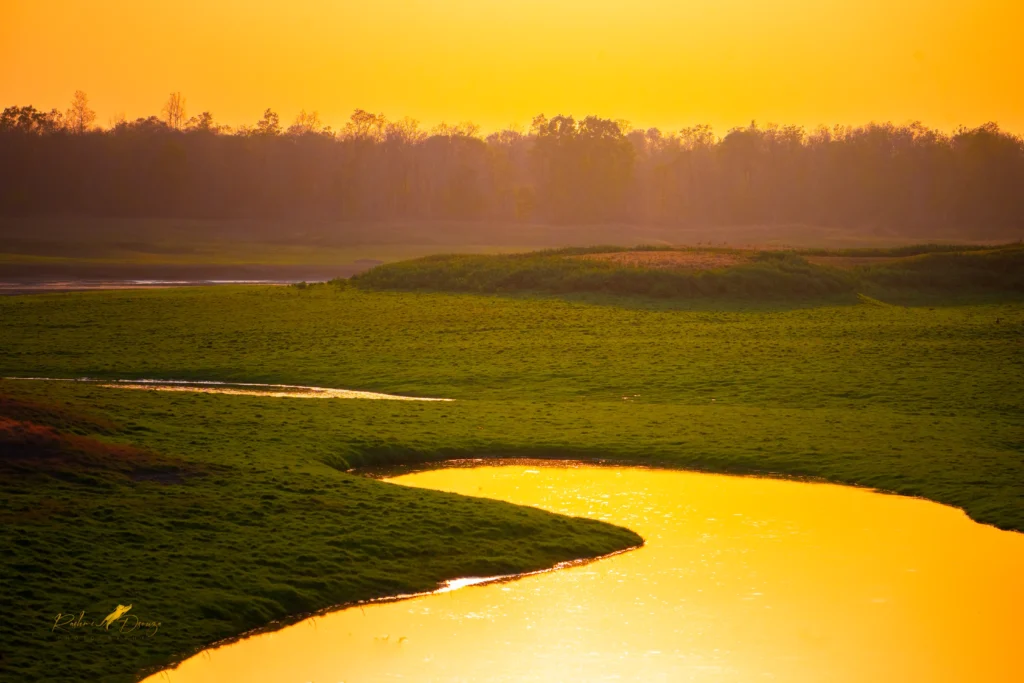
Most tiger reserves in Central India follow a strict, predictable format: you sit in an open 4×4 vehicle, stick to designated dirt tracks, and spend your hours searching for signs of a single apex predator. Satpura Tiger Reserve breaks away from this template entirely. It is designed for travelers who prefer a slower, more varied approach to viewing wildlife and landscapes.
While tigers live here, Satpura is chosen by experienced wildlife travelers because it is significantly less crowded than neighboring parks like Kanha or Pench, and it permits low-impact activities—such as walking safaris, canoeing, and cycling—that are banned in most other Indian reserves.
If you are planning a trip in 2026, this guide covers the practical realities of organizing permits, choosing your routes, and navigating the unique multi-activity system of the park.
Satpura at a Glance
Why Satpura is Famous
Satpura is famous because it balances classic jungle safaris with active exploration. The park boundary is defined by rugged sandstone peaks, deep gorges, and the expansive waters of the Denwa River, creating a terrain that supports a broad mix of species. It is one of the few places in India where you can track wildlife on foot with an official naturalist or paddle along riverbanks to observe birds and crocodiles without the noise of an engine.
Quick Facts for First-Time Visitors
Before dive into booking your trip, here are the essential metrics and operational details established by the Madhya Pradesh Forest Department and the National Tiger Conservation Authority (NTCA):
| Parameter | Detail |
| Official Core Area | 1,339.26 square kilometers |
| Location | Narmadapuram (Hoshangabad) District, Madhya Pradesh |
| Official Operating Season | 15 October to 30 June |
| Primary Landscape | Satpura Mountain Range, dry deciduous forest, teak valleys, and riparian wetlands |
| Permitted Activities | Jeep safaris, walking treks, canoeing, and cycling |
| Key Wildlife | Leopard, Sloth Bear, Tiger, Gaur (Indian Bison), Wild Dog (Dhole) |
Planning Your Arrival
Where Satpura is Located
Satpura Tiger Reserve sits in the southern part of the Narmadapuram region in Madhya Pradesh. The park’s main tourism hubs lie along the southern banks of the Denwa River, which acts as a natural barrier separating the core wildlife zones from the surrounding buffer areas and villages.
Plaintext
[Bhopal]
│
▼ (~140 km / 3.5 – 4 hours via road)
[Narmadapuram / Hoshangabad]
│
▼ (~70 km via Sohagpur)
[Madhai Gate / Denwa River Crossing]
How to Reach from Bhopal and Nearby Hubs
Bhopal is the most practical transit point for domestic and international travelers heading to Satpura.
- By Road from Bhopal: The distance from Bhopal to the primary entry hub at Madhai is approximately 140 to 180 kilometers, depending on your exact resort destination. The drive typically takes 3.5 to 4 hours along well-maintained state highways via Hoshangabad and Sohagpur.
- By Rail: The nearest major railway stations are Sohagpur (approx. 18 km from Madhai), Pipariya (approx. 40 km from Madhai), and Itarsi Junction (approx. 70 km away). Itarsi is a major national railway intersection, making it an excellent arrival choice if you are traveling by train from Delhi, Mumbai, or Nagpur.
- By Air: Bhopal Airport (BHO) is the closest operational airport with daily commercial flights from major Indian cities. From the airport, hiring a private prepaid taxi directly to your lodge is the most straightforward option.
Field Note
When navigating to Satpura by road, ensure your map destination is set to the specific safari gate or lodge you have booked, rather than just “Satpura National Park.” The reserve is vast, and arriving on the wrong side of the river can result in hours of backtracking along rural roads.
Seasonality, Core vs. Buffer Zones & Booking Process
The Best Time to Visit Satpura
According to the official Madhya Pradesh Forest Department brochure, the primary operating season for Satpura Tiger Reserve runs from 15 October to 30 June. Because Satpura relies heavily on varied landscapes and river systems, the experience changes significantly depending on when you arrive.
Winter Season (October to February)
The cooler months are ideal for active travelers. The post-monsoon forest is dense and green, and the comfortable temperatures make walking safaris and cycling much more manageable. This is also the peak period for birdwatching, as migratory species settle into the mixed forest and riparian habitats. Morning temperatures can be quite cold, requiring heavy layers for open jeep safaris and river breezes during canoe trips.
Summer Season (March to June)
As the heat increases, the dry deciduous forest thins out, and temporary water sources dry up. Wildlife is forced to congregate around the Denwa River and remaining permanent waterholes. If your primary goal is observing large mammals—such as tigers, leopards, and sloth bears—this is the most productive window. Be prepared for intense heat; while early morning and late afternoon safaris are excellent, midday activities are highly restricted due to the climate.
Monsoon Closures and Seasonal Access
Satpura’s core zone closes entirely from July through September due to the monsoon rains. While some buffer areas may remain open for limited tourism, travelers seeking the complete multi-activity experience should plan their visits within the official October–June window.
Navigating Safari Zones: Core vs. Buffer
Satpura operates under a zoning system designed to protect the 1,339.26 square kilometers of core area while managing tourism across the broader landscape. Understanding the distinction between core and buffer zones is critical for selecting the right permits.
| Feature | Core Zone | Buffer Zone |
| Primary Purpose | Strict wildlife protection and undisturbed habitat conservation. | A transitional area supporting both conservation and local village access. |
| Wildlife | Highest concentration of undisturbed flagship species. | Good wildlife movement, but animals share the landscape with human activity. |
| Permitted Activities | Classic jeep safaris, canoeing, and highly regulated walking routes. | The primary area for cycling, longer trekking routes, and evening/night safaris. |
| Access & Permits | Vehicle limits are strictly capped, requiring advance booking. | More flexible permit availability; often serves as an excellent addition to a core safari. |
Decision Guide
First-time visitors should prioritize securing at least two core zone jeep safaris to understand the scale of the park. Once core safaris are booked, utilize the buffer zones for specialized activities like cycling or twilight game drives, which are not permitted inside the core.
How Satpura Booking Works
Satpura actively positions itself as a low-crowd destination, meaning permit numbers are significantly lower here than in parks like Kanha or Pench. Spontaneous arrivals rarely yield good safari slots.
The Official Online Permit Process
All core zone jeep safari permits are administered by the Madhya Pradesh Forest Department. You must book your park entry permit through the official MP Forest online portal. The booking window typically opens 120 days in advance. Due to the limited vehicle quota, it is highly recommended to secure permits on the day the window opens, particularly for the popular Madhai gate.
Guide and Permit Notes
When you book online, you are only paying for the park entry permit. Upon arrival at the gate on the day of your safari, you are required to pay separately for the jeep (Gypsy) rental and the mandatory official guide. Guides are assigned via a rotational roster system by the forest department, ensuring fair employment for local naturalists. Mandatory guides are required for all activities, including walking and canoeing.
What to Verify Before You Travel
Because forest regulations adapt to wildlife movement and terrain conditions, always verify the following closely before your trip:
- Activity Permissions: Rules governing trekking and canoeing can change based on water levels or conservation needs.
- Gate Distances: Satpura covers a vast area. Ensure the safari gate you book on the portal aligns geographically with your chosen accommodation.
- Official Updates: Always cross-reference your plans against the official Satpura Tiger Reserve website or the NTCA portal to confirm there are no sudden closures or rule adjustments.
The Multi-Activity Experience
While most Indian wildlife reserves restrict visitors to motorized vehicles, Satpura Tiger Reserve’s defining feature is its official support for pollution-free nature activities. The park integrates trekking, canoeing, and cycling alongside traditional jeep safaris, allowing for a highly customized travel experience that suits families, adventure travelers, and serious wildlife enthusiasts.
Choosing how to explore the park is just as important as choosing when to go.
Satpura Safari and Activities Explained
Jeep Safaris
The classic 4×4 open jeep safari remains the foundation of most itineraries. Because the park covers a massive 1,339.26 square kilometers of core area, jeeps are the most effective way to cover varied terrain efficiently. If your primary objective is observing large mammals—such as tigers, leopards, sloth bears, and gaur—a jeep safari offers the best mobility and vantage point. These operate in both the strictly protected core zones and the transitional buffer zones.
Walking Safaris and Wilderness Trekking
Satpura provides a rare opportunity to explore a Central Indian tiger reserve on foot. Wilderness trekking completely shifts your focus from chasing apex predators to understanding the ecosystem as a whole. Accompanied by a mandatory official guide, walkers learn to identify animal tracks, interpret alarm calls, and observe smaller forest details that are completely missed from a moving vehicle.
Canoeing and Riverine Exploration
The Denwa River forms a natural boundary and a vital water source for the reserve, making it an excellent corridor for wildlife viewing. Canoeing provides a quiet, engine-free approach to the forest. It is an exceptionally productive activity for birdwatching and observing riparian (riverbank) species without the disruptive noise and dust of a traditional safari.
Cycling Trails
Permitted primarily in the buffer areas, cycling caters to travelers who want an active, low-crowd alternative. Cycling routes emphasize landscape appreciation and mixed-habitat exploration over intense wildlife tracking. It serves as an excellent supplementary activity for days when you do not have a core jeep permit.
Satpura Activity Matrix
To help structure your days, use this comparison of the primary activities available within the reserve:
| Activity | Primary Focus | Typical Location | Physical Effort |
| Jeep Safari | Covering large distances; tracking tigers, leopards, and large mammals. | Core and Buffer Zones. | Low |
| Trekking | Micro-ecosystems, tracks, and quiet nature observation. | Selected Core and Buffer areas. | Moderate to High |
| Canoeing | Riverine habitats, crocodiles, and birdwatching. | Denwa River / water bodies. | Moderate |
| Cycling | Landscape immersion, adventure tourism, and slow travel. | Buffer Zones. | Moderate to High |
Expert Tip: Combining Activities
You do not have to choose just one method of exploration. The most successful Satpura itineraries mix motorized and non-motorized activities. For example, schedule a core jeep safari for the early morning when large mammal movement is highest, and reserve a late afternoon canoe trip for relaxed birdwatching as the forest quiets down.
Wildlife Profiles, Habitat Guide & Accommodation Strategies
Wildlife and Habitats of the Satpura Range
Unlike parks dominated entirely by single-species forests, Satpura’s landscape is a complex environment featuring deep gorges, rugged sandstone peaks, dry deciduous forests, and sprawling riparian wetlands. This structural variety is what makes the reserve so productive for multi-activity wildlife observation.
Tigers, Leopards, and Large Mammals
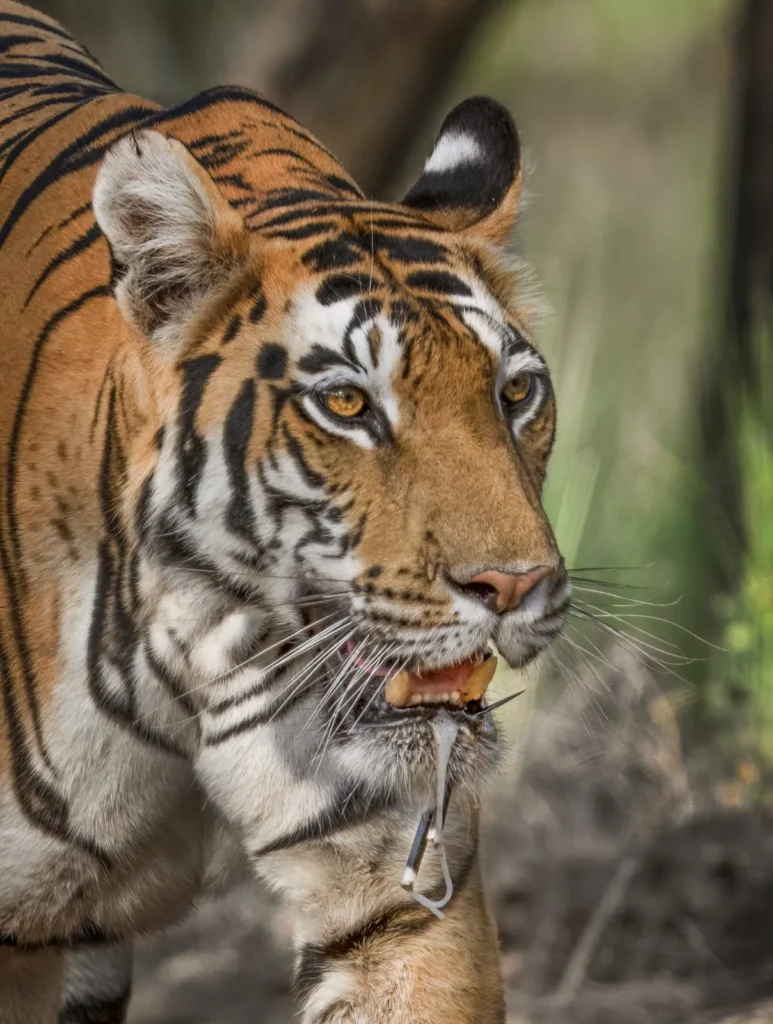
Machli, a resident tigress in the Churna range of Satpura National Park (Satpura Tiger Reserve), was spotted with sharp porcupine quills embedded in her lower jaw after a dangerous hunt.
While Satpura is an official tiger reserve, it does not guarantee the high-frequency tiger sightings of smaller, more congested parks. The flagship predators here are the tiger and the leopard. However, the park’s true mammalian draw lies in its broader diversity. Satpura is renowned for excellent sightings of sloth bears, gaurs (Indian bison), and packs of wild dogs (dholes). The prey base is equally robust, supporting populations of sambar, chital (spotted deer), nilgai, wild boar, and the four-horned antelope.
Birdwatching and Riverine Species
Satpura is widely recognized as a premier destination for birdwatching. The transitional zones between the mixed forest and the riverbanks create ideal conditions for a massive variety of avian species. Travelers exploring the park via canoe along the Denwa River can observe riparian species closely, alongside basking crocodiles.
Why Habitat Diversity Matters for Sightings
Understanding Satpura’s habitat is crucial for managing your expectations. Travelers accustomed to standard “tiger-chasing” trips must adapt to a landscape-led approach. Because animals have vast, uninterrupted terrain to move through, sightings require patience and proper tracking. The reward is observing wildlife in a genuinely quiet, uncrowded natural environment rather than surrounded by a dozen idling vehicles.
Wildlife Checklist by Habitat
To help target your observation efforts, here is a breakdown of where key species are typically encountered based on the park’s geography:
| Habitat Type | Key Wildlife & Observation Focus |
| Dry Deciduous & Teak Valleys | Sloth bear, leopard, wild dog, sambar, and four-horned antelope. |
| Grasslands & Buffer Margins | Chital, nilgai, wild boar, and gaur. |
| Riparian Wetlands (Denwa River) | Crocodiles, riverine birds, and occasionally crossing tigers. |
Photography Tip
Because Satpura supports such diverse habitats, rely on a versatile lens setup. While a long telephoto (400mm–600mm) is essential for birdwatching across the river and capturing skittish mammals, do not forget a wide-angle lens. The sandstone gorges and misty morning river crossings offer excellent landscape photography opportunities.
Accommodation Strategies: Where to Stay
Booking the right accommodation around Satpura requires careful attention to local geography. Because the reserve is anchored by the Denwa River, ending up on the wrong side of the water or far from your permitted gate can severely complicate your morning safari logistics.
Best Areas to Stay Near Satpura
The majority of tourism infrastructure is concentrated around the Madhai Gate, which serves as the primary entry hub for the reserve’s core zones. Lodges and resorts are predominantly situated along the northern banks of the Denwa River. From these properties, visitors typically take a short boat transfer across the river to reach the official forest department jeeps waiting on the Madhai side.
When choosing a resort, verify its exact distance to your booked safari gate. If you intend to prioritize core jeep safaris and canoeing, staying as close to Madhai as possible is the most efficient strategy.
Field Note
Unlike highly commercialized reserves, Satpura’s accommodation options lean heavily toward eco-lodges and experiential nature camps rather than large, densely packed resort chains. This aligns perfectly with the park’s identity as a low-crowd destination focused on slow wildlife travel.
Itineraries, Common Mistakes, FAQs & Conclusion
Planning Your Itinerary
Because Satpura offers a diverse mix of motorized and non-motorized activities, a standard one-night stopover is rarely enough. To properly experience the reserve’s unique positioning, you need time to transition from the fast pace of a jeep safari to the slower rhythm of walking or canoeing.
Recommended Length of Stay
A three-night stay is the practical minimum for a complete Satpura trip. This allows you to schedule two core zone jeep safaris to cover distance and track large mammals, while leaving ample time to safely book a walking trek and a river activity without rushing.
Travel Itinerary Options: 2-Day vs. 3-Day Route
Use this comparison to understand how to structure your days depending on your available time:
| Timeframe | Recommended Activity Mix | Ideal Visitor Profile |
| 2-Day Itinerary | Day 1: Afternoon Core Jeep Safari. Day 2: Morning Core Jeep Safari + Afternoon Canoeing. | Short-on-time travelers focused primarily on large mammal sightings with a brief river experience. |
| 3-Day Itinerary | Day 1: Afternoon Buffer Safari or Cycling. Day 2: Morning Core Jeep Safari + Afternoon Canoeing. Day 3: Morning Walking Trek + Afternoon Core Jeep Safari. | Nature enthusiasts, families, and photographers who want the complete landscape-led wildlife experience. |
Responsible Travel & Field Etiquette
Satpura’s reliance on low-impact tourism means visitors carry a higher responsibility for maintaining the park’s quiet environment.
Safety Rules for Walking and Cycling Activities
When you leave the protection of a motorized vehicle, you are entering active wildlife habitat on foot.
- Always follow the exact instructions of your mandatory official guide.
- Maintain a single-file line during walking treks.
- Keep noise strictly to a minimum; loud conversations masking natural sounds are a safety risk.
- Never attempt to approach wildlife for a better photograph.
Low-Impact Photography and Safari Etiquette
Satpura appeals to travelers looking for fewer crowds and a more authentic feel. Respect this culture by keeping your phone on silent, avoiding bright-colored clothing (stick to earth tones), and declining any requests to your driver to speed or chase animal tracks recklessly.
Common Mistakes to Avoid
- Treating Satpura like a standard tiger park: If you arrive expecting back-to-back tiger sightings and ignore the walking, canoeing, and cycling options, you are missing the park’s primary differentiator.
- Arriving without advance permits: Satpura limits vehicle entry to keep crowds low. Showing up at the gate without an online booking will likely result in missing out on core zone access.
- Booking accommodation far from the gate: The reserve is massive. Ensure your lodge is specifically near your permitted entry gate (usually Madhai) to avoid hours of unnecessary driving before dawn.
- Planning a trip in the monsoon: The core zone is completely closed from July through September. Always plan your visit within the official 15 October to 30 June operating season.
Frequently Asked Questions
1. What is Satpura National Park famous for? Satpura is famous for being a multi-activity wildlife destination where pollution-free activities like canoeing, cycling, and trekking are permitted alongside standard jeep safaris. It is known for its low-crowd, landscape-led approach to nature tourism.
2. Is Satpura open throughout the year? No. According to the MP Forest Department, the official season runs from 15 October to 30 June. The core area closes entirely during the monsoon months (July to September).
3. How do travelers book a Satpura safari online? Safari permits must be booked through the official Madhya Pradesh Forest Department online portal.
4. Are canoeing and trekking permitted inside the park? Yes. Satpura is one of the few tiger reserves in Central India that officially allows guided canoeing along the Denwa River and walking treks within designated forest areas.
5. Which Satpura gate is best for first-time visitors? Madhai is the primary gate and the best choice for most visitors because it offers the most direct access to core zones, river activities, and the highest concentration of nearby accommodations.
6. Is Satpura a good destination for tiger sightings? Yes, tigers are present and sighted, but Satpura is not a high-intensity “tiger-tracking” park. The habitat provides vast cover, so sightings require patience and are considered part of a broader wildlife experience rather than a guaranteed event.
7. What wildlife can be seen in Satpura besides tigers? The park supports robust populations of leopards, sloth bears, gaurs (Indian bison), wild dogs (dholes), sambar, chital, nilgai, wild boar, and the four-horned antelope.
8. Is Satpura good for birdwatching? Yes. The combination of dry deciduous forests, rugged gorges, and riparian wetlands along the Denwa River makes it a highly productive destination for birdwatchers.
9. How many days are ideal for a complete trip? A three-day stay is ideal. This provides enough time to schedule core jeep safaris while also participating in specialized activities like walking or canoeing without rushing.
10. How do visitors reach Satpura from Bhopal? Satpura (Madhai gate) is approximately 140 to 180 kilometers from Bhopal. The journey by road takes roughly 3.5 to 4 hours via state highways passing through Hoshangabad and Sohagpur.
Conclusion
Satpura Tiger Reserve requires a shift in mindset. It is not the destination for travelers who want to tick a tiger off a checklist in the shortest time possible. Instead, it rewards those who value the entire ecosystem. By combining early morning jeep safaris with quiet river canoeing and grounded walking treks, you gain a perspective of the Central Indian forest that simply cannot be seen from the back of a moving vehicle. Plan your season carefully, secure your permits early, and prepare for a genuinely active wildlife trip.
Satpura National Park : Topics Cluster
- Satpura National Park Detailed Guide
- Satpura National Park Quick Guide
- How to Reach Satpura National Park
- Ultimate India Wildlife Safari Planning Guide 2026
- How to book a Safari Permit online in India?
- How far advanced to book safari permit?
- Wildlife in Madhya Pradesh
- Madhya Pradesh Wildlife Tourism
- Sloth Bear Guide
Safari Planning : Topics Cluster
- How to book a wildlife safari in India?
- Park by Park Online Safari Booking Guide
- Tiger Safari India Planning Workbook
- Park by Park Safari Permits Guide
- National Parks Permit Guide – Park by Park Guide
- Tatkal Safari Booking Guide – Last Minute Safari Permits Booking
- Tiger Safari in India Cost
- Indian Wildlife Safari Budget Planner
- Jeep vs Canter Safari
- Best time for Tiger Sightings in India
- How far advanced should you book safari permits?
- Can foreigners book Indian Wildlife Safari online?
- Special Permits Guide for Foreigners and Domestic Visitors
- How to book a Safari Permit online in India? 2026 step by step guide
- Senior Citizens Friendly Safari Planning
- Multi Generation Family Safari Planning
- 50 things to know before your first safari in India